
A Missile Over Riyadh, and China’s Armchair Generals Have Thoughts
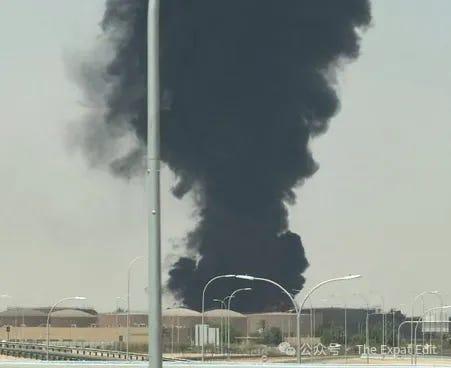
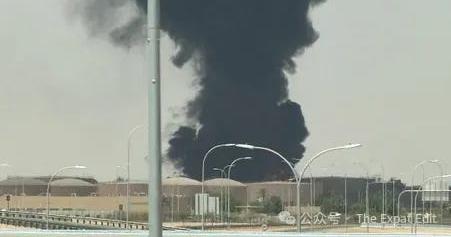
Before dawn on Saturday, phones across Riyadh lit up with a hostile-aircraft alert, and by breakfast a column of black smoke was climbing out of the fuel depot next to the international airport. Saudi Arabia says it shot down a Houthi ballistic missile, the first aimed at the capital since Yemen’s war reignited this summer. Chinese netizens spent the weekend doing what they do best with a foreign crisis: assigning blame, drawing lessons, and quoting gangster movies. One of the more interesting voices in the thread was a Chinese engineer who lives in Riyadh and heard the sirens himself.
The man who was playing video games when it started
The question doing the rounds asked, simply, who did it. The Houthis have since answered that themselves, claiming the strike and a second one on Aramco facilities at Yanbu. But before the claim landed, a Chinese telecoms worker posted from inside the city. He had been gaming on Friday night when his phone screamed. The next evening he was on a treadmill at the gym watching CNN cover the fire by the airport. On the 18th he had personally driven a colleague to that same terminal for a flight home.
Thanks for reading Silk & Steel! Subscribe for free to receive new posts and support my work.
At his desk sits a Yemeni colleague in a Saudi-style headscarf. Asked on Thursday what he made of the situation, the man replied with two words, roughly “damn Houthis,” and went back to work. The Chinese engineer’s own take was quieter. A line in the CNN report had stuck with him: Aden had been short of water and medicine for a long time. That, he wrote, is something the princes drinking at the Ritz-Carlton will never feel. He had driven through Bahrain the week before and passed hotels with missile damage still visible, and regretted not stopping to look.
“Patriots are finite. Ballistic missiles are not.”
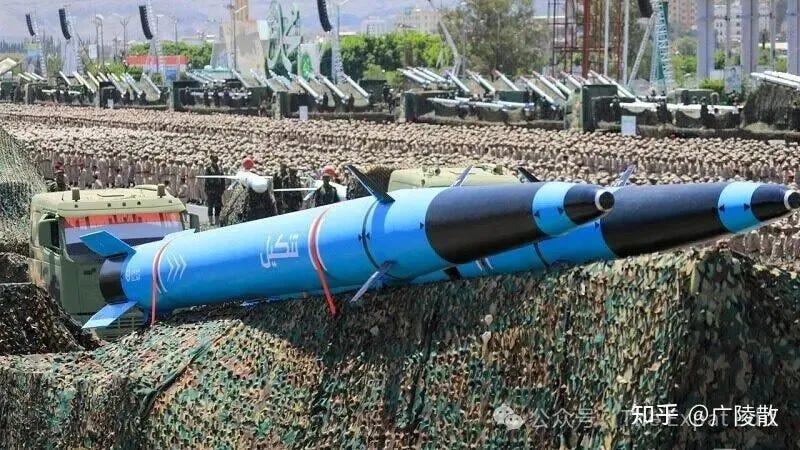
The bigger essays in the thread treated Saturday less as news than as confirmation. One long reply, written by a self-described amateur military historian, called the strike routine Houthi retaliation and then spent two thousand characters explaining why Riyadh cannot win this kind of fight. His argument: Saudi Arabia is a country that buys, facing a movement that builds. The Houthis, he claims, can turn out thousands of short-range missiles and drones a year from workshops in the desert, while every interceptor the Saudis fire is an imported item that will one day run out. Money buys weapons, he wrote, but it does not buy loyalty, and whatever money can buy, money can also buy away.
It is a theory, not a fact, and a reader should treat the production numbers as the poster’s claim. But it captures the mood. Another reply put the fear more compactly: the scary part, he said, is that Iran’s ceiling in this war has turned out to be the Houthis’ floor. Even if the Houthi push into Saudi Arabia fails, the fallback of closing the Bab al-Mandeb strait is still on the table. A third simply announced that Riyadh has run out of room to sit on the fence. Pick a side, he wrote, and then walk that road to the end.
Beijing’s favourite spoiled nephew
The most liked answer took a different angle entirely, and it says a lot about how Chinese observers see their country’s role in the Gulf. Some people, the writer began, are asking whether Saudi Arabia has thrown in with China and whether China will now protect it. Wrong question, he said. China has already bailed Riyadh out several times, and Riyadh keeps squandering it.
He counts the favours. First, the 2023 reconciliation with Iran that Beijing brokered, which he calls a golden road to Vision 2030, abandoned when the crown prince decided he had bought Washington’s goodwill and egged on a war with Tehran instead. Second, the Pakistani troops who arrived with Chinese-made equipment after the US and Iran started shooting. His metaphor for this is the best thing in the thread: a distant uncle watching a useless rich nephew stumble into a high-stakes card game, and quietly arranging for the kid to hire a bodyguard. The bodyguard is there to stop assassinations. The nephew, he says, took it as permission to go start bar fights. Third, the Red Sea ports China co-built and the east-west pipeline feeding them, an insurance policy against a closed Hormuz, now sitting idle after this month’s drone strikes.
He then claims a fourth move that we cannot verify anywhere: a Chinese air force detachment sent to Egypt to guard the Suez approaches. Treat it as a rumour. The whole answer ends with a Hong Kong gangster-movie quote about a man who thinks his sixty million bought more than it did. The point, for the writer, is that Saudi money has purchased a great deal of Chinese patience and not one ounce of Chinese sense.
“It is a bodyguard hired to stop an assassination. The nephew thinks it means he can go start fights in nightclubs.”
Why this is not just a Gulf story
Two details in the thread matter more for people living in China than the geopolitics. The first is that the Chinese embassy in Riyadh issued an emergency notice telling citizens to shelter and, pointedly, not to film military activity, a reminder that Beijing has a large working population in the kingdom and is nervous about it. The second is the pipeline. With Hormuz effectively shut since March, that 1,200-kilometre line to the Red Sea was carrying roughly five million barrels a day, and Aramco has now told European buyers they will get nothing next month. Chinese posters noticed that Chinese-flagged tankers were part of that route. Fuel prices, shipping costs and the price of everything on a container ship will feel this, in Shanghai as much as in Rotterdam.
The last word belongs to a poster who wrote only three sentences. Long-range drones, he said, have erased the difference between the front line and the rear, which is very bad news for the kind of people who never expected to be on a front line. He predicted that the “international community” will soon discover a consensus that striking rear areas with drones is unacceptable. He did not say who he thought would be doing the discovering.
Thanks for reading Silk & Steel! Subscribe for free to receive new posts and support my work.
Curated and translated from Zhihu, China's largest Q&A platform.
Newsletter
Subscribe to The Expat Edit
Chinese perspectives on global events, wars, and great power competition. Curated from Zhihu.
Free. No spam. View on Substack →