
For most of a century, Saudi Arabia has looked like one of the fixed features of the international landscape. It has a flag, a seat at OPEC, a monarchy that has never been overthrown, and a sovereign wealth fund that buys football clubs and golf tours. Western analysts treat it the way they treat France or Japan, as a permanent thing that will exist in ten years roughly as it exists today. That assumption deserves a hard look, because the war now consuming the Persian Gulf is testing the kingdom in a way it has never been tested, and the structure underneath it is far flimsier than the marble suggests.
Start with what Saudi Arabia is not. It is not a civilizational state. Iran is. Whatever one thinks of its government, Iran sits on a continuous political and cultural identity that runs back thousands of years, and its people have shown over the past year that they will absorb fifteen thousand American and Israeli missiles and keep fighting for it. Yemen, improbably, is closer to that model than its rich northern neighbor. The highlands controlled by Ansar Allah are one of the few parts of the Arabian Peninsula where things actually grow, and the tribes there have farmed the same terraces for millennia. They are bound to one another and to their land. When Saudi Arabia spent years bombing them, they did not scatter. They sent their sons to fight, and they won.
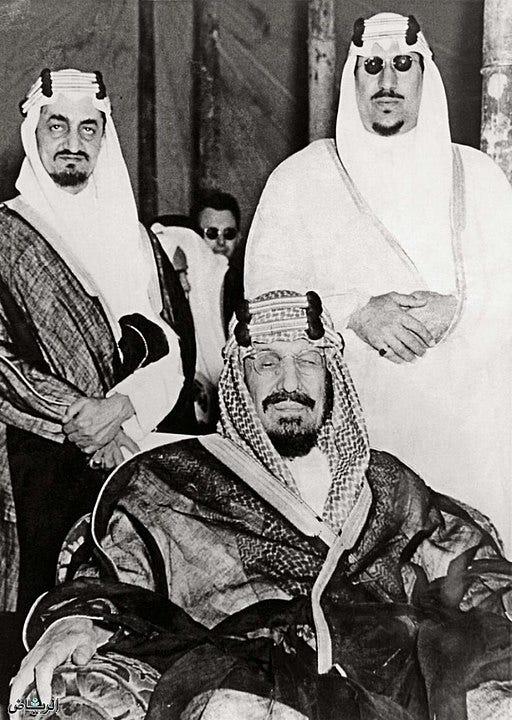
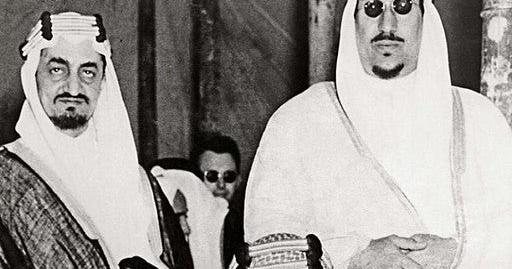
Saudi Arabia has none of that. It is, at bottom, a deal. In the 1920s and 1930s, one family, the House of Saud, established control over a patchwork of rival tribes and sects with the backing of Western intelligence, British first and then American. The bargain that followed was simple and has never really changed. The family sells the oil. The United States provides the protection. Everything else, the religious establishment, the sprawling bureaucracy of princes, the imported labor force that runs whole sectors of the economy, hangs off that central exchange.
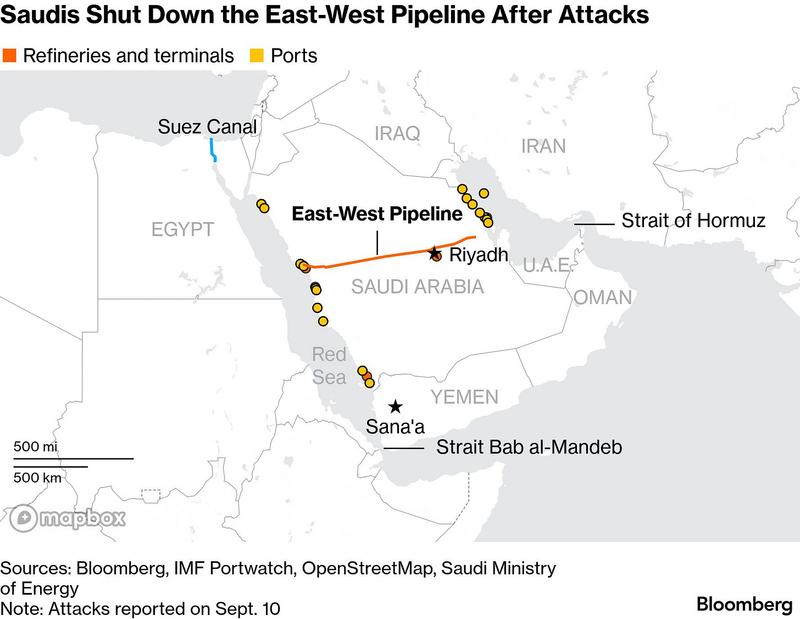
The trouble is that one half of the deal has stopped working. The United States, drawn into a war with Iran that it cannot win and cannot leave, is no longer able to protect its Gulf clients. Iranian strikes have rendered American forward bases across the region unusable. The US Secretary of the Navy has conceded that the Fifth Fleet’s home port in Bahrain is so badly damaged that ships cannot dock there. When Israel struck Iran’s gas infrastructure, Tehran answered immediately by devastating Qatar’s liquefied natural gas facilities, and it was the American military that told the Israelis to stop, because Washington understood it could not shield the monarchies from the consequences. Then came the Houthis (Ansarullah) who took the East-West pipeline offline and closed the Bab al-Mandab strait, choking the kingdom’s export routes on both coasts.
Consider what that means for a state whose only real function, from the perspective of its own citizens, is to convert oil into checks. The Saudi social contract is not a myth of shared struggle. It is a payroll. Citizens receive subsidies, public sector salaries, housing, and the tacit promise that the money will keep arriving as long as they keep quiet about who rules them. The millions of foreign workers who actually operate the economy have no allegiance to the kingdom at all; they will leave the moment the wages stop. And the citizens, unlike Yemeni farmers or Iranian villagers, are not tied to the land. Saudi Arabia is a desert. There is nothing to fall back on if the fiscal machine seizes. If the checks stop, the kingdom stops.
This is the position in which Mohammed bin Salman now finds himself, and it explains behavior that otherwise looks irrational. The smart move, by any dispassionate reading, would be to cut a deal with Iran and the Houthis. Neither has any interest in occupying Saudi territory. Both would settle for a neighbor that stopped hosting the American war machine and stopped bombing Yemen. That is roughly the arrangement Russia has sought with its own smaller neighbors: leave us alone, and we will leave you alone.
But the crown prince cannot bring himself to accept it. To make peace now would be to admit defeat to the Iranians and to the Houthis at once, after years of an intervention in Yemen that ended in humiliation. For a ruler of his temperament, that black mark may be unbearable. So, instead, he appears to be drifting the other way, toward an open military alliance with Israel and the United States against Iran. It is the logic of the gambler who has lost too much to walk away, and it is exactly the logic driving the American president who got him into this.
The risk of that choice is not primarily military. It is internal. The Saudi public, like every Arab public, watched Gaza. Whatever the palace once hoped for from the Abraham Accords, the kingdom has not dared since October 2023 to say aloud what its actions have long made plain: that it cares nothing for the Palestinians. An open alliance with Israel, on top of a fiscal crisis, on top of a leadership that has just lost a war, is a combination no regime could survive comfortably. Roughly ten to fifteen percent of the population is Shia, and they are concentrated along the Gulf coast in the Eastern Province, precisely where the oil is. The ingredients for a coup, a split within the royal family, or something far more chaotic are all present.
None of this is inevitable. Regimes with money and secret police can outlast their fundamentals for a long time. But the deeper point is that Saudi Arabia’s permanence was always an illusion produced by two things: oil revenue and American power. The first is now threatened by the collapse of Gulf export routes. The second is failing in plain view. Remove both, and what remains is a family, a flag, and a great deal of sand.
Americans have been trained to think of the Middle East in terms of fixed nation-states, each with its own interests and its own durable existence. That framework served Washington well when Washington was strong enough to hold the map in place. It is no longer strong enough. The war with Iran has already redrawn the region in ways that will not be undone: the American bases are wrecked, the Fifth Fleet is homeless, the strait is closed. The next line on the map to move may well be the one around the kingdom that has spent a century pretending it was drawn by God rather than by men in London and Washington who wanted the oil.
The coming months will tell whether Mohammed bin Salman chooses the humiliating peace that could save his house or the reckless alliance that could end it. If he chooses the latter, do not be surprised when the thing we call Saudi Arabia begins to come apart. It was never a country. It was a deal, and the deal is off.
Listen to CATR on:
Newsletter
Subscribe to Conversations Among the Ruins
Long-form geopolitics and the decline of the unipolar world order. New episodes straight to your inbox.
Free. No spam. View on Substack →
Reader-funded
This is independent, long-form work.
Conversations Among the Ruins is written, not repackaged, and it stays free because readers choose to fund it. If it is worth your time, a paid subscription or a one-off tip keeps it going.
Become a supporter →