


Daria Shipilova, a 28-year-old technician at a plague research institute in Irkutsk, fell ill on a field trip near the Mongolian border and died on October 2 after telling medics she had broken a test tube of live bacteria. Russian health authorities say the cause was an unidentified pneumonia and that the region is calm. Independent and foreign outlets report a second death, hospitals sealed for quarantine, and news stories quietly deleted. On Monday the United States embassy told its citizens in Russia to leave.
The first official word from the Siberian town of Baikalsk lasted about two hours. On October 3 the municipal government posted a message on Telegram asking residents to avoid the neighboring district of Shelekhov, citing “unofficial information” about a confirmed case of plague there. Then, according to the independent regional outlet Lyudi Baikala, the post disappeared.
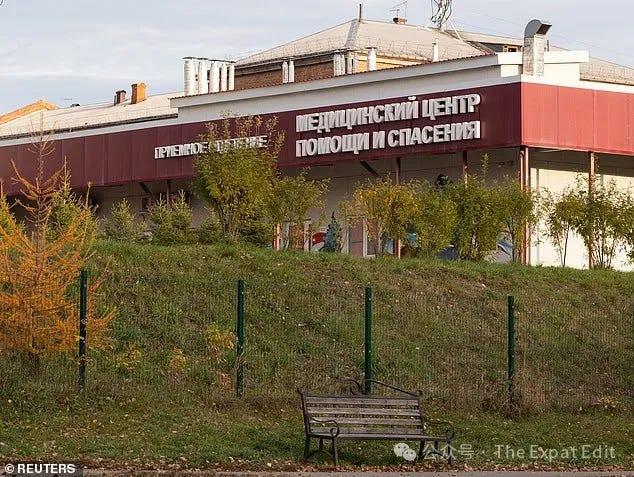
What is not in dispute is that a young woman is dead. Shipilova worked at the Irkutsk Anti-Plague Research Institute, one of a network of Soviet-era laboratories that study the bacterium behind bubonic and pneumonic plague and, seven centuries ago, the Black Death. She became unwell during fieldwork with colleagues in Buryatia, the republic on Russia’s eastern border with Mongolia, was hospitalized on September 29, put on a ventilator, and died three days later in Shelekhov, a satellite town of Irkutsk. Some 200 contacts have reportedly been placed under observation. The federal consumer-health agency Rospotrebnadzor said on October 4 that she died of “pneumonia of an unidentified type” and that the sanitary situation in Irkutsk and Shelekhov was “stable.” The Kremlin’s spokesman, Dmitry Peskov, told the public to trust that agency and nothing else.

On Zhihu, the question-and-answer platform where China’s educated middle class argues about the news, the thread tracking the story took off this week for a reason that has little to do with Siberia and everything to do with geography. China and Russia now wave each other’s citizens across the border without visas, the Golden Week holiday has just sent a wave of Chinese tourists to Lake Baikal and Vladivostok, and Irkutsk sits a few hundred kilometers from the Mongolian border, which in turn runs straight into Inner Mongolia and the Northeast. For foreigners in China with a Russian trip pencilled in, or friends just back from one, the thread reads less like geopolitics than like a travel advisory written by strangers.

The most upvoted answer drew a line that medical readers will recognize. Naturally occurring plague, the writer argued, is a solved problem for modern medicine: China itself records a scattering of cases most years in the grasslands of Inner Mongolia and the western provinces, where marmots carry the bacterium, and antibiotics given early almost always work. What made this case different, in the commenter’s view, was that the trail led to a laboratory rather than a rodent burrow. From there the answer slid into speculation about whether a research strain might have been altered; there is no evidence of that, and the writer did not claim any. What drew the upvotes was the sentence after: that Russia’s institutional reflex is to deny what can be denied and declare everything under control, right up to the moment it cannot be hidden.
That reflex is being tested from several directions. Mongolia, Kyrgyzstan and Uzbekistan have stepped up health screening at their Russian borders. The governor of Buryatia, Alexey Tsydenov, referred to Shipilova as “the woman who died of plague” before amending that to “possibly.” Russia’s chief sanitary doctor, Anna Popova, flew to Irkutsk personally and has yet to speak in public. Mikhail Favorov, a senior Russian epidemiologist, told the Moscow Times that the broken-test-tube explanation was “simply ridiculous,” because institute staff work in full protective gear and a dropped vial would be unlikely to infect anyone. Lyudi Baikala reports that as many as five Irkutsk hospitals, including a children’s hospital and a maternity ward, have stopped admitting or discharging patients, and that staff have been told to stay inside for three weeks. Local media reported a second death in a Shelekhov hospital on Tuesday. None of this has been confirmed by Moscow, and nearly all of it runs through outlets the Russian government does not recognize.
“Siberia being vast and empty is the good news. The visa-free arrangement and the Mongolian border are the bad news.”
Washington has leaned in. The American embassy in Moscow issued a health alert on Monday noting the reports of suspected pneumonic plague and the hospital closures, reminding citizens that the State Department’s “do not travel” advisory already applies to Russia, and asking anyone who has passed through the affected area to watch for fever for 14 days. Secretary of State Marco Rubio said the United States was monitoring the situation but not alarmed. President Trump said America would “help” Russia, adding that “they call it pneumonia.” Rospotrebnadzor replied with a statement offering Russian experts and laboratory equipment to help the United States with its own outbreaks, listing measles in three states and a fatal plague case recorded in New Mexico in June.
The mood on the thread was less amused when it turned homeward. Several commenters said they had looked for guidance from Chinese health and border agencies on the eve of a holiday that sends hundreds of thousands of travelers north, and had not yet found any. One proposed pausing visa-free entry for Russian arrivals until the picture clears; another suggested that anyone traveling the Baikal circuit this week stay put in Russia rather than, in the gamer’s phrase that stuck, “run through the poison.” The top answer struck a more careful note: given the state of relations between the two countries, it said, restraint in official coverage is understandable, but the flow of information, the management of risk and plain public-health education cannot go missing.
A few practical points surfaced for anyone who needs them. Pneumonic plague, the form that spreads person to person, is treatable with common antibiotics when caught in the first day or so of symptoms, which look like a fast, severe pneumonia. The incubation period is usually two to six days, which is why the American advisory settles on two weeks of self-monitoring. And the places under scrutiny are specific: Irkutsk city, Shelekhov and the Buryatia field sites, not Russia at large.
Whether this is a laboratory accident with a handful of cases or something larger will become clear the way these things usually do, through hospital counts that leak faster than press offices can delete them. Searches for the Russian word for plague, the New York Times noted, are running at fifty times last year’s level. On Zhihu the thread’s title still carries the question “how should we view this,” and for once the answer most readers seemed to settle on was the honest one: we do not yet know, and we would like someone to tell us.Read the original Zhihu thread: https://www.zhihu.com/question/2091220263526458858
Curated and translated from Zhihu, China's largest Q&A platform.
Newsletter
Subscribe to The Expat Edit
Chinese perspectives on global events, wars, and great power competition. Curated from Zhihu.
Free. No spam. View on Substack →