America’s crisis is often described in familiar terms: inflation, debt, political polarization, and institutional decay. All of these are real. None of them reaches the core of the problem.
The deeper crisis is one of identity.
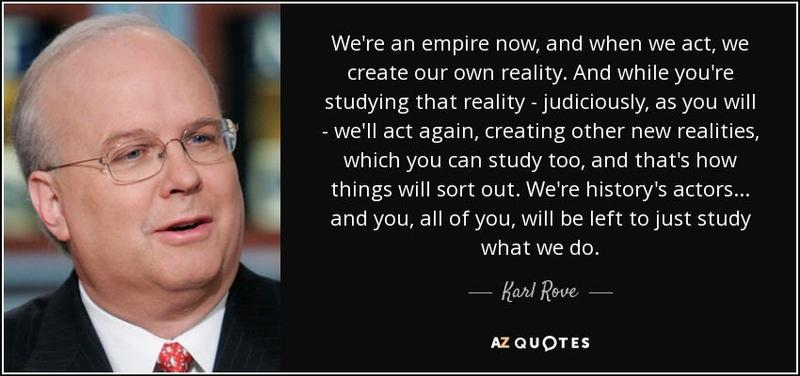
For decades, the United States did not have to answer basic questions about who it was, what it produced, or what purpose its political system served. Power itself supplied the answer. America was the center of the global order, the issuer of the world’s reserve currency, the military guarantor of allied states, and the country around which economic and diplomatic life was organized. Hegemony gave the nation not only influence but also a kind of borrowed coherence.
That coherence is beginning to fail.
The unipolar moment is over. Other centers of power have emerged. Much of the world is looking for ways to reduce its dependence on Washington, whether in trade, finance, diplomacy, or security. Moreover, the moral authority that once underwrote American leadership has eroded. Endless war, selective appeals to international law, and the open brutality of close allies have done lasting damage. Even where American power remains formidable, American legitimacy has become fragile.
For many countries, this shift creates strategic questions. For the United States, it creates something more unsettling: a civilizational question.
What is America if it is no longer the unquestioned organizer of the world system?
This is not a question the political class is prepared to answer. In fact, much of Washington seems determined not to ask it at all. Instead, both parties continue to speak as if primacy were the natural condition of American life and any movement away from it were a temporary malfunction to be corrected by more spending, more confrontation, and more insistence.
But a country cannot live forever on a memory of dominance.
The problem is not simply that America may be losing relative power. Great powers rise and decline. The problem is that the country has built too much of its economic structure, political imagination, and social psychology around the assumption of permanent supremacy.
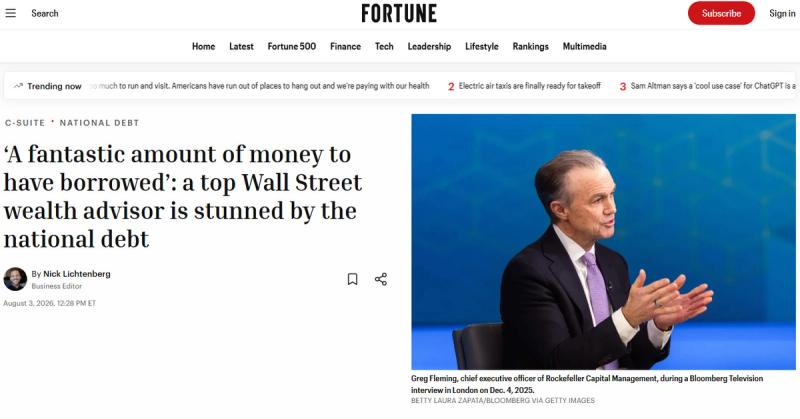
The economy offers the clearest example. The United States has become accustomed to consuming beyond its means, borrowing on a vast scale, and relying on the special privileges that come from dollar hegemony. It has allowed large parts of its productive base to hollow out while finance expanded and debt accumulated. This arrangement could survive as long as the world continued to absorb the costs. It becomes far more precarious in a world where alternatives begin to emerge.
A nation that once made things on a continental scale now often struggles to imagine what rebuilding industrial capacity would even require. A society that celebrated production increasingly rewards speculation, administration, and spectacle. Many Americans sense that something fundamental has been lost, even if they cannot name it precisely.
That loss is not only economic. It is moral and cultural.
Read more
Listen to CATR on:
Newsletter
Subscribe to Conversations Among the Ruins
Long-form geopolitics and the decline of the unipolar world order. New episodes straight to your inbox.
Free. No spam. View on Substack →