
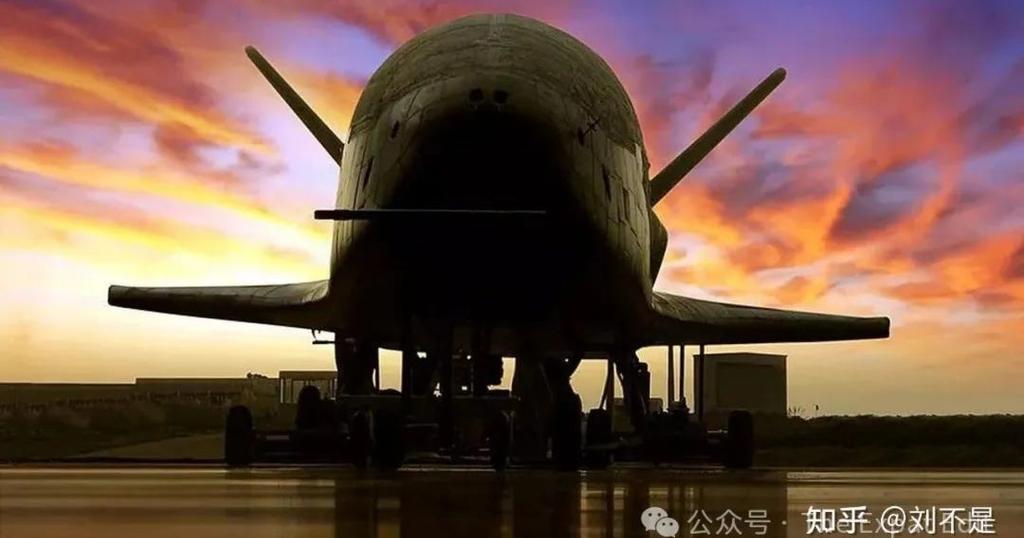
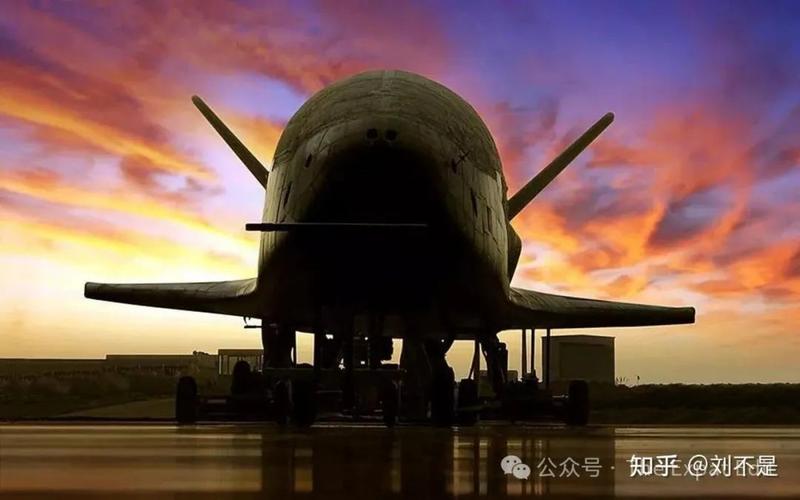
On Sunday, US Air Force Secretary Troy Meink stood up at a conference in Maryland and said that America now has “space control weapons” in orbit, able to protect US forces from hostile attack. According to the Washington Post, it is the first time Washington has admitted to an offensive capability in space. He did not say what the weapon is. China’s internet spent the next 24 hours filling in the blank, and the guesses are far more entertaining than the announcement. Here is what China is saying.
Half a century on, the same movie
Thanks for reading Silk & Steel! Subscribe for free to receive new posts and support my work.
The most liked answer opens with a yawn. Fifty years after Reagan’s Star Wars, the writer says, and it is still the same script. Space was militarised the moment the first spy satellite went up. The X-37B has been flying for years. SpaceX has launched batches of classified “black” satellites for the Pentagon. The US Space Force was created in 2019, and nobody thought that was a school play.
The writer then offers a rule of thumb that runs through the whole thread, and which we should flag as a theory rather than a fact: whenever Washington spends a decade accusing Russia and China of building anti-satellite weapons, assume Washington is building the same thing and simply waiting for the right moment to announce it. This, in their reading, is that moment.
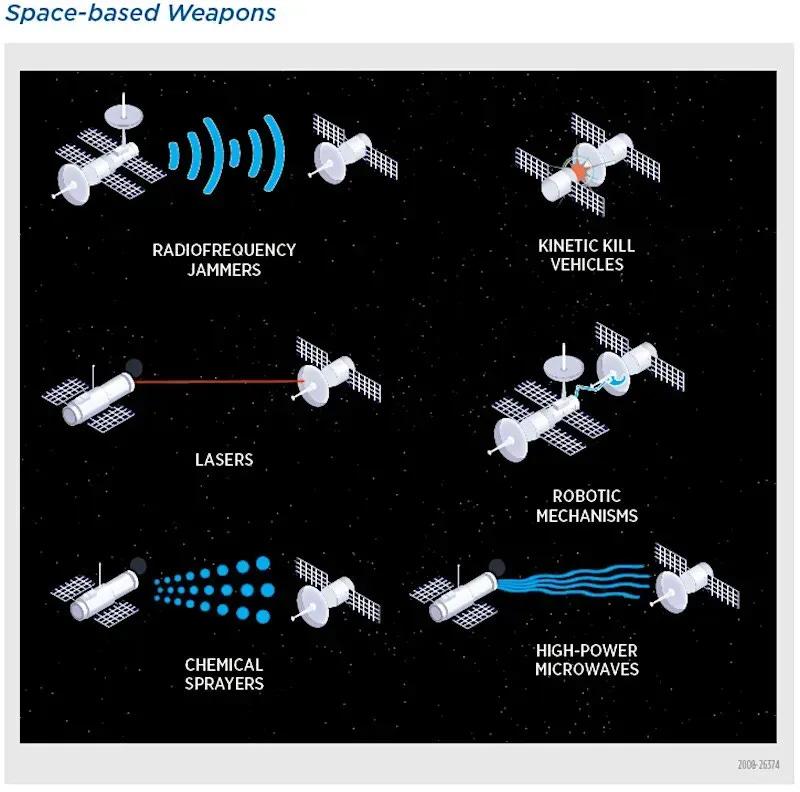
As for what the weapon might be, they post a US Defense Intelligence Agency chart of six space-weapon types and shrug. The Americans have surely studied all six, they write, and probably picked the ones that sound coolest: lasers, high-power microwaves, kinetic kill vehicles. Then comes the line that got quoted all over the thread. It is like football clubs insisting on Tiki-Taka or high pressing. Never mind the cost or whether it works. Does it look good?
The three suspects
One long reply, from a writer who runs a commentary account, pieces the puzzle together from public sources. Meink’s definition was deliberately vague, they note, covering “kinetic and non-kinetic means” with no models, numbers or orbits. But the writer sees three likely components, and it is worth stressing that all of this is their reconstruction, not anything Washington has confirmed.
First, killer satellites: manoeuvrable platforms sold to the public as “on-orbit servicing,” repair, refuelling, debris removal, but fitted with robotic arms, small impactors or short-range lasers that let them sidle up to a foreign satellite and grab, ram or blind it. The X-37B has demonstrated arm capture and autonomous orbit changes, and the writer points to a February launch that carried a “manoeuvrable prototype satellite” operated by a Space Force unit.
Second, jamming. The writer describes a ground system they say entered service in June, capable of blasting high-power electromagnetic beams at satellites across four frequency bands out to 36,000 kilometres, which is geostationary orbit, meaning everything up there. Third, the space-based interceptors at the heart of the Golden Dome missile shield, for which a dozen companies have prototype contracts and which the Congressional Budget Office has priced at up to 1.2 trillion dollars over twenty years.
Why announce now? Because, the writer argues, two weeks earlier US Space Command ran its first live orbital exercise with six allies, satellites approaching satellites, locking on, manoeuvring in concert. The message, as they put it: I have the weapon, and I just finished practising with it.
“This is not news,” says the satellite watcher
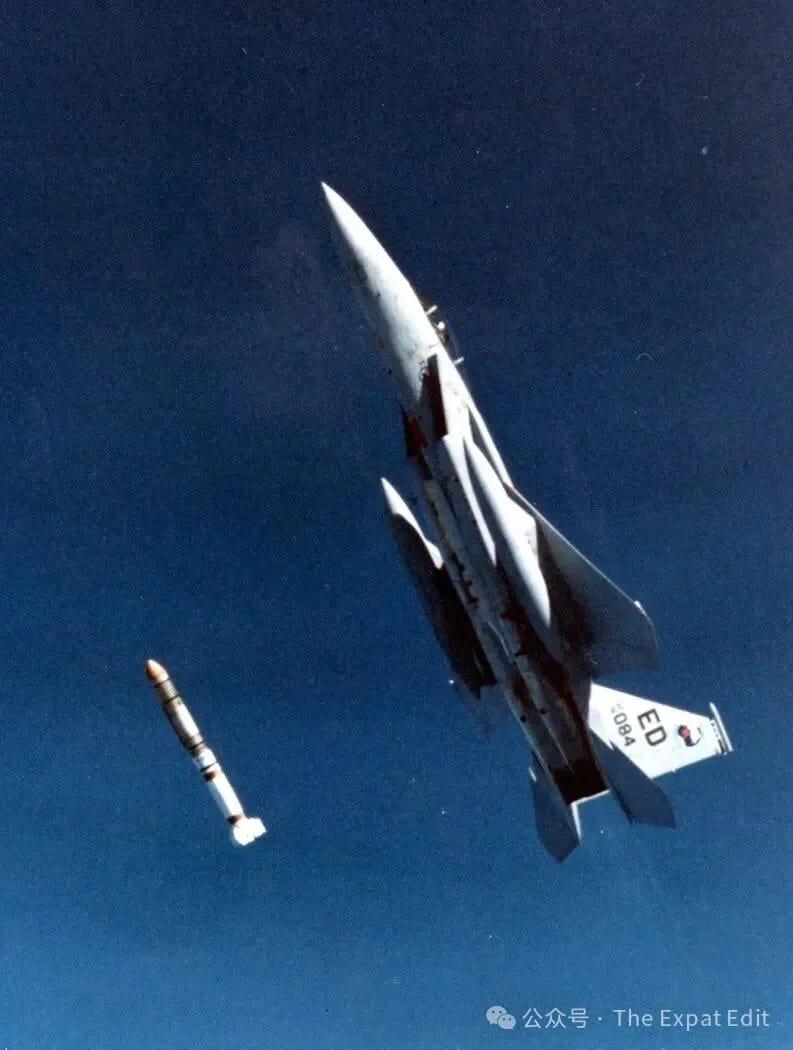
A drier reply says Meink is being modest: America has had this stuff for a decade. The writer points to the GSSAP satellites, a set of small US spacecraft parked just above and below geostationary orbit, officially to “observe” that neighbourhood. Citing data from the Secure World Foundation, an American NGO, they say the satellites have made hundreds of manoeuvres since 2014 and crept up on dozens of foreign satellites, Russian and Chinese among them, sometimes to within ten kilometres. They add a second family of eavesdropping satellites that sit next to commercial birds and listen.
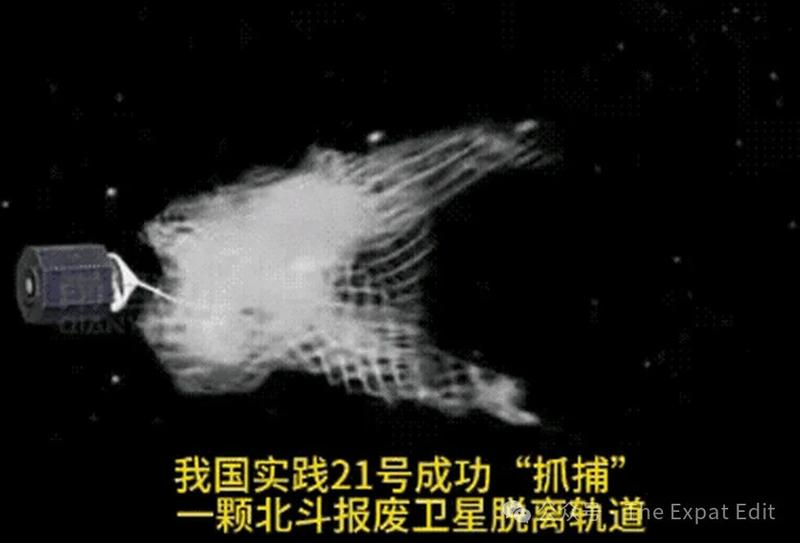
Then, with unusual candour for a Chinese military thread, they concede the mirror image. China has Shijian-21, which in 2022 docked with a dead Beidou navigation satellite and towed it to a graveyard orbit. Same capability, different cover story. America calls it space awareness. China calls it cleaning up debris.
The sceptics, and the maths
Not everyone is impressed. One well-liked reply suggests the whole announcement is a congressman discovering that satellites can change direction and concluding you could ram one into another. Another, in the thread’s most nationalist register, calls it “streaking at the end of the road”: a fading power trying to reboot Star Wars on borrowed money. That writer runs the numbers, and again these are their figures, not ours. Golden Dome’s 1.2 trillion price tag is roughly half a year of the entire US defence budget. The plan calls for 7,800 interceptor satellites with five-to-eight-year lifespans, so hundreds of billions in replacements each decade. And by their estimate the whole constellation could stop about ten intercontinental missiles at once, before you even count the debris.
Where the sceptics and the alarmists agree is on what comes next. The 1967 Outer Space Treaty bans nuclear weapons in orbit and nothing else. Japan, France and Germany are all cited as pouring fresh money into space defence this year. One writer notes Starlink has been designated a defence reserve, blurring the line between a commercial satellite and a military one to nothing.
“Once this door has been pushed open, it will never close again.”
The line in the thread that lands hardest for anyone living abroad is not about missiles. It is the reminder that your phone’s map, your bank transfer and tomorrow’s flight out of Pudong all run on satellites that somebody, somewhere, now openly admits they can switch off. China’s internet is not panicking about that. It is doing what it always does with an American announcement: rolling its eyes, taking notes, and quietly checking what its own side has parked in the same orbit.
Thanks for reading Silk & Steel! Subscribe for free to receive new posts and support my work.
Curated and translated from Zhihu, China's largest Q&A platform.
Newsletter
Subscribe to The Expat Edit
Chinese perspectives on global events, wars, and great power competition. Curated from Zhihu.
Free. No spam. View on Substack →