
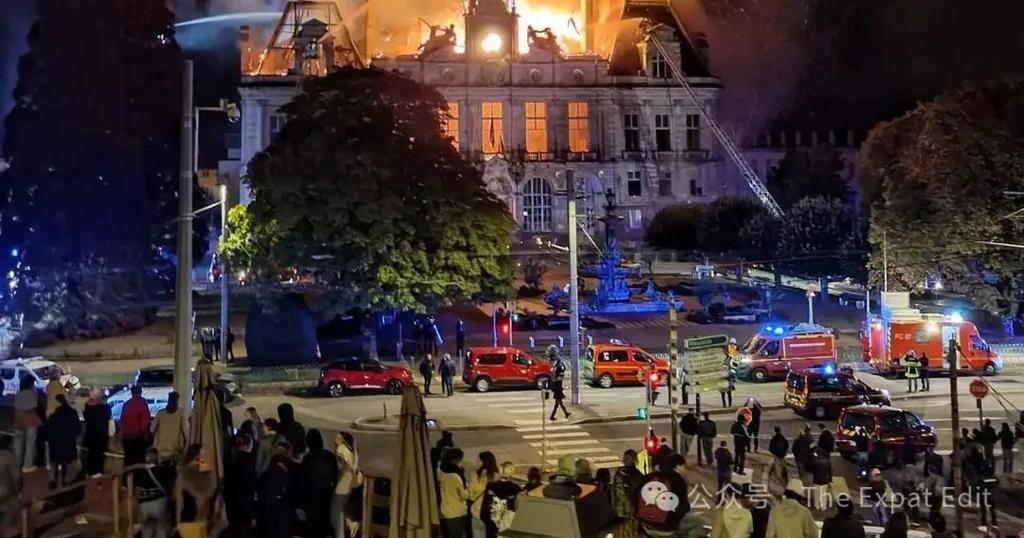
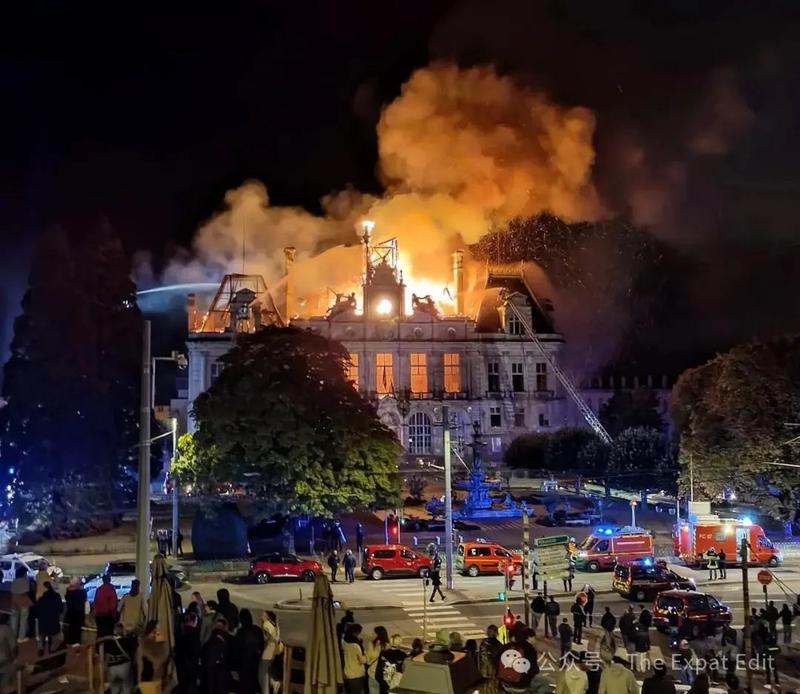
In Paris, Saturday was a catastrophe. In China, it was a confirmation. Within hours of the Limoges fire, the country’s online commentariat had filed its diagnosis of France, and it was not the diagnosis of a neutral observer. It was that of a rival that had been watching the patient for years, had predicted the decline, and now wanted to know only one thing: how is this different from 2018, the last time the French rioted over the price of living? The thread that asked went to the top of Zhihu, the question-and-answer site where China’s educated urban class argues about everything, and the answers arrived with the brisk confidence of people who had been expecting the news. They were not really about France at all. They were about whether a Western welfare state can still afford to exist, and whether anyone in China should mind if it cannot.
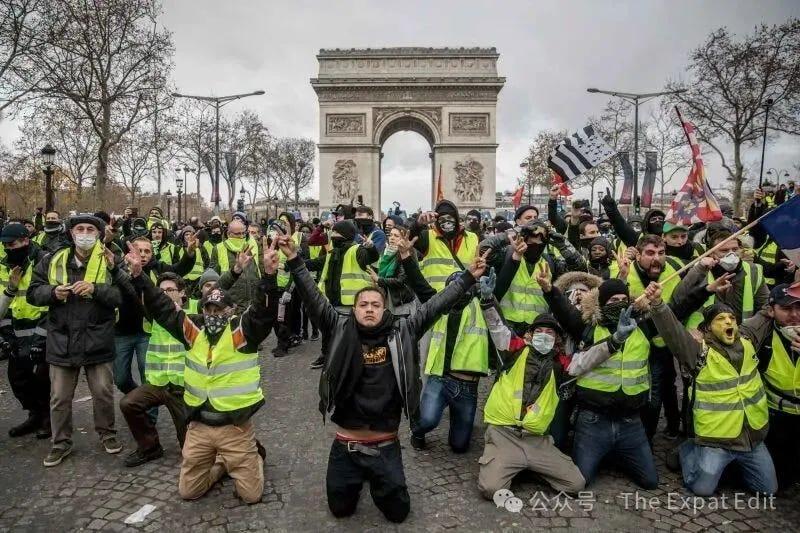
The verdict is this: 2018 was a negotiation. 2026 is not. The Yellow Vests, in the Chinese telling, were a haggling session between a people and a government that both assumed the money was there. A writer posting as 亦然寻意 described the France of eight years ago as “a fallen aristocrat who still kept its dignity.” Rural and small-town drivers, angry at a green fuel tax, pulled on three-euro safety vests and blocked the roundabouts with one message: we know you have money, so tax us less and pay us more. And it worked. Macron scrapped the tax and spent some ten billion euros making the problem go away. Most people, the writer observed, “wiped their mouths, felt they had come out ahead, and went home for coffee.” It was, in a phrase repeated across the thread, the art of dividing the cake.
Then the writer lists what happened to the cake. Three years of pandemic spending. The war in Ukraine and the end of cheap Russian energy. The loss, one after another, of the West African garrisons that had kept uranium and gold flowing on favorable terms. And a Paris Olympics staged, in the writer’s words, as “France’s last bit of nonchalance” on a credit card already maxed out. The conclusion lands like a door closing: when the streets filled again this month, politicians and protesters alike “discovered there was not a single grain left in the house.”
Chinese readers fixed on the details that made the two moments feel like different countries. In 2018 the fuse was lit by working men with diesel cars. This time it was high-school students, furious at unfilled teaching posts, who blockaded their lycées in September and were only later joined by unions, farmers and veterans of the Yellow Vest movement trying to revive the brand. The symbols of the state took the damage: Limoges lost a town hall that had stood since 1883, protesters forced their way into Marseille’s city hall, and in Paris the base of the Marianne monument on the Place de la République was partly pulled apart. Two widely shared claims on the thread, that Limoges police had run out of tear gas and that a police union plans to sue the government over contradictory orders, could not be confirmed and should be read as internet lore.
The thread’s most prominent answer skipped the imagery and went straight to the ledger. France, wrote a user under the handle 鸿雁复北翔, has reached the end of a road other indebted countries never walk, because it cannot devalue its currency or set its own interest rate. The figures cited, public debt of some 3.6 trillion euros and a tax burden that supposedly leaves 900 euros of a 2,000-euro salary, are the commenter’s, and the second is almost certainly exaggerated. But the structural point is one you can hear in Brussels as easily as Beijing: a government that cannot print money or borrow cheaply can only cut, and schools and hospitals are the softest targets. The writer notes, approvingly, that Jean-Luc Mélenchon on the far left and Marine Le Pen on the far right have reached the same prescription: stop paying for Ukraine and start questioning the euro.
“In 2018, France was a fallen aristocrat who still kept its dignity. In 2026, even the dignity is gone.”
Not everyone is convinced the moment is historic. A terse, well-liked reply makes the opposite case in three lines. In 2018 Macron wanted a second term; now he is a lame duck. The Yellow Vests had workers who could actually stop the country, metro drivers above all. Students, the writer notes without sentiment, shut down nothing but their own classrooms. And a parliament obsessed with the deficit will not vote for the giveaway that ended the last round. The prediction: “this time it probably achieves nothing.” It would not be out of place in a Paris newsroom.
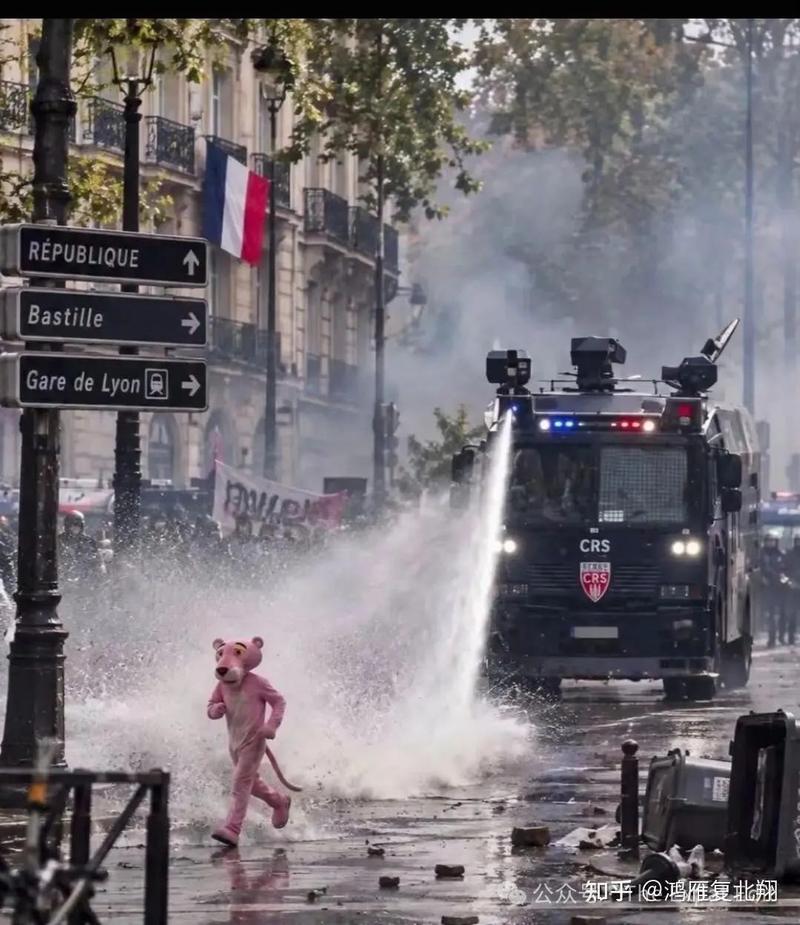
What a Western reader should not miss is the tone. There is sharp analysis on the thread, but also a current of satisfaction that runs through the comments like a low hum. Europe, one reply says, has lived too well for too long and is learning what the Ukraine war costs. Another imagines the continent carved up: China takes the market, America the capital, Russia the east. “Europe falls, three eat their fill.” The top answer predicts a “European spring” from Lisbon to Milan, and the same weekend did see clashes in the Piazza del Duomo and marches in Belgium and Portugal. But the eagerness to read a bad Saturday as the end of a civilization says as much about the audience as the subject. For a decade, Western decline has been one of the Chinese internet’s favorite genres, consumed with the same mix of dread and comfort Westerners once brought to stories about Chinese ghost cities.

France chooses its next president in April. Marine Le Pen has called the government exhausted and incapable; Jean-Luc Mélenchon has accused it of playing with fire. Both are already running on the ruins. On Sunday in Limoges, more than seven thousand people stood in silence beside the blackened shell of a building where, as one resident put it, their parents had been married. Nobody on Zhihu mentioned that part. The cake, after all, is the only thing they were asked to count.
Read the original Zhihu thread: https://www.zhihu.com/question/2095227460857983151
Curated and translated from Zhihu, China's largest Q&A platform.
Newsletter
Subscribe to The Expat Edit
Chinese perspectives on global events, wars, and great power competition. Curated from Zhihu.
Free. No spam. View on Substack →