
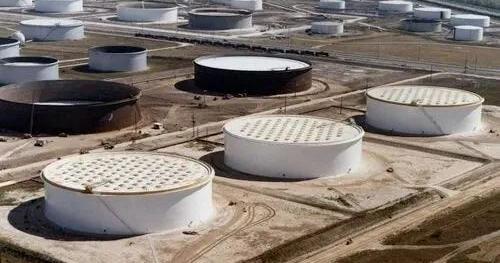
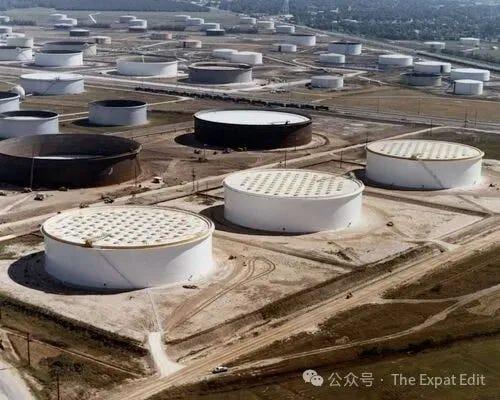
After an emergency video call convened by Emmanuel Macron on Thursday, the Group of Seven agreed to release 100 million barrels from strategic reserves over four months, with diesel going out first in the opening 20 days. The trigger was a diesel crisis: American pump prices hit a record of about $6.50 a gallon in late September, European prices are at or near all-time highs, and the war with Iran has knocked out a large slice of the world’s refined-fuel exports. Donald Trump, who has been pressing allies to open their tanks, said the United States would begin releasing diesel immediately.
A hundred million barrels sounds like a great deal of oil. On Zhihu, the question-and-answer site where China's amateur and professional analysts argue over the news, the first thing people did was divide it by something. The United States alone runs through roughly 20 million barrels of petroleum a day, a little over half of it as gasoline and diesel, so the entire G7 release covers about ten days of American road fuel. Against diesel specifically, the fuel the release is actually aimed at, it stretches to something under a month. "Ten days," one commenter wrote, and then asked the obvious follow-up: what happens in November, when it's winter and the reserves have already been spent on autumn?
Thanks for reading Silk & Steel! Subscribe for free to receive new posts and support my work.
That question runs through almost every substantive answer in the thread. The release is being read in China not as an energy policy but as a calendar. The first 20 days are diesel-only; the American midterm elections are on November 3. The most upvoted analysis, by a user writing as 飞跃本屯, lays it out plainly: diesel is what moves trucks, barges and trains, and in September and October it is also what moves combine harvesters across the Midwest. Farmers who have watched their harvest costs climb by a third because of a war in the Gulf are exactly the voters the White House cannot afford to lose. Hence the urgency, hence the pressure on Europe, hence the diesel-first sequencing.
The same writer walks through why the release cannot fix the thing it is meant to fix. Diesel is a refinery product, not a crude product, and the world’s refineries are the bottleneck. Russian exports, hammered by Ukrainian drone strikes, are down sharply. Gulf exports are down with them, and Iranian output is under American blockade. Together, by his reckoning, that is something like a fifth of global diesel exports gone, and the refineries still running are already at capacity; American plants are operating above 95 percent. New capacity takes months to build, and the East Asian refiners who might fill the gap are, as he puts it, busy keeping themselves supplied. Release all the stored diesel you like; until the Middle East and the Russia-Ukraine front calm down, the pipe is simply narrower than it used to be.
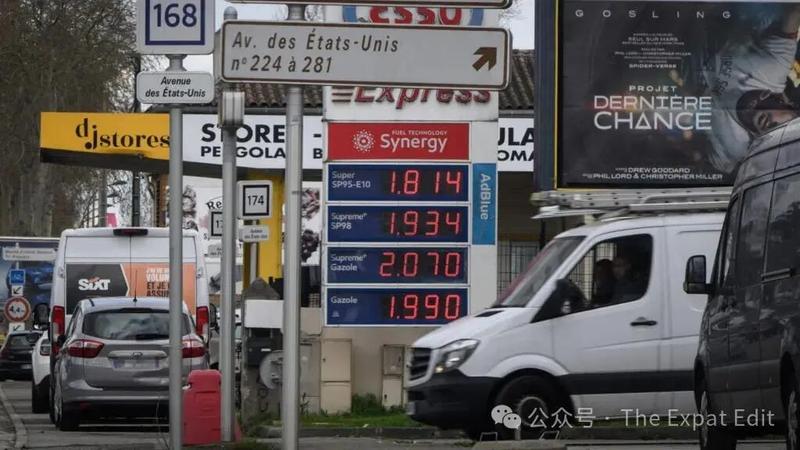
A second strand of the discussion is about what the Americans have left to give. A commenter posting as 天恒 points out that Washington drew its strategic reserve down by nearly half in 2022, from around 580 million barrels to about 350 million, refilled only a little while prices were low, and has been drawing again since the Iran war began. His estimate is that the reserve is now near a historic low of roughly 280 million barrels, with another 40 million about to go out the door. That, he argues, is why the pressure has shifted onto allies: Europe now gets around a fifth of its oil and half its imported diesel from the United States, which is why a single threat from Trump to halt diesel exports was enough to bring the Europeans to the table.
“Unless demand falls off a cliff or the Middle East settles overnight, oil is going higher next year. The later you release your strategic reserve, the better. They are releasing it now.”
From there the thread tips into something darker, and more speculative. One widely read answer argues that the release is not a miscalculation at all but a strategy: the United States, on this reading, is deliberately encouraging its allies to burn through their buffers so that Europe and Japan lose any independent ability to ride out a supply shock and become dependent on American fuel at American prices. The writer recommends, in passing, buying oil stocks. The theory rests on nothing firmer than the fact that reserves are falling, but it tells you something about how the whole episode looks from Beijing: like a bloc that is spending its insurance policy to get through a single election.
What is striking is the tone. There is no panic in the thread, and very little concern about China’s own position. The quiet confidence has a basis. China is a net exporter of refined products, its fuel prices are set by the state on a ten-working-day cycle that smooths out the spikes Western drivers feel immediately, and, as 天恒 notes, Beijing appears to have been quietly refilling its own reserves and cutting product exports while everyone else drains theirs. One commenter went further, citing Western press reports that Chinese crude imports fell by roughly a quarter between the spring and the summer, from around 12 million barrels a day to about 7 million. Over six months, he calculated, that amounted to something like 600 million barrels China did not buy, which did more to steady world prices than anything the G7 announced on Thursday. The import figures are plausible and have been reported in the Western business press; the claim that China did this deliberately to calm markets, rather than because its economy needed less fuel, is the commenter’s own.
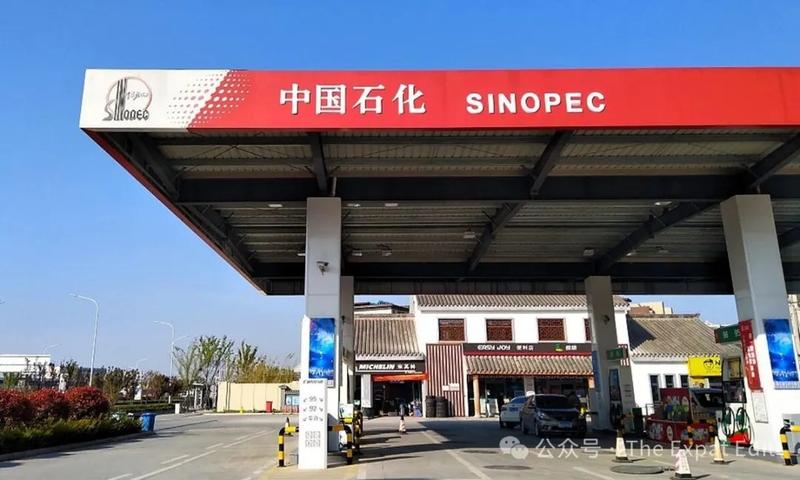
For foreigners living here, the practical upshot is a familiar one: the Chinese pump is the calm end of the global market. If you drive, you will see the adjustment notices every couple of weeks, and this year they have mostly been upward, but nothing like the whiplash friends back home are describing. Where the squeeze reaches you is indirectly, in the price of anything shipped, flown or trucked, in airfares home, and in the exchange rate conversations that follow every energy shock. The diesel crisis is a European and American crisis first. China, for now, is watching it on Zhihu.
The last word in the thread went to the commenter who did the division. Forty years ago, he wrote, the Western strategic reserves added up to something like 1.2 billion barrels, roughly a year of cover. Now the big headline is a hundred million, released over four months, with winter three weeks away. He did not need to spell out the comparison. Ten days of oil, spent in October, to buy one quiet November.Read the original Zhihu thread: https://www.zhihu.com/question/2089655246322495630
Thanks for reading Silk & Steel! Subscribe for free to receive new posts and support my work.
Curated and translated from Zhihu, China's largest Q&A platform.
Newsletter
Subscribe to The Expat Edit
Chinese perspectives on global events, wars, and great power competition. Curated from Zhihu.
Free. No spam. View on Substack →