
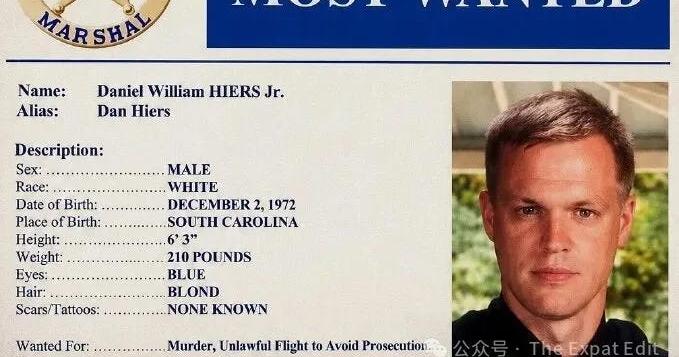
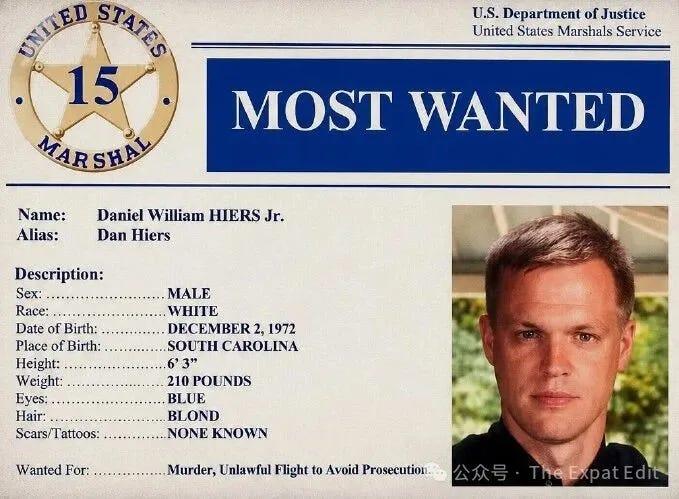
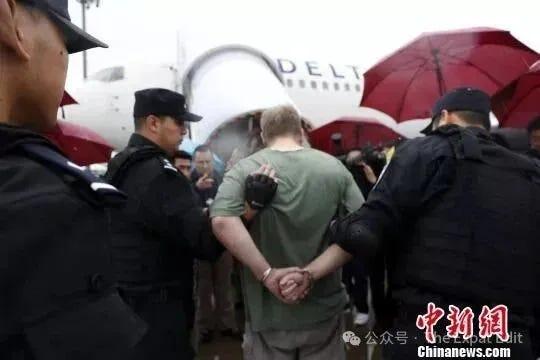
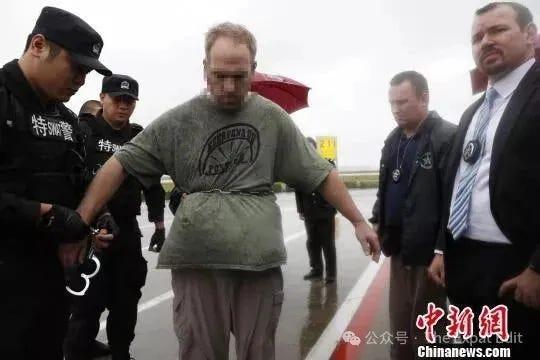
Chinese police have returned an American fugitive to the United States after years of legal and diplomatic coordination. The man, accused in the U.S. of murdering his wife and sexually assaulting a child, had reportedly lived in Shanghai under a false identity and taught at East China Normal University for more than a decade. On Zhihu, the question is less about the crime itself and more about how a case this shocking could slip through so many cracks.
What Happened
Thanks for reading Silk & Steel! Subscribe for free to receive new posts and support my work.
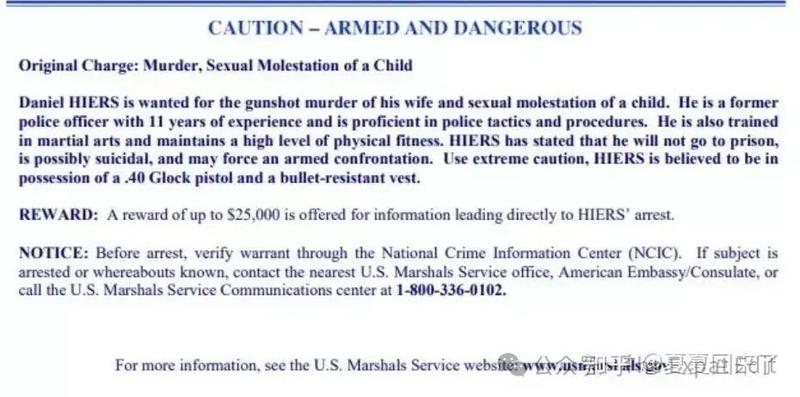
According to widely cited Chinese media reports, the fugitive was Daniel William Hiers Jr., a former police officer from South Carolina. He was wanted in the U.S. in connection with the 2005 shooting death of his wife, along with allegations involving sexual abuse of a minor. After fleeing, he allegedly entered China using an alias and built a long second life here as an English teacher.
Chinese internet users were especially stunned by one detail: this was not some obscure training center. The case is linked to East China Normal University, one of Shanghai’s best known universities. Reports and old online discussion suggest he was already detained in 2018, but only now has been formally sent back to the U.S. after a lengthy process. China and the United States do not have an extradition treaty, which helps explain why the legal path took so long.
Why This Story Hit Such a Nerve
The public anger is not just about one man. It is about the idea that someone accused of such serious violence could allegedly reinvent himself inside a Chinese campus, teach students, and remain in the system for years. That has triggered a broader conversation about whether some universities treated foreign hires with too much trust and too little scrutiny, especially in the 2000s and early 2010s.
Many of the most upvoted Zhihu answers point to a simple but uncomfortable truth. Back then, background checks for foreign teachers often relied heavily on paper documents submitted by the applicant. If the passport, degree, and criminal record certificate looked valid, that was often enough. Schools generally had neither the authority nor the habit of checking overseas law enforcement databases directly. If a person arrived under a new name with clean looking documents, the system was vulnerable.
The University Problem Was Bigger Than Recruitment
What makes the case worse is that online discussion did not stop at hiring failures. Multiple Chinese commentaries and older reports claim that during his time in China, he was known for inappropriate behavior toward female students. If that is true, then the bigger issue is not only that he got in. It is that warning signs inside the institution may not have been taken seriously enough.
This is where the story becomes a very Chinese one. A lot of people online are arguing that some schools were strict with paperwork but weak with day to day oversight. Once a foreign teacher was hired, management often focused on teaching schedules, visas, and contract renewals. Complaints about personal conduct could become awkward, bureaucratic, or quietly buried to avoid scandal.
“The scariest part is not that one person lied. It is that the system may have been too willing to believe him.”
Was This Just a Different Era?
Partly, yes. Two decades ago, biometric tools, digital records, and cross border verification were far weaker than they are now. If someone changed names and identity details, it was much easier to move undetected. Several Chinese commentators also noted that a former police officer would have understood how identity checks work and how to avoid obvious triggers.
But the “different era” defense only goes so far. The viral anger online suggests many Chinese people think the real issue was a culture of overvaluing foreign faces, especially in English teaching. In that system, being a native speaker could sometimes count more than teaching quality, professional training, or close supervision. In plainer terms, some universities wanted international optics and were not always careful enough about who they let through the door.

The Bigger Take
This case does not mean every foreign teacher was poorly vetted, and it certainly does not mean universities could easily access American criminal databases whenever they wanted. But it does expose a familiar management weakness. Institutions often assume that if the entry paperwork is complete, the risk has been handled. In reality, hiring is only the first filter. Ongoing oversight matters just as much.
For many Chinese readers, that is the real lesson. The scandal is not just that a wanted man once slipped in. It is that a combination of weak verification, fragmented cross border information, and soft internal accountability may have allowed him to stay far too long. In a country where parents and students expect campuses to be tightly managed, that feels like a much bigger breach than one sensational headline.
Thanks for reading Silk & Steel! Subscribe for free to receive new posts and support my work.
Curated and translated from Zhihu, China's largest Q&A platform.
Newsletter
Subscribe to The Expat Edit
Chinese perspectives on global events, wars, and great power competition. Curated from Zhihu.
Free. No spam. View on Substack →