
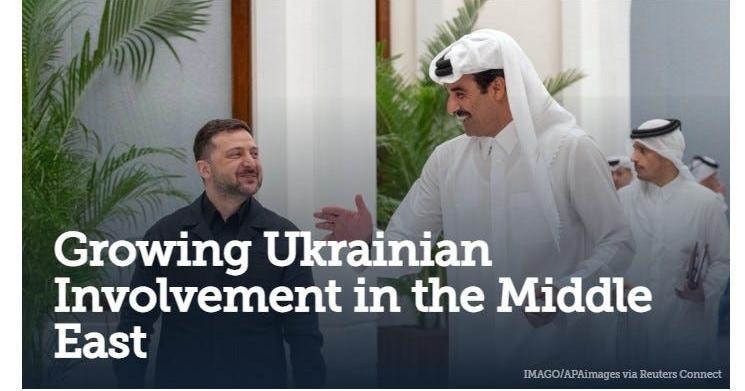
For most of the past three years, the war in Ukraine and the confrontation with Iran have been treated as separate crises, each with its own logic, geography, and cast of characters. One belongs to Europe’s battered frontier. The other sits at the center of the Middle East’s combustible balance of power. One is discussed in the language of NATO, sanctions, and artillery shells, the other in the language of uranium stockpiles, militias, and oil chokepoints.
That distinction may be starting to break down.
What is emerging instead is something more dangerous: the possibility that two failing proxy wars, each underwritten by American power, begin to bleed into one another. Not through a formal declaration, and not through a dramatic headline announcing a new alliance, but through a quieter process of convergence. Shared enemies. Shared technologies. Shared desperation. And above all, shared political incentives among leaders who no longer see a path to victory inside the confines of their own theaters.
This is how wider wars often begin. Not with a master plan, but with failing strategies that seek escape through expansion.
In both Ukraine and Iran, the immediate military picture has grown less favorable for Washington and its partners. In Ukraine, the promise of strategic reversal has given way to a grinding struggle of attrition, mounting manpower shortages, and acute dependence on foreign financing. In the Middle East, the image of overwhelming Western military superiority has been punctured by the inability to impose decisive costs on Iran or to protect exposed bases and infrastructure across the region. The gap between rhetoric and capacity has become harder to hide.
When clients begin to lose, they tend to look for ways to widen the circle.
Volodymyr Zelensky and Benjamin Netanyahu, for different reasons and in different contexts, now face a similar structural temptation. Both are leaders whose political survival is tied to the continuation of conflict. Both rely on the United States not simply for diplomatic support, but for the military and financial means to continue operating. And both have strong reasons to believe that a narrower war, left to its own internal logic, will end in disappointment or defeat.
Under those conditions, escalation ceases to look reckless. It begins to look necessary.
The logic is familiar. If a war cannot be won on its present terms, then it must be reframed. New actors must be drawn in. Existing alliances must be fused. Separate conflicts must be reinterpreted as fronts in a single larger struggle. The language used to justify this is already available. The West is told it faces a unified axis of revisionist powers: Russia, Iran, and China. If that is true, then why should Ukraine and Iran remain compartmentalized at all?
Signs of this conceptual merger are already appearing.
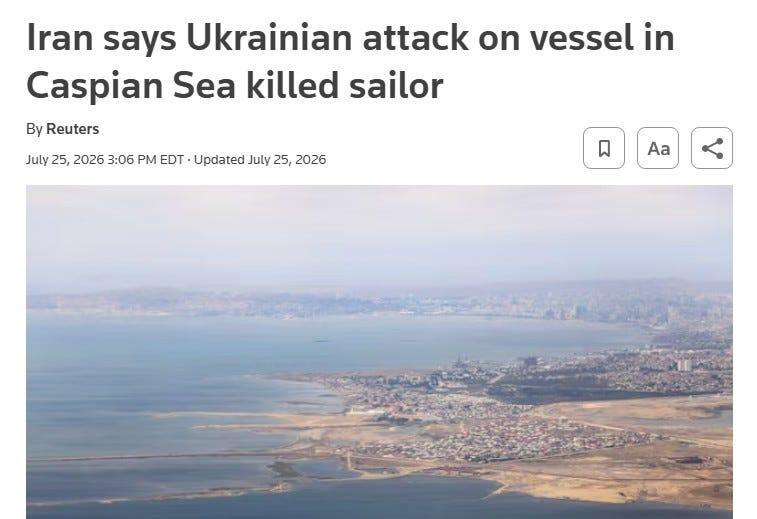
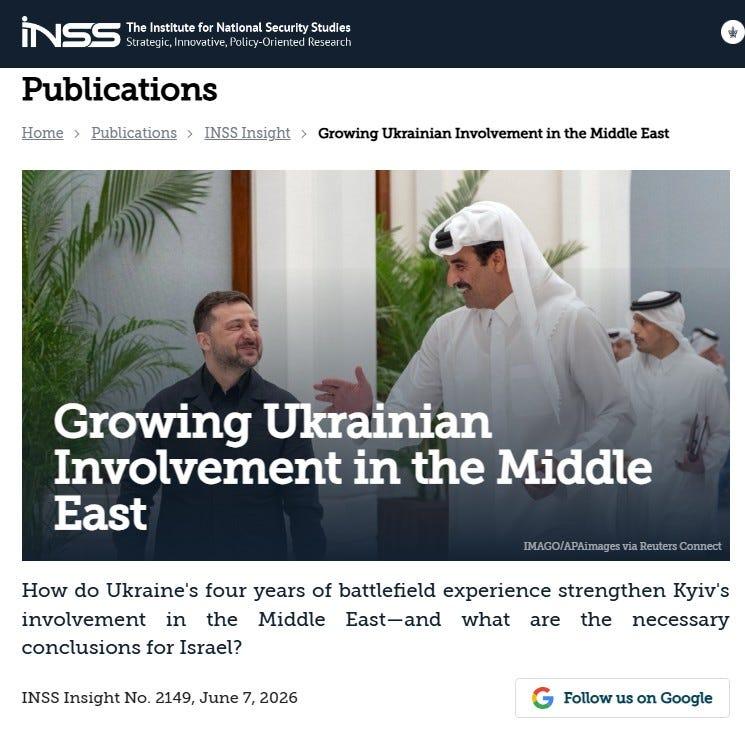
Ukraine has demonstrated a willingness to strike Iranian-linked targets beyond the immediate battlefield, including a recent attack on an Iranian vessel on the Caspian Sea. Whether such operations become routine remains to be seen. But the significance lies less in any single strike than in what it suggests about political direction. Kyiv has every reason to present itself not merely as a beleaguered recipient of aid, but as an active participant in the broader strategic contest Washington increasingly frames as global.
That positioning is not accidental. Ukraine’s value to Western planners has never been limited to the Donbas. It also lies in what the war has produced: a highly adaptive military force with real battlefield experience in a 21st-century war against a peer rival. Western armies have spent decades investing in expensive, low-volume weapons systems designed for short punitive campaigns and counterinsurgencies. Ukraine, by contrast, has become a laboratory for mass drone warfare under conditions of sustained industrial attrition.
That matters in the Middle East.
Iran and its regional allies have shown that they, too, understand the future of war differently than the Pentagon’s procurement system does. Cheap drones, missile saturation, mobility, and decentralized strike capacity have repeatedly embarrassed vastly more expensive defensive architectures. American systems remain formidable against many conventional threats, particularly manned aircraft and naval vessels. But the mythology surrounding intercept rates, deterrence, and precision dominance has become increasingly difficult to sustain in the face of persistent asymmetric pressure.
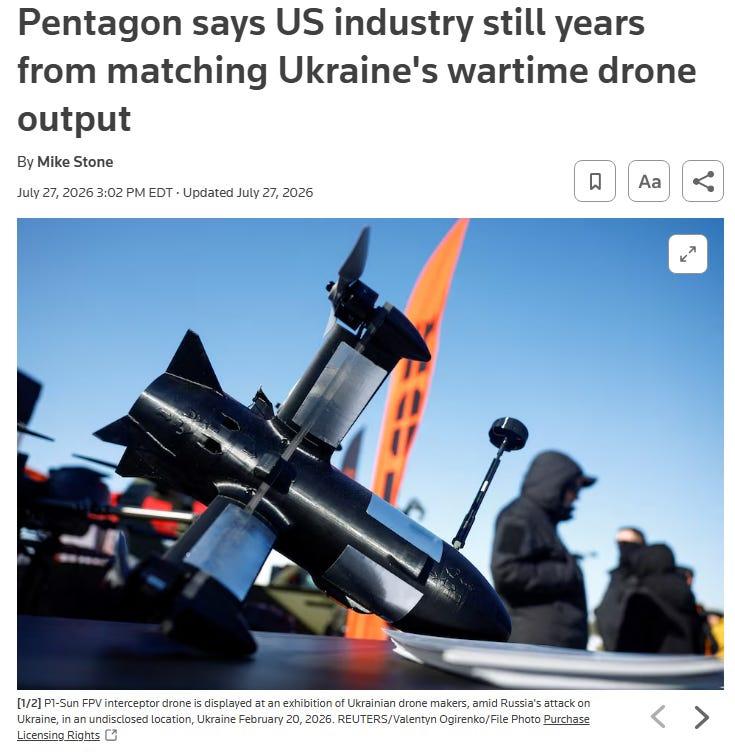
This creates an obvious area of overlap. If the United States and Israel seek ways to pressure Iran without committing to a catastrophic ground war or a politically impossible full-scale campaign, Ukraine offers useful tools, expertise, and personnel. Ukrainian operators have accumulated practical knowledge in drone warfare that Western militaries lack in comparable depth. Reports have already surfaced of Ukrainian military specialists operating in the Middle East in advisory roles related to air defense and unmanned systems. If those links deepen, the result will not be a formal merger of wars, but something more ambiguous and perhaps more consequential: operational integration without public acknowledgment.
That kind of integration would serve the interests of multiple parties.
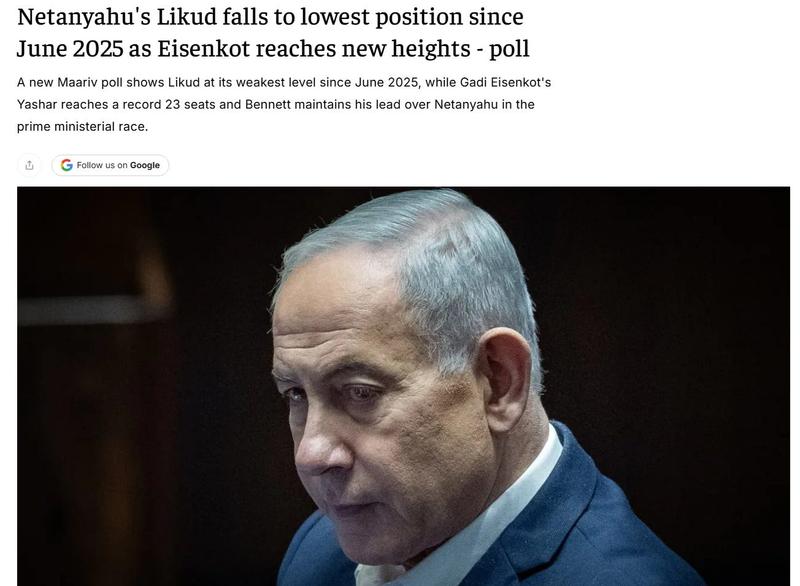
For Netanyahu, a widening conflict has always held political utility. Every expansion of war permits the extension of emergency politics at home and appeals to Israel’s reflexive, trans-partisan support for foreign intervention abroad. A regional crisis can eclipse domestic vulnerabilities, delay legal jeopardy, and restore the centrality of Israel to Washington’s strategic imagination. If the current confrontation with Iran is proving more costly and less decisive than expected, the incentive to pull in adjacent actors only grows stronger.
For Zelensky, the attraction is no less clear. Ukraine faces chronic funding needs, shrinking manpower reserves, and uncertainty over the long-term commitment of its Western backers. To remain central to Washington, Kyiv must continuously prove relevance. One way to do that is to position Ukraine not as a regional problem but as part of the solution to America’s wider geopolitical anxieties. If conflict with Iran becomes another arena in which Ukrainian capabilities can be marketed as indispensable, then Kyiv’s strategic importance rises accordingly.
And for hard-liners in Washington, the fusion of these conflicts offers a way to rescue a failing narrative of global primacy. If American power appears stretched in one theater, the answer is to claim the theaters are connected. If stockpiles are depleted, if offensive operations fail to achieve decisive goals, if allies begin quietly to doubt the reliability of the American security umbrella, then strategic coherence can be manufactured through escalation. Separate defeats can be repackaged as one grand contest requiring one grand response.
It is a dangerous illusion, but it is an alluring one.
There is, however, a larger problem. The United States may lack the material basis to sustain this kind of convergence. For all the talk of integrated deterrence and global force projection, recent conflicts have exposed the brittleness of the Western military model. Precision munitions are costly and difficult to replace at scale. Defensive systems consume interceptors faster than industry can replenish them. Command structures built around air supremacy and uncontested logistics begin to strain when facing adversaries able to impose costs through volume, concealment, and persistence.
In that sense, the prospect of a merging war is not a sign of strength. It is a symptom of strategic exhaustion.
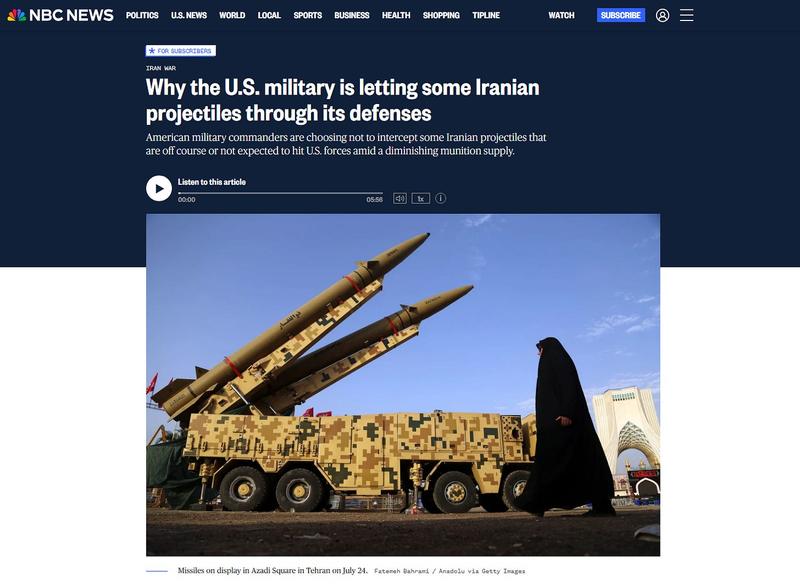
When great powers lose the ability to win cleanly, they often become more prone to reckless combinations. They seek advantage by linking crises that should remain separate. They gamble that coordination can substitute for capacity. They imagine that what cannot be achieved in one theater might be achieved through pressure in another. But this approach rarely restores control. More often, it spreads instability across larger areas and draws more actors into dynamics none of them can fully manage.
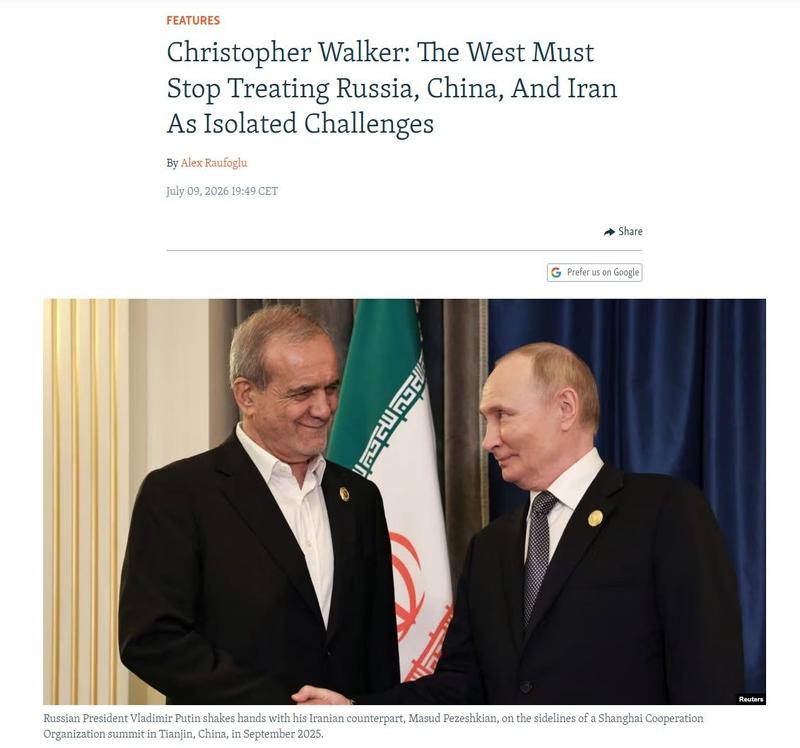
Russia and China are unlikely to watch such a development passively. Whatever their differences with Tehran, both have strong reasons to prevent an American or Israeli success that would dramatically weaken Iran’s role as a strategic partner and regional counterweight. A broader anti-Iran campaign, especially one visibly incorporating Ukrainian assets or personnel, would reinforce the view in Moscow and Beijing that the conflict is no longer local. It would become one more front in a larger contest over the shape of the international order.
That is precisely what makes convergence so perilous. Once separate wars begin to merge in the minds of policymakers, they also begin to merge in the calculations of adversaries. Escalation in one arena invites retaliation in another. Symbolic operations take on systemic meaning. Regional conflicts become tests of credibility for nuclear powers. The room for miscalculation expands.
None of this means a formal merger is inevitable. It is entirely possible that competing priorities, limited resources, and political caution will slow the process. The United States may yet resist being drawn further into an expanding conflict architecture. Gulf states, wary of becoming targets in a larger war, may press urgently for restraint.
But the incentives are there, and they are growing.
That should be enough to command attention. Wars do not need to be officially linked to become materially connected. They need only enough shared infrastructure, enough overlapping interests, and enough desperate men looking for a way out through escalation.
That is how the map of one war may become the map of many.
Listen to CATR on:
Newsletter
Subscribe to Conversations Among the Ruins
Long-form geopolitics and the decline of the unipolar world order. New episodes straight to your inbox.
Free. No spam. View on Substack →
Reader-funded
This is independent, long-form work.
Conversations Among the Ruins is written, not repackaged, and it stays free because readers choose to fund it. If it is worth your time, a paid subscription or a one-off tip keeps it going.
Become a supporter →