For decades, the world has obsessed over whether Iran might one day acquire a nuclear weapon. Sanctions, inspections, assassinations, cyberattacks, diplomatic summits, military threats, and covert operations have all revolved around that single fear: that Tehran could eventually obtain the ultimate deterrent.
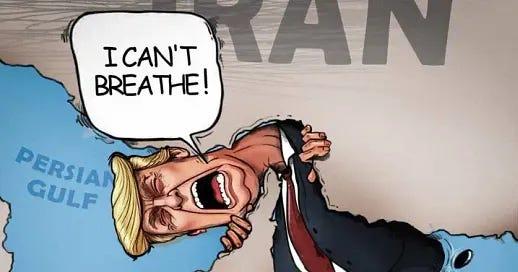
But the obsession has obscured a more important reality. Iran already has a strategic weapon capable of forcing the United States and its allies to the negotiating table. It does not sit in an underground enrichment facility. It does not require a ballistic missile or a test detonation. It is visible on any map of the Persian Gulf.
It is the Strait of Hormuz.
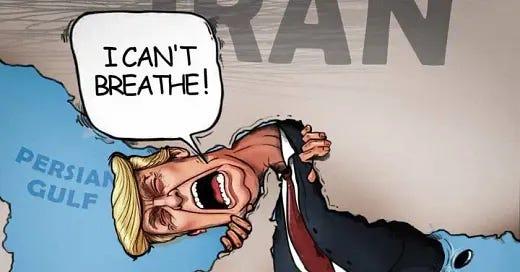
The strait is not a metaphorical weapon. It is a physical chokepoint through which a substantial share of the world’s seaborne oil and liquefied natural gas must pass. It links the Persian Gulf to the Gulf of Oman and the Arabian Sea. At its narrowest point, it is only twenty miles wide. Its shipping lanes are even narrower. On one side is Iran. On the other is Oman. Inside the Gulf sit some of the most energy-dependent and energy-producing states on earth: Saudi Arabia, the United Arab Emirates, Qatar, Kuwait, Bahrain, and Iraq.
A nuclear bomb is a weapon of ultimate deterrence because using it risks catastrophe. That is also its limitation. The more apocalyptic the weapon, the harder it is to employ. A nuclear missile, once launched, cannot easily be folded back into diplomacy. It invites retaliation, escalation, and possibly annihilation.
The Strait of Hormuz is different. It can be squeezed without being fully closed. It can be slowed, taxed, regulated, insured, reopened, and restricted again. It can create panic in shipping markets without triggering instant Armageddon. It allows Iran to impose pain gradually, to calibrate pressure, and then to offer relief in exchange for concessions.
In that sense, Hormuz is in some ways more useful than a nuclear weapon. A bomb may deter an invasion. A chokepoint can do the same and more, such as compel negotiation.
That is the essence of Iran’s new strategic position. The United States may possess unmatched naval power, global bases, and the ability to strike targets across the region. Israel may possess a powerful air force, an undeclared nuclear arsenal, and long-standing influence in Washington. But neither country can guarantee the normal flow of commerce through the Strait of Hormuz if Iran decides to contest it.
The reason is not simply that Iran can fire missiles or deploy drones, mines, and fast boats, though it can. The deeper reason is that commercial shipping depends on confidence. Tankers do not move through war zones merely because a president says the waters are open. They move when captains, insurers, owners, and energy traders believe the risk is manageable. If Iran can raise that risk, even selectively, it can change the behavior of the entire global energy system.
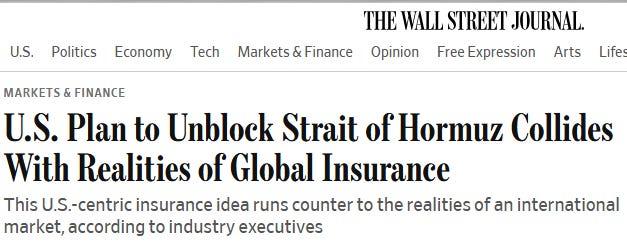
That is why declarations that the strait is “open” can be misleading. Open compared with what? Open for whom? Under whose procedures? At what price? With what insurance? If shipping traffic remains well below normal levels, if vessels hesitate at the mouth of the gulf, if insurers raise rates, and if captains receive conflicting instructions from rival powers, then the strait is not simply open. It is contested.
The distinction matters. A waterway can be legally open, militarily threatened, and commercially impaired all at once. That is the space in which Iran operates.
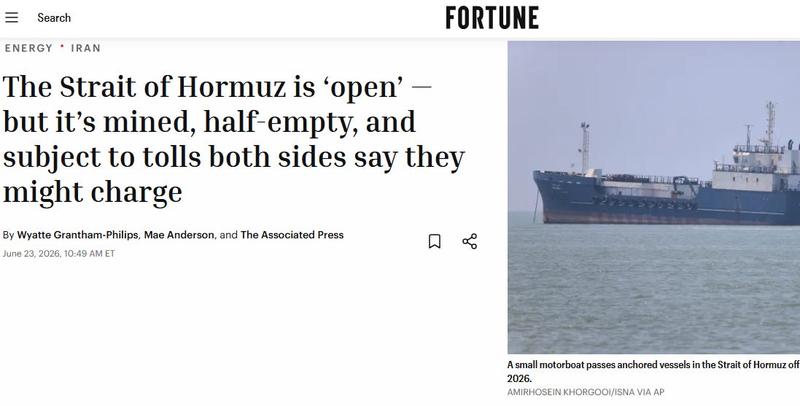
Reports in recent weeks have suggested precisely this kind of gray-zone control. Rather than announcing a total closure of the Strait of Hormuz, Iran appears to have favored something more sophisticated: a managed passage system. Ships are reportedly expected to use a designated corridor, register with Iranian authorities or Iranian-aligned entities, and follow procedures that amount to a recognition of Iranian authority over the flow of traffic.
This is how power often works in practice. Not through a formal declaration, but through compliance. If shipowners decide that the safest way out of the Gulf is to follow Iran’s instructions, then Iran’s position becomes real. If energy companies conclude that paying a fee or obtaining a particular form of insurance is cheaper than risking a disabled tanker, then Iran has not merely disrupted commerce. It has monetized leverage.
Even a modest toll structure could be enormously lucrative. A large crude carrier can transport roughly two million barrels of oil. A fee of one dollar per barrel would amount to two million dollars for a single vessel. Perhaps the eventual charges will be lower. Perhaps they will be disguised as insurance premiums, administrative costs, or safety fees. But the financial mechanism is less important than the political one.
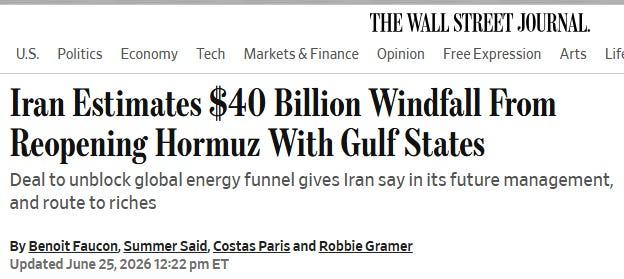
Payment is recognition.
That is why Iran would be wise, from its own strategic perspective, not to abandon the procedures it has imposed, even if it temporarily waives fees. A 60-day grace period without charges may calm markets and allow diplomacy to proceed, but if Iran maintains registration, routing, and insurance requirements, it preserves the core achievement. It establishes that normal passage through Hormuz is something Tehran can regulate, American naval dominance be damned.
That fact alone changes the balance of power.
Iran has long been treated in Western political discourse as a sanctioned, isolated, second-tier regional actor. It was portrayed as dangerous, but also fragile. Its economy was supposedly on the brink. Its population was supposedly waiting to overthrow the government. Its military was supposedly no match for American and Israeli power. Its regional alliances were supposedly crumbling.
Yet the events surrounding the Strait of Hormuz suggest something very different. Iran has shown that it can absorb punishment, impose costs, and force its adversaries to deal with the Iranian reality. It does not need to defeat the United States Navy in a conventional battle, nor does it need to sink half the world’s tanker fleet. It only needs to make the normal operation of the global energy system uncertain enough that everyone else starts demanding a settlement.
This is the overlooked genius of the Hormuz deterrent. It weaponizes interdependence. The same global economy that made sanctions so powerful against Iran also gives Iran leverage over the countries that depend on energy flows from the Gulf. Washington can freeze assets and restrict trade. Tehran can remind the world that a significant portion of its energy lifeline passes along Iran’s coast.
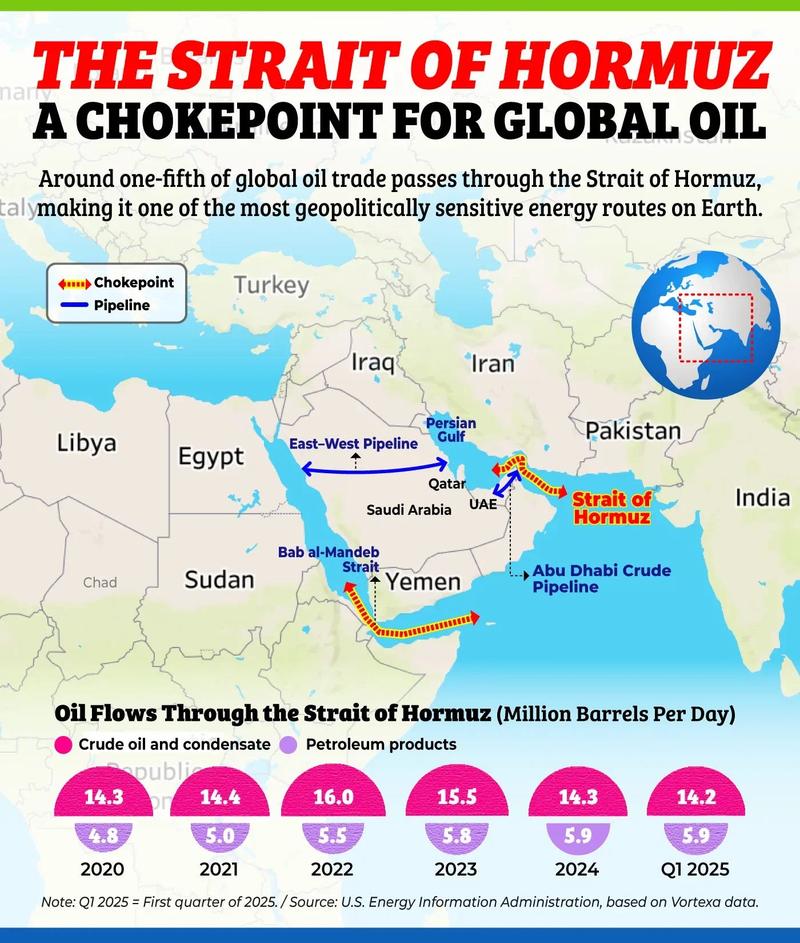
The Gulf monarchies understand this. For years, many of them relied on the American security umbrella and, increasingly, on quiet or open alignment with Israel against Iran. That strategy depended on the assumption that the United States could contain Tehran at an acceptable cost. But if Iran can disrupt, regulate, or tax passage through Hormuz, then the Gulf states must rethink their position. They cannot simply outsource their security to Washington while ignoring the power next door.
This does not mean they will become Iranian allies. It means they will have to become more pragmatic. They will need understandings, channels, and arrangements with Tehran. For small states whose prosperity depends on uninterrupted energy exports, ideology is a luxury. Geography is not.
The biggest loser in this new reality is Israel.
Israel has spent decades trying to prevent Iran from becoming the central power in the region. Its strategy has involved assassinations, sabotage, airstrikes, lobbying campaigns in Washington, and repeated efforts to push the United States toward confrontation with Tehran. The aim has not so much been to stop a nuclear weapon, but to keep Iran weak, isolated, and permanently vulnerable.
That strategy has failed.
Worse for Israel, it may have produced the opposite of its intended result. Instead of demonstrating Iran’s weakness, the latest confrontation has highlighted Iran’s resilience. Instead of proving that American and Israeli power can impose terms on Tehran, it has shown that Iran possesses a form of leverage neither Washington nor Tel Aviv can neutralize.
This is a devastating development for Israel’s regional ambitions. Israel’s dream of becoming the unquestioned military and political hegemon of the Middle East depends on a broken Iran. It depends on Arab states believing that Iran can be bypassed, contained, or humiliated. It depends on the United States being willing and able to enforce Israeli preferences across the region.
The Strait of Hormuz exposes the limits of that fantasy.
Israel can devastate Gaza. It can bomb Lebanon. It can seize more territory in Syria. It can deepen its occupation of the West Bank. It can assassinate scientists, commanders, and political figures. It can use extraordinary violence against weaker opponents, and it has done so with impunity for years, often in open defiance of international law and basic human decency.
But Iran is not Gaza, Lebanon, or Syria. It is a large state with strategic depth, a developed missile program, regional alliances, and, most importantly, control over one of the world’s most important economic arteries. When Israel pushes for escalation against Iran, it is not merely risking another regional conflict. It is risking a global energy crisis.
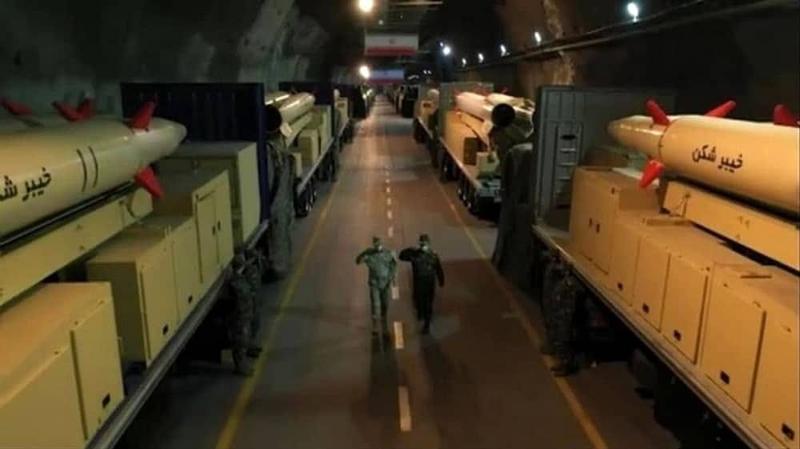
That is why the United States has limits, even when its political class pretends otherwise. There remains in Washington a deep belief that American willpower can solve any strategic problem. If a country resists, escalate. If escalation fails, escalate again. If a war becomes costly, insist that victory is just one more strike away.
But the Strait of Hormuz is a hard wall against that kind of thinking. The United States can attack Iran. It can destroy facilities, kill commanders, and impose suffering. What it cannot easily do is force global commerce to behave as though the strait is safe if Iran retains the ability and willingness to threaten it.
That is the difference between military power and strategic control.
A superpower can win battles and still lose leverage. It can dominate the skies and still fail to secure a shipping lane. It can issue statements from Washington declaring the problem solved while tankers wait offshore for someone else to tell them whether it is safe to move.
The result is a new kind of deterrence. Iran does not need to match the United States ship for ship or bomb for bomb. It only needs to convince the world that any attempt to crush it will endanger the economic stability of everyone else. That is exactly what a nuclear deterrent is supposed to do: make the cost of attack intolerably high.
The difference is that Iran’s deterrent is usable.
Of course, this power is not risk-free for Tehran. If Iran pushes too hard, it could alienate countries it wants to court, invite a larger military response, or damage its own economy. The Strait of Hormuz is not a magic shield. It is a dangerous instrument, and dangerous instruments can backfire.
But the strategic fact remains. Iran has demonstrated that it can place itself at the center of the world’s calculations. It has forced its adversaries to think not only about what they can destroy, but also about what they cannot control afterward.
That is what major powers do.
Whether one calls Iran a superpower is less important than acknowledging what has changed. A country long described as isolated has compelled the world to consider its terms. A state denied the right to develop nuclear weapons has revealed a powerful deterrent hidden in geography. A government targeted for decades by sanctions and military threats has shown that it can threaten the arteries of the global economy without firing a nuclear shot.
The world spent years asking whether Iran would acquire the bomb.
It should have been asking a different question: What if Iran’s real nuclear weapon was never a bomb at all?
Listen to CATR on:
Newsletter
Subscribe to Conversations Among the Ruins
Long-form geopolitics and the decline of the unipolar world order. New episodes straight to your inbox.
Free. No spam. View on Substack →
Reader-funded
This is independent, long-form work.
Conversations Among the Ruins is written, not repackaged, and it stays free because readers choose to fund it. If it is worth your time, a paid subscription or a one-off tip keeps it going.
Become a supporter →