
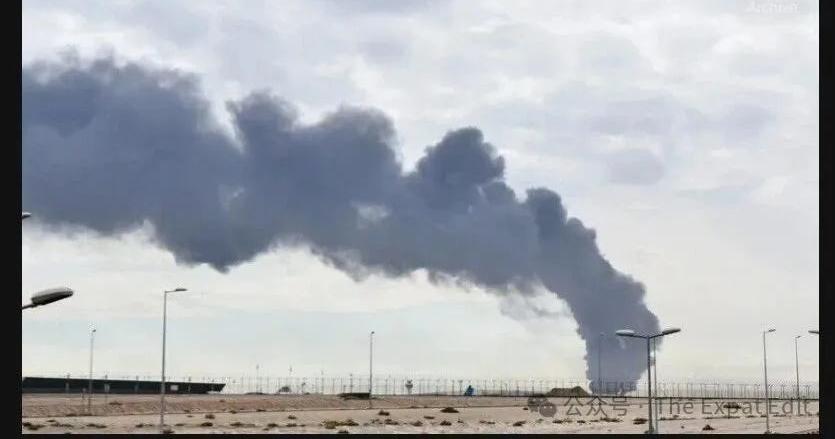
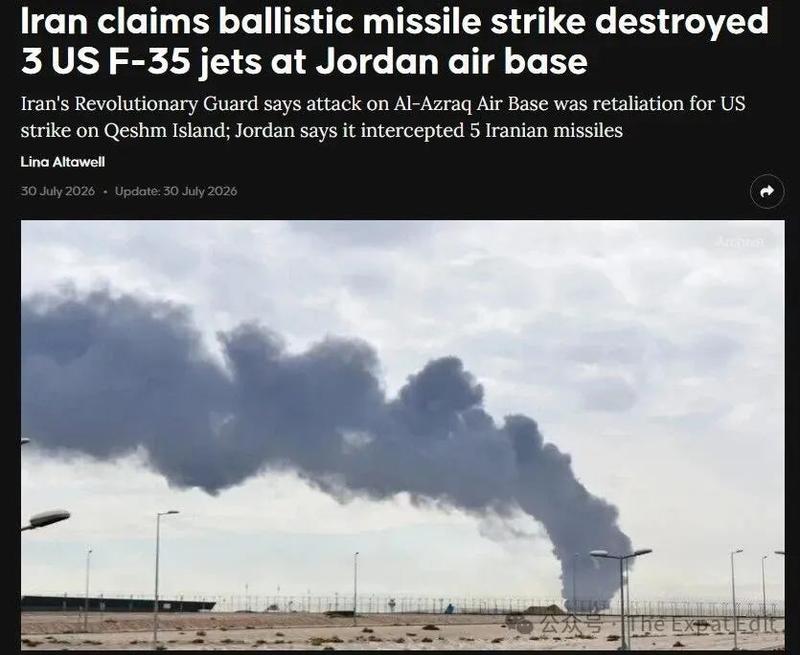
Iran says it retaliated against a US-linked base in Jordan and destroyed three F-35 fighter jets. That is a huge claim. It is also the kind of wartime statement that travels much faster than hard evidence. Right now, the most important thing is not choosing a side too quickly. It is separating what has been claimed, what has been visually suggested, and what still has not been independently confirmed.
What Iran Says Happened
Thanks for reading Silk & Steel! Subscribe for free to receive new posts and support my work.
According to the Iranian Revolutionary Guard, the strike came after a US air raid allegedly launched from regional bases hit Qeshm Island at dawn, killing three people and injuring two children. Iran says it responded later that morning with several ballistic missiles aimed at the US base in Azraq, Jordan. Its version of events is dramatic: three F-35s destroyed, three more aircraft heavily damaged, and multiple officers, technicians, and maintenance staff killed.
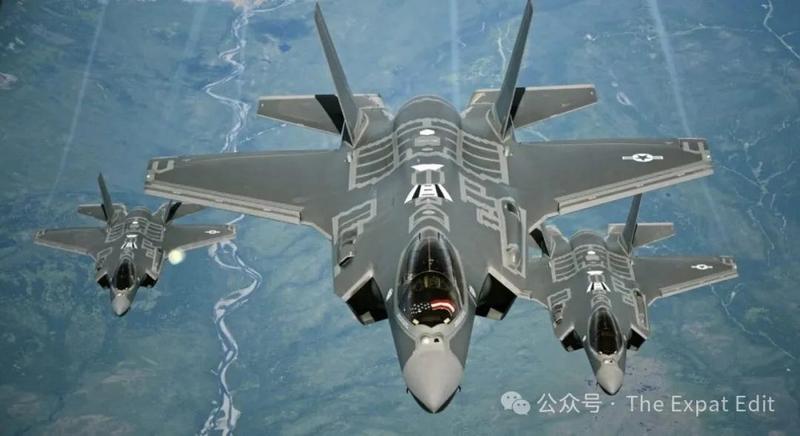
That framing matters. Iran is not just claiming a successful retaliatory strike. It is claiming a politically symbolic one. The F-35 is one of America’s most advanced and expensive aircraft, so saying you destroyed three of them on the ground sends a message far beyond the battlefield.
What Evidence Exists So Far
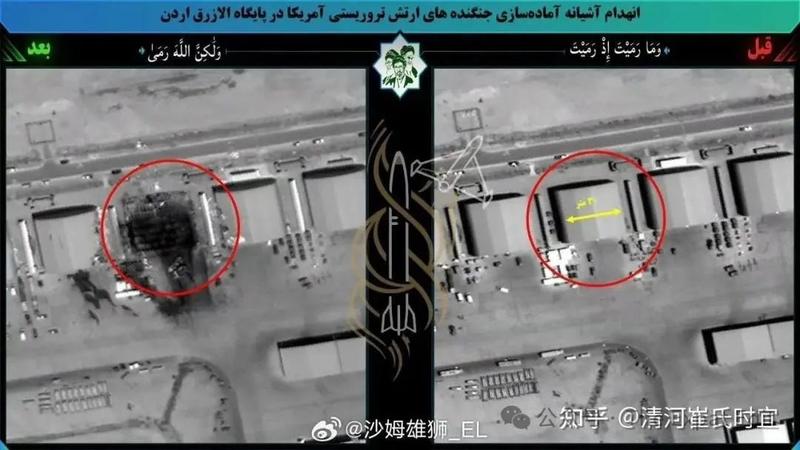
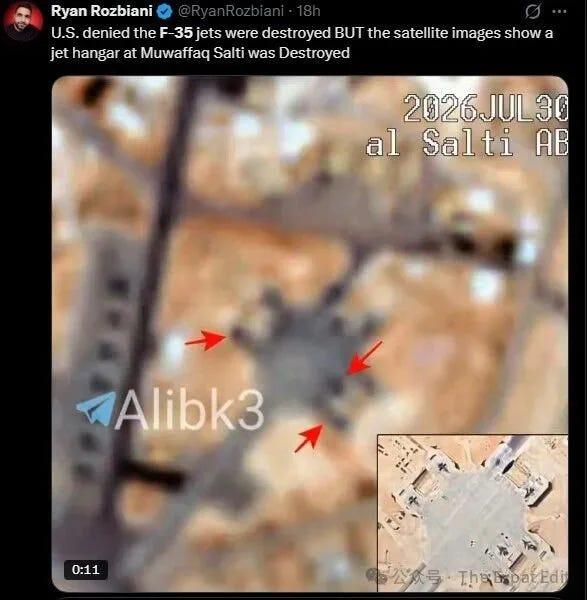
The current evidence is messy. Low resolution satellite images circulating online appear to show visible burn marks and possible damage at Muwaffaq Salti Air Base, also known as Al Azraq. Some images seem to show a destroyed hangar or maintenance area. Other images suggest a strike hit a parking or shelter area with notable scorch marks.
But here is the catch: damage to a base does not automatically prove three F-35s were destroyed. Burn marks can indicate a successful hit without telling us exactly what was hit. A hangar can be damaged without confirming which aircraft, if any, were inside. In short, something may well have been struck. The leap from that to “three F-35s destroyed” is still unproven.
In wartime, the first viral version is usually the loudest, not the most complete.
Why People Are Taking the Claim Seriously Anyway
On Chinese platforms like Zhihu, many commenters are not fully endorsing Iran’s numbers, but they are also not dismissing the strike outright. The tone is telling. A lot of users are basically saying: wait for better satellite imagery, but it looks like something real was hit. That is already significant.
Part of that skepticism toward official denials comes from recent reporting. Some Chinese commenters referenced earlier reports from major US outlets that acknowledged Iranian missile strikes had previously damaged aircraft and facilities at Jordanian bases. That history makes it easier for people to believe that another accurate strike could have happened, even if the exact claim about three F-35s remains uncertain.
There is also a basic military point here. Hitting a stealth fighter parked on a tarmac or inside a shelter is very different from shooting one down in the air. Even advanced aircraft are vulnerable on the ground if the missiles get through.
The Political Context Matters
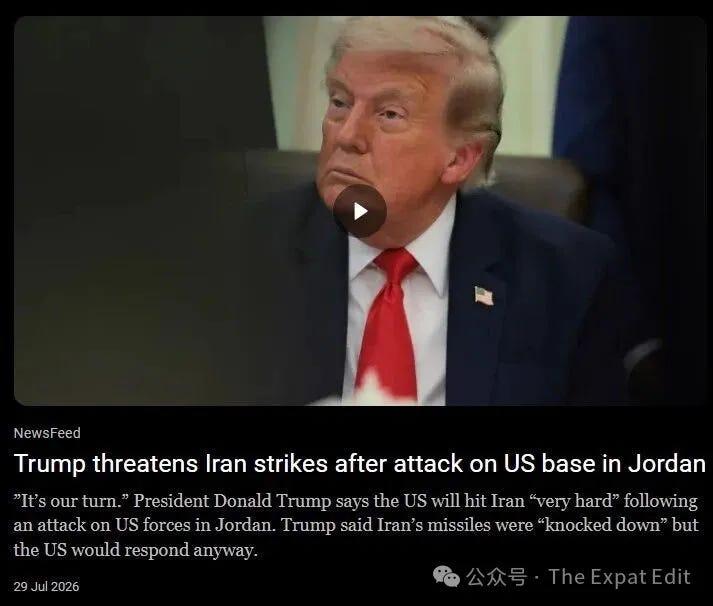
This strike did not happen in a vacuum. Just before it, Trump publicly threatened Iran with a hard response after an earlier attack on US forces in Jordan. That made the atmosphere much more combustible. Once public threats are made, both sides become more invested in projecting strength, and that usually means competing narratives arrive before neutral verification does.
For Iran, saying it hit F-35s tells domestic and regional audiences that retaliation was real and costly. For the US and Jordan, downplaying the scale of the damage would be equally understandable. That does not tell us who is lying. It tells us why the information war is intense.
So What Is Worth Watching Next?
The next real test is higher resolution satellite imagery. If clearer commercial images emerge showing the exact number of hit shelters, burn patterns, wreckage outlines, or cleanup operations, analysts will have a much better sense of whether aircraft were actually destroyed and how many.
Also worth watching is whether the US quietly repositions aircraft, changes base operations, or avoids showing certain assets in public imagery. In modern conflicts, official statements are only one layer. Open-source clues often tell the fuller story over time.
Our read? Iran’s exact headline claim is still unverified, but the available signs suggest this was probably not a complete fabrication either. A strike appears to have landed. The real question is not whether something happened. It is how much happened.
Thanks for reading Silk & Steel! Subscribe for free to receive new posts and support my work.
Curated and translated from Zhihu, China's largest Q&A platform.
Newsletter
Subscribe to The Expat Edit
Chinese perspectives on global events, wars, and great power competition. Curated from Zhihu.
Free. No spam. View on Substack →