


Flydubai flight FZ1073, a Boeing 737 MAX carrying 174 passengers from Dubai to Tel Aviv, 166 of them Israeli, made an abrupt turn over Jordan on Tuesday morning, transmitted the international code for unlawful interference, dropped some 20,000 feet and landed at Tabuk in northwestern Saudi Arabia. According to Prime Minister Benjamin Netanyahu, the first officer stabbed the captain and tried to crash the aircraft before an Israeli passenger and a crew member overpowered him and a second flight crew travelling in the cabin took the controls. Everyone survived. The suspect is in Saudi custody. Israel’s defence minister has called it an attempted jihadist terror attack; Flydubai says the motive is unclear and an investigation is under way.
Seven months into a war with Iran that has neither ended nor properly restarted, Israel does not need to be told what a planeload of its citizens diving toward the Jordanian desert looks like. Within hours of FZ1073’s landing, Defence Minister Israel Katz had declared the incident a thwarted jihadist attack, praised the “brave Israelis” who stormed the cockpit and, more pointedly, tied the episode to intelligence-based warnings he and Netanyahu had issued in recent days. Netanyahu, in a video statement, said he had ordered the security services to prepare for other potential threats. Transport Minister Miri Regev demanded that Flydubai be suspended from Israeli airspace. The opposition leader Yair Lapid, in a line that tells you where Israeli politics is four weeks before an election, accused the prime minister of trying to hitch a ride on heroes who had prevented a disaster he had not been prepared for.
Thanks for reading Silk & Steel! Subscribe for free to receive new posts and support my work.
That is the frame the story arrived in. It is also the frame in which China’s internet received it, once it had got past a false start. On Zhihu, the question-and-answer site where China’s white-collar class argues about the world, the thread that carried the story to the top of the platform still bears its first-hour title, which asks about a violent quarrel between a Russian captain and a Ukrainian first officer. That version came from early Israeli reports of a cockpit “brawl” and a garbled detail about crew nationalities, and it collapsed within hours. The Russian and the Ukrainian turned out to be the off-duty pilots who landed the plane. The captain, first described as Emirati, was named by Netanyahu as Smit Machchhar, an Indian national. The first officer is Omani.
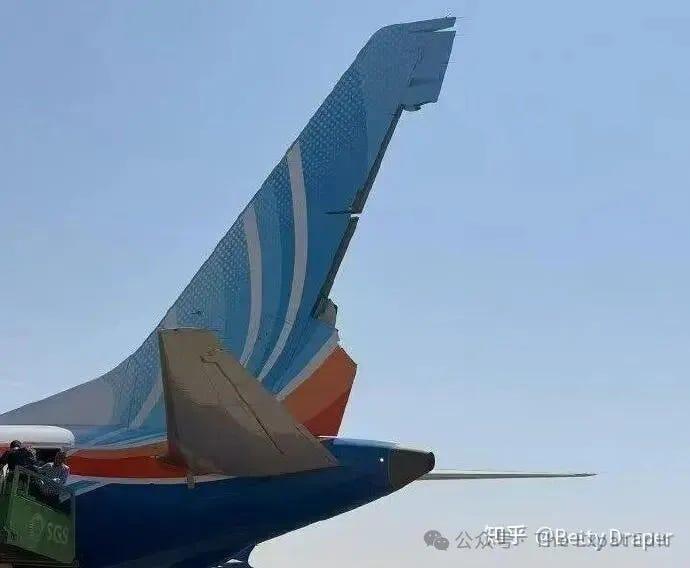
The most-followed answer, from a military-hardware blogger who posts as 从IS-3到腾云工程 and who edited a single post through the morning as reports came in, did the sober work. He pulled the flight-tracking profile and noted the aircraft had fallen from 34,000 feet to around 14,000 with its ground speed spiking past 600 knots, numbers that in a 737 mean the cockpit was not in anyone’s control for more than a moment. He posted photographs from Tabuk: the jet on a desert apron with airstairs and a crowd, and a close-up of the tail with what appeared to be a section of rudder missing. A little longer, he wrote, and the aircraft would have been unrecoverable even without a stall. Another widely read answer laid out the timeline of transponder codes, 7700 for a general emergency, then seven minutes later 7500, the hijack code that every air-traffic controller and air force along the route treats as a declaration that the aircraft has been taken.
But the thread’s centre of gravity was not the aeronautics. It was the question of what the attack would be used for. Chinese netizens have spent seven months watching this war the way one watches weather over someone else’s ocean: the American and Israeli strikes that killed Iran’s supreme leader in February, the Pakistani-brokered ceasefire in April, the memorandum signed in June, the collapse in July when Iran began seizing ships in the Strait of Hormuz, the Houthi front in Yemen, the summer of drone alerts across the Gulf. Last week Iran floated a one-week truce framework through Qatar. Donald Trump called it an offer of desperation and rejected it, then said on Tuesday that the war would end very soon, without saying how. Into that limbo drops an Omani pilot with a knife and a cabin full of Israelis.
One answer relayed reports that Israeli officials suspected Iranian involvement and were weighing retaliation against Iranian cities; another said Saudi commenters online had regretted that the attack failed. Neither claim could be verified, and no Israeli official has publicly named a sponsor. A commenter offered a different explanation for how a planeful of civilians disarmed a man with a knife and handed a 737 to two off-duty pilots: Israel-bound flights, he guessed, carry plainclothes security, and this was their work. That, too, is a guess. What the thread agreed on, across every faction, was that the significance of FZ1073 would be decided in Jerusalem and Washington rather than in a Saudi interrogation room, and that Katz’s language about intelligence warnings was the thing to watch.
“Into that limbo drops an Omani pilot with a knife and a cabin full of Israelis.”
The Chinese reading is not paranoid so much as practised. Netanyahu heads to the polls on October 27 with his bloc and Gadi Eisenkot’s tied at 52 seats apiece in the latest Kan 11 survey, neither within reach of a majority, and with the third anniversary of October 7 falling next week. A prime minister in that position who has spent the summer warning of enemies, and whose defence minister now says those warnings were intelligence-based, has every incentive to let an attack on Israeli civilians carry the weight of a case. Whether it becomes one depends on what the Saudis get out of the man in custody and whether anything connects him to a state. As of Tuesday night, the only official words on motive from the airline were that it is not known.
For foreigners living in China, most of whom route through Dubai or Doha to get almost anywhere west, the story has a practical edge that the geopolitics obscures. Flydubai and its parent Emirates are among the most common connections between Chinese cities and Europe, Africa and the Middle East. The Dubai-Tel Aviv route, which only opened after the 2020 normalisation between the UAE and Israel, has been one of the airline’s political showpieces, and Netanyahu spoke to the UAE’s president on Tuesday evening about aviation security. Regev’s argument that Oman, which has no diplomatic relations with Israel, should never have supplied a cockpit crew member on that route is the kind of rule that will be written into more agreements before this is over. If you fly the Gulf carriers, expect more questions at the gate.
Somewhere in the middle of all this is a man named Smit Machchhar who was stabbed by the colleague sitting eighteen inches to his right and kept fighting him until the door opened. The Zhihu thread, for all its geopolitics, kept returning to him, and to the strangers in economy who did not know when they boarded that their morning would include a cockpit. Nobody has yet said what the first officer wanted. Everyone, in Jerusalem and Tehran and on the Chinese internet, has already decided what it means.
Thanks for reading Silk & Steel! Subscribe for free to receive new posts and support my work.
Curated and translated from Zhihu, China's largest Q&A platform.
Newsletter
Subscribe to The Expat Edit
Chinese perspectives on global events, wars, and great power competition. Curated from Zhihu.
Free. No spam. View on Substack →