
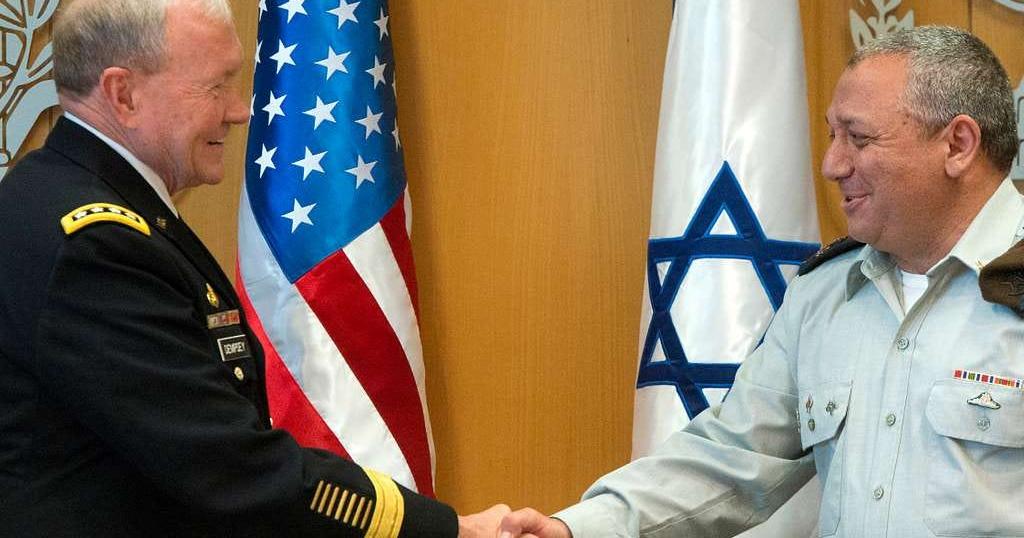
On October 27, Israelis will go to the polls, and if the surveys hold, Benjamin Netanyahu will lose. The likely beneficiary is Gadi Eisenkot, the former army chief of staff whose centrist coalition has led the field for months. The moment the result is called, a reassuring sound will roll across Western capitals: a long, collective sigh of relief. Editorial pages will declare the fever broken. Foreign ministers will speak of a reset. The phrase “the old Israel” will do a great deal of work. Everyone who spent two years defending the indefensible will be handed a clean way out, and they will take it.

They should not. Nothing about Eisenkot’s record or his platform suggests that the project he inherits will change. What will change is the vocabulary.
The author of the doctrine
Eisenkot is presented, at home and abroad, as the reasonable man. It is worth remembering what he is known for. In 2008, as head of Israel’s Northern Command, he gave the world the Dahiya doctrine, named for the Beirut suburb that Israeli aircraft flattened two years earlier. The idea was simple and openly stated: deterrence is achieved by inflicting damage on civilian areas out of all proportion to the threat they pose, so that the cost of hosting an enemy becomes unbearable. Every apartment block reduced to concrete dust in southern Beirut since then is a footnote to his theory.

This is not a man who disagrees with how the war in Gaza was fought. He has said nothing to suggest he does. His difference with Netanyahu is not moral but managerial. He believes Israel has mismanaged its image, that the ministers Bezalel Smotrich and Itamar Ben-Gvir have said things out loud that should have been done quietly, and that a country dependent on Western patience cannot afford to provoke Western disgust. His remedy is to change the speakers, not the script.
Ten kilometers to eight
Consider what he actually proposes. In southern Lebanon, where Netanyahu insists Israel will not retreat an inch, Eisenkot suggests pulling back from ten kilometers to eight. In Syria, he says Israel will hold Mount Hermon no matter what. This is the highest point in the country, its watershed, land seized in the confusion of the Assad regime’s fall. He is willing to withdraw troops from some other captured ground, but only into a buffer arrangement that lets them return whenever Israel judges the buffer violated. The stated reason is manpower, not principle. Israel is stretched thin, and he is husbanding soldiers.
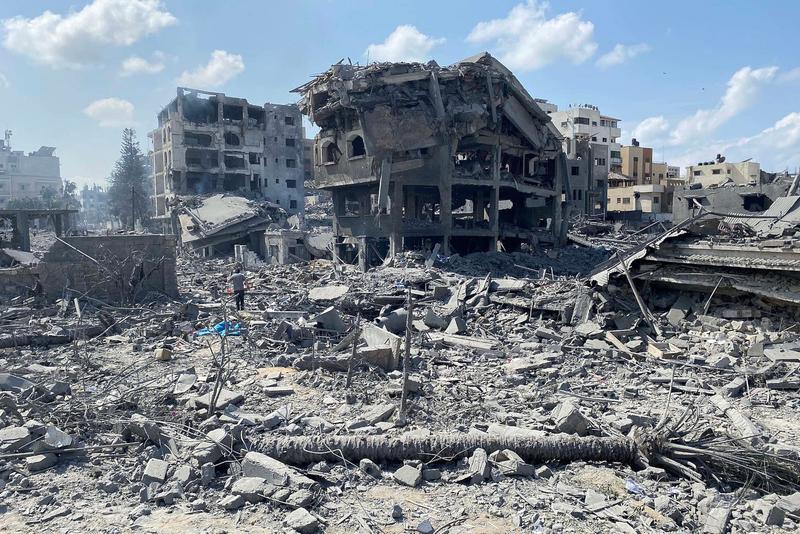
In Gaza, he speaks of the need to “give them something.” The something is not sovereignty or return or reconstruction. It is a percentage. Israel controls roughly seventy percent of the strip; under Eisenkot it might control sixty, maybe less. In any case, two million people would remain compressed on a rubble field, and the reduction will be reported as a significant concession.
On Iran, his instincts are more cautious than those of Netanyahu and the defense minister, Israel Katz, who favor bombing energy infrastructure. Eisenkot understands that such strikes would enrage Washington, provoke retaliation against the Gulf’s oil facilities, and finish what remains of Israel’s standing abroad. His alternative is to establish what he calls kill zones around Iran’s nuclear sites, air-patrolled areas in which anything that moves is destroyed, on the model of the no-fly zones imposed on Iraq after 1991. Paired with an expanded program of sabotage and assassination, this amounts to a permanent, low-visibility war conducted in a way the world can more easily ignore. It is smarter than Netanyahu’s approach. It is certainly not peace.
There is no anti-war Israel to elect
It helps to be clear about the field. Naftali Bennett, once seen as the alternative, has spent the campaign trying to outflank Netanyahu on the right and has faded for it. The one party that could plausibly be called anti-war, the Democrats, polls at one or two percent. Whatever “left” and “right” mean in Israeli domestic politics, they do not describe positions on the wars. On Lebanon, on Gaza, on Iran, the mainstream spectrum runs from maximalist to slightly less maximalist. An Israeli voter cannot choose to end the project, but can only choose its pace and manner.
That is why the coming sigh of relief is dangerous. Two years of the argument that this was all one man’s doing, that Netanyahu and his extremist coalition partners hijacked an otherwise decent state, will appear to be vindicated by his departure. The theory was always convenient. It allowed Israel’s supporters to condemn the government without condemning the Zionist project, and it allowed Israel’s critics to imagine that an election could fix what an election cannot. Netanyahu did not drag an unwilling public into Gaza and Lebanon. He represented it. Polling throughout the war has shown broad Israeli support for the campaign and little appetite for the concessions that would end it. A new prime minister will govern the same electorate.
What the sigh will cost
The pattern is easy to predict because it has run before. A slight increase in the trickle of humanitarian aid will be hailed as a humanitarian turn and a substantive concession. A two-kilometer pullback will be described as de-escalation. Smotrich and Ben-Gvir will be gone, and their absence will be treated as proof that the state has been cleansed of the impulses they voiced. Governments that found it painful to defend Israel under Netanyahu will find it easy again, and the pressure that had begun to build on Western governments will bleed away into a sense that the problem has resolved itself.
It will not have resolved itself. It will have found a spokesman who understands that the world was never objecting to the policy so much as to the tone. Eisenkot’s wager is that he can preserve the substance of Israeli power in Gaza, Lebanon, Syria, and against Iran by removing the language that made it hard to look at. If the West rewards that wager, it will have told him he was right.
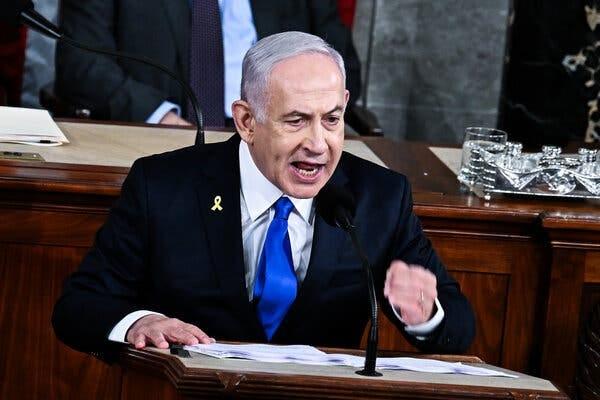
There is a case, cynical but not unserious, that the region’s adversaries would prefer Netanyahu to stay. A leader who cannot stop talking about what he is doing is easier to isolate than one who does it in silence. Iranian officials have made similar remarks about Trump, whom they see as dismantling American influence faster than any rival could. The logic applies here. Netanyahu has been Israel’s most effective diplomatic liability in a generation. Eisenkot would end that and change nothing else.
The test for anyone who claims to care about how this ends is simple. Watch what happens to the land, the borders, and the bombing, not what happens to the names. If the only thing that changes in November is who gives the press conference, then nothing has changed, and the applause will have been for a costume.
Listen to CATR on:
Newsletter
Subscribe to Conversations Among the Ruins
Long-form geopolitics and the decline of the unipolar world order. New episodes straight to your inbox.
Free. No spam. View on Substack →
Reader-funded
This is independent, long-form work.
Conversations Among the Ruins is written, not repackaged, and it stays free because readers choose to fund it. If it is worth your time, a paid subscription or a one-off tip keeps it going.
Become a supporter →