
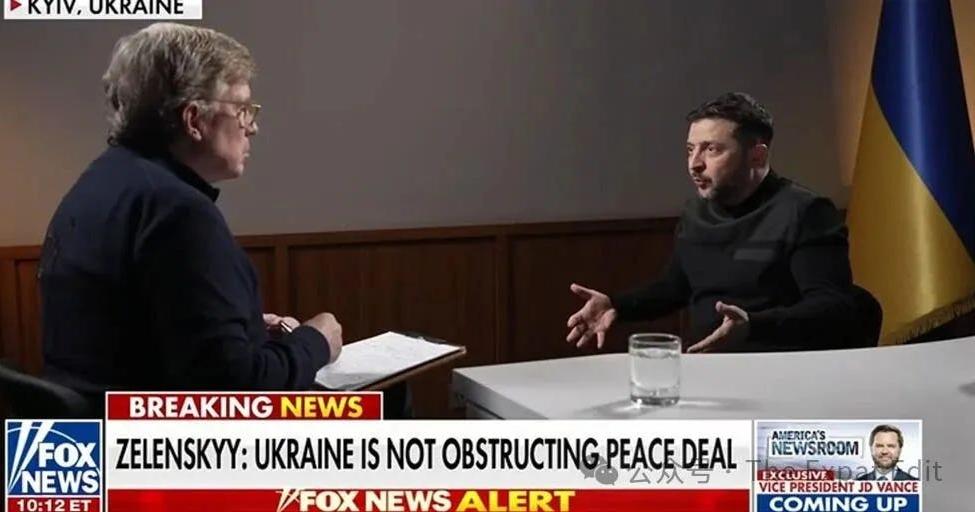
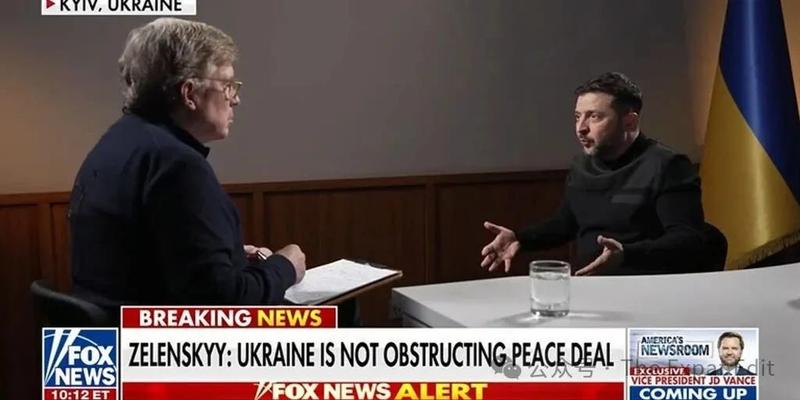
Asked on Fox News whether he would accept a peace deal that froze the war where it stands and left Ukraine with 75 percent or more of its territory, Volodymyr Zelensky answered with a single word: yes. Within a day, the Kremlin said Vladimir Putin had told the American envoy Steve Witkoff that Russia was ready to resume three-way talks with Washington and Kyiv in mid-November. In China, where the war has been followed with a mixture of detachment and schadenfreude, the two statements landed as the clearest sign yet that the fighting is winding down. The question people are asking is not whether, but why now, and who decided.
For anyone living in China, the war in Ukraine has been a background hum for four and a half years: a topic that surfaces at dinner with Chinese colleagues, usually with a shrug and a comment about how it is really a fight between Washington and Moscow. That framing is now getting its vindication, at least in the eyes of Chinese commentators. On Zhihu, the question-and-answer site that functions as the country’s closest thing to a public intellectual forum, the question of why everyone suddenly softened drew a long, sharply written answer from Niu Tanqin, a veteran media commentator whose geopolitical essays reach a wide audience, and a cluster of shorter, more combative replies.
Niu Tanqin’s argument begins with the texture of the moment itself. The Fox host Brian Kilmeade asked a hypothetical; Zelensky did not push the framework away. He did not say territory was non-negotiable. He called a freeze “the realistic way” to end the war, then went on social media to insist that Ukraine was not losing the war, only losing lives and time. To Niu, the second statement is the more revealing one. A man who in October 2022 signed a decree ruling out any negotiation while Putin remained in office is now accepting the premise of a deal that leaves a quarter of his country on the other side of the line.
Why? The answer, in Niu’s telling, has three layers, and all of them sit outside Ukraine. The first and heaviest is Washington. Over the past month Donald Trump has said publicly that he is “not a fan” of Zelensky, that the Ukrainian leader does not really want to solve the problem, and, most pointedly, that it may be time for someone else to negotiate on Ukraine’s behalf. Vice President J.D. Vance has said Ukraine is not an American ally and should not join NATO. Niu reads that progression the way a Chinese office worker reads a boss: being told you are not liked is a personal matter; being told publicly that you should go is a survival matter.
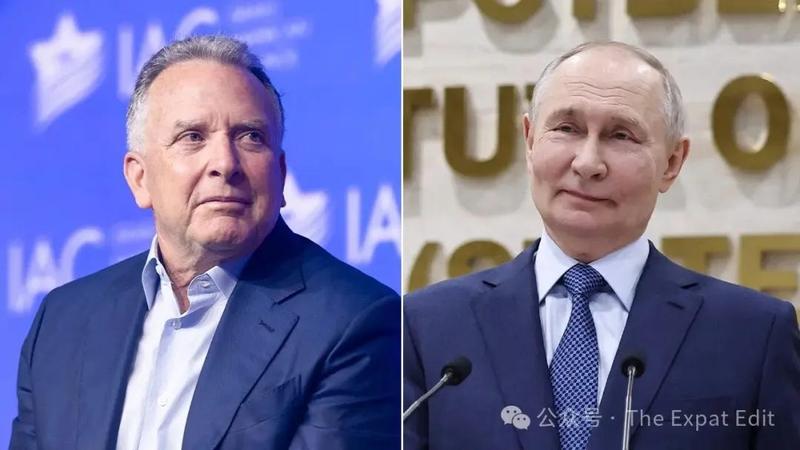
The pressure, he argues, has not been rhetorical. He cites reports that Patriot interceptor deliveries already paid for by NATO allies have been held up by the Pentagon, that American missile-warning intelligence has been curtailed, and, citing American media, that Elon Musk ordered Starlink service for Ukrainian forces throttled, hobbling the drone campaigns that had been Ukraine’s most effective weapon against Russian refineries. These are claims Chinese commentators are relaying from Western reporting rather than verifying themselves, and Niu’s own essay drifts at one point into dark speculation about what else Washington might do to an uncooperative client, which other users mocked. But the core picture he draws is one Chinese readers find intuitive: a dependent state whose patron has stopped paying cannot keep fighting, whatever its president says.
The second layer is the battlefield. Niu describes a night in mid-October when Russia fired 39 ballistic and cruise missiles plus 128 drones and Ukrainian air defense watched them land, because the interceptors had run out. Zelensky himself has called Russian ballistic missiles his country’s biggest challenge. Once the sky is no longer shielded, Niu writes, every retreat on the ground stops being a tactical choice and becomes a matter of time.

The third layer is Europe, and here the Zhihu discussion turns to electoral arithmetic with the relish of people who do not have to vote in it. Marine Le Pen has said France has done what it can and cannot keep funding Ukraine. Alice Weidel of Germany’s AfD has called continued support for “a war that has already been lost” a mistake, and argued that any settlement must account for Russia’s security interests too; her party has won in eastern state elections and leads national polls. Niu’s image for this is a tide going out: first the knees, then the ankles, and by the time you notice, the shore is far away. Zelensky’s nightmare, he suggests, is not that Europe cuts him off tomorrow but that he cannot know which morning the leaders promising to stand with him will have been voted out.
A second widely read answer, from a user writing under the handle Demon Hunter, strips the question down further: it is about money. By any accounting, he writes, Ukraine’s public debt now exceeds its annual output; the civilian state runs on borrowed funds, and even civil servants’ salaries are paid with European money. He cites figures putting Ukraine’s total debt at about 215 billion dollars as of late August, with the European Union, at roughly 84 billion, now its largest single creditor, and notes that official creditors have agreed to suspend repayments due from February 2026 until 2030. His conclusion is blunt: a country that cannot repay its 2026 debts cannot be funded through 2027, and the voters of France and Germany know it. Chinese readers, who have watched their own government’s reluctance to hand out money abroad, find this argument easy to accept; it should be read as one commentator’s framing of the numbers rather than an audited balance sheet.
“Land to Russia, resources to America, debt to Europe, glory to Ukraine.”
That line, which Niu quotes as a popular jibe, captures the prevailing mood on the thread: not sympathy for Moscow so much as a weary satisfaction at seeing Western promises come due. Niu’s most pointed passage is historical. In the spring of 2022, he recalls, negotiators in Istanbul discussed a deal under which Ukraine would renounce NATO membership and Russia would withdraw to the pre-invasion line, before, as a senior Ukrainian lawmaker later acknowledged, Western encouragement to keep fighting closed that door. The door shut quietly, Niu writes; by the time you looked back, the wall had been built. Today’s “realistic way,” translated into plain language, means: we once had a cheaper way to end this, and we missed it.
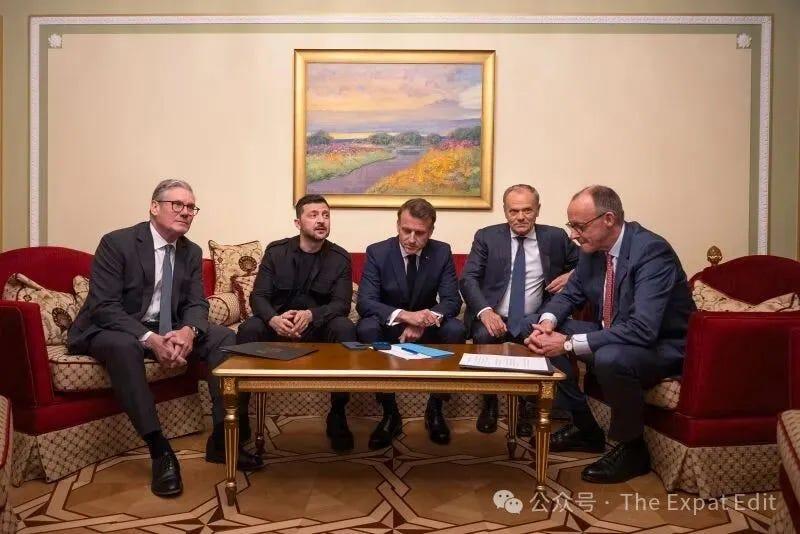
Not everyone on the thread buys the surrender narrative. One of the more combative replies argues that Zelensky said nothing new at all: a freeze along the current line, real security guarantees and no legal recognition of lost territory has been Kyiv’s position for a year, and he restated it on Fox precisely to avoid being labeled the obstacle to peace, knowing Putin would reject the terms. This user points out that Russia holds something under 20 percent of Ukraine, so a 75 percent framework costs Kyiv nothing it has not already lost, and bristles at the idea that the man who survived February 2022 and the Oval Office shouting match would fold now. Another, smaller strand of opinion is more cynical about Washington than about anyone: the sudden peace posture, this user suggests, has less to do with Ukraine than with American midterm elections and the price of oil, with every party being asked to look conciliatory until November.
What unites the camps is a conviction that the decisive conversations are happening in Washington and the capitals of Europe, not in Kyiv, and that the Russian side has been waiting for exactly this. Putin’s offer to talk in mid-November cost him nothing. The Zhihu crowd, which has been predicting this ending since 2022, is treating it less as news than as a verdict. Whether they are right will be tested in a few weeks, at a table Ukraine will sit at, but did not set.
Curated and translated from Zhihu, China's largest Q&A platform.
Newsletter
Subscribe to The Expat Edit
Chinese perspectives on global events, wars, and great power competition. Curated from Zhihu.
Free. No spam. View on Substack →