
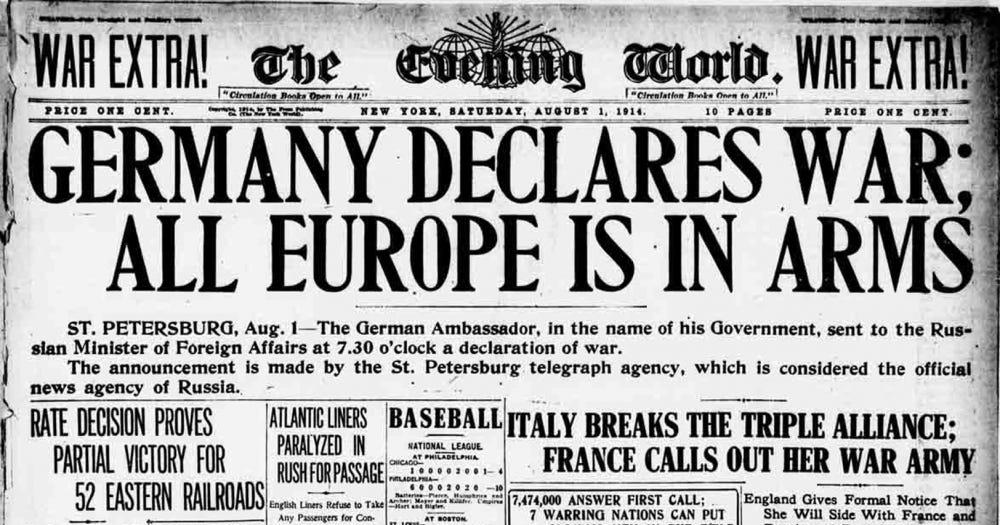
There are moments in public life when politics no longer feels like a contest of choices. It feels like momentum. Events gather force, leaders become prisoners of their own rhetoric, and even those at the center of power appear less like decision makers than passengers on a vessel already aimed at danger.
That may be the most demoralizing feature of the present moment. It is not simply that the world faces grave risks. It is that many people increasingly suspect those risks are no longer being managed by rational calculation. The machinery has been set in motion. The arguments have hardened. The exits are narrowing. And what remains is an unnerving sense that catastrophe may arrive not because it was intended, but because too many actors have convinced themselves they cannot turn back.
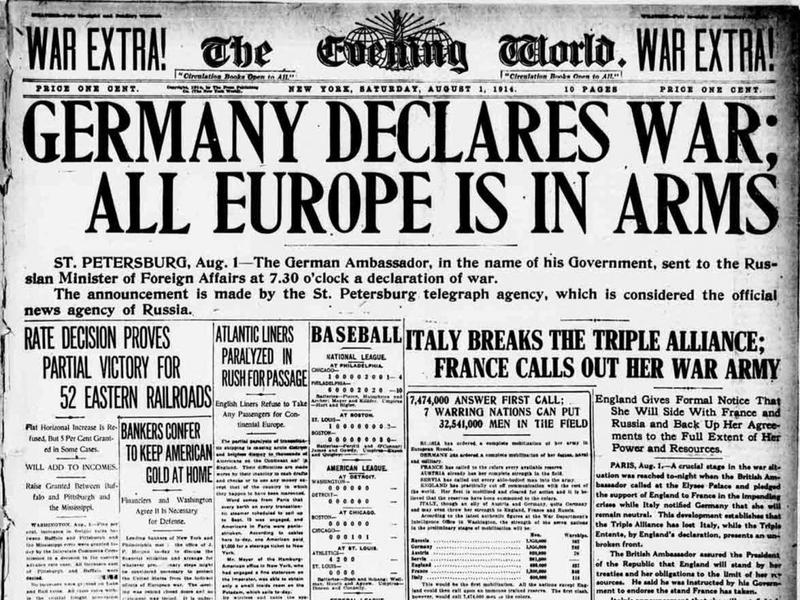
History offers more than one example of this kind of drift. A triggering event occurs, alliances activate, prestige becomes inseparable from escalation, and what might once have been contained becomes impossible to stop. The result is often not triumph for anyone, but ruin for nearly everyone. The lesson is as old as modern statecraft: once leaders begin treating retreat as more dangerous than disaster, disaster becomes much more likely.
That is why so much public discussion now carries a note of despair. People can see the iceberg. They can describe it in detail. They can warn about the speed, the trajectory, and the consequences. Yet the ship continues forward. At some point, repeated warnings begin to feel less like civic engagement than ritual. Citizens talk, analysts explain, commentators plead, and still the course holds. Cynicism flourishes in precisely this environment, not because people no longer care, but because they care and see no evidence that caring matters.
This is not merely a political problem. It is a psychological one. A society that loses confidence in the capacity of institutions to correct course begins to fray from within. Public reasoning gives way to fatalism. Serious debate is displaced by exhausted irony. Even the act of paying attention can begin to feel corrosive, as though informed citizenship were becoming a form of self-harm. When every headline appears to confirm that no responsible authority is in command, the temptation is to turn away entirely, to retreat into private life, distraction, entertainment, anything less punishing than the spectacle of preventable disorder.
And yet resignation carries its own danger. If a catastrophe cannot be prevented, the struggle over how it will be understood becomes even more important.
This is an unglamorous task, but it may be one of the few that still matters. In periods of gathering crisis, a clear explanation is not a luxury. It is preparation. If a political order stumbles into disaster, people will need to know why it happened, who made it more likely, what illusions sustained it, and what alternatives were ignored. Without that understanding, societies do what frightened societies often do: they lash out blindly, misidentify causes, elevate opportunists, and compound the original failure with new ones.
The day after a crisis is often shaped by the stories available when it arrives. If those stories are shallow, manipulative, or false, the aftermath can be even more destructive than the event itself. But if enough people understand the real structure of the breakdown, there remains some chance, however narrow, of choosing better from the wreckage.
That is why explanation matters even when influence seems remote. It is not always possible to stop the collision. It may still be possible to prevent the survivors from learning the wrong lesson.
This distinction matters because there is a tendency, especially in dark times, to imagine those in power as omnipotent. Their reach appears total. Their motives appear coordinated. Their fallback plans appear limitless. In that frame of mind, it is easy to picture elites insulated from the consequences of the crises they help create, protected by wealth, private infrastructure, and the hard shell of indifference. Ordinary people worry about prices, jobs, food, stability, and war. The powerful, it is said, worry only about preserving themselves.
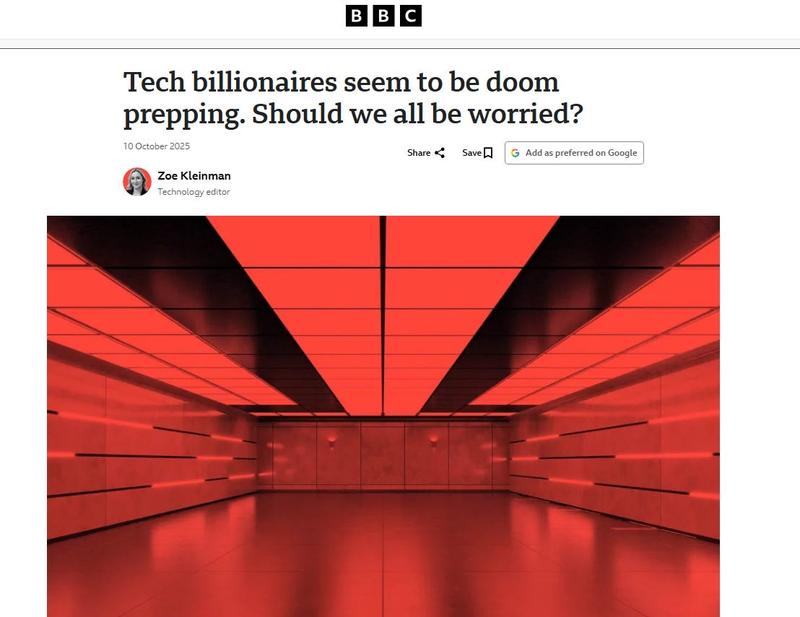
There is some truth in this perception. Wealth can purchase distance from chaos. Power can dull conscience. There are indeed people at the commanding heights of political and financial life who seem astonishingly detached from the social consequences of their decisions. It would be naive to deny that many of them believe they can weather storms that would destroy others.
But it would be a mistake to confuse recklessness with mastery.
The people driving dangerous escalations are not necessarily puppet masters with a coherent plan. More often, they are trapped in a web of arrogance, ideological rigidity, self-deception, and strategic illiteracy. They misread adversaries. They overestimate deterrence. They assume others will yield because yielding seems, from within their own worldview, the only rational choice. Then reality intervenes. Rivals do not comply. Escalation produces counter-escalation. The crisis deepens. And what had been presented as strength is exposed as a series of blunders defended by pride.
This does not make the situation less dangerous. In some ways, it makes it more so. A leadership class that cannot admit error is often more perilous than one rationally pursuing a coldly calculated design. People who know they are winning may compromise. People who suspect they are losing often do something worse. They double down. They widen the conflict. They gamble on dramatic measures because ordinary ones have failed. They begin to speak and act as if the only unacceptable outcome is accountability.
That is when public fear turns truly apocalyptic. If leaders come to believe they cannot retreat without humiliation, legal jeopardy, or political ruin, what limits remain? How far might they go to avoid the reckoning they have earned? In that atmosphere, even previously unthinkable scenarios begin to enter ordinary minds. The fact that such thoughts now occur to so many people is itself a measure of how degraded the political environment has become.

Still, one should resist the seduction of absolute despair. Power is formidable, but it is not invincible. The last several years have made that much clear. Narratives once treated as unquestionable have weakened. Institutions once assumed to be unchallengeable have shown fractures. Figures long presented as indispensable have been seen more plainly, and not to their advantage. The aura of competence surrounding many centers of power has dimmed. That matters. Public disillusionment can be destabilizing, but it can also be clarifying. It strips away mystique. It reduces fear. It reminds societies that those who appear dominant may in fact be brittle.
That brittleness may help explain some of the desperation now visible across the political landscape. A declining order does not surrender gracefully. It tries to preserve itself, often by intensifying the very behaviors that accelerated its decline. It lashes out abroad. It tightens narratives at home. It mistakes coercion for legitimacy. It substitutes force for persuasion. Such systems are dangerous precisely because they are weakening, not because they are secure.
None of this offers comfort in the short term. A brittle order can still inflict immense damage. Decline can be violent. Miscalculation can be irreversible. A leadership class in retreat can drag entire populations into suffering before its failures are fully spent. There is nothing fanciful about fearing that.
But fear alone is not analysis, and fatalism is not wisdom. If the present moment feels like one of narrowing options, then the responsibility is to think as clearly as possible, especially about causes and consequences. Not to romanticize the people in charge. Not to imagine them as omniscient. Not to deny their power either. Simply to see them plainly.
What lies ahead may indeed be ugly. The shocks may come in succession. Economic dislocation, military escalation, political upheaval, and social breakdown do not arrive neatly separated from one another. They spill across borders and systems. They feed one another. They turn local failures into global ones. Anyone paying attention understands that the range of plausible outcomes has widened in disturbing ways.
Still, the task remains the same: to name what is happening before the crash, to explain it during the crash, and to preserve enough clarity afterward that the next generation is not handed the same script and told it is inevitable.
That, in the end, is the argument against surrendering to cynicism. The point is not to pretend that public discussion alone can halt the machinery of conflict. Often it cannot. The point is that when the impact comes, understanding is one of the few forms of preparedness still available. It is how societies distinguish tragedy from myth. It is how they avoid rewarding the architects of failure with a second chance to explain their own wreckage. It is how they keep catastrophe from becoming doctrine.
We may not be able to stop the ship in time. But we can still refuse to be lied to about why it sank.
Listen to CATR on:
Newsletter
Subscribe to Conversations Among the Ruins
Long-form geopolitics and the decline of the unipolar world order. New episodes straight to your inbox.
Free. No spam. View on Substack →
Reader-funded
This is independent, long-form work.
Conversations Among the Ruins is written, not repackaged, and it stays free because readers choose to fund it. If it is worth your time, a paid subscription or a one-off tip keeps it going.
Become a supporter →