
There are moments in war when the strategic argument gives way to something more basic. Not military logic. Not diplomatic positioning. Not even politics. Simply a question of whether a society still recognizes a line it must not cross.
Ukraine may be approaching such a line now.
For more than two years, the war has been sustained by a simple Western formula: keep the weapons flowing, keep the rhetoric elevated, and keep Ukraine in the field for as long as possible. Publicly, this has been framed as a defense of sovereignty, democracy and the international order. In practice, it has become something darker and more cynical: a proxy strategy with no credible path to victory, no serious peace process, and no visible limit to the human material it is willing to consume.
That reality has already been visible for some time in Ukraine’s forced mobilization campaign. Videos have circulated for months showing military recruiters and police dragging men from sidewalks, cafes, buses and cars. Families plead. Wives and mothers intervene physically. Men are beaten, shoved into vans, and sent into a war that large parts of the political class still describe in the language of honor and duty.
These are not isolated abuses. They are symptoms of exhaustion.
A state does not resort to this kind of coercion when it is confident. It does so when voluntary enlistment has dried up, when losses have become impossible to replace, and when the gap between official rhetoric and lived reality has grown too wide to hide. Forced mobilization is not a sign of national resolve. It is a sign that the social foundation of the war is cracking.
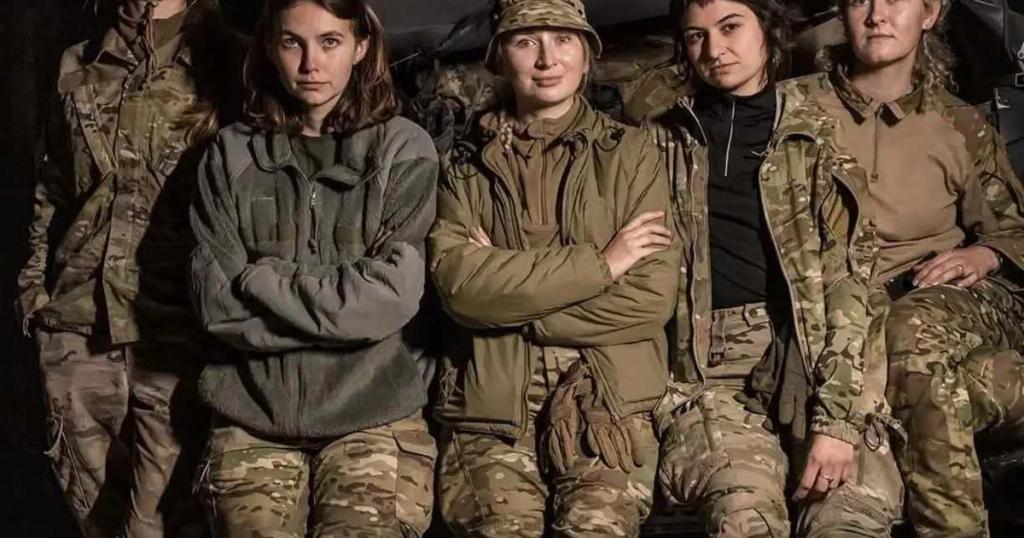
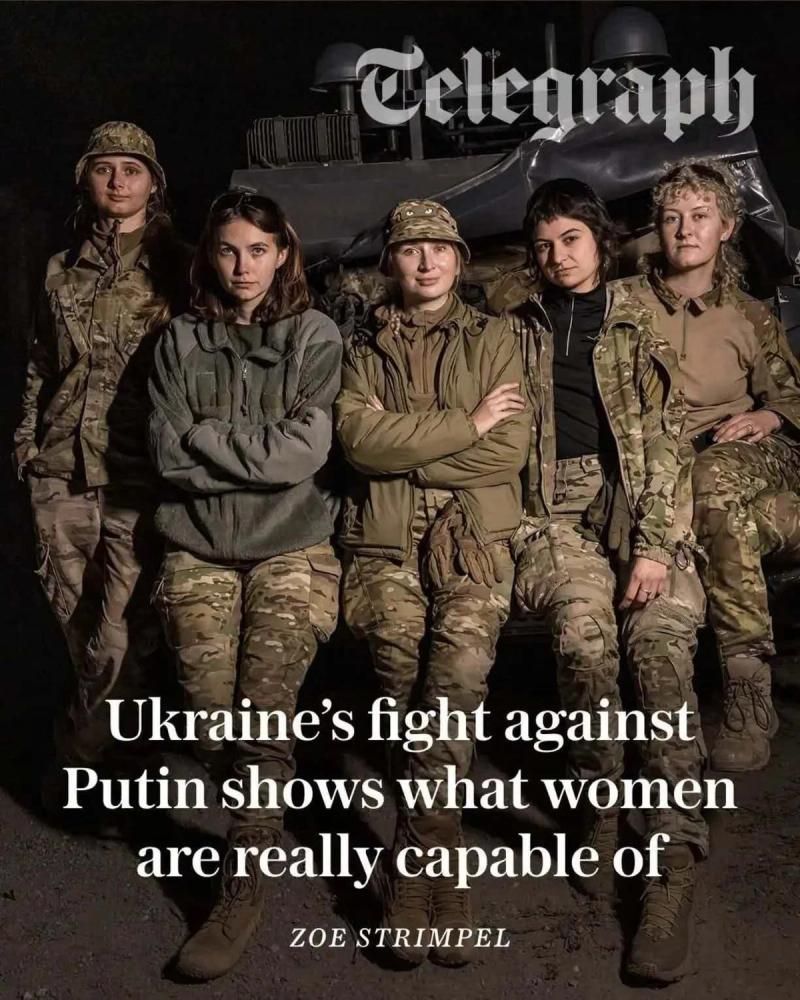
Now there are growing signs that the next step may be coming into view: the mobilization of women.
For months, Western commentary has dressed up this prospect in the approved language of modern liberal virtue. Women can do anything men can do. War service is equality. The battlefield is empowerment. If Ukraine needs more bodies, then asking whether women should be included is presented not as a tragedy, but as a progressive inevitability.
This is moral evasion masquerading as principle.
The issue is not whether women are capable of certain kinds of military service. Of course they are. Women already serve in armed forces around the world. The issue is what it means for a country to reach the point where it must seriously consider sending large numbers of its daughters into an attritional industrial war because so many of its sons are dead, maimed, missing, or in hiding.
That is not emancipation. It is national ruin.
The argument now taking shape in some policy and media circles is revealing in ways its authors may not intend. It does not ask whether the war remains winnable on acceptable terms. It does not ask whether the current course serves Ukraine’s long-term survival. It does not ask whether outside powers that encouraged maximalist aims bear responsibility for the disaster that followed. Instead, it asks how much further the manpower base can be stretched, which categories of exemption can be eliminated, and what new social groups can be fed into the front.
This is how a society speaks when people are no longer being treated as citizens to be defended, but as inputs to be managed.
The cruelty is compounded by the way this logic is sanitized abroad. In Western capitals, the suffering required to sustain the war is kept at arm’s length. The young men seized in Odessa or Kharkov do not appear in strategy papers. The wives pulling desperately at recruiting officers do not feature in speeches about democratic values. The hospitals losing medical staff to mobilization do not fit into triumphalist narratives about resilience. The likely next step, women pushed toward the same machinery, is discussed with the emotional register of a workplace inclusion initiative.
Yet the reality is brutally simple. When a state begins scraping the bottom of its demographic barrel, it is not demonstrating strength. It is advertising collapse.
It is worth pausing to consider how abnormal this is. In the mythology that still surrounds modern war in the West, democratic societies fight reluctantly, mobilize consensually, and preserve some visible distinction between necessary sacrifice and state predation. Whatever the truth of that self-image in earlier conflicts, it is becoming impossible to sustain now. There is nothing democratic about men being hunted through the streets to replenish a depleted front. There is nothing noble about extending that system to women and calling it equality. There is nothing humane about watching it happen from afar while insisting that perseverance itself is the strategy.
The deeper scandal is not only in Kiev. It is in Washington, London, Brussels, and the editorial culture that has helped normalize this trajectory. The Western approach to Ukraine has been trapped for many months in a framework of denial. Denial about the military balance. Denial about the effectiveness of sanctions and the limits of matériel. Denial about Russia’s ability to escalate. Denial about Ukraine’s shrinking manpower pool. Denial, above all, about the meaning of a war effort that must increasingly rely on coercion rather than consent.
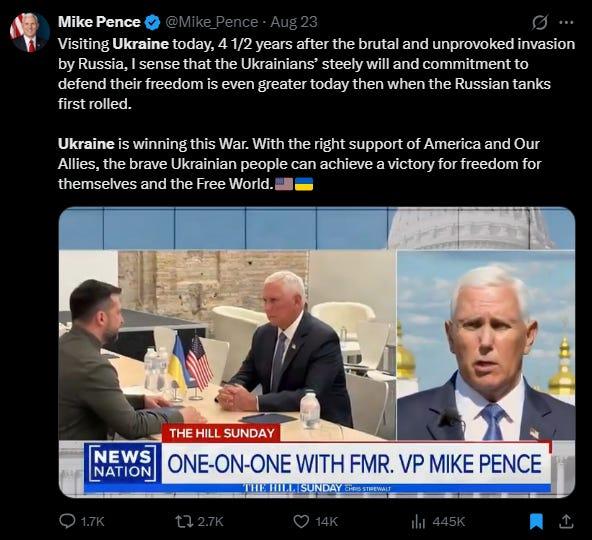
There is a reason this matters beyond Ukraine itself. Proxy wars encourage a particular form of ethical corruption in the outside powers that sponsor them. They allow officials and commentators to speak in elevated abstractions while other people absorb the blood cost. They reward symbolic toughness over prudence. They turn restraint into disloyalty and negotiation into weakness. Most dangerously, they create a political environment in which almost any sacrifice becomes acceptable, provided it is borne by someone else.
That is the point at which strategy decays into moral vacancy.
The possible mobilization of women should force a reckoning because it exposes, in unusually stark form, what the war has become. If a country has reached the stage where its remaining option is to widen compulsory service to women in order to keep an unwinnable war going, then the proper response is not applause. It is horror and disgust at the spectacle of foreign backers and domestic elites preparing to consume yet another layer of Ukrainian society rather than admit that the strategy they supported has reached a dead end.
A country’s daughters are not the final reserve of someone else’s geopolitical fantasy. Please, Ukraine, don’t cross this line.
Listen to CATR on:
Newsletter
Subscribe to Conversations Among the Ruins
Long-form geopolitics and the decline of the unipolar world order. New episodes straight to your inbox.
Free. No spam. View on Substack →
Reader-funded
This is independent, long-form work.
Conversations Among the Ruins is written, not repackaged, and it stays free because readers choose to fund it. If it is worth your time, a paid subscription or a one-off tip keeps it going.
Become a supporter →