
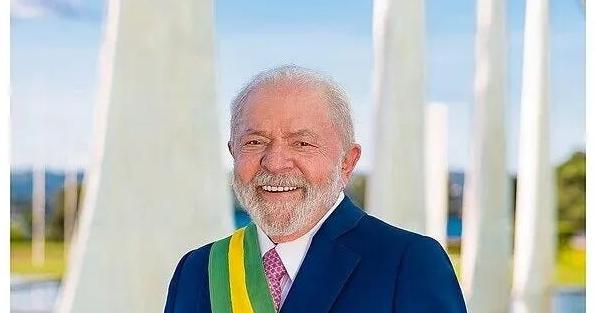
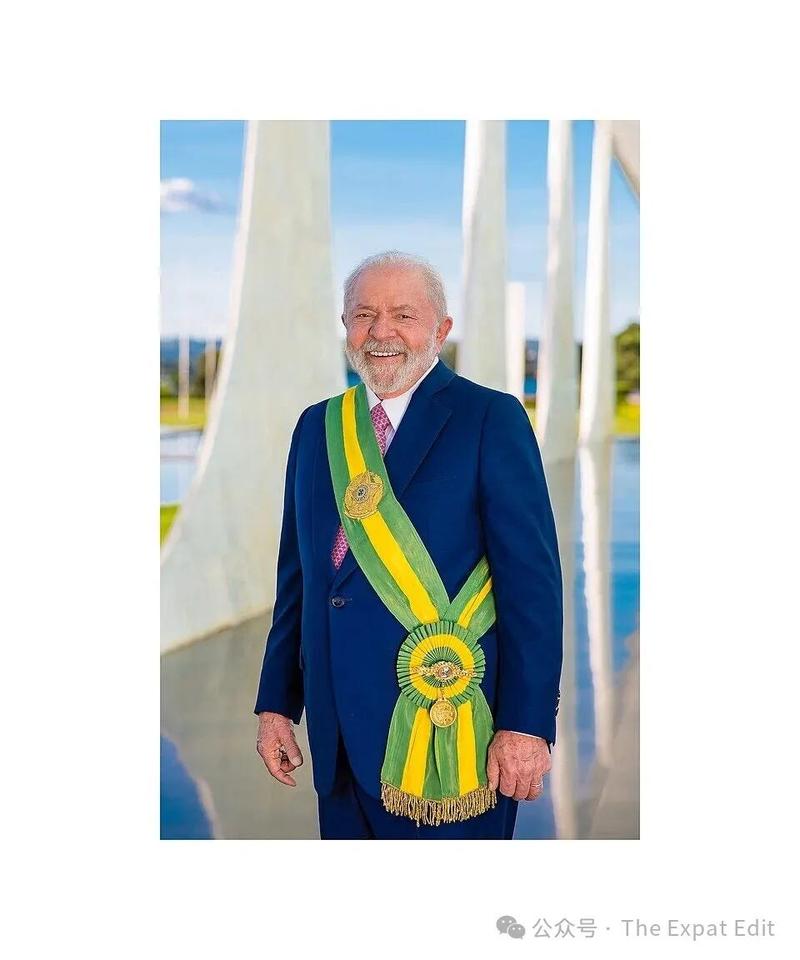
Brazil voted on Sunday and nobody won. Senator Flávio Bolsonaro, son of the convicted and barred former president, took about 47 percent; President Lula took about 45. They meet again on October 25, with the challenger ahead and his party dominant in Congress. In China, where Lula has been treated as a partner against American pressure, the result set off a sharp argument about whether Beijing let him down, and whether it owed him anything in the first place.
On October 1, three days before Brazilians went to the polls, China’s commerce ministry announced a 55 percent tariff on Brazilian beef. On Sunday night, as Lula’s numbers settled two points behind a Bolsonaro, one Chinese commenter decided those two facts were connected. “I will never forgive Trump’s good buddy for stabbing Lula in the back in the last week of the election,” the post read, on Zhihu, the question-and-answer site that serves as China’s upmarket Quora. The tariff, in this telling, gave Brazil’s right a chance to change the subject from its own closeness to Washington. If Brazil cannot count on China while facing American threats, the writer asked, what reason do Brazilians have to keep resisting? It was the thread’s most upvoted answer for a time, and it drew a hundred comments, many of them telling the writer to get a grip.
Whether a beef tariff moved a single vote in Bahia is unknowable, and the claim is speculation. But the anger behind it is real and it has a logic. To a slice of China’s online left, Lula is not just a Brazilian politician. He is the leader of a large country who refused to bow to Washington, absorbed a 50 percent American tariff rather than plead for relief, and kept Brazil inside the BRICS tent while others wobbled. For China to tax his beef in his final week looked, to these commenters, like a great power behaving as a trading partner at the exact moment it should have behaved as the leader of a bloc. One wrote that Lula’s Northeast heartland had drifted right, that the situation was hopeless, and that the only remaining hope was a Bolsonaro scandal before the runoff. The tone was grief, not analysis.
The rebuttal came fast, and it came from people who think China should stop picking favourites in Latin America altogether. A commenter writing as 飞跃本屯 argued that a Bolsonaro in the presidential palace is nothing to fear, because the region’s right wing has a habit of saying one thing and doing another. He recalled that Jair Bolsonaro, Flávio’s father, visited Taiwan as a candidate in 2018 and talked as though confrontation with Beijing were a campaign promise. In office he opened Brazil to Chinese investment, trimmed tariffs and laid the groundwork for the visa-free travel arrangement that Lula eventually signed and took credit for. Right-wingers, in this view, are “genuine villains”: unpleasant to listen to, easy to do business with. The left are harder to deal with because they mean what they say, and what they say includes welfare systems that cannot be cut and a pride that cannot bend to Washington when the tariffs come.

The same commenter gave Lula his due as the most pragmatic of the Latin American left, and offered a detail that explains part of Sunday’s result. When Brazil’s labour inspectorate went after BYD’s factory in Bahia, Lula removed the official leading the investigation to keep Chinese investment flowing. It cost him with the unions, and several commenters traced some of his underperformance on Sunday to union voters who stayed home. The implication was uncomfortable for the sympathetic camp: Lula had already paid a domestic price for being China’s friend, and China had answered with a beef tariff.
The historians on the thread went further and questioned whether Latin America’s left was ever China’s friend at all. One commenter walked through the record. Argentina under Cristina Kirchner, a left-wing icon, hit Chinese goods with anti-dumping duties across a third or more of imports whenever the economy turned, and by 2010 had one of the worst reputations among Chinese exporters in the region. Ecuador’s biggest diplomatic rupture with Beijing this century came under Rafael Correa, another leftist; the Chinese-financed infrastructure he is remembered for came later, along with debt disputes his successor had to untangle. The idea that the left is pro-China, this commenter argued, is an illusion created by 2015 to 2019, when a wave of right-wing governments turned hostile and the left, needing an alternative, began “amplifying ideological resonance” with Beijing. Before that, the right was the easier partner. Argentina’s Mauricio Macri and Colombia’s Iván Duque visited Beijing repeatedly; Javier Milei, the new ideological right, has yet to manage a trip.
“Latin America’s left and right don’t actually tell China apart. Lula is just one of the clearer-headed ones.”
Then there were the commenters who thought the whole argument was beside the point. A user posting as 刘哲屿 rejected the idea that Brazil’s result belonged to any “global right turn,” noting that right-wing governments in the United States, Argentina and Italy have all watched their approval slide and that Canada went the other way this year. Lula, he wrote, was a president of “humanity’s long summer,” the commodity boom that Chinese demand created in the 2000s. His first presidency was as good as the economy and his third has been as bad. Brazil will swing right now and left again in a few years, and attributing any of it to Beijing, in either direction, is the same reflex that blames China for everything. “It’s all economics,” he wrote, and predicted that South Korea’s Lee Jae-myung would meet the same fate for the same reason.
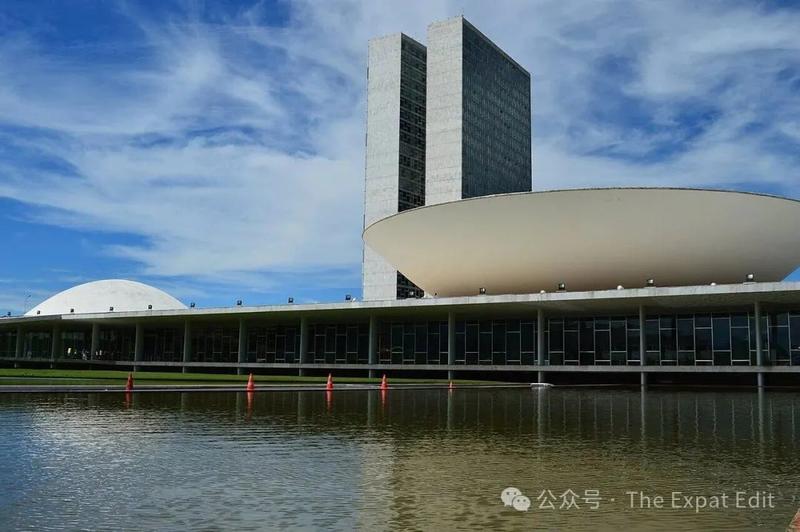
The numbers on the thread, from a user writing as Y.Zeng who rebuilt the count from the electoral court’s data, mostly support the sceptics. Lula won the Northeast by eleven million votes and lost every other region of Brazil. Bolsonaro led in fifteen states to his twelve. In the lower house the Liberal Party drew nearly a quarter of the national vote to the Workers’ Party’s 13 percent; in São Paulo the party’s candidate for governor lost by twenty-six points. This is not the profile of a government undone by a foreign tariff in its final week. It is the profile of a government that had already lost most of the country and was holding on through one region.
That will not settle the argument, because the argument was never really about Brazil. It is about what China is supposed to be to the countries that line up with it against Washington: a patron that protects its friends at the ballot box, or a buyer that taxes their beef when the market calls for it. The sympathetic left wants the first and feels cheated. The realists say the second is all Beijing has ever been, that it has worked fine with governments of both colours, and that Lula of all people knows it. Brazil decides on October 25. The question underneath it has no date.Read the original Zhihu thread: https://www.zhihu.com/question/2090289046253839954
Curated and translated from Zhihu, China's largest Q&A platform.
Newsletter
Subscribe to The Expat Edit
Chinese perspectives on global events, wars, and great power competition. Curated from Zhihu.
Free. No spam. View on Substack →