

There are moments in the life of a nation when policy debates cease to be merely technical, strategic, or partisan. They become moral tests. They reveal not simply what a government intends to do, but what a people are willing to tolerate, excuse, and eventually internalize.
The United States is living through such a moment now.
For over two years, Americans have watched a campaign of destruction unfold in Gaza with a level of documentation unprecedented in modern history. Images of dead children, shattered hospitals, starving civilians, leveled neighborhoods, grieving parents, bombed schools, and mass displacement have circulated daily, often in real time. The facts are not hidden. They are not waiting to be discovered in some future archive. They are in plain view.
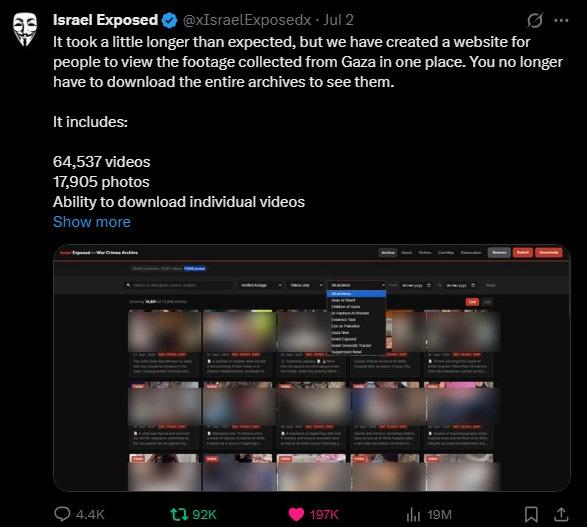
And yet the machinery of support has continued. Military aid has continued. Diplomatic cover has continued. Public defenses that would once have been unspeakable in polite society are now offered as routine arguments. Worse still, deeper forms of institutional integration between the United States and Israel are reportedly under consideration with barely any national scrutiny at all.
The scandal is no longer simply what is being done abroad. It is what Americans are becoming by consenting to it.
A nation does not participate in or enable mass atrocity without altering itself. It cannot spend months and years justifying the killing of children, the destruction of civilian life, and the dehumanization of an entire population without paying a moral price. Such things do not remain confined to foreign soil. They come home. They enter the culture. They shape the language of politics. They lower the threshold of what is acceptable. They train the public to look away.
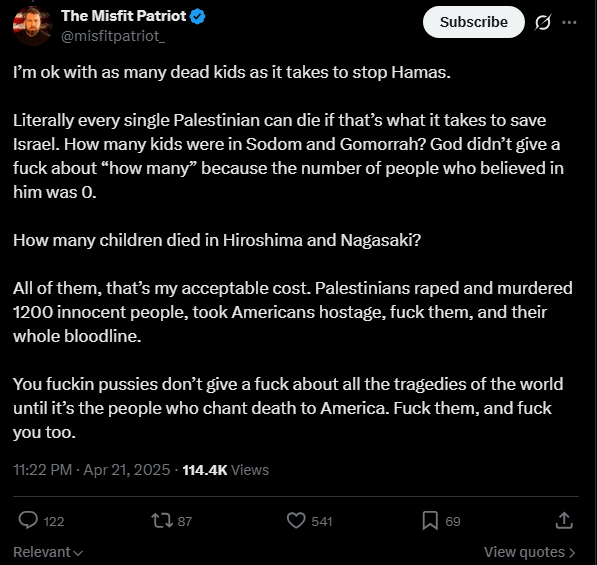
That is how barbarism spreads in modern societies. Not all at once, and not always with open celebration at first, but through repetition, rationalization, and fatigue. A population is asked to accept one horror, then another, then another still, until outrage itself begins to seem naïve. Eventually, the outrageous becomes ordinary.
This is not only a crisis of policy. It is a crisis of moral formation.
The defenders of this order insist that what is happening is either necessary, exaggerated, or too complicated for simple judgment. That argument grows weaker by the day. One does not need advanced expertise in military affairs or regional history to recognize the slaughter of innocents. One does not need to master every diplomatic nuance to know that starving a civilian population, bombing hospitals, targeting medics, destroying homes, and rendering whole communities unlivable are crimes against both law and conscience.
What has become most striking is not merely the violence itself, but the vacuum of leadership surrounding it. Across much of the Western political world, there has been no serious moral resistance. There have been statements of concern, procedural objections, and carefully hedged criticisms. But there has been remarkably little willingness among those with real power to draw a clear line and defend it.
This absence has produced a growing sense of unreality. Many people now feel that they are watching something obvious and monstrous unfold while the institutions most responsible for naming reality refuse to do anything about it. The result is a profound civic disorientation. Citizens are told not to trust their own eyes. They are instructed, in effect, that what they see is not what they see.
The role of the media in this collapse deserves special scrutiny. The American press is not solely responsible for the moral failures of the political class, but it has too often functioned less as a check on power than as a buffer for it. It has softened language where clarity was required. It has obscured agency where accountability was required. It has treated sustained mass death as one more polarizing issue to be managed rather than a truth to be confronted.
This is one reason alternative media has flourished. Whatever its many flaws, it has filled a void left by institutions that increasingly appear unable or unwilling to say plainly what is happening. When the official channels evade the central fact, people will seek other channels.
But media failure, severe as it is, is only one part of the story. The deeper problem is political and cultural. The United States has spent decades constructing a foreign policy architecture in which moral limits are constantly subordinated to strategic habits, ideological loyalties, and imperial reflexes. In such a system, exceptional violence comes to be defended not because it is defensible, but because too many reputations and interests depend on defending it.
That is why accountability has proved so elusive. For many politicians, donors, commentators, and institutional leaders, the truth is no longer merely inconvenient. It is existentially threatening. To admit what has happened would be to admit complicity in one of the great moral disgraces of the age. It would mean confronting not only bad judgment, but active support for evil.
Most people will avoid such a reckoning for as long as they can.
Instead, they harden themselves. They retreat into slogans. They dehumanize the victims. They tell themselves that the dead were dangerous, that the grieving are manipulative, that the evidence is unclear, that the whole matter is regrettable but necessary. These are not signs of moral seriousness. They are the oldest defense mechanisms of a conscience under siege.
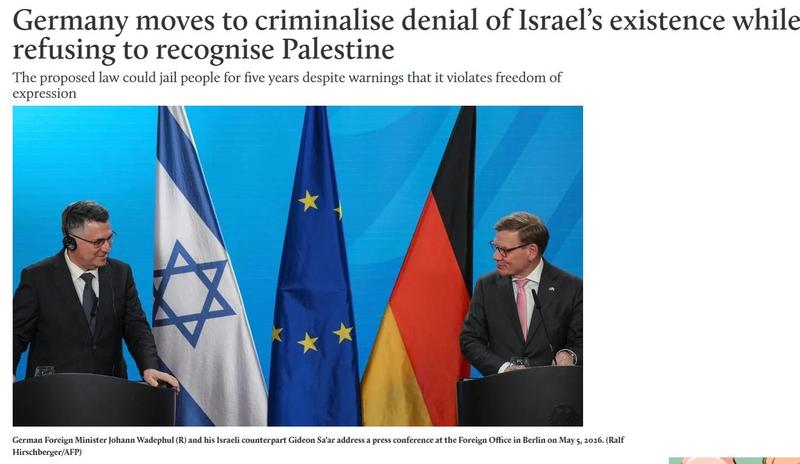
Once this pattern takes hold, it does not remain limited to one conflict. It expands. A political culture that learns to excuse atrocity abroad begins to absorb the logic of atrocity at home. A society that normalizes censorship in the name of safety becomes less capable of defending free speech when it matters. A country that tolerates collective punishment overseas becomes more comfortable with coercion, surveillance, and political repression within its own borders.
History is not kind to systems built on impunity. There is always a delay between the crime and the reckoning. During that interval, the perpetrators and their enablers often imagine that they have succeeded. Institutions appear stable. Public outrage is managed. Language is manipulated. Careers continue. The dead are buried, and official life moves on.
But the butcher’s bill always comes due.
It comes due politically, when publics no longer trust the institutions that lied to them. It comes due culturally, when cynicism and moral injury hollow out national life. It comes due strategically, when the violence justified in the name of order produces only deeper instability and hatred. And it comes due personally, when those who rationalized the irrational must finally confront what they defended.
The form of that reckoning is impossible to predict. It may arrive through electoral revolt, institutional collapse, diplomatic isolation, legal exposure, or a broader moral awakening that sweeps away the old consensus. It may come gradually, then suddenly. But it will come.
No civilization can endlessly violate its own stated principles without consequence. No republic can remain free while teaching itself that some children do not matter, some people may be erased, and some crimes are permissible when committed by the right client or in service of the right myth.
The gravest danger is not only that America is implicated in atrocities abroad. It is that, through repetition and excuse, it is being remade in their image.
There is still time to refuse that transformation. There is still time to recover the capacity for moral judgment, to reject the corruption of language, to oppose the normalization of cruelty, and to insist that no strategic relationship justifies the abandonment of conscience.
But such recovery will require more than sadness and more than private disgust. It will require courage, clarity, and a willingness to break with institutions that have shown themselves morally incapable of leading.
A reckoning is coming, whether the political class welcomes it or not. The only remaining question is whether Americans will meet it as a free people who finally chose to see clearly, or as a broken public that waited too long and allowed barbarism to become its inheritance.
Listen to CATR on:
Newsletter
Subscribe to Conversations Among the Ruins
Long-form geopolitics and the decline of the unipolar world order. New episodes straight to your inbox.
Free. No spam. View on Substack →
Reader-funded
This is independent, long-form work.
Conversations Among the Ruins is written, not repackaged, and it stays free because readers choose to fund it. If it is worth your time, a paid subscription or a one-off tip keeps it going.
Become a supporter →