
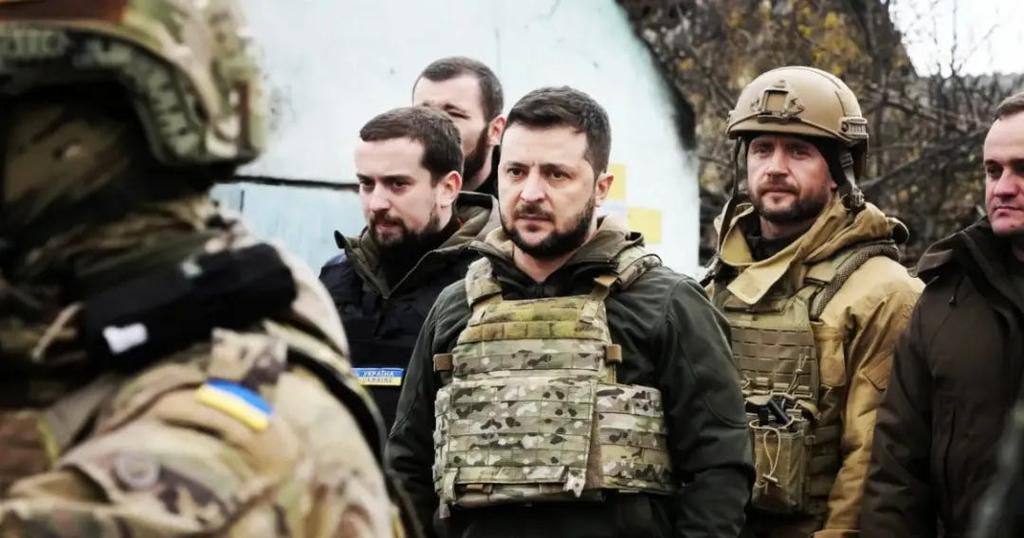
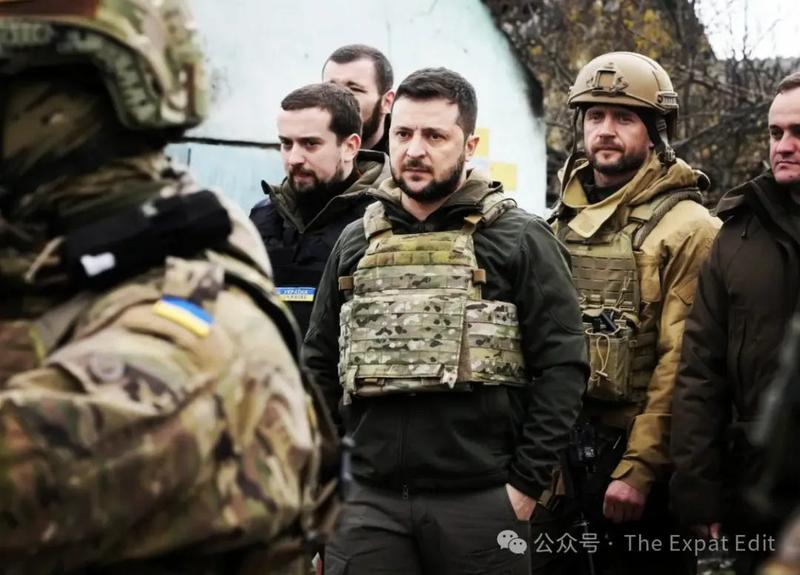
On October 21, Volodymyr Zelensky was asked on television whether he would accept a peace deal that froze the war where it stands and left Ukraine holding 75 percent or more of its territory. He said yes. “Now we have to freeze it,” he said, by the account of China’s state broadcaster CCTV. “That is the practical way to end this war.” Within hours the remark was among the most-read topics in China, where the argument was less about the number than about whether the words meant anything at all.
The venue was Zhihu, a question-and-answer site that functions as the long-form end of the Chinese internet, where a foreign-policy story draws amateur strategists, market watchers and a reliable contingent of people who think the whole thing is theatre. The answer that pulled ahead belonged to the last group. A Fox interview, it said, is not a policy; what is said on Monday can be disowned on Tuesday. The author argued that four years of war have created military constituencies on both sides that no leader can switch off, that a Ukrainian president who gave up land would be remembered as a criminal, and that even a signed ceasefire would leave armed groups in the east fighting on with donated money. He then pivoted, as the thread often did, to a Europe he described as coming apart, with France under curfew and Spain heading to early elections.
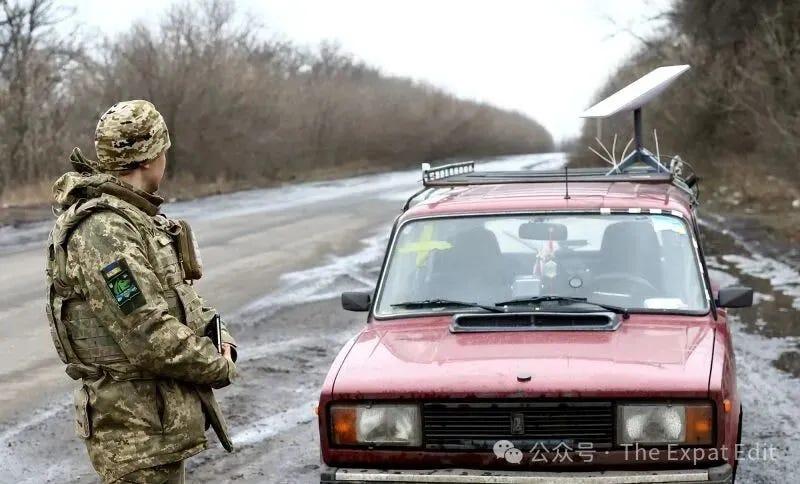
The second and most energetic strand was a theory of why Zelensky’s position moved, and it had almost nothing to do with Russia. Two of the most-read answers told the same story. On October 13, they said, the military version of Starlink that Ukraine’s forces run on was quietly throttled: drones flying above 120 kilometres an hour began dropping packets, and above 160 the link vanished. That night a planned raid of some 400 long-range drones on Russia fell apart after launch, Ukrainian interceptor drones went blind, and Russian strikes left 600,000 people without power. The writers tie the timing to a Trump-Putin diesel deal on October 9 and to the American midterms on November 3, and describe a three-way blame game in which Elon Musk, the State Department and the White House each point elsewhere.
What makes the theory worth reporting is where every version of it lands. “A country’s sky, an army’s communications, handed to a private company, a foreign company: what you bought is a service, never sovereignty.” The line, or something like it, appears in answer after answer, and it is always followed by the same conclusion: this is why China built Beidou, its own satellite navigation system, and why it is spending heavily to put the Guowang and Qianfan constellations into low orbit as a domestic answer to Starlink.
The sober reading came from a current-affairs account called Rewen Reyi, and it is the one a diplomat would recognise. The news, it argued, is the signal, not the number. For four years Kyiv’s stated position was a return to the 1991 borders; accepting a freeze on the current line is the clearest public acknowledgement yet that the lost territory cannot be taken back by force, and it makes the line of contact rather than the old border the starting point of any talks. The 75 percent was the interviewer’s figure: by this commenter’s count Russia holds roughly 19 percent of Ukraine, while another in the thread put it nearer a quarter. Either way, the author continued, the president cannot deliver what he hinted at. Ukrainian law reserves territorial changes for a referendum, polls show a war-weary public that still rejects ceding land, and Zelensky’s own mandate lapsed under martial law two and a half years ago. The remark was aimed outward, at a Washington that wants the war over, and inward, as a trial balloon.
“He released a negotiating signal, not an executable commitment.”
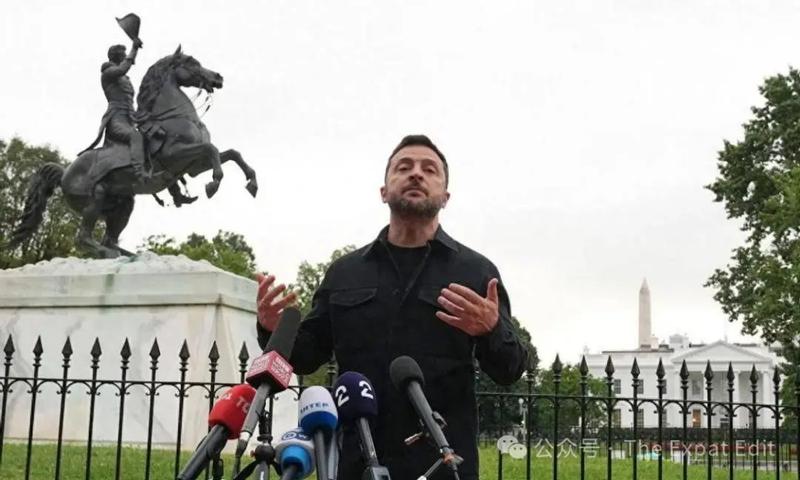
The markets corner of the thread had already moved on to prices. A commenter writing as Hu Kankan laid out three lines to watch: the American midterms, where a frozen conflict becomes a campaign line; the arrival of what he called the “space sovereignty” era, with Europe accelerating its own IRIS² satellite network; and commodities, where a ceasefire would strip the risk premium from oil and European gas and reopen Black Sea grain and fertiliser routes. He also mentioned, as did several others, a proposal Trump has confirmed and the Kremlin says is under discussion: a meeting of the American, Russian and Chinese leaders on the sidelines of next month’s APEC summit in China. Beijing has not confirmed it. Commenters who assumed it will happen called it the return of great-power summitry, and one reached for Yalta.
What is missing from the discussion is as telling as what is in it. Almost nobody asked what Ukrainians want, or what a frozen line would mean for the people on the wrong side of it; the war was discussed as a board on which Washington, Moscow and Beijing move pieces and Kyiv is a piece. “Zelensky thinks he is a player,” one commenter wrote, in a line many repeated. “He is a pawn.”
Whether the 75 percent was a slip, a signal or a soundbite, the Chinese reaction says less about Kyiv’s intentions than about the assumptions of the audience reading it: that the war will be ended at a table with three chairs, that infrastructure is the real battlefield, and that a country’s first duty is to own its own sky. Zelensky may well walk the remark back by the time you read this. The satellites, in the Chinese telling, are the part of the story that stays.
Read the original Zhihu thread: https://www.zhihu.com/question/2096328160241633097
Curated and translated from Zhihu, China's largest Q&A platform.
Newsletter
Subscribe to The Expat Edit
Chinese perspectives on global events, wars, and great power competition. Curated from Zhihu.
Free. No spam. View on Substack →