
The Gulf monarchies have spent years trying to avoid a direct choice between the United States and Iran. They kept their security ties to Washington, hosted American forces, bought American weapons, and publicly aligned themselves with the U.S.-led regional order. At the same time, they pursued, to varying degrees, quieter understandings with Tehran, because they understood a basic geographic reality that policymakers in Washington often ignore: if war came, it would not be fought in America. It would be fought in their neighborhood, against their infrastructure, with consequences that their states might not survive.
That moment has now arrived.
The war did not begin with an Iranian bid for regional conquest. It was driven by the United States and Israel, which chose escalation without anything resembling a viable endgame. The first round already showed the limits of that strategy. Neither Washington nor Tel Aviv succeeded in imposing a decisive outcome. Iran absorbed the assault, retaliated effectively, and demonstrated capabilities that many in the West had spent years dismissing or pretending did not exist.
The current phase is more dangerous, not because the war is new, but because the illusions that once helped contain it are gone.
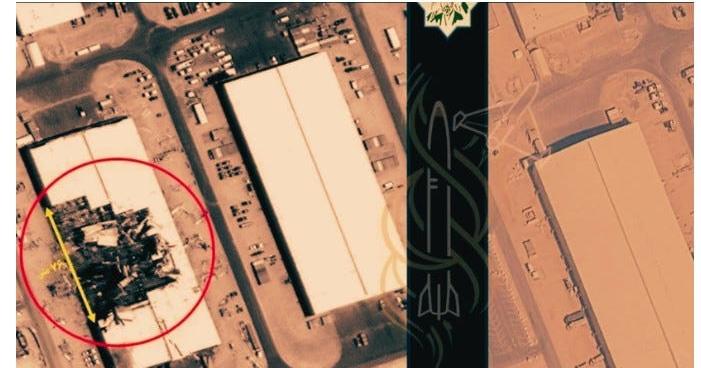
Iran has already shown that it can close the Strait of Hormuz at will. It has already demonstrated that it can hit key infrastructure across the Gulf with devastating precision. And it has already shown that the United States has no dependable way to stop it. That last point matters most. This is no longer a question of whether Washington would choose to defend its regional partners if things worsened. The problem is that it cannot. American bases have already been pounded. The shield that Gulf rulers were told would protect them has been exposed as far weaker than advertised.
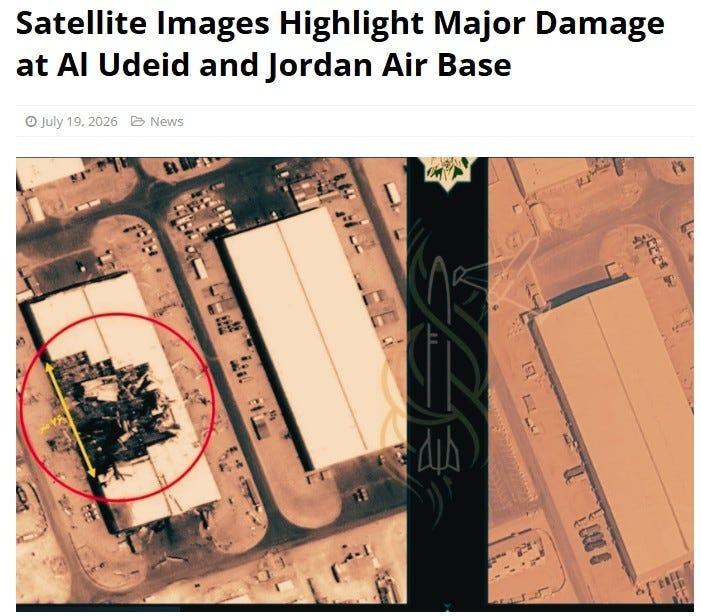
A military power that cannot reliably defend its own positions is in no position to guarantee the survival of an entire region’s energy and water infrastructure.
That is the reality now confronting the Gulf states. If they continue allowing their territory, airspace, and facilities to support attacks on Iran, they are not simply risking retaliation. They are risking the destruction of the foundations on which their states rest. Refineries, export terminals, bridges, ports, power systems, and desalination plants are not secondary assets in the Gulf. They are the basic machinery of state survival. A sustained campaign against them would not be painful but manageable. It would be ruinous.
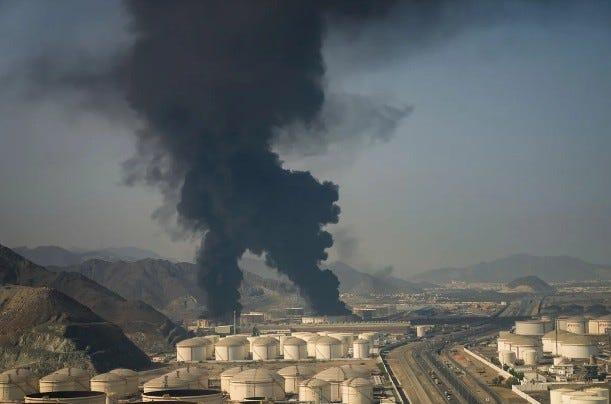
This is the point Iran is making with growing clarity. The message is no longer theoretical and no longer subtle. If Gulf governments help facilitate attacks on Iran, they should expect their own states to be treated as part of the battlefield.
That changes everything.
For years, Gulf leaders tried to hedge. It was a rational strategy under less dangerous conditions. They could host American power, extract the benefits of the relationship, and still keep lines open to Tehran. But hedging works only so long as the price of ambiguity remains bearable. Once the infrastructure that keeps a state alive comes under direct threat, ambiguity becomes a luxury.
The Gulf monarchies now face a stark choice. They can continue enabling an American war effort that has already failed to produce strategic success and that they know Washington cannot defend them from. Or they can act in their own interest and stop the escalation before the war destroys them too.
That would mean doing what they have so far avoided: restricting or ending U.S. use of their bases, airspace, and logistical networks for attacks on Iran.
Such a move would have enormous consequences. It would not merely inconvenience Washington. It would severely constrain the American campaign. Much of the present war effort depends on proximity, staging, and regional access. Remove those, and the United States loses the operational ease that has allowed it to continue the conflict despite its shrinking leverage and depleted stockpiles.
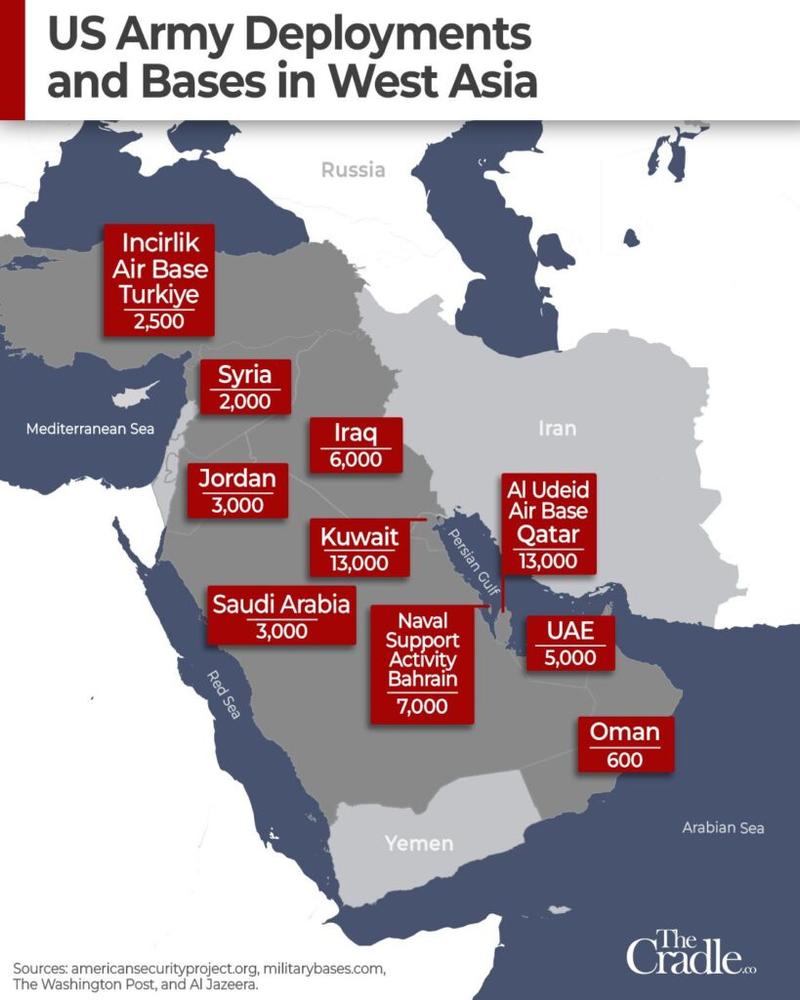
This is why the Gulf states may now be the only actors with both the motive and the means to force a pause.
Europe will not do it. The European political class has shown again and again that it responds to strategic failure with denial and escalation. Israel will not do it. Israel appears trapped in a logic of permanent expansion and military compulsion that has become self-destructive, but no less dangerous for that. Washington itself may not do it either. The Trump administration appears to be operating without a coherent strategy beyond the hope that more pressure, more bombing, and more spectacle can somehow produce the victory that earlier escalation failed to deliver.
The Gulf states are different. They are not driven by ideology in the same way. They are not animated by messianic ambition or liberal crusading fantasies. They are monarchies built on calculation, wealth, and survival. They are often cynical, often ruthless, but usually pragmatic. And pragmatism may now matter more than anything else.
If they conclude that continued alignment with Washington places their own regimes in mortal danger, they may finally act with the clarity the moment requires.
There is every reason to think that if the United States expands its attacks on Iranian infrastructure, Iran will answer by escalating against the Gulf states most deeply tied to the American war effort. Bahrain and Kuwait look especially vulnerable. If they are hit hard enough, the rest of the Gulf will understand that no amount of money and no American promise can protect them from the consequences of hosting a war on Iran.
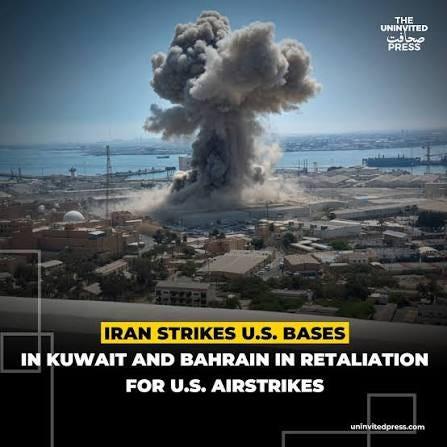
At that point, what has been unthinkable is starting to look unavoidable: a direct demand that the United States stop using Gulf territory as a platform for escalation.
That would mark a historic break. For decades, the American military presence in the Gulf has been treated as the fixed architecture of regional order. But if the host states themselves decide that the U.S. presence has become a threat rather than a shield, that order begins to collapse from within.
Washington would experience that as humiliation. The Gulf states may experience it as a necessity.
And necessity is the one force that can still interrupt the momentum toward a wider war.
If the Gulf monarchies act now, they may still be able to stop a regional catastrophe before it becomes irreversible. If they do not, they may soon learn that in a war launched by others, they have become the most exposed targets of all.
Listen to CATR on:
Newsletter
Subscribe to Conversations Among the Ruins
Long-form geopolitics and the decline of the unipolar world order. New episodes straight to your inbox.
Free. No spam. View on Substack →
Reader-funded
This is independent, long-form work.
Conversations Among the Ruins is written, not repackaged, and it stays free because readers choose to fund it. If it is worth your time, a paid subscription or a one-off tip keeps it going.
Become a supporter →