
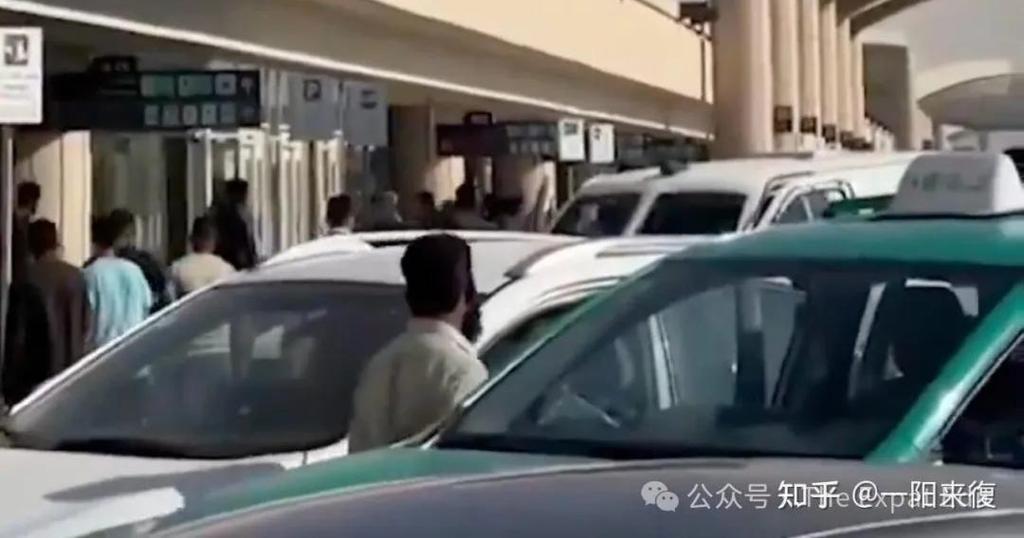
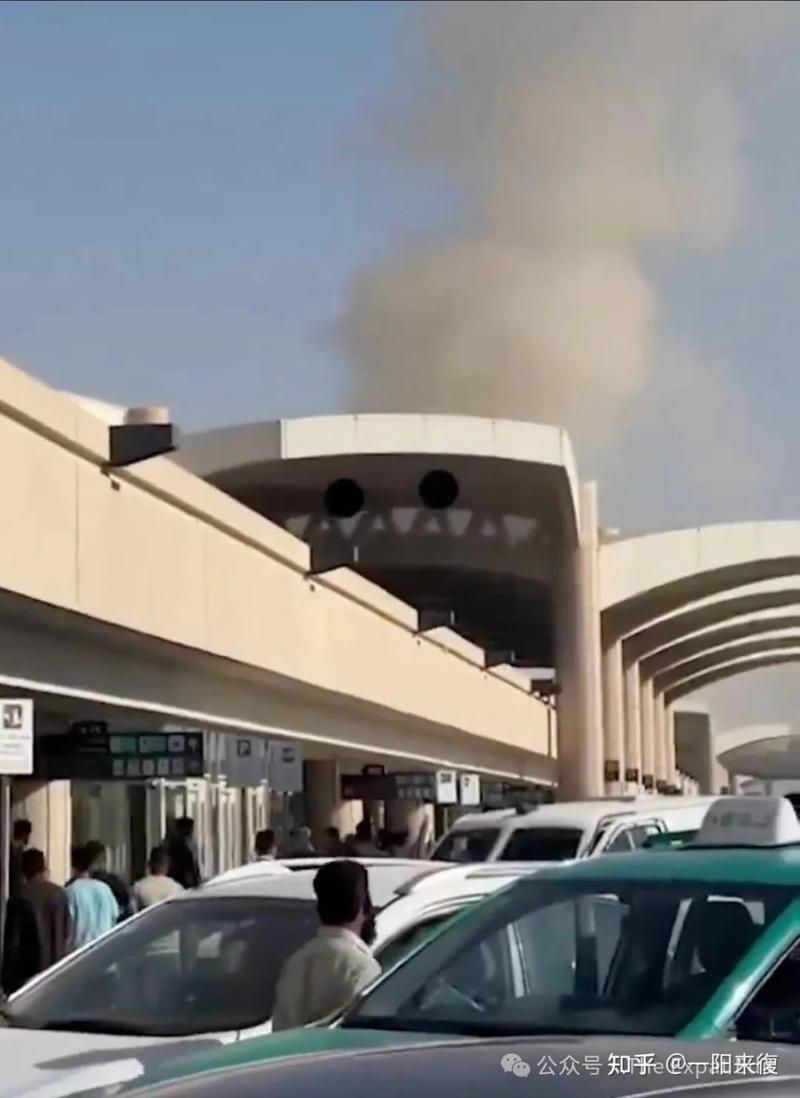
On Saturday afternoon a missile struck the passenger terminal at King Khalid International Airport in Riyadh, killing 12 people and wounding 309, according to Saudi Arabia’s civil aviation authority. It was the third strike on the airport in a week. The kingdom has suspended operations there while it assesses the damage. Yemen’s Houthi movement, which had warned for days that it would close Saudi airspace to all but humanitarian flights, is widely assumed to be responsible.
The Saudi statement came out in the small hours of Sunday, Riyadh time, and by breakfast in Beijing the story had already been through a transformation. In the Western wire copy it was a terror attack on a civilian airport: the dead and wounded, the suspended flights, the Houthis’ long record of lobbing missiles at Saudi cities. On Zhihu, China’s answer to Quora and the place where the country’s educated class argues about the world, it was something else. The thread led not with the casualties but with a calendar.
The most widely endorsed answer came from a user posting as 清河崔氏时宜, who identifies as a management graduate of University College London and writes in the clipped, prosecutorial register that Zhihu rewards. The media will tell you, the post begins, that the Houthis fired a ballistic missile at Riyadh’s terminal. It will not tell you that Saudi warplanes hit the largest maternity hospital in Sanaa a week earlier, that Yemen’s own airports at Sanaa and Hodeidah have sat wrecked for years under Saudi bombing, or that the kingdom has blockaded Hodeidah port, Yemen’s lifeline, for most of a decade. The commenter cites United Nations famine classifications and argues that millions of Yemenis were pushed into catastrophic hunger by that blockade. Should a strike on a civilian terminal be condemned? Of course, the post concedes. But an aggressor that brings disaster to another country’s people and is then hit back cannot, in the writer’s phrase, discover the word terrorist only when the missiles start flying the other way.
That reading, that Saturday’s strike was retaliation rather than terror, ran through the thread like a spine. A commenter who posts open-source intelligence under the handle 一阳来復 laid out the sequence as reported by Turkish and Qatari outlets: on the morning of October 10, Saudi jets hit Sanaa airport four times; by mid-afternoon, Riyadh’s Terminal 3 was burning. Another user, 小陈同学, went further and checked timestamps across Saudi, Yemeni and even Ukrainian news sites to establish which airport was hit first. The conclusion, offered with appropriate hedging, was that Sanaa came first and the Houthis answered the same day. Several commenters called this a grudge that doesn’t sleep overnight.
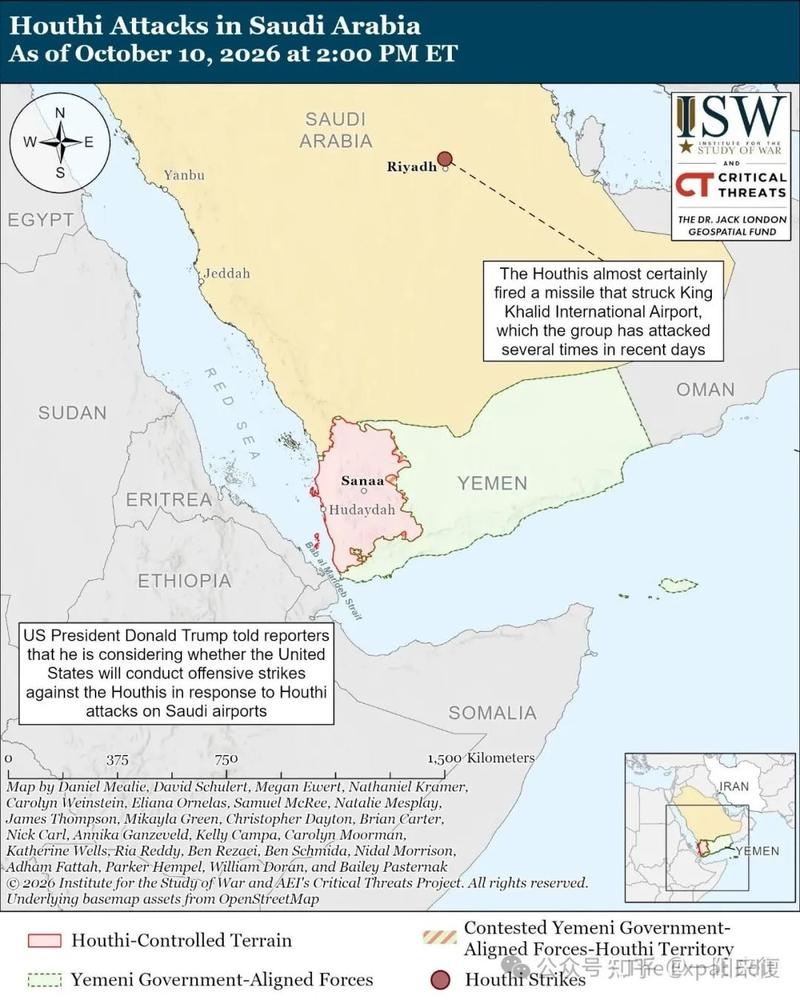
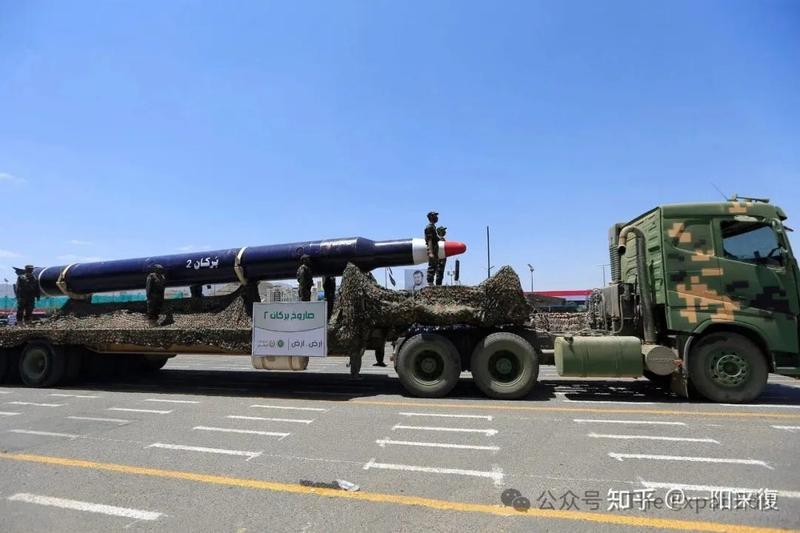
The geography matters because it goes to the second theme, which is less about justice than about hardware. The distance from Sanaa to Riyadh is around 1,100 kilometers, shrinking to perhaps 885 from the border. The missile most commenters assume was used is the Burkan-2H, an Iranian-origin ballistic missile with a published range of about 1,000 kilometers, which the Houthis first aimed at this same airport in November 2017. Back then Saudi Patriot batteries claimed an intercept. This time, according to several accounts, there was no intercept, no siren and no evacuation.
Chinese commenters, who follow military hardware the way other countries follow football, found this astonishing. A user writing as 飞跃本屯 catalogued the Saudi arsenal: American E-3 early-warning aircraft, F-15SA fighters with radars more advanced than most of the U.S. Air Force’s own, Patriot PAC-3 and THAAD interceptors. Against that, a missile hand-assembled in a country with almost no industrial base got through. The lesson drawn was not about Saudi Arabia alone. If a Houthi workshop can defeat a mainstream Western air-defense stack, the post argued, every country that relies on the same stack should think harder before bombing someone else’s civilian targets.
“Without the Houthis, you’d never know how hollow Saudi Arabia really is.”
There was a darker, more speculative strand too, and it should be reported as speculation. Several commenters claimed that Saudi Arabia burned through most of its Patriot interceptors shooting down Iranian drones and missiles earlier this year and simply has nothing left. One user, in a post dripping with sarcasm, suggested the crown prince had concluded that the cost of intercepting every missile now exceeded the cost of being hit, and switched off the airport’s sirens to protect the business climate ahead of the Future Investment Initiative summit, the annual Davos-in-the-desert gathering the Houthis have explicitly threatened. None of this is verified. All of it was repeated with relish.
The third theme is the one that will feel most familiar to anyone who has spent time reading Chinese opinion on the Middle East, and it concerns who gets to be a victim. Why, one commenter asked, did the bombing of Sanaa’s airport on Friday produce no outrage, while the bombing of Riyadh’s on Saturday produced a global headline? The answer offered was that the Saudis belong to what the writer called, in heavy quotation marks, the civilized world. Another put it in starker class terms: information has a hierarchy, and the hierarchy tracks power. A Western ally’s dead are news; a poor country’s dead are a statistic. This is a well-worn argument on the Chinese internet, and it is deployed here with the confidence of people who feel they have watched it play out many times.
Notably absent was much sympathy for Riyadh itself, a city many Chinese have come to know through business travel and the kingdom’s heavy courtship of Chinese investment. One of the more upvoted short answers simply observed that the Houthis had announced the target in advance, declared a no-fly zone and then hit a defended military-grade airport with a long-range ballistic missile, and wondered aloud since when that combination had been called terrorism. The reply that followed, that it is certainly terrifying if you have run out of interceptors, drew a laugh.
What the conversation did not do was predict. The question asked what the attack meant for the wider region, and the honest answer from the thread was a shrug: both sides are now hitting each other’s infrastructure, and the contest is about who has more to lose. The Houthis have very little. Saudi Arabia has a capital, an investment summit and a national airline. That asymmetry, more than any missile, is what Chinese readers took from Saturday.
It is a cold reading, and it leaves out things that matter: the people in Terminal 3 on Saturday afternoon were not combatants, whatever the history of the war. But it is a reading, and it is widely held. The Western press will spend the week asking what the Houthis want. A good portion of China’s internet has already decided it knows what Saudi Arabia got.
Read the original Zhihu thread: https://www.zhihu.com/question/2092513467722719411
Curated and translated from Zhihu, China's largest Q&A platform.
Newsletter
Subscribe to The Expat Edit
Chinese perspectives on global events, wars, and great power competition. Curated from Zhihu.
Free. No spam. View on Substack →