
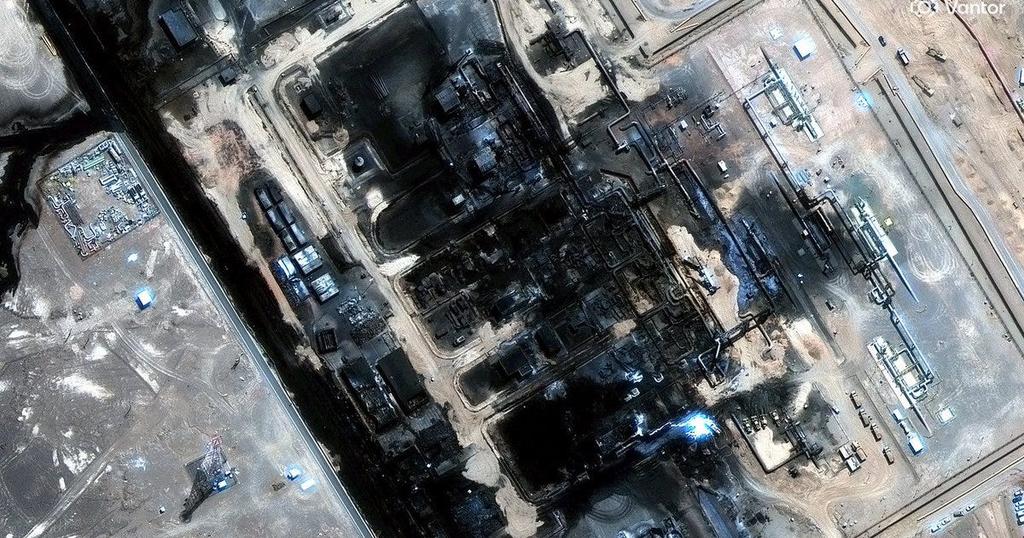
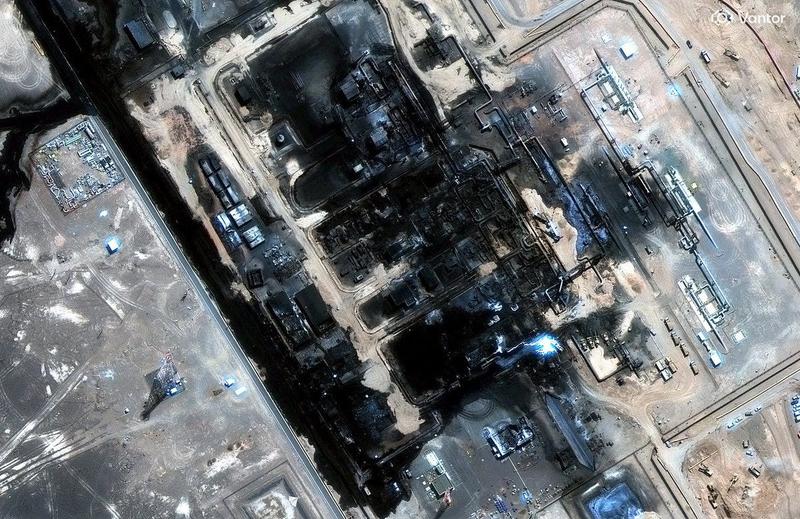
Somewhere in the Saudi desert this week sits a pumping station that no longer exists. Satellite images show it flattened, one of two stations on the East-West pipeline that the Houthis struck along with the pipeline itself in eight separate places. That line was carrying roughly five million barrels of oil a day to the Red Sea, which is to say about as much as has been squeezing through the Strait of Hormuz on a good day since the Iran war closed it. Now that oil is gone, too. A pipeline can be patched in a couple of weeks. A pumping station cannot, and nothing prevents the Houthis from hitting the patch.
Consider what that means for Mohammed bin Salman. His kingdom has already applied to the World Bank for a loan. Its only remaining export route (excluding the Suez Canal, which cannot accommodate fully-loaded supertankers) runs past a coastline the Houthis now hold from Yemen’s western border down to the Bab al-Mandab, a strait nine miles wide at its narrowest point, so narrow that a man on the shore can watch any passing tanker with his own eyes. The Saudi air force flew approximately 120 strikes into Yemen yesterday, and it changed nothing, because bombing does not touch missile arsenals hidden in mountains, and because Saudi ground forces are little more than mercenaries who will drive a truck for a paycheck but will not die for a monarchy. The Americans, whose security guarantee Riyadh spent decades and hundreds of billions of dollars purchasing, declined to come.
And so the Saudis are talking to the Iranians. Not loudly, not happily, but they are talking. A meeting of the Gulf states and Iraq with Iran was scheduled in Oman to discuss the arrangement Tehran has worked out with Muscat for managing the Strait of Hormuz, an arrangement that treats the strait as the property of the region rather than of Washington. The meeting collapsed only because Bahrain, a member of the Abraham Accords, walked out, declaring Iran the enemy, and the United Arab Emirates, another signatory, downgraded its delegation. The others were ready to sit down. They will sit down again.
There is nothing admirable about the House of Saud. It is corrupt to its foundations, it waged a cruel war of siege against Yemen for the better part of a decade, and it is reaping what it sowed. But the men who run it can read a balance sheet. When the cash flow that keeps them in power is severed, they do not deliver speeches about resolve. They pick up the phone. That capacity, the ability to notice when you have lost and adjust, turns out to be rarer than anyone assumed, and its absence in Europe is the most dangerous fact in the world right now.
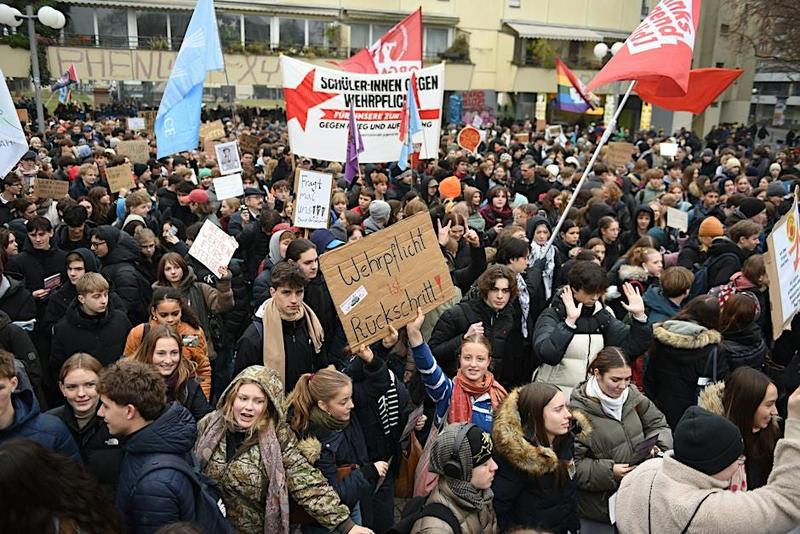
Look at what Europe’s leaders have been doing while the Gulf recalculates. Germany’s government, led by Friedrich Merz, has committed itself not merely to higher defense budgets but to remaking the consciousness of its people for war. It mailed roughly 300,000 registration letters to young men of military age, encouraging them to volunteer. Five hundred and eighty-three did. About a fifth expressed some interest. The rest complied with registration under threat of a fine and otherwise ignored the state. Among the women who received letters, 95 percent did not bother to reply at all. Earlier polling found that only about one German in five would definitely fight to defend the country if it were invaded. The public is willing, in the abstract, to endorse conscription. It simply intends for someone else to be conscripted.
Poland’s foreign minister, meanwhile, has been assuring audiences that Western air power would do to Russia what American and Israeli air power did to Iran. This is fantasy. Iran had no real air force and a fraction of Russia’s air defenses, and even so, American pilots have stayed largely outside Iranian airspace, firing from a distance. Russia fields the S-300 and S-400, the best integrated air defense on earth, and the practical result is already visible inside Ukraine, where the F-16s the West delivered stay in the far west of the country, shooting down drones with cannon fire because they have run out of air-to-air missiles. The United States annually produces only four hundred of the JASSMs that the Polish minister invoked, and it is scraping the bottom of all of its stockpiles for the war it is already fighting. The generals, who know the nuts and bolts, tend to understand this. The politicians do not want to descend from the altitude at which they have lived their entire careers.
That altitude has a name. These are the children of the unipolar moment, men and women who came of age when Western supremacy and Russian decrepitude were not conclusions but premises, and who built their careers on policies that assumed both. They have never had to think their way out of that assumption, and they show no sign of being able to. When a Russian strike disabled a train two minutes from the Polish border, directly behind one carrying Boris Johnson, the former Swedish prime minister and Merz’s national security adviser, it followed within days of Vladimir Putin’s flat statement that any NATO soldiers in Ukraine would mean direct war with Russia. A rational leader would have heard a signal: do not send your troops. The Polish prime minister instead announced that he now expects a Russian attack on Poland. The response to every warning is to raise the volume.
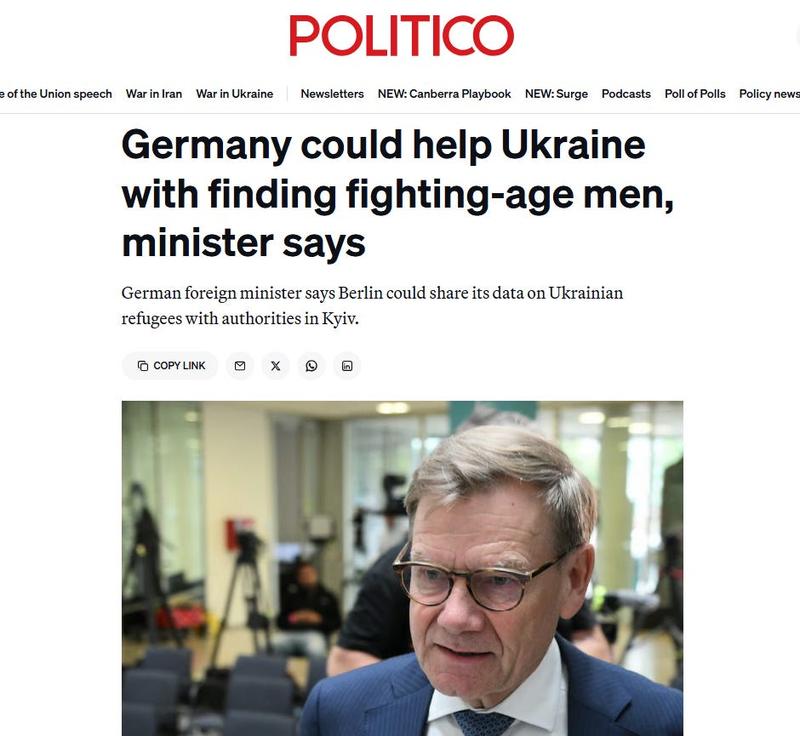
The tragedy is that the war Europe is so eager to escalate is already lost on its own terms. Ukraine’s front line has not collapsed, and it may hold for some time yet, because small drones make any advance slow and brutal. But it is held by men rounded up on the street and driven to the trenches in handcuffs, financed by a 90 billion euro “loan” that will never be repaid and that is already running short of the two years it was meant to cover, supplied through logistics that Russian jet-powered drones are dismantling from the air. Even Eric Schmidt, whose company built drones for the Ukrainian army, has now written that Russia has taken a decisive technological lead in drone warfare. The next moves available to Europe and Ukraine—seizing frozen Russian assets outright, lowering Ukraine’s conscription age, drafting women, deporting Ukrainian men of fighting age from Germany back to the front—are all things Europe’s leaders have been reluctant to do because they know their own voters or international financial markets would revolt. They are talking about them anyway.
This is where the comparison with Riyadh stops being a curiosity and becomes an argument. The Saudis are cornered by physics: a strait, a pipeline, a cash flow. When physics spoke, they listened. Europe is cornered by the same physics, in the form of depleted arsenals, tiny armies, an energy market one cold winter away from crisis, and populations that have made their unwillingness to fight as plain as a population can. And Europe’s leaders have responded by declaring that they will change the population. Their distrust of reality is not a policy failure. It is an ideology, held by true believers, and true believers do not update. They can only be outlasted or removed.
There is a source of hope in this, and it is the same one crushing Saudi Arabia. The energy shock now radiating out of the Gulf is coming for Europe, and European voters have already shown, in Germany above all, that they will punish leaders who ignore it. Reality has a way of arriving whether or not the political class has scheduled it.
The danger lies in the interval.
A government that believes its own myths, that cannot enlist its people by persuasion, and that faces a widening gap between what it has promised and what is happening on the ground, has historically found other ways to close that gap. It manufactures the emergency that it cannot otherwise produce. Various questionable incidents, including the Leipzig drone, have been read in Europe’s capitals as a reason to escalate rather than a reason to stop.
The Gulf has just demonstrated what a rational actor does when it loses. It counts the cost, swallows its pride, and calls its enemy. Europe is about to demonstrate what an irrational one does. Between those two demonstrations could lie the difference between a war that ends and a war that spreads.
Listen to CATR on:
Newsletter
Subscribe to Conversations Among the Ruins
Long-form geopolitics and the decline of the unipolar world order. New episodes straight to your inbox.
Free. No spam. View on Substack →
Reader-funded
This is independent, long-form work.
Conversations Among the Ruins is written, not repackaged, and it stays free because readers choose to fund it. If it is worth your time, a paid subscription or a one-off tip keeps it going.
Become a supporter →