
For decades, American military power in the Middle East rested on a simple premise. The United States could project overwhelming force from a network of regional bases while remaining largely insulated from serious retaliation. It could strike, punish, and escalate, while its own troops and infrastructure stayed protected behind layers of geography, diplomacy, and technological superiority.
That strategic logic is failing in real time.
The confrontation with Iran is revealing something Washington has long tried to avoid confronting: the American way of war in the region depends on a basing architecture that is increasingly vulnerable, politically fragile, and militarily unsustainable. At the same time, the U.S. military is facing a type of conflict it was never truly designed to fight, one in which fixed installations are exposed, escalation carries immediate economic costs, and precision retaliation can make even “rear areas” dangerous.
This is not simply a question of whether the United States can bomb Iran. Of course it can. The more important question is whether it can wage a prolonged regional war against Iran while protecting its troops, preserving its alliances, and containing the economic consequences. The answer is looking more doubtful by the day.
The Old Model is Failing
The American military presence in the Gulf was built for an era in which local partners provided territory, the U.S. provided protection, and adversaries lacked the ability to inflict serious damage across the region. That arrangement gave Washington extraordinary freedom of action. Airfields, logistics hubs, naval facilities, and prepositioned assets across the Gulf allowed the United States to sustain operations while reassuring its allies that American power would keep the regional order intact.
But what once seemed like a stable platform for American power has become a source of growing vulnerability. Iran has shown that it can threaten not just American forces, but the physical infrastructure on which Gulf states themselves depend. That includes oil facilities, power plants, refineries, and desalination systems that are essential to daily life in some of the world’s most centralized and geographically exposed states. In many of these countries, critical infrastructure is not deeply dispersed. A small number of sites support enormous portions of the population. That creates a vulnerability that both Tehran and the Gulf monarchies understand well.
This matters because Washington’s military footprint does not exist in a vacuum. It depends on the continued consent of governments that know they may be made to pay a devastating price for hosting American operations. If the United States strikes Iranian infrastructure and Iran responds in kind against Bahrain, Kuwait, or other Gulf states, the burden does not fall on abstract strategic concepts. It falls on states whose water, energy, and commercial life can be disrupted with alarming speed.
That changes the political equation. Gulf governments may still want American protection, but they do not want to become the battlefield on which an American-Iranian war is fought. The more vulnerable they feel, the more likely they are to limit Washington’s freedom of action, quietly pressure for restraint, or restrict the use of their territory altogether.
In other words, the United States is discovering that its bases are only as useful as the willingness of its hosts to remain exposed.
Retreat Is Not a Solution
A natural response is to move personnel and assets farther from the most exposed positions. But here too the logic of the old system is breaking down.
The assumption behind relocation is that distance still provides security. If one set of Gulf bases becomes too dangerous, forces can be shifted to more insulated locations, perhaps farther west, perhaps to Jordan, perhaps into installations considered less vulnerable to immediate Iranian retaliation.
But this assumes a battlefield geometry that may no longer exist.
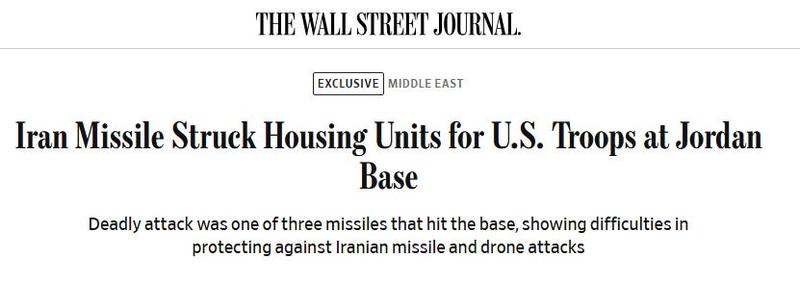
Iran’s missile and drone capabilities have steadily improved, particularly in accuracy. What was once considered tolerable risk is becoming something closer to persistent exposure. Bases once treated as rear areas are no longer reliably safe. Long range is no longer the protective barrier it once seemed. Consolidation does not necessarily reduce vulnerability. In some cases, it increases it, creating more attractive targets and concentrating personnel and equipment in fewer places.
This has profound operational consequences. A military designed around secure hubs, large installations, and dependable logistical corridors begins to struggle when every node in the network is threatened. Fuel, munitions, maintenance, aircraft staging, intelligence support, and troop housing all become more complicated when there is no true sanctuary.
The result is a strategic paradox. The more pressure Iran puts on the regional basing network, the more the United States is forced to centralize. And the more it centralizes, the more vulnerable it becomes.
A Military Built to Strike, Not to Absorb
Read more
Listen to CATR on:
Newsletter
Subscribe to Conversations Among the Ruins
Long-form geopolitics and the decline of the unipolar world order. New episodes straight to your inbox.
Free. No spam. View on Substack →
Reader-funded
This is independent, long-form work.
Conversations Among the Ruins is written, not repackaged, and it stays free because readers choose to fund it. If it is worth your time, a paid subscription or a one-off tip keeps it going.
Become a supporter →