
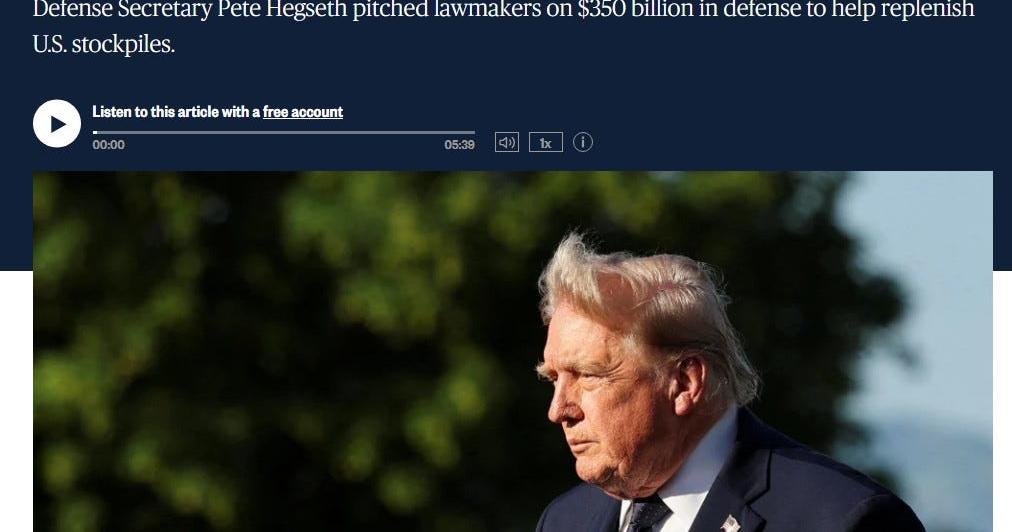
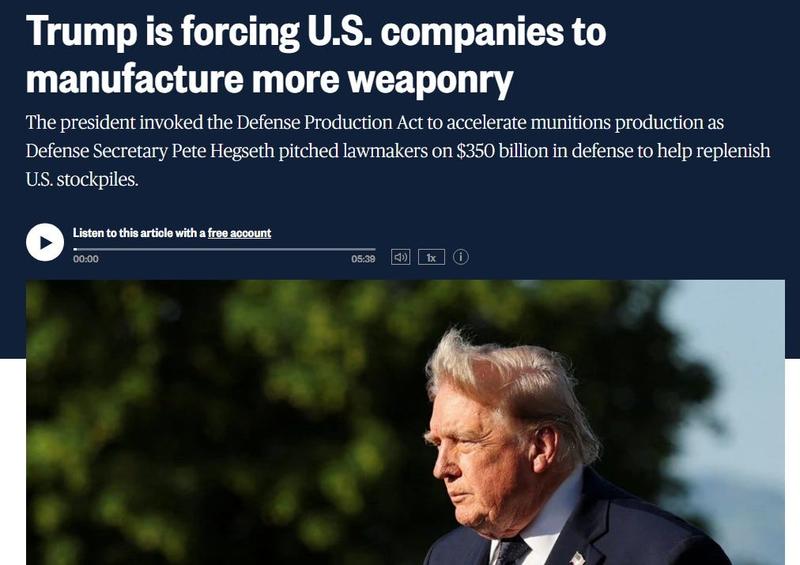
Trump’s latest announcement raised eyebrows fast: America’s auto giants may be pulled into weapons production, including systems linked to Tomahawk cruise missiles and Patriot air defense. On the surface, it sounds like a dramatic wartime headline. Underneath it, though, sits a bigger story about shrinking stockpiles, strained factories, and a U.S. defense base that suddenly looks less limitless than many assumed.
Why This Is Happening Now
Thanks for reading Silk & Steel! Subscribe for free to receive new posts and support my work.
The clearest signal is simple: the United States has been burning through precision munitions faster than it can replace them. Commentary circulating on Zhihu points to a sharp mismatch between wartime use and peacetime production. Tomahawk launches have reportedly reached shockingly high levels across recent operations, while annual replacement rates remain far lower. Patriot and other air defense interceptors face the same problem. In short, Washington is discovering that modern wars can drain even a superpower’s arsenal at uncomfortable speed.
That matters well beyond the Middle East. If current conflicts consume so much ammunition, U.S. planners have to ask a harder question: what happens if another major crisis erupts in the Pacific? That is why this story is less about one Trump soundbite and more about America’s anxiety over industrial readiness.
The World War II Comparison Is Real, But Incomplete
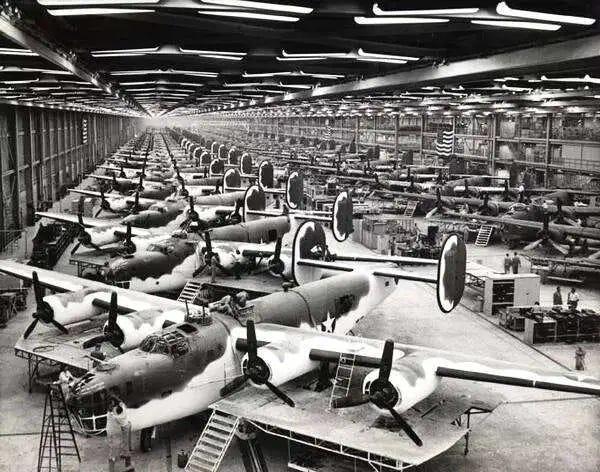
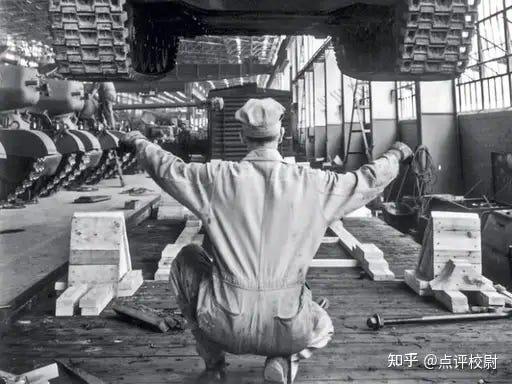
Many Chinese commenters immediately reached for the obvious historical parallel: Detroit did it before. In World War II, Ford, GM, and others famously shifted from cars to bombers, tanks, trucks, and engines. That part is true. But the comparison can also mislead.
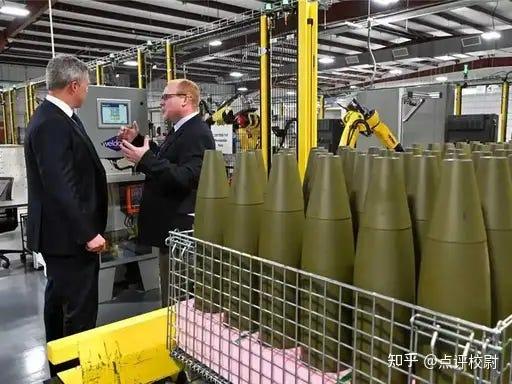
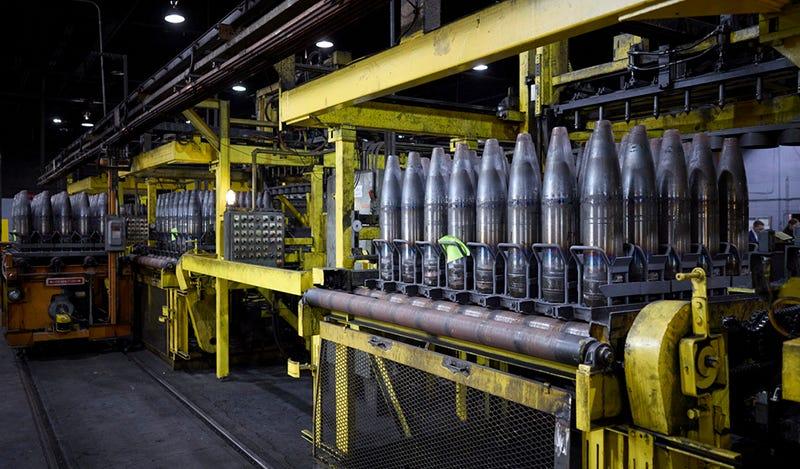
Back then, military production was supported by a full wartime mobilization system, centralized planning, standardization, and massive state coordination. Today’s missiles and air defense systems are far more specialized. A car factory can help with casings, wiring, machining, subassemblies, and repeatable industrial parts. It cannot magically become a complete missile plant overnight. The likely reality is not “Ford starts building Tomahawks by itself,” but “civilian manufacturers are drafted into the supply chain to ease bottlenecks.”
What Signal Is Trump Sending?
Politically, Trump is sending several messages at once. First, he wants to look tough and urgent. If stockpiles are low, ordering industry to move faster lets him project wartime command energy. Second, it fits his broader narrative that America must rebuild manufacturing at home. Weapons production is one of the few areas where Washington can still justify large, guaranteed spending with bipartisan support.
Third, there is a strategic message for rivals and allies alike. The White House wants the world to believe America is not only willing to fight long wars, but also preparing to sustain them. Even if implementation is messy, the announcement itself is a form of signaling.
“This is not just about missiles. It is about proving that America can still turn industrial power into military power.”
The Supply Chain Problem Nobody Can Ignore
There is also a harder limit here: raw materials and components. Several Zhihu answers highlighted the awkward dependency on critical minerals, especially rare earths and other strategic inputs used in defense and aerospace systems. Even if assembly capacity expands, supply chains for magnets, alloys, electronics, sensors, and specialty materials remain vulnerable.
This means the real bottleneck may not be factory floor space at all. It may be upstream control over the materials that make advanced weapons possible. If the U.S. pushes more civilian industry into defense work while those inputs remain constrained, costs rise and timelines stretch. That weakens the fantasy of a quick industrial pivot.
What It Could Mean for the World
The global effect is unlikely to be subtle. If Washington leans harder on civilian industry for munitions, allies may follow. Europe is already moving in that direction, with more traditional manufacturers discussing military production links. Japan is also expanding defense output. Once this logic spreads, the line between civilian manufacturing and military manufacturing gets thinner.
That has two consequences. One is strategic. A world where major economies retool for sustained weapons output is a world expecting longer, more frequent confrontations. The other is economic. Factories, investment, and materials may increasingly be pulled toward defense instead of consumer industries. In plain English, governments are preparing for a more militarized era.
The biggest takeaway is not that America has suddenly solved its production problem. It has not. The takeaway is that the problem has become impossible to hide. Trump’s statement is best read as an admission that the U.S. arsenal, impressive as it still is, no longer feels comfortably deep for the kind of world Washington thinks it may be entering.
Thanks for reading Silk & Steel! Subscribe for free to receive new posts and support my work.
Curated and translated from Zhihu, China's largest Q&A platform.
Newsletter
Subscribe to The Expat Edit
Chinese perspectives on global events, wars, and great power competition. Curated from Zhihu.
Free. No spam. View on Substack →