
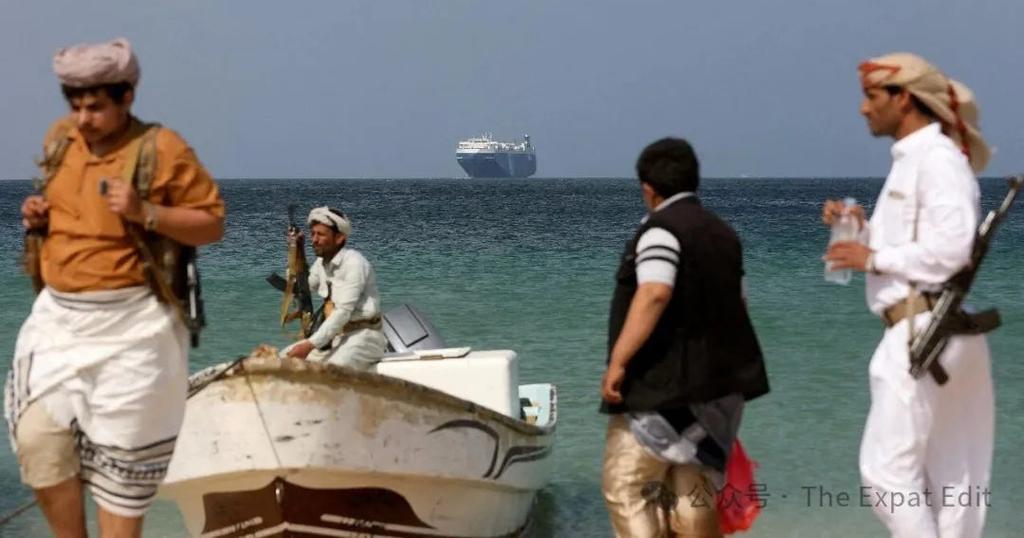
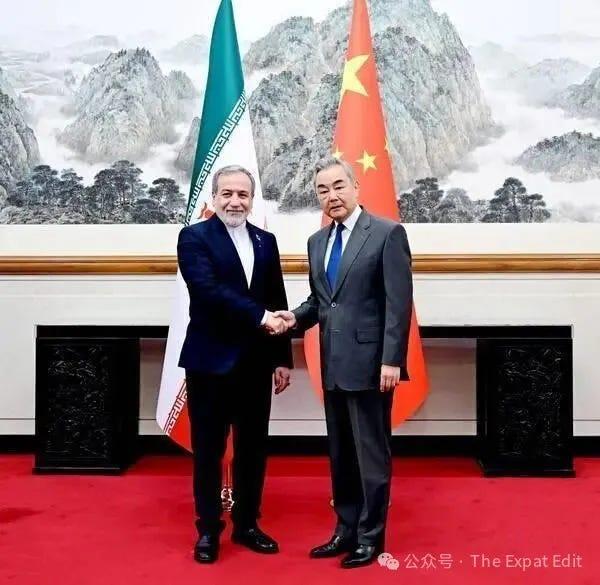
In mid-September, with Houthi fighters pushing along Yemen’s Red Sea coast toward the strait that carries Saudi oil to the world, Crown Prince Mohammed bin Salman asked Donald Trump for airstrikes. He got an offer of intelligence sharing and help picking targets. Nothing more. So, according to Reuters, Riyadh did something it has not done in a security crisis before: it asked Beijing to intervene, by leaning on Iran to pull the Houthis back. Within days Iran’s foreign minister was in Beijing shaking Wang Yi’s hand.
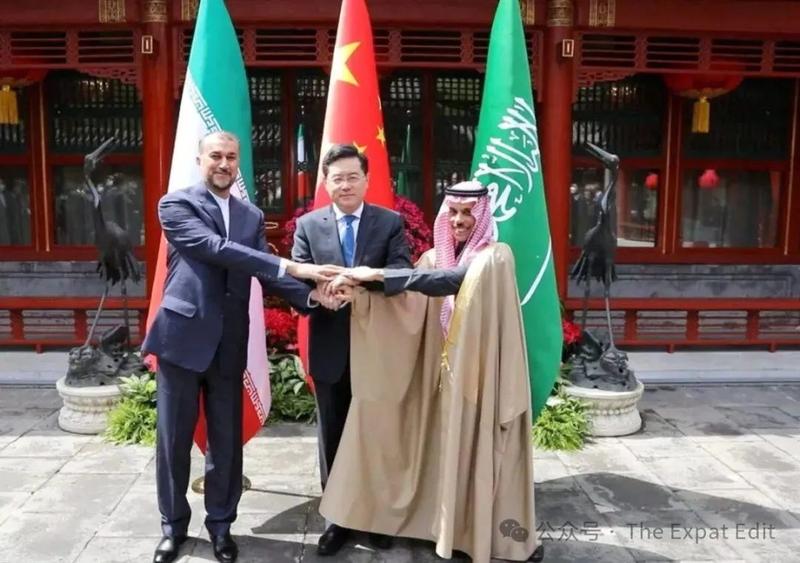
The request itself is easy to explain. Saudi Arabia still needs American radar, American bases and the American-made missiles in its arsenals. Nobody in Riyadh thinks that has changed. But the question on the table was not “who can shoot down drones.” It was “who can get a message to Tehran that Tehran will actually act on.” Washington has no such line. Beijing does, and it has had one since March 2023, when it brokered the surprise deal that restored Saudi-Iranian diplomatic relations after seven years. That agreement was widely dismissed abroad as a photo opportunity. This month Riyadh started using it.
Thanks for reading Silk & Steel! Subscribe for free to receive new posts and support my work.
China has the leverage to make the call matter. Tracking firm Kpler estimates that more than 80 percent of Iran’s seaborne oil exports went to China last year, around 1.4 million barrels a day. Iran’s economy runs on Chinese buyers. At the same time roughly half of China’s crude imports come from the Gulf, and its trade with the Gulf monarchies runs to about 300 billion dollars a year. A shooting war that closes the Red Sea hurts China from both directions at once, which is exactly why every party in the region seems to want Beijing involved.
That is the view from the foreign ministry. The view from the Chinese internet is more interesting, because it is divided, and the divide says a lot about how people here now think about their country’s place in the world.
The most liked answer in a thread on the news opens with a scene from a recent Chinese action film, in which an American officer tells a Chinese restaurant owner that his business partner is a terrorist and his best friend has just been killed, and asks whether he still thinks the war has nothing to do with him. That, the writer argues, is China’s Middle East problem in one line. Beijing keeps looking for the perfect angle from which to stay out, and every other player keeps dragging it in. Saudi Arabia calls with a consumer’s mentality, the writer says: they tried the American customer service line first, it was busy, so now they are ringing the Chinese one. Iran publicly denies any hand in the Red Sea attacks and then sends its foreign minister to Beijing to quietly carry a message anyway, playing good cop and bad cop with the same face. The Houthis wave Chinese ships through while firing at American carriers, a very deliberate signal about whose goodwill they think they will need in the end. And Trump, staring at midterm elections, cannot afford a second Middle East front and knows it.
The writer’s prescription is a cook’s. “I only make Chinese food,” he has China tell the table. Not every dish will suit every guest, but nobody leaves hungry. Translated out of metaphor: use the UN Security Council to draw red lines, keep every phone line open, offer a venue for talks without joining them, and guard Chinese shipping as a hard bottom line. Diplomacy yes, military no. Communication yes, taking sides no. Beijing does not want the old regional boss’s chair, he concludes, but whoever tries to sit in it without asking will find it wobbles.
Not everyone wants to cook. A blunt reply that gathered its own following says the quiet part out loud: China is not a wishing well, it has no ability to mediate this, and the Saudis should clean up their own mess. “The Americans can’t beat the Houthis and neither can we. Sorry.” Another reply reaches further back with a grudge. In 2023, it says, China told you to make peace with Iran and you nodded and did nothing; now you’ve been hit and you come running. The real problem, this writer admits, is that China cannot project military force to the Red Sea, so it has to hold its nose and accept things it dislikes. Beijing’s stated goal of a “new regional security architecture” run by the region’s own states is, in this reading, simply what you say when you cannot get in and would prefer nobody else did either.
Then there are the chess players. One long answer, written like a strategy briefing, argues that the outcome most useful to China is neither a Houthi victory nor a Saudi one but a war kept at a managed simmer: hot enough to keep America pinned in the Gulf and shake Riyadh’s faith in Washington, cool enough that the tankers keep sailing and Saudi Arabia is not frightened into an American-brokered deal with Israel. Asking which side to back, the writer says, is the wrong question. The right one is which situation helps China, and that can change by the week.
“Almost everyone except China itself wants China to step in.”
A fourth camp says the whole thing is a matter of principle, and the principle is one the reader will recognize. The Houthis are fighting Yemen’s government; Saudi Arabia is fighting on the government’s side. That makes it a civil war with foreign intervention, and China’s position on those is fixed, not least because China has an unfinished civil war of its own and spends a great deal of energy telling other countries to stay out of the Taiwan Strait. Demand that foreigners keep out of your internal affairs, this writer says, and you cannot rush to rescue a monarchy that waded into someone else’s. He adds, without much sympathy, that a kingdom which has spent years brandishing its dollar oil contracts at the RMB could stand to be humbled a little.
Running underneath all of this is a rumor worth flagging precisely because it is unproven. Video circulating since mid-September shows a missile booster in the Yemeni desert stencilled with “DF-15A,” the designation of a Chinese short-range ballistic missile that has never been publicly exported. Several Chinese commentators find the footage too neat: the markings undamaged after a launch and impact, no Saudi serial numbers painted over them, a 600 kilometer tactical missile aimed at mountain guerrillas. Their theory is that someone wanted China to look involved. The Wall Street Journal has reported the debris; nobody has explained it. It is a question, not a fact.
The shift in tone is the thing to notice. A decade ago the Chinese internet’s reflex on Middle East crises was to enjoy America’s discomfort from a safe distance. This week’s thread reads differently. It reads like a country arguing with itself about the costs of being the number people call.
Beijing’s official line, repeated at the September 14 briefing, is that dialogue is “the only way out.” The most liked answer puts the same idea less politely. Saudi Arabia, it says, has grown used to there being a strongman in the room, first the British and then the Americans, and will have to get used to a new arrangement. China does not want the strongman’s job. It just wants to be asked before anyone else takes it.
Thanks for reading Silk & Steel! Subscribe for free to receive new posts and support my work.
Curated and translated from Zhihu, China's largest Q&A platform.
Newsletter
Subscribe to The Expat Edit
Chinese perspectives on global events, wars, and great power competition. Curated from Zhihu.
Free. No spam. View on Substack →