
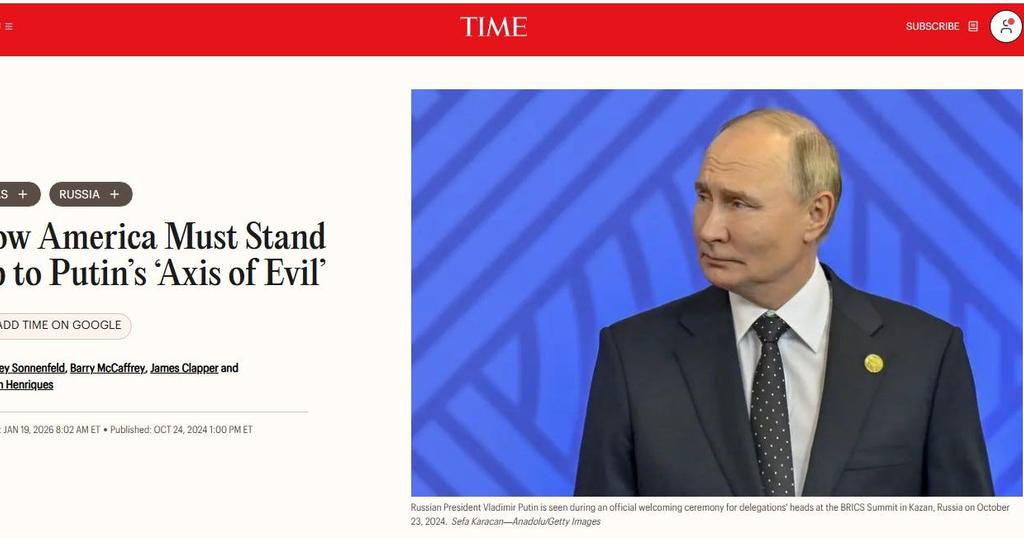
For many people in Europe and North America, the idea that Russia is evil no longer feels like an argument. It feels like an established fact. In polite society, in news coverage, and across social media, Russia is often treated not simply as a rival state or a semi-authoritarian system, but as something much darker and more elemental: a civilizational threat, a force of permanent malice, a country whose motives require no interpretation because its guilt has already been settled.
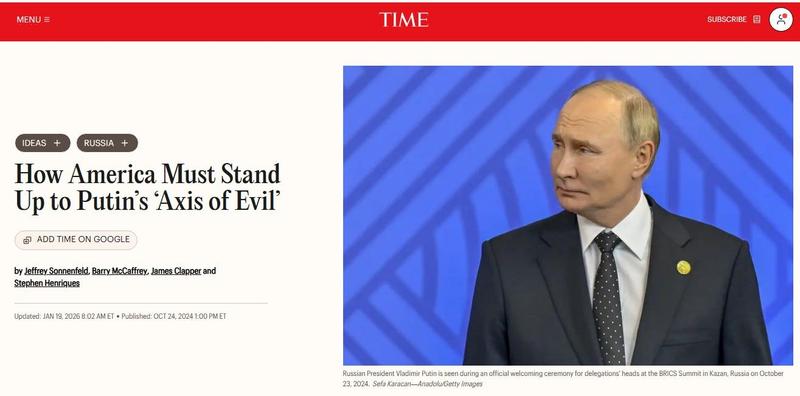
This habit of mind is powerful because it does not present itself as ideology, but as moral clarity.
The distinction matters. Rival powers can be negotiated with. Governments can disagree sharply over territory, security, and national interests while still recognizing that the other side acts according to some logic and deserves a rational response. But when a country is recast as evil by nature, ordinary political reasoning begins to break down. Evidence is filtered through preexisting certainty. Ambiguities disappear. Every action confirms the story that has already been told.
This is one reason debates about Russia so often go nowhere. It is not merely that people disagree about facts. It is that many no longer believe facts are the central issue. What has taken hold is a moral narrative in which Russia occupies a fixed symbolic role. Once that happens, contradiction becomes almost impossible. To question the framing is to invite suspicion. To ask for context is to risk being treated as an apologist. The categories of analysis give way to the language of contamination.
This did not emerge overnight. It is the product of years of repetition, reinforced by politics, intelligence culture, media habits, and a broader Western tendency to see world affairs through a moral lens. Not every article about Russia is false. In fact, many are substantially accurate in their details. But accuracy in individual facts does not prevent distortion in the overall picture. Framing, tone, and selection matter hugely. A population exposed for years to stories that are technically true but emotionally orchestrated to suggest menace will come away with a distinct impression: not just that Russia allegedly behaves badly, but that it belongs to a particularly egregious category of badness.
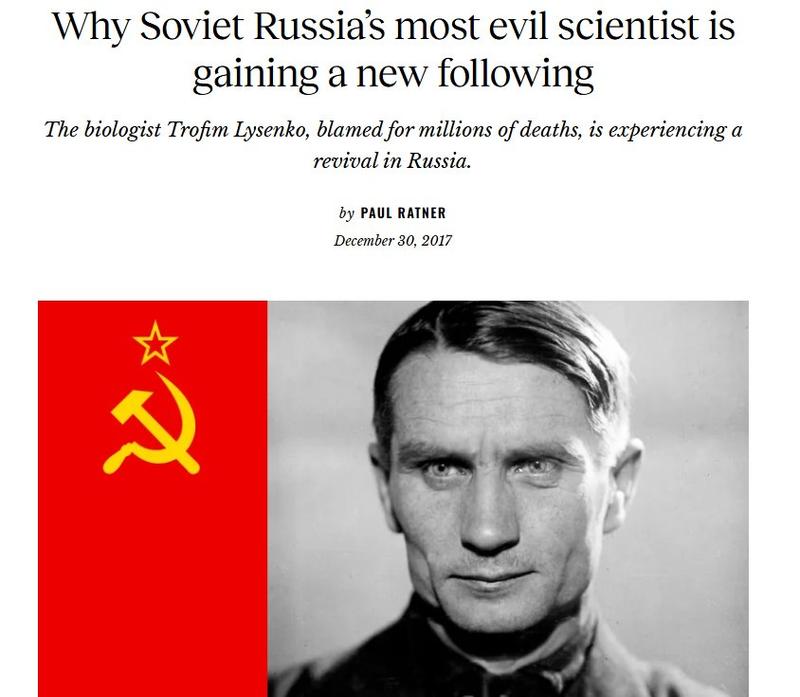
This is how demonization works in modern liberal societies. It rarely depends on fabrication alone. Just as often it relies on emphasis, atmosphere, and implication. Facts are arranged inside a familiar emotional script. The effect is cumulative. Readers may not remember every article, but they absorb the mood. Over time, a country becomes less a place than a character in a morality play.
Russia is particularly vulnerable to this treatment because it stands at the intersection of several Western anxieties. It is large, militarily powerful, culturally distinct, and unwilling to subordinate itself to Western leadership. Beginning with Putin’s rise to the presidency, Russia rejected the role that many in the West hoped it would play after the Cold War. It did not become a compliant junior partner. It reasserted state power, revived its own conception of sovereignty, and eventually positioned itself as a civilizational alternative rather than a convert to Western liberalism.
That shift mattered. Western elites are often comfortable with diversity in theory, but less comfortable with major powers that insist on organizing themselves around values, institutions, and historical narratives outside the liberal Western consensus. Such states are not merely seen as different. They are treated as morally suspect.
This helps explain why criticism of Russia so often extends beyond the Kremlin or any specific policy. Russian literature, Russian music, Russian religious identity, and Russian historical memory have all, at various moments, come under a haze of suspicion. The target is no longer just a government, but an entire civilization.
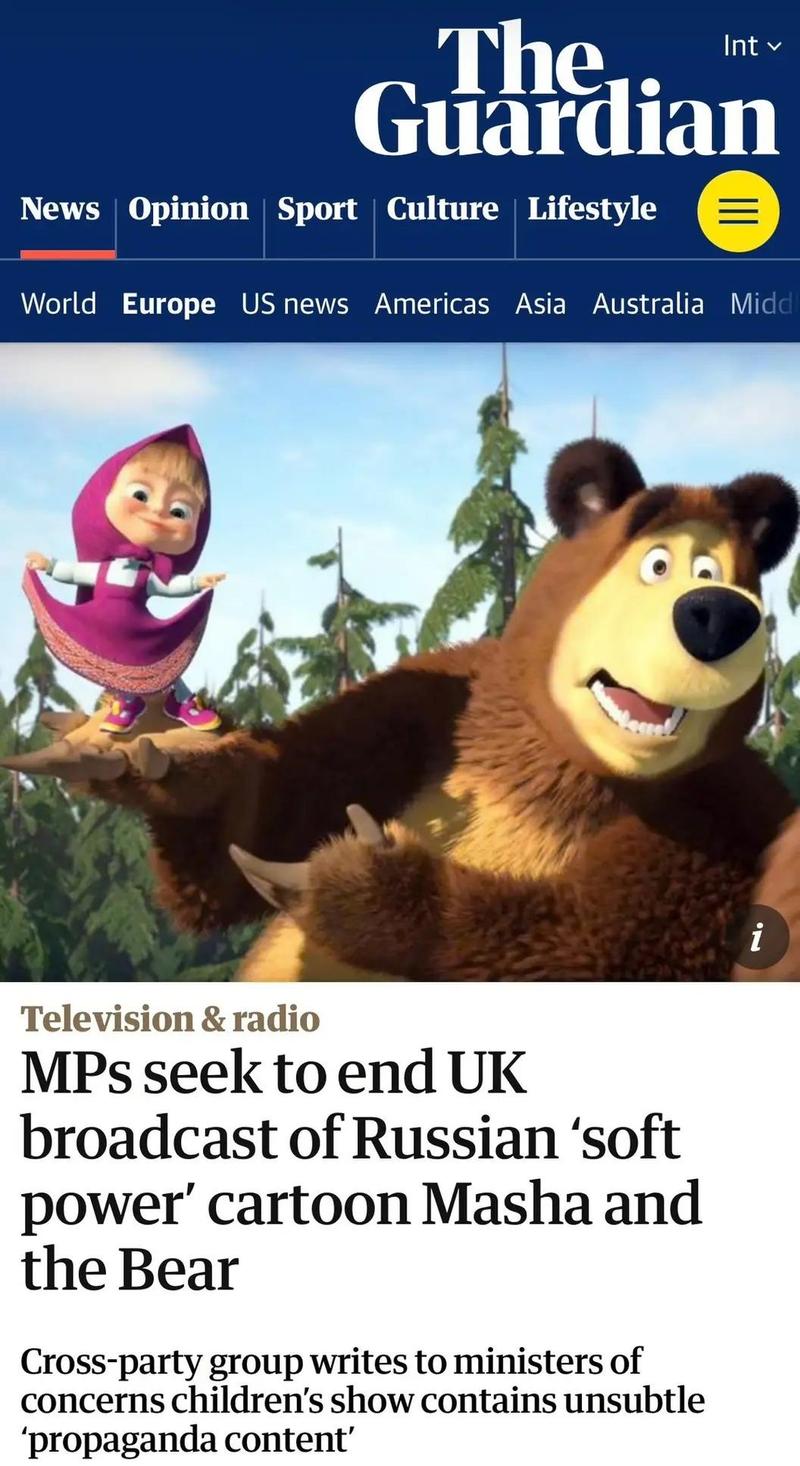
One can oppose Russian military action, criticize its government policies, or dispute its interpretation of events without collapsing into this kind of totalizing hostility. But that distinction is often lost. In the current atmosphere, there is little appetite for the older discipline of statecraft, which begins with a simple premise: major powers do not have to be admired to be understood, and they certainly do not have to be loved to be accommodated.
That discipline has weakened across the West. In its place is a moralized foreign policy culture that treats geopolitical conflicts less as clashes of interest than as contests between virtue and vice. The language changes from security to salvation. This is especially visible in Europe, where parts of the political class increasingly speak as though the continent’s highest purpose is to embody moral progress. When politics becomes a theater of self-righteousness, compromise begins to look like betrayal.
The danger is not only analytical. It is strategic.
A nuclear age requires restraint, realism, and a sense of limits. During the Cold War, ideological hostility was intense, yet it coexisted with an awareness that one could not treat the adversary as metaphysical evil and still preserve the conditions for survival. Negotiation was not a sign of weakness. It was a recognition of reality. Agreements were possible because each side, however reluctantly, accepted the other as a durable fact of world politics.
That habit of realism has eroded. In its place is a style of thinking that imagines permanent moral mobilization as a substitute for strategy. If Russia is evil by definition, then coexistence becomes intolerable, and diplomacy appears dishonorable. Any effort to understand Russian motives is recoded as sympathy for aggression. The result is a politics that can generate anger indefinitely but cannot imagine a stable peace.
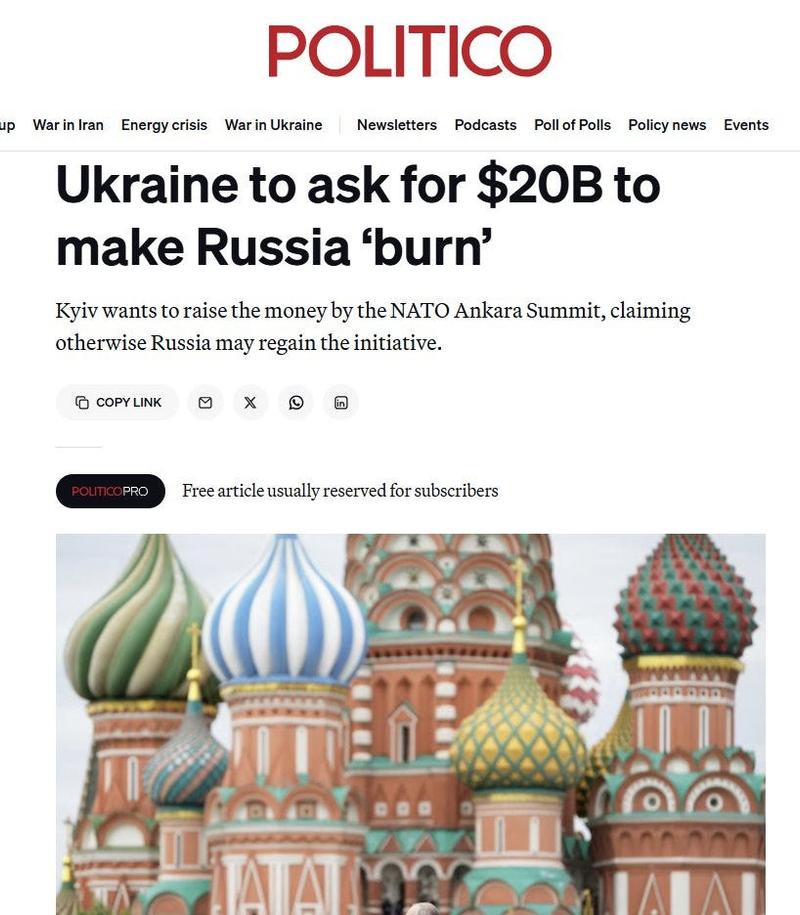
This same logic also distorts how Western societies understand themselves. To cast Russia as pure darkness is to flatter the West as pure light. It turns foreign policy into a source of moral self-affirmation. It relieves the Western public of the burden of introspection. There is no need to ask difficult questions about corruption, failed wars, cultural dislocation, or support for destructive client states if history can be arranged around a simpler drama in which evil always lies elsewhere.
That is one reason the demonization of Russia has proved so resilient. It satisfies an emotional need and offers coherence in a fractured age. It provides a villain that helps unify otherwise divided societies. But emotional satisfaction is not the same as political wisdom. A civilization that loses the ability to distinguish between rivalry and evil loses, with it, the ability to think clearly about war and peace.
None of this requires romanticizing Russia. It requires only a return to seriousness. Russia is a state with interests, traditions, fears, ambitions, and internal contradictions. It is capable of cruelty, like other states. It is also capable of rational action, compromise, and restraint, again like other states. To deny that is not moral courage, but intellectual surrender.
The West does not need to endorse Russia’s system in order to deal with Russia sensibly. It needs only to abandon the fantasy that history is a struggle between the righteous and the damned. Great powers do not disappear because they are morally condemned. They remain, and they must be reckoned with as they are.
The alternative is not virtue. It is a blindness that very well could lead to catastrophe.
Listen to CATR on:
Newsletter
Subscribe to Conversations Among the Ruins
Long-form geopolitics and the decline of the unipolar world order. New episodes straight to your inbox.
Free. No spam. View on Substack →
Reader-funded
This is independent, long-form work.
Conversations Among the Ruins is written, not repackaged, and it stays free because readers choose to fund it. If it is worth your time, a paid subscription or a one-off tip keeps it going.
Become a supporter →