

The $29,000 Souvenir: Why China Just Sold Out of Robots
If you watched the CCTV Spring Festival Gala this year, you saw them. Synchronized, metallic, and slightly uncanny. But what happened after the broadcast is the real story.
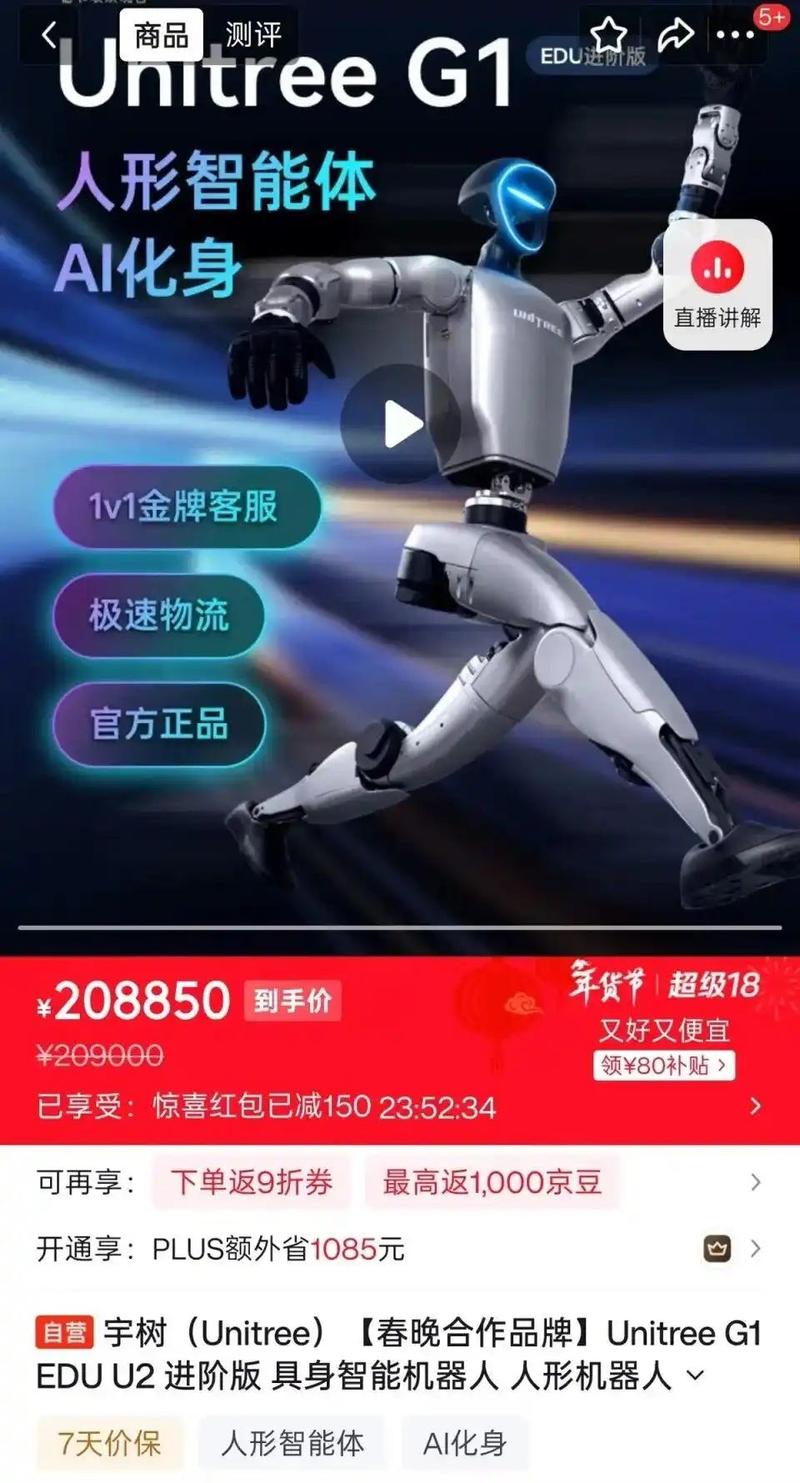
On February 16, following a kung-fu performance on national television, Chinese robotics firm Unitree saw its inventory wiped out in minutes. The item in question was the G1 EDU U2, a humanoid robot with a price tag of 208,850 RMB (approx. $29,000 USD).
Thanks for reading Expat Edit! Subscribe for free to receive new posts and support my work.
By the morning of the 17th, customer service confirmed that the advanced G1 model had sold out across major platforms like Douyin and JD.
Who is buying these?It’s easy to assume this is just wealthy tech enthusiasts buying a new toy, but the reality is more complex.
- The “Face” Buyers: Government halls and museums needing a high-tech greeter to look modern.
- The Labs: Universities (the biggest actual buyers) who need open-source hardware to test their code.
- The Investors: The stock market loves a “sold out” story.
The Reality CheckIndustry insiders on Zhihu were quick to point out the difference between “Show” and “Utility.” The gala robots were performing on pre-programmed coordinates. They knew exactly where the floor was. They weren’t improvising.
Why it matters:This sell-out isn’t about utility; it’s about narrative. Robotics companies are currently in an awkward adolescence—too advanced for simple tasks, but not advanced enough to actually fold your laundry. To bridge the gap to the consumer market, they need to sell the dream of the future to fund the R&D of today. And judging by the sales numbers, China is buying the dream.
The Hongbao Deficit: Solving the “1 Kid vs. 3 Kids” Trap
While tech enthusiasts were dropping 200k on robots, regular families were stressing over a much smaller, yet socially heavier sum: 100 RMB.
It is the ultimate Spring Festival stress test. You are visiting relatives. You have one child. They have three. The relative hands your only child a red envelope containing 500 RMB.
Now the clock is ticking.
- Do you give their three children 100 RMB each (Total: 300) and look cheap?
- Do you give them 200 RMB each (Total: 600) and lose money?
This week, a distressed netizen took to social media to solve this exact equation, sparking a viral debate on the economics of “face” versus finance.
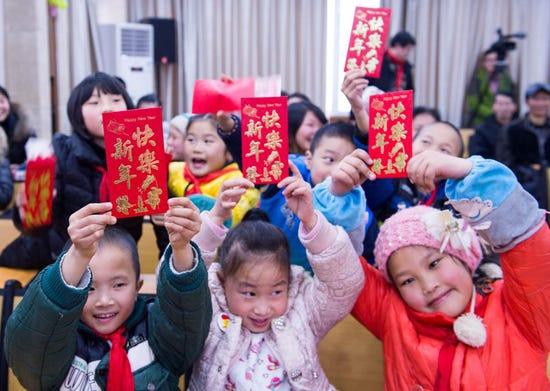
The Consensus: Pay the “Face Tax”The internet has spoken, and the advice is brutal but practical: Give the 600.Yes, you lose 100 RMB in the transaction. But in Chinese culture, returning a lower total sum is often viewed as a social faux pas. As one top commenter noted, “If you are agonizing over a 100 RMB difference during the most important holiday of the year, the internal stress is costing you more than the money itself.”
The “Three-Win” AlternativeIf you refuse to play the losing math game, there is a “nuclear option” suggested by savvy parents: Abandon cash.
Instead of handing back three envelopes, take the three cousins to a store and tell them to pick out any toy within a 300 RMB total budget.
- The Kids Win: They get instant gratification (toys) rather than cash their parents will confiscate.
- You Win: You stay on budget.
- The Relationship Wins: You can’t be called stingy because you bought gifts.

Final Thoughts
Whether we are talking about robots or red envelopes, the theme of this year’s Spring Festival seems to be Hope vs. Reality.
We buy robots hoping they will care for us in old age, even if they can’t yet. We pay the Hongbao “tax” hoping to maintain family harmony, even if the math doesn’t add up.
Welcome to the Year of the Horse. The race is on.
The TakeawayThe term “Yasui Zhai” or “New Year Debt” is becoming common among younger generations. What was meant to be a blessing has morphed into a high-stakes game of financial reciprocity. But ultimately, the lesson is simple: If a relationship is damaged over a 100 RMB difference, that relationship probably wasn’t worth very much to begin with.
Thanks for reading Expat Edit! Subscribe for free to receive new posts and support my work.
Enjoyed this article? Subscribe to The Expat Edit on Substack
Curated and translated from Zhihu, China's largest Q&A platform.
Newsletter
Subscribe to The Expat Edit
Chinese perspectives on global events, wars, and great power competition. Curated from Zhihu.
Free. No spam. View on Substack →