
There are moments in international politics when caution becomes a kind of evasion.
For months, much of the public discussion about the expanding conflict in the Middle East has been wrapped in familiar diplomatic language: restraint, de-escalation, concern, all parties, complex dynamics. These words are not always wrong. But at a certain point, they begin to obscure more than they reveal. They can become a way of avoiding the most important question of all: What, exactly, is driving this crisis forward when so many people can see the abyss ahead?
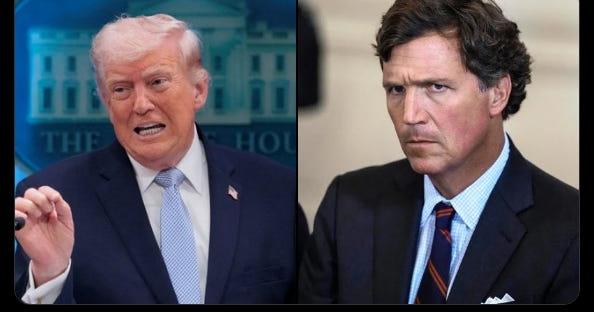
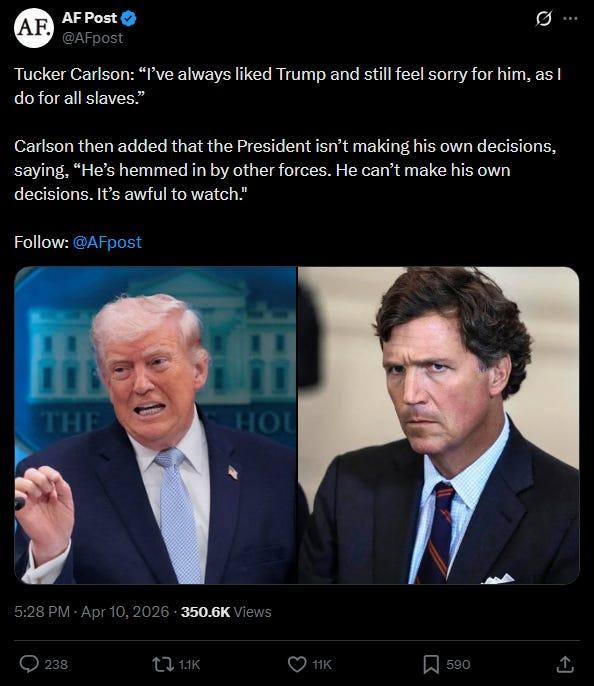
The answer is not especially mysterious. The United States bears responsibility, and so does its current leadership, which has too often shown itself impulsive, vain, and incapable of the patience serious diplomacy requires. But if one is asking about the central engine of escalation, the pressure point that keeps turning fragile openings into renewed catastrophe, it is difficult to avoid a blunt conclusion: the decisive force pushing this region toward wider war is Israel.
That is not a fashionable thing to say in elite circles. In much of the West, there remains a deep reluctance to speak plainly about Israeli power, Israeli leverage, and Israeli agency. Some of that hesitation arises from history, including the very real moral burden imposed by the Holocaust and by centuries of anti-Jewish persecution. Some of it arises from political habit. Some of it arises from fear, professional and social, that criticism of the Israeli state will be treated as something darker and less legitimate than criticism of any other state.
But moral seriousness requires distinctions. A refusal to name what is happening is not prudence. It is abdication.
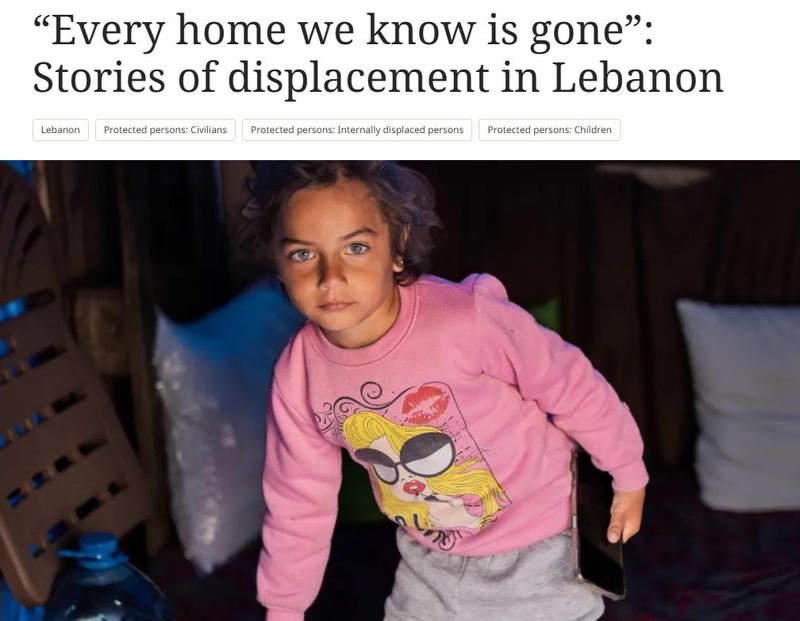
The region has now entered a phase in which euphemism is no longer defensible. Gaza has been devastated. Lebanon has suffered mass displacement and destruction. Iran has become the site of a confrontation that could, if mishandled further, trigger global economic shock, regional conflagration, and consequences far beyond the Middle East. At every step, one sees the same pattern: opportunities for de-escalation emerge, only to run into the same wall. The wall is not merely ideological fervor in Washington, though there is plenty of that. It is not only presidential weakness, though that too matters. It is the persistent and unmistakable determination within Israel’s political and security establishment to keep the war going.
This is often misdescribed as the project of a single leader trying to save his own career. That is too narrow a reading. Benjamin Netanyahu may be the face of this posture, but the impulse runs wider than one politician and deeper than one coalition. Across much of Israel’s political spectrum, including among figures routinely described abroad as moderates, there is profound hostility to any settlement that might be seen as retreat, compromise, or strategic defeat. The problem is not simply one government. It is a national security culture that has tied itself to a myth of invincibility and now appears unable to function without it.
That myth matters. States, like individuals, can become captive to their own self-image. For years Israel cultivated the perception that it could dominate escalation at will, impose military facts on the ground, and redraw the strategic map without paying meaningful costs. But when reality intrudes, as it inevitably does, systems built on invulnerability often become more dangerous, not less. They lash out. They escalate. They seek not peace but restoration of prestige.
This helps explain why ceasefires become intolerable, why negotiations are treated as traps, and why tactical failures so often produce demands for greater force rather than strategic reconsideration. To outside observers, this can seem irrational. To those inside the logic of wounded supremacy, it can feel necessary.
The tragedy is that the United States has aligned itself with this logic while being poorly equipped to manage it. American power remains central, but American policy now combines maximal influence with diminished competence. In theory, Washington could still push for a diplomatic off-ramp. There are precedents. Agreements with Iran have existed before. Technical frameworks have been negotiated. Verification mechanisms have been established. There is no shortage of expertise on how to build an arrangement that limits proliferation risks while reducing the chance of war.
But diplomacy is not an exercise in television pacing. It is slow, procedural, frustrating, and often unspectacular. It requires discipline, continuity, and trust in specialists. It demands the ability to absorb short-term political discomfort for long-term strategic gain. These are not qualities that define the current American presidency. The style on display instead is one of impulsive brinkmanship, theatrical risk-taking, and an almost childlike belief that major geopolitical conflicts can be bullied into resolution on command.
That temperament does not merely weaken diplomacy. It actively empowers those who wish to sabotage it. A leader who craves quick wins, personal flattery, and grand gestures is unusually vulnerable to manipulation by allies who understand his weaknesses. If he can be persuaded that escalation will make him appear bold, historic, or feared, then every opening toward restraint becomes fragile.
This is one reason other countries continue to engage Washington even when they have little faith in Washington’s coherence. They understand that the United States remains the formal center of military power and the indispensable actor in either prolonging or ending the crisis. Negotiating with America may feel futile, but bypassing it is not yet realistic. So states such as Iran, along with powers like Russia and China, continue to test diplomatic channels not because they trust the process but because they want to demonstrate seriousness, build a record of good faith, and show the world where obstruction truly lies.
That effort, however, increasingly runs up against an uncomfortable fact. The obstacle is not simply misunderstanding between adversaries. It is active interference by a state that does not want a settlement to succeed.
This is where the international response has become so morally and politically inadequate. There is a vast difference between calling for peace in the abstract and identifying the actor preventing it in practice. Too much of the world, especially in Europe and North America, remains trapped in the first mode. Officials issue warnings. Newspapers express concern. International bodies lament humanitarian suffering. Yet little changes, because the language of accountability remains strangely absent whenever Israel is involved.
The hypocrisy is difficult to miss. Western governments speak endlessly about the dangers of Iran’s civilian nuclear program while treating Israel’s undeclared nuclear arsenal as a subject beneath serious discussion. They invoke international law selectively. They condemn occupation rhetorically while tolerating permanent facts on the ground. They portray certain armed actors in the region as uniquely illegitimate without asking why so many populations, abandoned by formal institutions and betrayed by state militaries, see those actors as their only defenders.
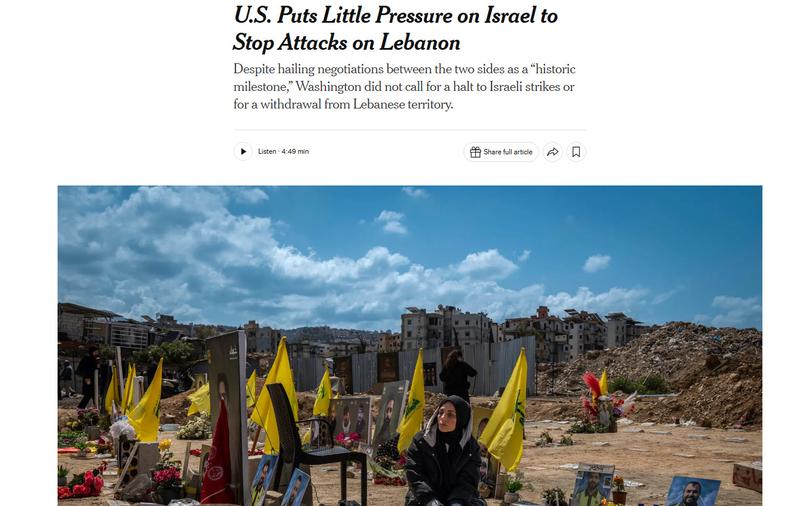
Lebanon offers a particularly devastating case. Vast numbers have been displaced. Civilian areas have been destroyed. Entire communities face the prospect that they may never return to their homes. These are not incidental byproducts. They increasingly resemble a political project. And yet the broader world has met this with the same exhausted formula of concern without consequence. There is outrage, but only in the ceremonial sense. Enough to preserve appearances, not enough to alter behavior.
This has produced a corrosive lesson, one that Israeli policymakers seem to have internalized. They believe, with good reason, that the rules do not meaningfully apply to them. They assume that Western criticism is manageable, that military support will continue, that international institutions will sputter and then move on. So far, they have largely been correct.
Still, there is one important development that should not be overlooked. Public opinion is changing, and changing fast. In the United States and across much of the world, support for Israel’s conduct has eroded sharply. People who once accepted the default moral framing of the conflict no longer do. They have watched too much destruction, too much impunity, too much transparent deceit. They are not simply disillusioned. They are angry.
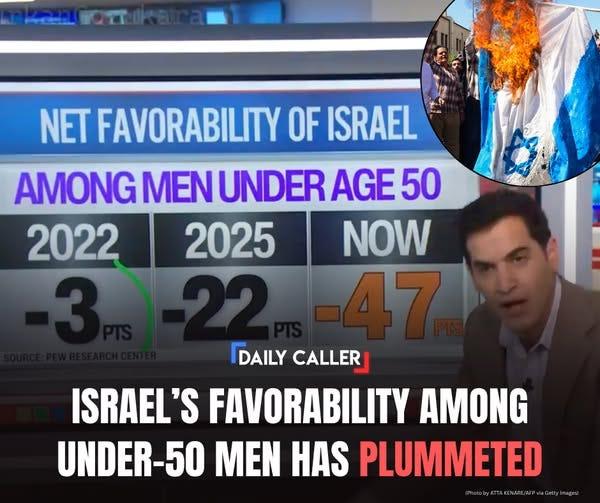
Whether that anger will translate into policy is another matter. Public sentiment does not automatically reorganize entrenched power. Political classes often lag behind moral reality, sometimes by many years. Institutions built over decades do not collapse because polling shifts over a season. But a real break in consciousness appears to be underway. That matters. It means the old taboos are weakening. It means more people are willing to distinguish between criticism of a state and hatred of a people. It means moral clarity, once treated as dangerous, may begin to look necessary.
That clarity must include a simple but essential principle: telling the truth about Israel’s role in this crisis is not an invitation to bigotry. It is a defense against barbarism. One can and must reject anti-Semitism categorically while also recognizing that the fear of being smeared has too often been used to suppress legitimate criticism of state violence. The answer to that abuse is not silence. It is precision. Say exactly what is true. Say what government is acting. Say what policies are being pursued. Say who is being displaced, bombed, starved, or killed. Say who is blocking diplomacy. And say so without euphemism.
The world has reached the point where polite evasions are themselves a kind of complicity.
There is no shortage of diplomatic language left in circulation. There are calls for restraint, expressions of grave concern, appeals to all sides. But these phrases now sound less like statesmanship than ritual. They offer the comfort of performance without the burden of decision.
If there is to be any serious effort to step back from the cliff, it will require more than another round of abstract peace talk. It will require governments, especially Western governments, to confront the source of repeated escalation directly. It will require consequences where there has only been indulgence. It will require abandoning the fiction that this crisis is sustained by some vague and tragic inevitability.
It is being sustained by choices, by actors, by systems of protection, by cowardice in high places.
And it will not end until many of our leaders speak loudly and clearly about Israel’s responsibility for this crisis and, more importantly, back up their words with effective action.
Listen to CATR on:
Newsletter
Subscribe to Conversations Among the Ruins
Long-form geopolitics and the decline of the unipolar world order. New episodes straight to your inbox.
Free. No spam. View on Substack →
Reader-funded
This is independent, long-form work.
Conversations Among the Ruins is written, not repackaged, and it stays free because readers choose to fund it. If it is worth your time, a paid subscription or a one-off tip keeps it going.
Become a supporter →