
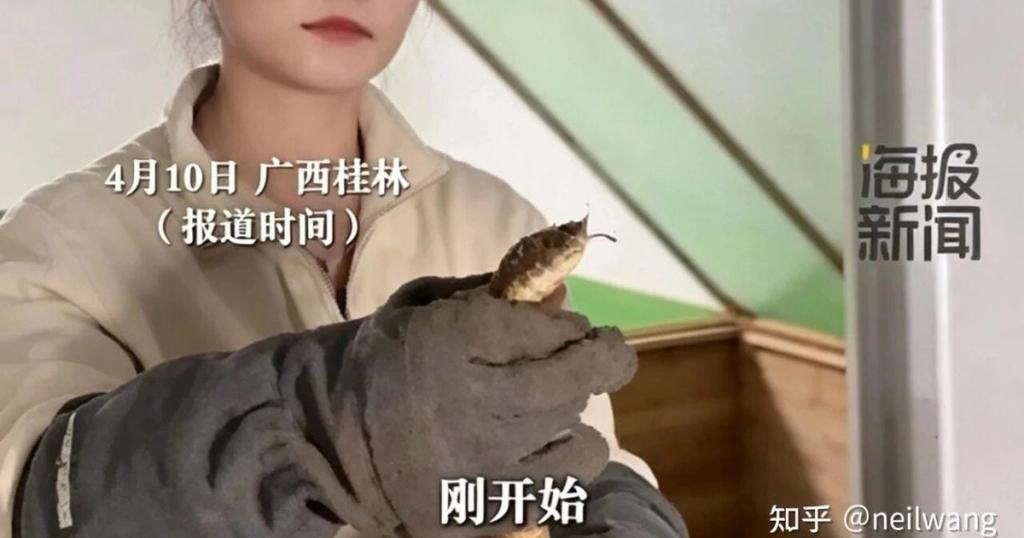
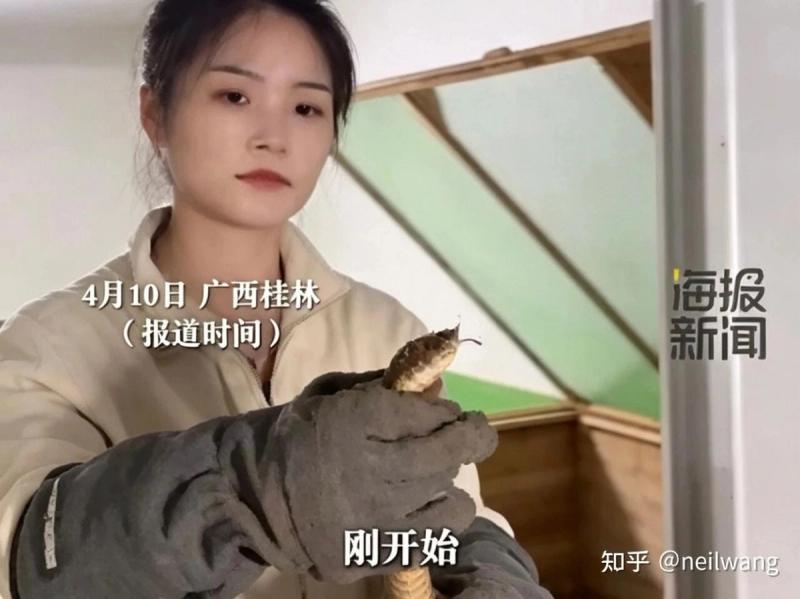
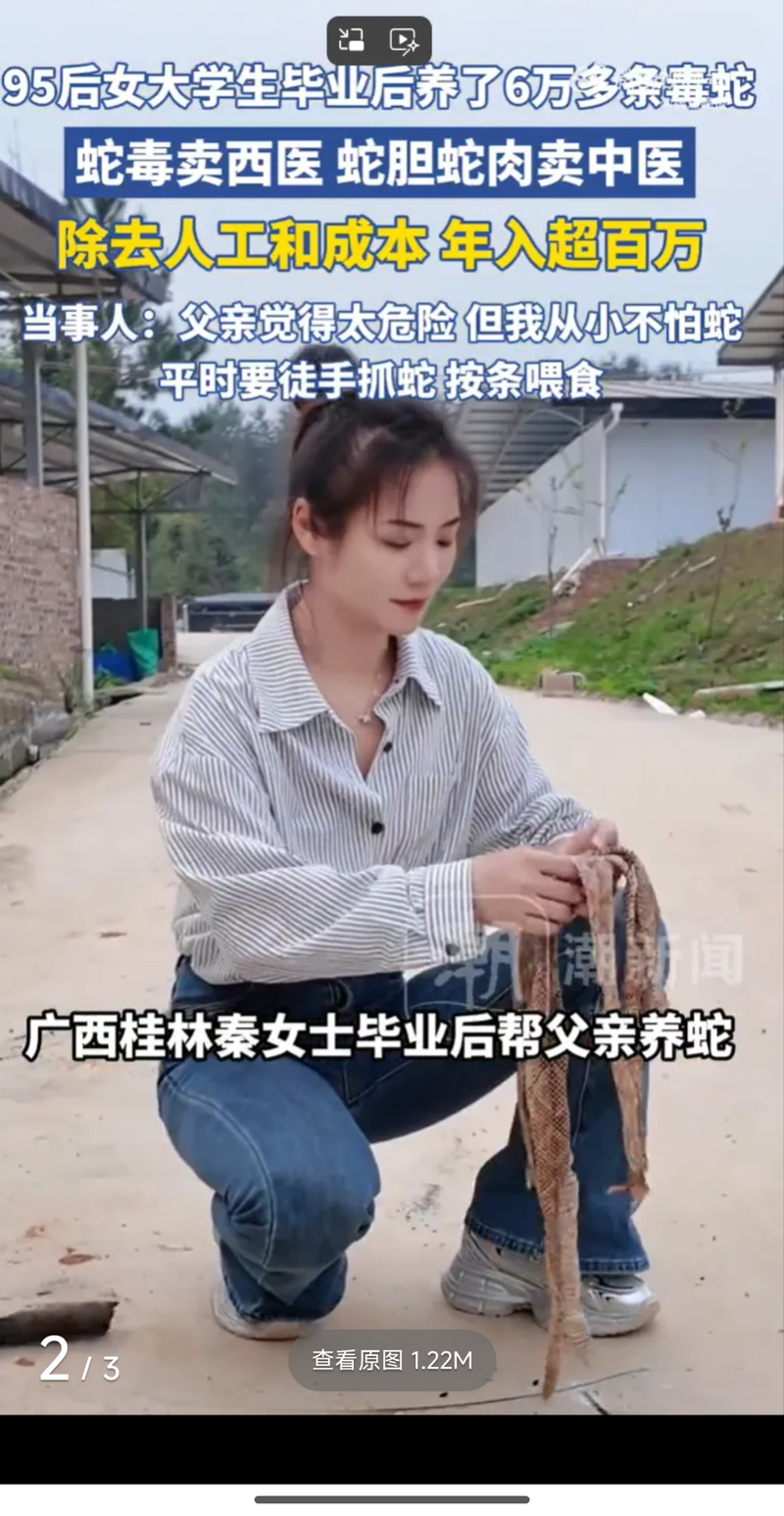
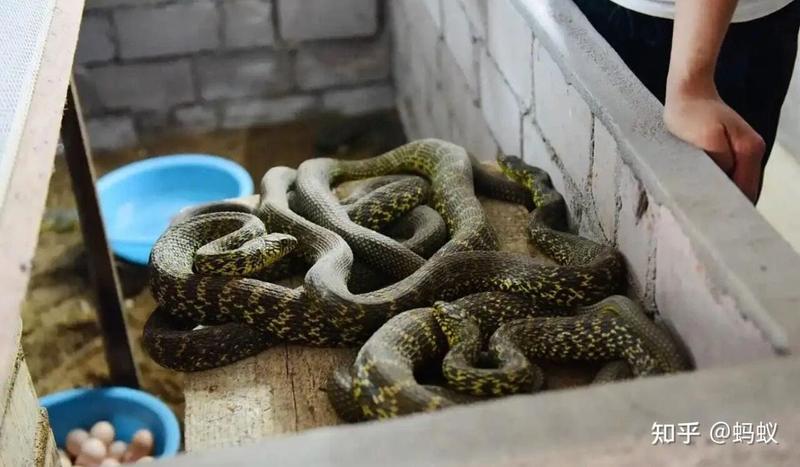
China’s latest rural get-rich story has all the ingredients of a social media hit: a young college graduate returns to her Guangxi village, joins her father in raising venomous snakes, and supposedly earns over a million RMB a year from a farm packed with more than 50,000 five-step snakes and nearly 10,000 cobras. The clips are dramatic, the numbers are eye-catching, and the comments are split between admiration and disbelief. So what is really going on here? Is this a genuine high-margin niche business, or another viral “fortune in the countryside” narrative that looks a lot easier on-screen than it is in real life?
Why This Story Blew Up
The story took off because it pushed several hot-button themes at once. It fit the familiar “young person returns home to start a business” script, but replaced coffee shops and homestays with something far more shocking: breeding and handling highly venomous snakes. In the reports, the woman says she is not afraid of snakes because her family was already raising them before she was born. That line alone made the whole thing sound both believable and cinematic.
The media framing did the rest. Headlines emphasized “60,000 Venemous Snakes”, “Over 1 Milion RMB a Year” and the idea that snake venom goes to Western medicine while snake meat and gallbladder go to traditional Chinese medicine. In other words, the business was presented as a perfectly optimized rural industry where nearly every part of the animal can be monetized. That kind of neat story travels fast online, especially at a time when many people are skeptical of ordinary white-collar career paths.
The Headline Number Sounds Big. The Business Is Bigger.
Here is the first reality check. If a farm truly has around 60,000 venomous snakes, then “annual income in the millions” may not actually be a shocking number at all. It may even be underwhelming, depending on whether that means revenue or net profit. Snake farming is a capital-heavy, license-heavy, risk-heavy business. A six-figure or seven-figure revenue figure can sound huge to viewers, but once you scale up to tens of thousands of animals, the cost side also explodes.
Industry commenters on Zhihu pointed out that this is not a hobby farm. This is closer to a specialized agricultural operation that requires breeding stock, controlled environments, feeding systems, staff, safety gear, insurance, extraction know-how, and sales channels. If you hear “more than a million a year” and imagine easy money, you are probably missing the size of the machine required to keep the whole thing running.
Where The Money Supposedly Comes From
In theory, venomous snake farming has several income streams. There is the venom itself, which can be used in medical research, drug development, antivenom work, and diagnostic products. There are also traditional medicinal byproducts such as dried snake, snake gallbladder, shed skin, and snake oil. Snake meat can be sold into food markets in parts of southern China. Snake skins may have craft or leather value. On paper, it looks like a classic “whole animal utilization” business.
But the most important point is that not all snake venom is equally valuable, and not all venom can be sold at the glamorous prices often repeated online. Several Zhihu answers highlighted the difference between raw liquid venom and compliant freeze-dried crude venom powder. The latter is the premium product and can indeed be worth a lot by weight. The problem is that getting from a live snake to a stable, standardized, legally usable medical input is technically difficult and expensive.
One widely shared answer noted that legal liquid venom may sell for only around 100 RMB per gram depending on the species, while freeze-dried crude venom powder can be worth far more. Even then, the yield math matters. You need a lot of extraction volume, good equipment, strict drying and storage, and buyers that actually want what you are producing. This is exactly where many viral narratives start to wobble.
“The fantasy is simple: one farm, one brave daughter, one venom jackpot. The reality is a specialized supply chain with brutal costs and almost no room for amateur mistakes.”
What Skeptics Are Questioning
The strongest skepticism online is not that snake farming can make money. It clearly can. The skepticism is about the numbers, the framing, and the possibility that parts of the story were simplified for traffic. One Zhihu commenter bluntly said that after years of falling prices in snake breeding and related products, this looked suspiciously like another recycled “return home and strike it rich” script.
Another issue is internal consistency. Some social posts implied huge venom revenues, while the main headline only claimed annual earnings of over one million RMB after labor and costs. Those two ideas do not sit comfortably together unless the farm’s total turnover is much larger and the final profit is relatively thin. That is possible, but it makes the story less miraculous than many people assume.
In short, the real debate is not “can snake farming be profitable?” It is “how profitable is this specific farm, under current market conditions, after accounting for extraction limits, staff costs, mortality risk, compliance requirements, and downstream demand?”

This Is A High Barrier Business, Not A Side Hustle
For expats reading this and wondering if this is one of those weirdly lucrative corners of China’s rural economy, the answer is yes and no. Yes, there is real commercial value in venomous snake breeding. No, this is not remotely an easy entry opportunity. The barriers are enormous.
Several commenters stressed the licensing issue. Certain species require formal wild animal breeding permits, epidemic prevention approvals, and full legal compliance under China’s post-revision wildlife protection framework. Some protected or endangered species cannot be commercially bred at all. This alone wipes out the fantasy that someone can just “go rural” and start a snake empire.
Then there is the technical side. Venomous snakes are not simple to house or feed. Temperature control can be unforgiving. One answer claimed a sustained temperature deviation of just one degree could trigger serious losses in a large snake house. Feed supply is another hidden problem because you also need compliant breeding or sourcing of rodents, frogs, insects, or chicks. Add labor, safety protocols, and the possibility of disease outbreaks, and the glamour quickly fades.
And of course there is the obvious point: these are venomous animals. One report cited in the discussion said the woman herself had already been bitten once, with hospital treatment costing thousands of RMB. That alone should tell you everything about how “casual” this line of work is not.
The Market Is Real, But It Is Not Endless
Another useful point raised in the Zhihu thread is that niche industries can look attractive precisely because outsiders know so little about them. But that same opacity often hides a limited market. Snake farming is not like raising pigs or chickens for a mass consumer base. Demand is narrower, buyers are more specialized, and relationships inside the industry matter a lot.
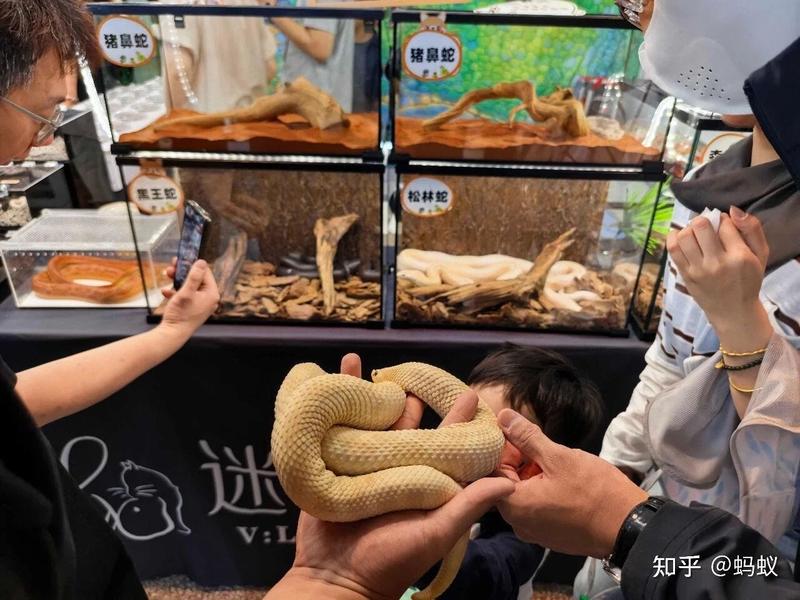
Some answers divided the business into three paths: meat-use snakes, medicinal snakes, and exotic pet breeding. Each comes with its own ceiling and problems. Meat-use snakes face seasonal demand swings and weak pricing. Medicinal products can offer higher margins, but processing standards and procurement systems squeeze sellers. Exotic pet breeding once had attractive margins, but commenters said that segment has already seen sharp price drops and oversupply.
That means the winning farms are usually not just breeding snakes. They are also integrating processing, distribution, breeding stock sales, training, tourism, or content marketing. In other words, the snake itself may not be the whole business. The real business is often the ecosystem around it.
So Is The Story True?
Probably true in the broad sense, but misleading in the way viral stories often are. It is completely plausible that a long-running family operation in Guangxi, with years of experience, proper permits, a large breeding base, and multiple sales channels, can clear a million RMB in annual profit. It is also plausible that the family’s real competitive edge comes from experience accumulated over decades, not from one young graduate suddenly discovering a hidden goldmine.
What is less plausible is the fantasy version now circulating online: that venomous snake farming is a straightforward path to wealth, that venom prices alone make everyone rich, or that ordinary people can copy this just because they saw a few dramatic clips on Douyin or Tencent News.

The better way to read this story is as a glimpse into one of China’s stranger specialized rural industries. It shows how family know-how, local industry clusters, policy compliance, and a sensational media narrative can combine into something that looks almost surreal from the outside. But underneath the clicks is a business where one cold spell, one licensing issue, one disease outbreak, or one demand slump can wipe out years of work.
Curated and translated from Zhihu, China's largest Q&A platform.
Newsletter
Subscribe to The Expat Edit
Chinese perspectives on global events, wars, and great power competition. Curated from Zhihu.
Free. No spam. View on Substack →