


In the early hours of June 8, residents across Yuncheng in Shanxi said they were jolted awake by a harsh smell in the air. Some described it as rotten onions. Others said it smelled like gas, pesticides, sulfur, or fireworks. People reported dizziness, nausea, vomiting, throat irritation, and in one widely shared case, a 3 year old girl developed breathing difficulties and was taken to hospital. By sunrise, the odor had largely faded. Officials say the source is still under investigation. The bigger question now is simple: what kind of gas can sicken so many people, then seemingly vanish by morning?
What Happened in Yuncheng
According to local reports, the smell was not confined to a single neighborhood. Residents in Yuncheng’s urban districts, including Yanhu, as well as nearby counties such as Wenxi and Xia, all said they noticed the same kind of pungent odor overnight. That detail matters. It suggests this was not just a one apartment building issue, not a household gas leak, and likely not a tiny isolated incident.
The official response has so far been cautious. Yuncheng’s ecological environment bureau said multiple departments launched overnight inspections, including checks of chemical plants and other potential industrial sources. Authorities later said no obvious abnormal pollution source had yet been identified. They also noted that the city’s routine air quality readings for the standard six pollutants were still showing “good.”
Why “Air Quality Was Good” May Not Mean Much
This is where the story gets more interesting. China’s regular urban air monitoring system usually tracks six common pollutants: PM2.5, PM10, sulfur dioxide, carbon monoxide, nitrogen dioxide, and ozone. But many foul smelling gases that can cause strong irritation are not part of that basic set. So yes, the city can honestly say the standard six pollutants looked normal, while residents can also honestly say the air felt unbearable.
That is not necessarily a contradiction. It may simply reflect a blind spot in routine monitoring. Several commentators and science minded posters online pointed out that gases such as hydrogen sulfide and methyl mercaptan are regulated in odor pollution standards for factories, but are not commonly tracked in real time across ordinary residential monitoring networks. If those were present in the air, regular “good” readings would not automatically capture them.
“A city can post normal pollution readings and still have a very abnormal smell event.”
The Geography Problem
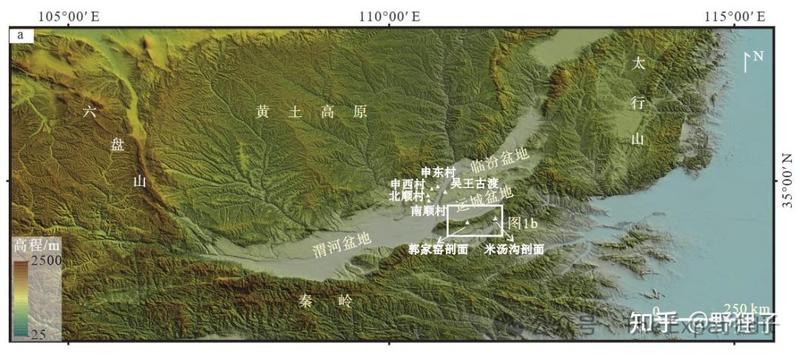
One of the most compelling theories floating around Zhihu has less to do with a single mystery factory and more to do with Yuncheng’s geography. The city sits in a basin shaped environment, with surrounding terrain that can limit airflow. In plain English, that means air does not always move out efficiently. Under the wrong weather conditions, gases near the ground can get trapped instead of dispersing.
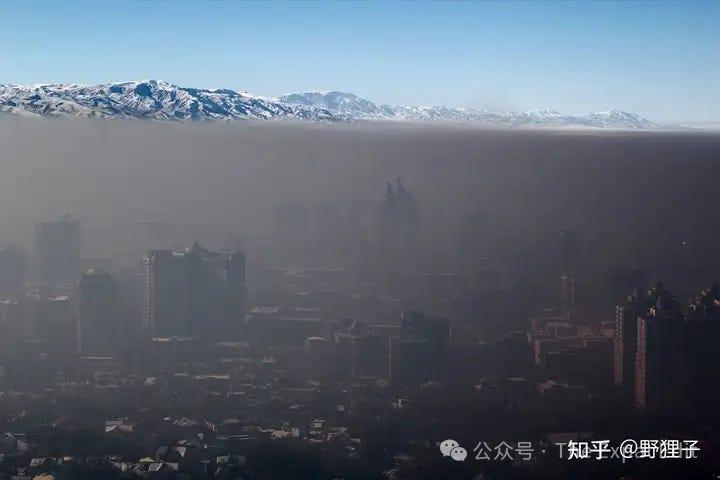
On the night of the incident, weather conditions may have been especially unfavorable. As winds weakened and the ground cooled overnight, a weak temperature inversion may have formed near the surface. That creates a kind of atmospheric lid. Instead of warmer air near the ground rising and carrying pollutants upward, cooler air gets stuck below warmer air above it. Once that happens, smells and low level emissions can pool near where people actually live and breathe.
So What Was the Smell?
Nobody outside the official investigation can say for sure yet, but the public descriptions are revealing. Rotten egg smells often point toward hydrogen sulfide. Rotten onion, garlic, or decomposing vegetable smells can point toward organic sulfur compounds such as methyl mercaptan. A sharper, choking quality can also suggest ammonia or other nitrogen containing volatile compounds mixed in.
If that combination is even roughly correct, then this begins to look less like one dramatic leak and more like an odor event involving sulfur based industrial or waste related gases. These gases are notorious because people can smell them at very low levels, and they can still cause headaches, nausea, throat irritation, and breathing distress depending on concentration and individual sensitivity.
That would also line up with the timing. If several low level sources were releasing odorous compounds overnight into stagnant air, the smell could intensify across a wide area, then weaken rapidly after sunrise when surface heating restarted air mixing.
What Probably Wasn’t the Cause
Some online speculation focused on Yuncheng Salt Lake, since sulfur related smells can occur naturally in certain anaerobic environments. But that explanation has limits. Natural emissions from a lake would usually be more gradual and diffuse, not a sudden citywide wave that peaks in the middle of the night and disappears after dawn. It also does not neatly explain the more complex “rotten onion” descriptions.
Others pointed fingers at magnesium smelting in Wenxi, a major local industry. Yet the standard chemistry of magnesium smelting does not strongly support the production of the specific sulfur containing organic compounds many residents seemed to be describing. That does not mean every industrial source is ruled out. It just means the internet’s first guesses are not always the best ones.
Where Investigators May Need to Look Harder
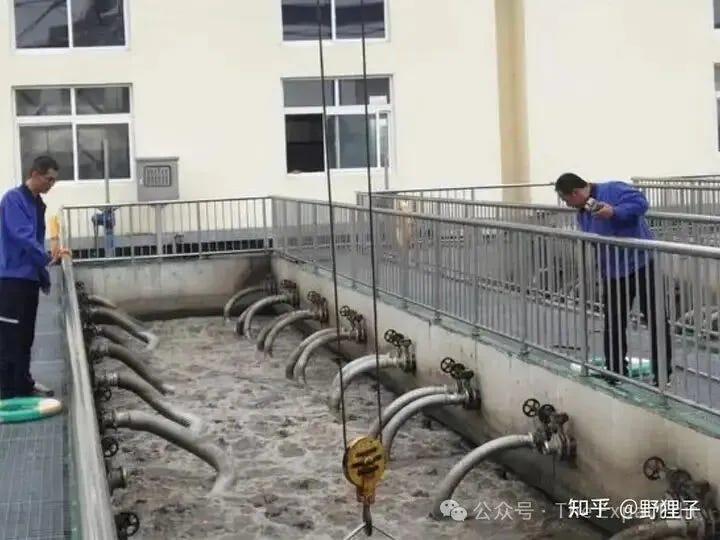
The most plausible discussion online has centered on multiple scattered sources rather than one single smokestack. Wastewater treatment plants are one obvious candidate. Anaerobic tanks and poorly sealed treatment systems can release hydrogen sulfide and methyl mercaptan, especially in warmer weather. Chemical plants, fertilizer facilities, plastic related manufacturing, livestock operations, and certain wastewater linked processes can also produce strong odor compounds under the right conditions.
That matters because Yuncheng officials themselves said they were checking not just chemical plants, but also fertilizer producers, plastics manufacturers, livestock operations, and sewage treatment plants. If emissions were coming from several sites around the city at once, and all of them were trapped under weak nighttime inversion conditions, the result could feel to residents like one giant invisible cloud.
Why This Story Hit a Nerve
Part of what made this story spread so fast was the feeling of helplessness. Residents smelled something intense enough to wake them up, some got sick, children struggled to breathe, and yet the city’s ordinary monitoring system could still say everything looked fine. That gap between lived experience and official data is exactly the kind of thing that destroys public confidence.
It also exposed a broader problem in environmental governance. Odor pollution is often treated as less serious than smoke, haze, or visibly dirty water. But for people on the ground, bad smells are not trivial. They can signal real chemical exposure, they can cause acute symptoms, and they can reveal major weaknesses in urban monitoring systems.
For now, the official investigation is still ongoing, and national level experts have reportedly been brought in. If a clear source is eventually identified, this could become another case study in how weather, terrain, and fragmented industrial emissions combine to create a public health scare. If no source is ever clearly named, it will only deepen public suspicion.
In Yuncheng, the smell disappeared by morning. The bigger issue has not.
The simplest reading of the evidence so far is this: Yuncheng likely experienced a nighttime odor accumulation event, probably involving sulfur based compounds, likely worsened by basin topography and weak inversion conditions, and possibly fed by more than one dispersed source. That is not a final answer. But it is a far more convincing one than “the air quality was good, so nothing happened.”
Curated and translated from Zhihu, China's largest Q&A platform.
Newsletter
Subscribe to The Expat Edit
Chinese perspectives on global events, wars, and great power competition. Curated from Zhihu.
Free. No spam. View on Substack →