
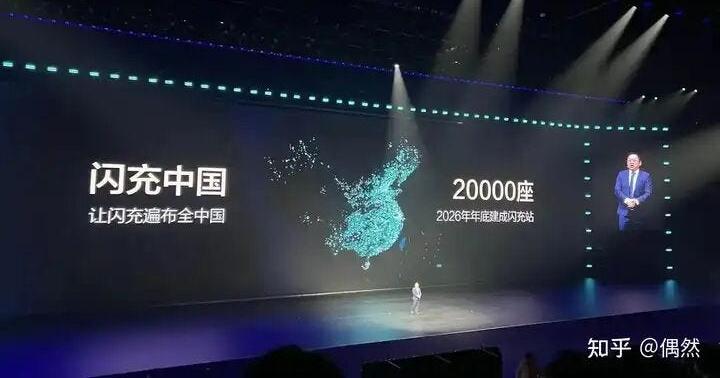
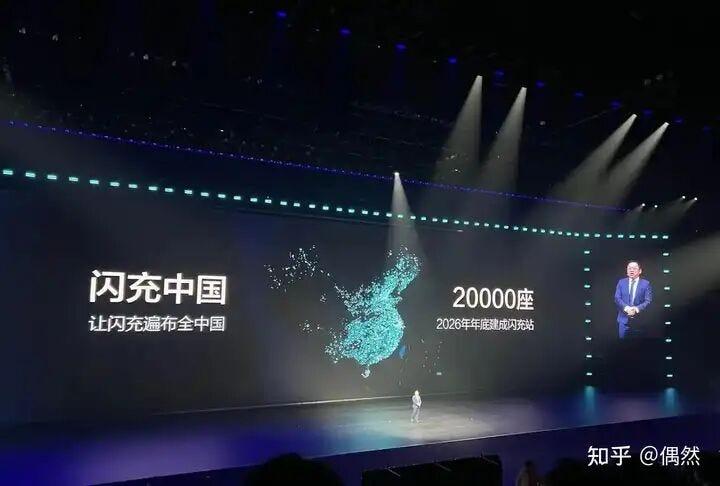
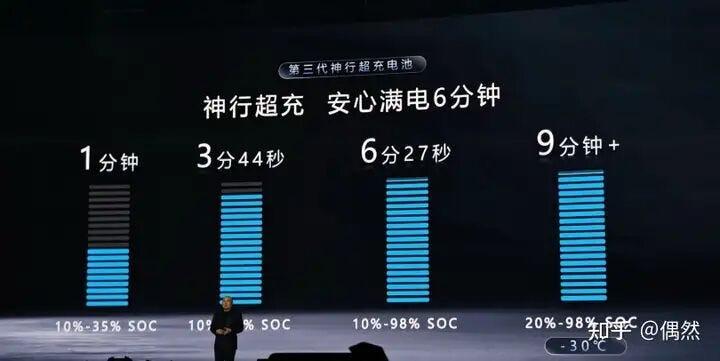
China’s EV battery war just got another viral headline. On April 21, CATL used its 2026 “Super Tech Day” to announce a new third generation Shenxing supercharging battery with some eye-popping numbers: 10% to 35% in one minute, 10% to 80% in 3 minutes 44 seconds, and 10% to 98% in 6 minutes 27 seconds. That instantly reignited a debate already heating up on Zhihu and Chinese social media: has CATL truly leapfrogged the market, or is this mostly a response to BYD’s flash charging push from earlier this year?
The short answer is that the technology sounds impressive, and it probably is, but the internet reaction in China has been full of caveats. People are not just asking how fast the battery can charge in a controlled demo. They want to know when this will be installed in real cars, whether normal public charging stations can support it, how it affects battery lifespan, and whether this is even a battery story at all. Because in China’s EV race, fast charging is no longer just about chemistry. It is about the whole system.
The Number That Went Viral
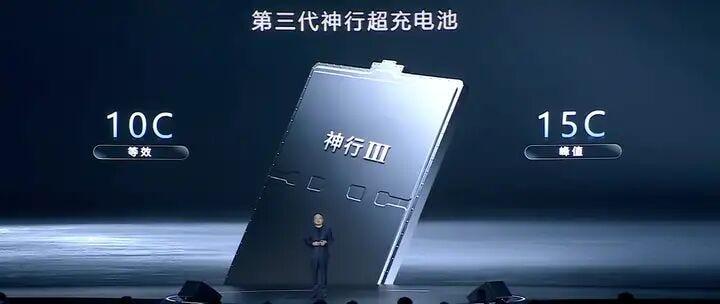
CATL’s headline figure was simple and highly shareable: 10% to 98% in 6 minutes 27 seconds. In EV terms, that is the kind of number designed to make people compare charging a car to filling a gas tank. The company also said the battery can achieve equivalent 10C charging and a peak 15C rate. For anyone outside the battery world, that basically means an extremely aggressive charging speed under ideal conditions.
The immediate comparison was with BYD. In March, BYD announced that its second generation Blade Battery could charge from 10% to 70% in 5 minutes and from 10% to 97% in 9 minutes. So yes, CATL’s new claim appears faster on stage. But Chinese commenters were quick to point out a crucial difference: BYD already tied its charging message to real cars, real stations, and a broader self-built ecosystem. CATL, by contrast, is first and foremost a battery supplier. It can build the cell, but it still needs automakers, platforms, and infrastructure partners to turn the claim into an everyday consumer experience.
Why So Many Chinese Commenters Are Skeptical
If you read through the Zhihu thread, a pattern emerges. Even people impressed by the spec sheet are treating it as a “show me the car first” moment. That skepticism is not anti-CATL. It is more like hard-earned market realism. China’s EV users have now seen enough launches to know that a lab breakthrough and a mass-market product are not the same thing.
Several of the highest-ranked answers made the same point in different ways. A charging speed announced at a conference is only step one. After that comes vehicle integration, thermal management, charging station compatibility, large-scale production, defect rates, durability testing, pricing, and rollout speed. A lot can change between a stunning launch slide and a vehicle sitting in a 4S showroom ready for delivery.
That is why the most common reaction was not “fake” but “wait.” Wait for the first production model. Wait for independent tests. Wait to see the performance in winter. Wait to see what happens after many cycles. Wait to see whether owners can actually find a charger capable of delivering the advertised speed.
“In China’s EV market, the real flex is no longer a battery spec. It is turning that spec into a car, a charger, and a habit people can trust.”
The Bigger Debate: Battery Alone vs Whole System
One of the most interesting points in the Zhihu discussion came from commenters arguing that BYD’s advantage is not just the battery itself. Their view is that flash charging depends on deep integration across the battery, motor, control system, voltage platform, and charging station. In other words, a battery maker can announce ultra-fast charging, but a full-stack carmaker can sometimes industrialize it faster because it controls more of the moving parts.
That argument matters because it shifts the conversation away from “whose chemistry is better?” and toward “whose ecosystem is more mature?” It also helps explain why some Chinese users are less excited by headline charging rates than by charging station density. For the average driver, a slightly slower charger that is easy to find may be more valuable than a record-breaking charger that barely exists.
Put simply, a six-minute battery is only revolutionary if drivers can routinely charge it in six minutes. Otherwise, it remains an engineering achievement with limited daily impact.
Can Charging Really Become as Easy as Refueling?
This is really the dream behind all of these announcements. If EVs can recharge in just a few minutes, much of the psychological edge of gasoline disappears. Chinese commenters noted that what drivers hate most is often not range anxiety but replenishment anxiety. The problem is not always how far a car can go. The problem is how easy it is to get going again.
That is why some argued the whole old debate between LFP and ternary lithium is becoming less important. If a safer chemistry can charge extremely fast, hold up over more cycles, and retain practical everyday usability, then its lower energy density matters less than before. Others pushed back, saying the chemistry wars are not over at all, especially in premium segments and in colder climates. But the fact that this debate has shifted from pure range to charging experience tells you a lot about where China’s EV market is heading.
The center of competition is moving. It is no longer enough to promise a longer battery. Now brands need to promise less waiting.
What This Means for CATL, BYD, and Everyone Else
For CATL, this launch is important even if mass adoption takes time. It signals that the company is not going to let BYD define the public narrative on fast charging without a fight. In market terms, it is a declaration that CATL still wants a leading voice in how China imagines the next generation of EVs.
For BYD, the pressure is now to keep proving that execution beats headlines. Several Zhihu users basically framed the current contest this way: CATL may have posted a stunning number, but BYD is the one trying to build the full real-world loop of battery, car, and charger. If that perception sticks, then CATL needs partners to move quickly or risk being seen as impressive but abstract.
The ripple effects go further. Battery second-tier players could get squeezed harder if the market becomes defined by a top-two charging arms race. Swap-based business models face new pressure if charging starts to feel almost as fast as battery replacement. Even solid-state battery startups may feel the chill, because every improvement in liquid battery charging makes the future feel a bit less urgent.
And for ordinary drivers? The answer is much less dramatic. Most people do not need a six-minute top-up every day. What they need is confidence that a charger nearby works, is available, and does not waste half an hour. In that sense, the future may belong not to whoever makes the fastest battery on a stage, but to whoever makes EV charging feel boringly reliable.
So, How Should We Read the 6 Minute 27 Second Claim?
The smartest reading is probably this: take it seriously, but do not take it literally just yet. CATL likely has something real and technically meaningful here. China’s battery giants are too advanced for this to be dismissed as pure fantasy. But the public is also right to ask harder questions now than it did a few years ago.
Can it survive mass production? Can it be priced competitively? Can enough charging infrastructure support it? Can partner automakers integrate it without delays? Can it keep performing after years of use, not just one glamorous product launch?
In other words, China is entering a new phase of the EV race where the wow factor alone is no longer enough. The battery war is getting less theatrical and more logistical. And that may actually be a sign of progress.
Curated and translated from Zhihu, China's largest Q&A platform.
Newsletter
Subscribe to The Expat Edit
Chinese perspectives on global events, wars, and great power competition. Curated from Zhihu.
Free. No spam. View on Substack →