
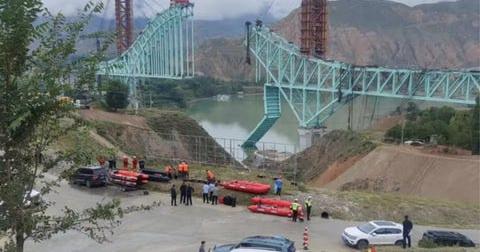
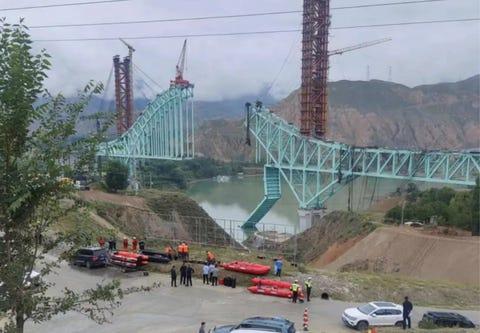
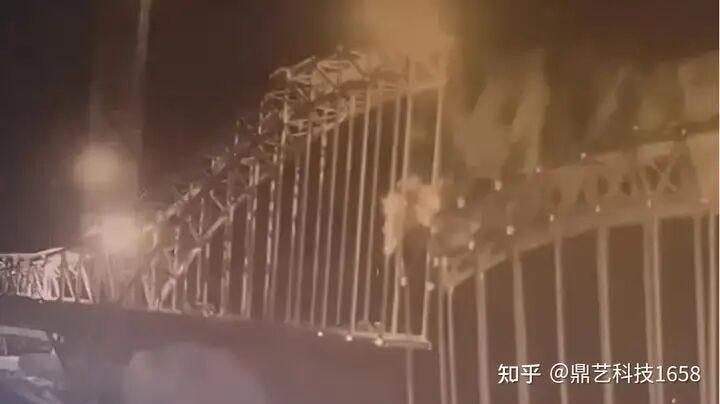
China has released the official investigation into one of its most shocking infrastructure disasters in recent years. In the early hours of August 22, 2025, part of the Jianzha Yellow River Bridge project on the new Xining to Chengdu railway collapsed during construction in Qinghai, killing 13 people and leaving 3 missing. The report is unusually blunt. This was not a freak accident. It was a preventable man-made disaster caused by substandard bolts, poor fabrication, sloppy installation, fake or meaningless acceptance procedures, and a chain of companies and regulators that failed to do their jobs.
What Actually Failed
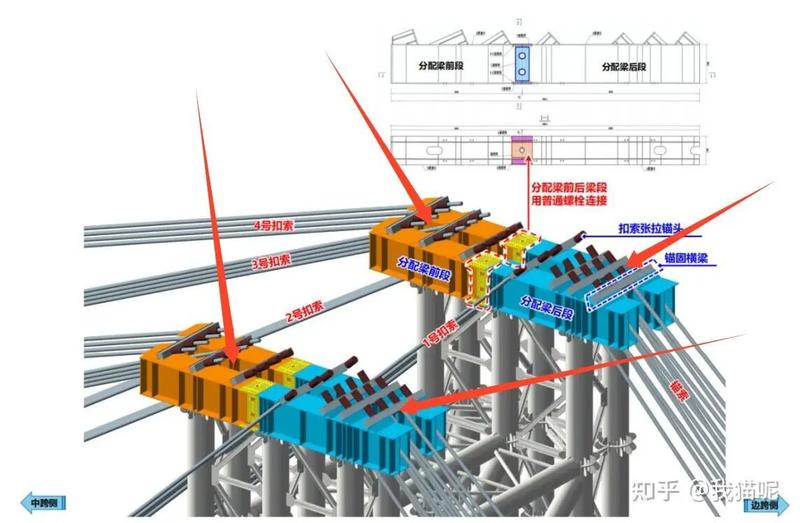
The immediate cause sounds technical, but the logic is simple enough. A key load-bearing part in the temporary cable support system, called a distribution beam, was joined together with bolts that turned out to be low quality. According to the investigators, those bolts had an overall load capacity about 41 percent below the national standard. That alone was dangerous. But the problem did not stop there.
The beam itself was also badly made and badly installed. Bolt holes were not drilled according to design and code requirements. On site, when the holes did not line up properly, workers simply enlarged them to make things fit. That changed how the bolt group carried force and weakened the joint even more. When the fourth stay cable on the Xining side was tensioned during a critical pre-closure stage, the beam faced the heaviest load of the whole construction process. The defective bolts sheared, the beam fractured at the splice, the cable support system failed, and the steel arch and deck structure lost support and collapsed rapidly.
The Part Nobody Was Supposed to Notice
One of the most revealing parts of the report is that the collapsed section was tied to a temporary structure, not the final permanent bridge itself. In major construction projects, temporary works often get less public attention, less prestige, and sometimes less rigor, even though they can carry enormous loads during key stages. Engineers commenting online noted that the night-time operation itself was not necessarily suspicious. Major bridge closure work is often done at night because temperatures are more stable and the structure can be adjusted more precisely. The scandal was not the hour. The scandal was the quality.
In other words, the project appears to have respected the sophistication of the overall bridge sequence while neglecting the integrity of the very hardware that made that sequence possible. That is a devastating combination. A big elegant structure can still be brought down by something as small and cheap as the wrong bolt in the wrong place.
“This was not one mistake. It was a whole system agreeing not to look too closely.”
How Did the Supply Chain Go So Wrong?
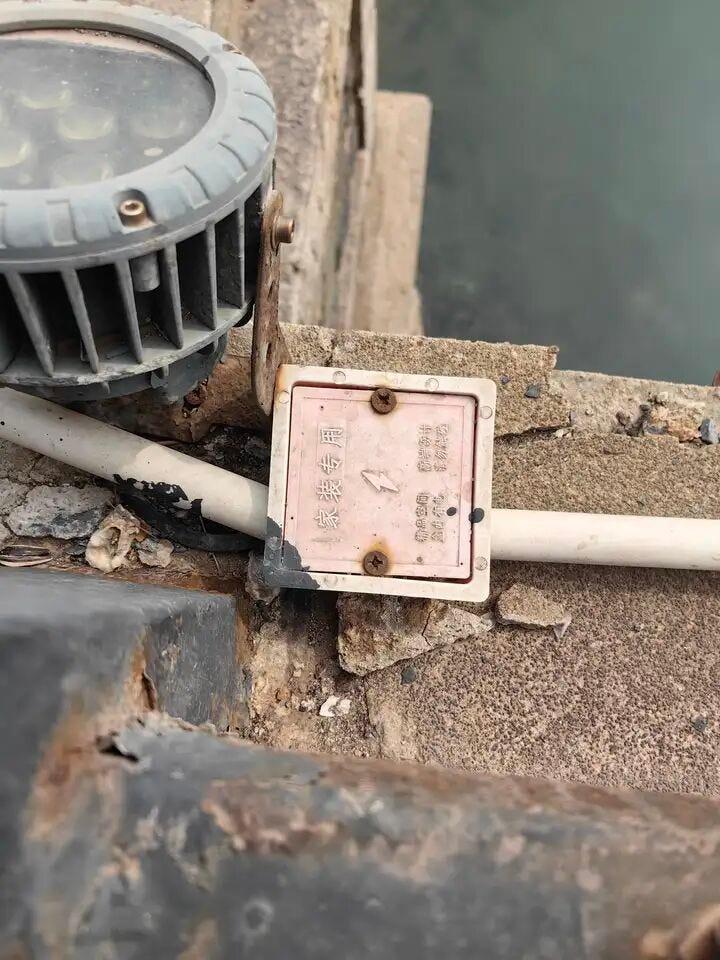
The official report lays out a procurement story that reads more like a low-budget scam than a flagship rail project. Commentary on Zhihu and Chinese social media seized on the same shocking detail. The bolts, nuts, and washers were allegedly sourced through a chain of middlemen involving a lightly staffed shell-style supplier, an online procurement platform, and falsified paperwork. One widely shared summary pointed out that the material cost savings were tiny compared with the damage. Investigators say the project bought thousands of bolt sets, and net savings versus compliant products may have been less than 20,000 RMB. The collapse caused direct economic losses of about 48.86 million RMB, not counting the human cost in any meaningful moral sense.
Even worse, some documents were allegedly faked after the accident. The report says investigators found attempts to alter technical disclosure records by adding key safety requirements after the fact, including language about bolt testing, prohibiting hole enlargement, precision machining, and stress monitoring. There were also reports that fake certificates were produced using simple image editing software and were riddled with spelling and formatting mistakes. If true, that means the cover-up was almost as reckless as the construction itself.
Why Did Layer After Layer of Oversight Fail?
This is the question that hit hardest online. China’s official report names responsibility across a wide range of actors, including the project owner, contractor, subcontractors, design branch, supervision consultant, procurement-related companies, and regulators. Multiple units were found to have failed in quality management, subcontracting control, safety duties, hidden risk inspection, and enforcement. In plain English, everybody had a stamp, but nobody really stopped the train.
One theme that surfaced repeatedly in public discussion was what management scholars call a “silence culture.” In many organizations, especially deadline-driven ones, reporting a problem can make you look difficult, disloyal, or incapable. On remote project sites, supervisors and contractors often work side by side for long periods and may develop relationships that soften formal oversight. The result is dangerous but familiar. Everyone sees a little irregularity. Everyone assumes someone else signed off on it. Everyone keeps the project moving.
That is why major accidents so often look obvious in hindsight. They are usually not born in one dramatic moment. They are assembled slowly out of tolerated shortcuts.
What Punishment Is Coming?
The legal fallout is already substantial. The investigation says 11 people suspected of crimes including the crime of causing a major liability accident and the crime of producing or selling products that do not meet safety standards have been transferred to judicial authorities. Police also uncovered a separate criminal lead involving a Hebei manufacturer suspected of producing substandard safety-related products, and the company’s actual controller has reportedly been placed under coercive measures.
On the disciplinary side, clues involving public officials and state-sector personnel were transferred to anti-corruption and supervisory bodies. According to the report, 42 people from several relevant units received Party or administrative punishment. A number of companies are also facing administrative penalties from emergency management and railway regulators, and some state-owned entities were ordered to submit formal written self-criticisms to their parent organizations.
For foreign readers, that means punishment here is happening on several tracks at once: criminal prosecution, regulatory fines, internal Party discipline, administrative sanctions, and political accountability inside the state enterprise system. Whether that ultimately changes behavior on future projects is the bigger question.
Why This Story Landed So Hard
Chinese internet reactions were unusually raw. Many commenters were not just angry at the bridge collapse itself. They were angry because the report confirmed a fear they already had: that parts of the construction ecosystem still tolerate corner-cutting in places the public never sees. Some users compared it to a broader pattern in which people who point out obvious defects are ignored, mocked, or silenced until disaster makes the problem impossible to deny.
There was also a bitter sense of proportion. If public discussion is to be believed, all this may have happened for astonishingly little money. Saving a few yuan per bolt on a project of this scale now stands as a symbol of a deeper sickness: weak procurement discipline, outsourced responsibility, and a culture where paperwork can matter more than reality right up until reality wins.
The official investigation ends with six lessons and six corrective recommendations, including stronger safety red-line awareness, tighter control over temporary facilities, stricter material procurement, better subcontractor management, and tougher enforcement. All sensible. But the real test is not whether the lesson list is correct. It is whether anyone will still care about bolts, holes, splice details, and fake certificates once the headlines move on.
Curated and translated from Zhihu, China's largest Q&A platform. Read the original discussion →
Newsletter
Subscribe to The Expat Edit
Chinese perspectives on global events, wars, and great power competition. Curated from Zhihu.
Free. No spam. View on Substack →