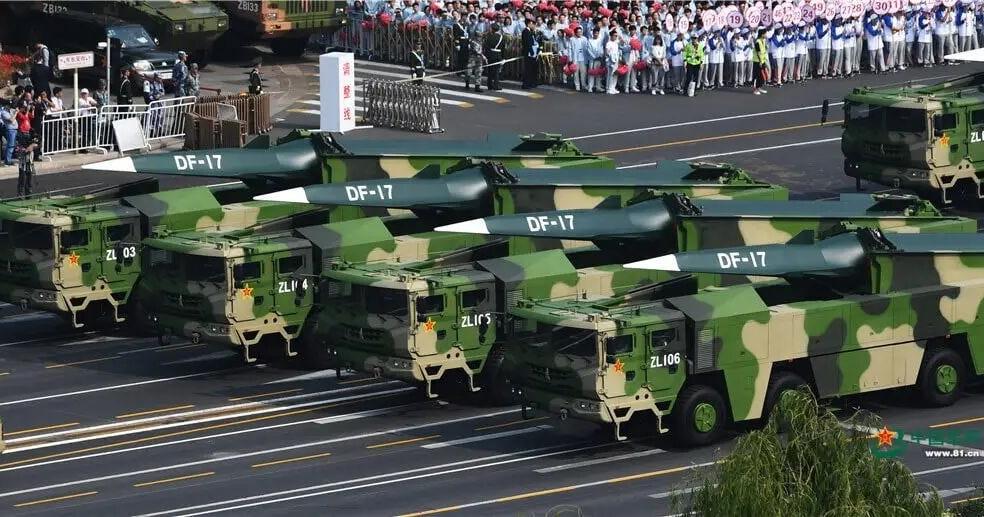
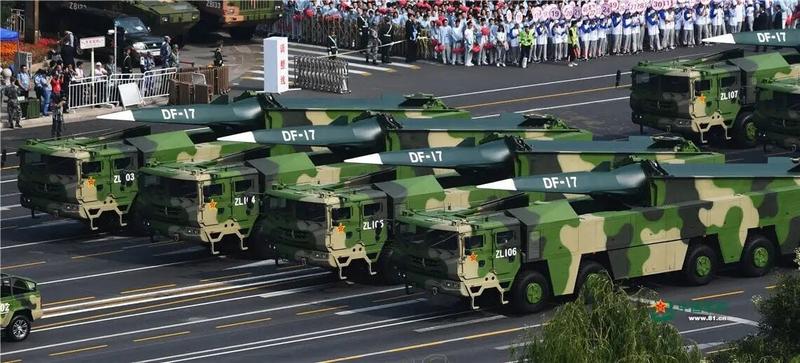
Chinese state media has, for the first time, shown the DF-17 in launch posture during a field training exercise. The clip quickly took off on Chinese social media, not just because of the hardware, but because it showed multiple launch vehicles operating together under simulated battlefield pressure. For military watchers, that was the real story.
What Was Actually Shown
Thanks for reading Silk & Steel! Subscribe for free to receive new posts and support my work.
The footage came from a Rocket Force training ground and showed several new missile systems erecting for launch in the field. According to the CCTV report, units were not simply practicing a clean firing sequence. They were also training for electromagnetic interference, precision strike threats, and fast coordination across multiple waves of firepower.
In plain English, the message was simple: this is no longer about a single launcher on a prepared site. The emphasis is on mobility, survivability, speed of response, and the ability to launch under messy real world conditions.
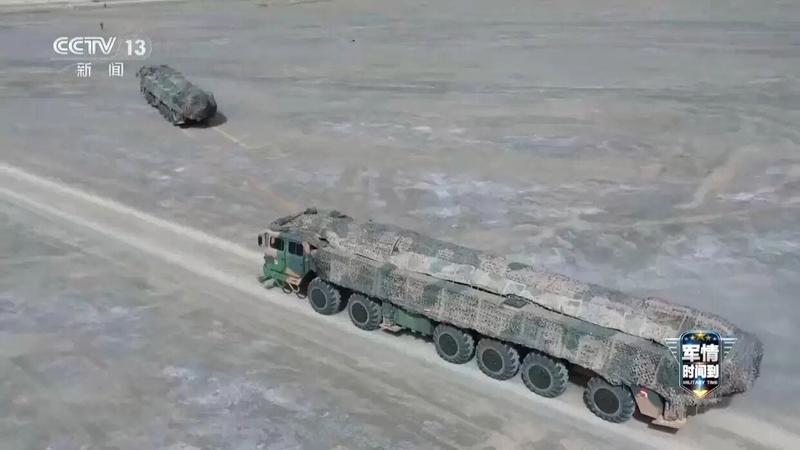
Why the Multi Vehicle Salvo Matters
The phrase getting the most attention in Chinese commentary is 多车齐射 (duō chē qí shè), or multi vehicle salvo firing. That sounds dramatic, but the strategic meaning is pretty straightforward. If several launchers can fire in coordination, the target faces more than just one incoming threat. Defenders have less time to react, interception becomes harder, and the launch site itself is less exposed because the firing window is compressed.
Analysts quoted by Chinese media stressed that this is not about making flashy television. It is about proving that road mobile systems can disperse, set up quickly, and deliver concentrated fire from different positions with less warning. That kind of capability complicates any opponent’s planning.
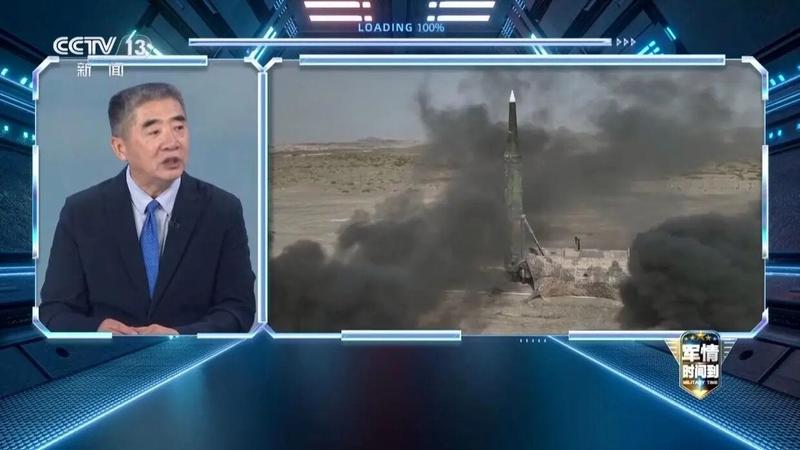
“The headline is not just that the DF-17 appeared. It is that China chose to show it being readied and coordinated under battlefield style conditions.”
Why DF-17 Gets So Much Attention
The DF-17 has drawn years of attention because it is widely associated with a hypersonic glide vehicle configuration. Chinese commentators and state media guests focused on its maneuverability, mobility, and ability to penetrate defenses. One recurring point in the discussion was that systems with terminal maneuvering capability force defenders into a much harder tracking and interception problem.
The broadcast also hinted that the DF-17 was not the only system on display. Chinese analysts noted another missile in the clip that resembled an updated DF-26 variant. That matters because the bigger signal may be less about one specific missile and more about a broader, increasingly integrated missile force that is training as a system.

The Political Signal Behind the Video
Chinese online reactions went far beyond technical analysis. A lot of the discussion framed the footage as strategic messaging toward the United States and Japan, especially amid rising regional tensions. Some of that commentary was highly nationalistic, but the core point was clear enough: when a military that usually reveals little decides to show launch state footage, people assume the audience is not just domestic.
That does not mean China is unveiling a brand new weapon. The DF-17 has been public for years. What changed is the level of operational detail shown. For many viewers, that makes this less of a technology reveal and more of a deliberate reminder that these systems are fielded, mobile, and training routinely.
Bottom Line
The strategic significance of the clip is not that China owns missiles capable of launching from trucks. Every major military power understands mobile missile operations. The bigger message is that the Rocket Force wants to demonstrate faster command chains, field survivability, launch flexibility, and coordinated salvos under pressure.
For casual readers, the footage may just look hard core. For defense watchers, it suggests something more important: China is showing confidence not only in the missile itself, but in the training system, command system, and battlefield concept behind it.
Thanks for reading Silk & Steel! Subscribe for free to receive new posts and support my work.
Curated and translated from Zhihu, China's largest Q&A platform.
Newsletter
Subscribe to The Expat Edit
Chinese perspectives on global events, wars, and great power competition. Curated from Zhihu.
Free. No spam. View on Substack →