
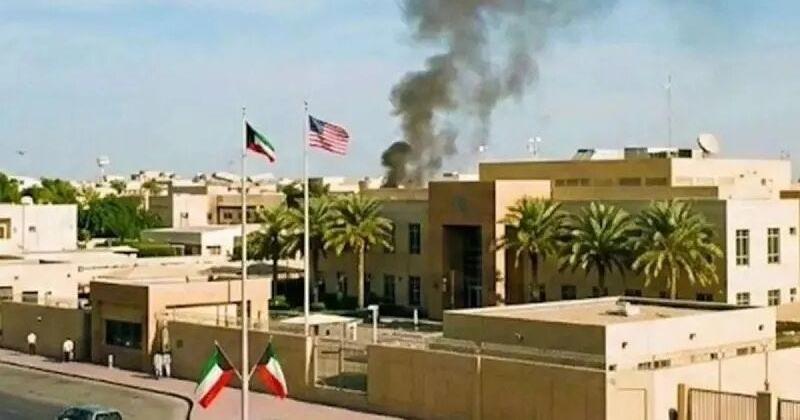
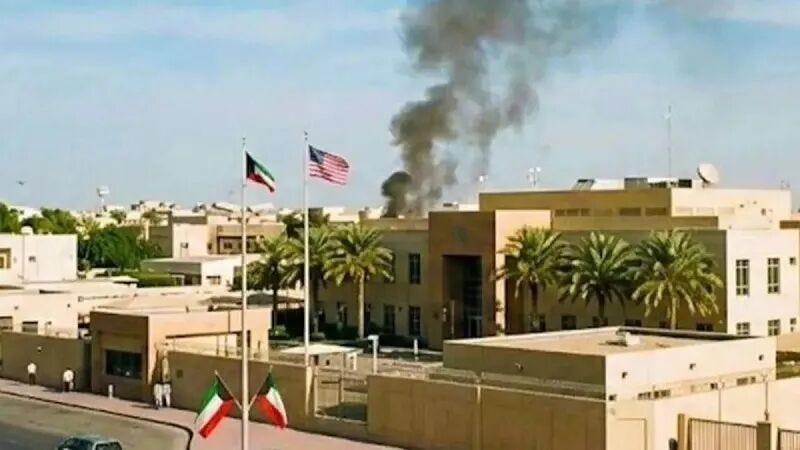
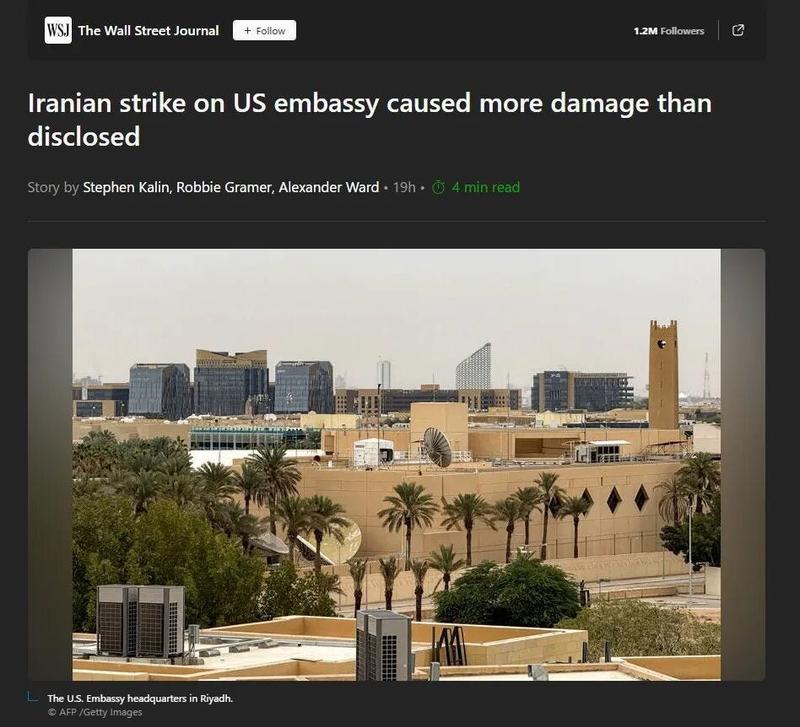
Another Middle East mystery is blowing up online. After reports that the U.S. embassy in Saudi Arabia had been hit, Washington pointed toward Iran. Tehran fired back fast, condemning the accusation and saying the strike had nothing to do with Iran. Instead, Iran’s Islamic Revolutionary Guard Corps suggested the real culprit was Israel, calling it fully consistent with Israel’s broader regional strategy. On Chinese social media, especially Zhihu, that claim has spread fast, with many users arguing that if anyone had the motive to widen the war and drag Saudi Arabia in, it was not Iran but Israel.
Why This Story Suddenly Matters So Much
At first glance, this might sound like just another fog of war incident. But the location changes everything. A strike on a U.S. embassy in Riyadh is not just a military headline. It sits right at the crossroads of American credibility, Saudi caution, Israeli strategy, and Iranian signaling. If Iran did it, then Washington has a much stronger case for escalation. If Iran did not do it, and someone else did, then the story becomes even more explosive because it suggests an attempt to manipulate the battlefield and pressure allies into taking sides.
That is why the question is bigger than who launched two drones or who started a fire. The deeper issue is whether this was a genuine Iranian strike, a misread incident, or a deliberate provocation designed to expand the war. That is also why this story has become a kind of geopolitical Rorschach test online. People are not just reacting to the evidence. They are reacting to who they believe is capable of this kind of move.
What Iran Is Actually Claiming
Iran’s position is simple and very deliberate. It says the embassy strike was not part of its operations and that Tehran had already made clear what targets fell within its declared response framework. The Revolutionary Guard statement also stressed that neighboring states had been warned about instability caused by Israeli actions. In other words, Iran is trying to draw a clear line between attacks it considers part of open confrontation and attacks that would needlessly force Gulf states, especially Saudi Arabia, deeper into the conflict.
That distinction matters because many Chinese commentators believe Iran has been trying, however imperfectly, to avoid crossing certain lines with Riyadh. The basic argument running through Zhihu is that Iran may be in a direct fight with the United States and Israel, but it still has reasons to avoid a dramatic strike on Saudi soil that could trigger a broader Sunni alignment against it.
“The real battle here may be less about one embassy and more about who gets blamed for the next phase of the war.”
Why So Many People Online Suspect Israel
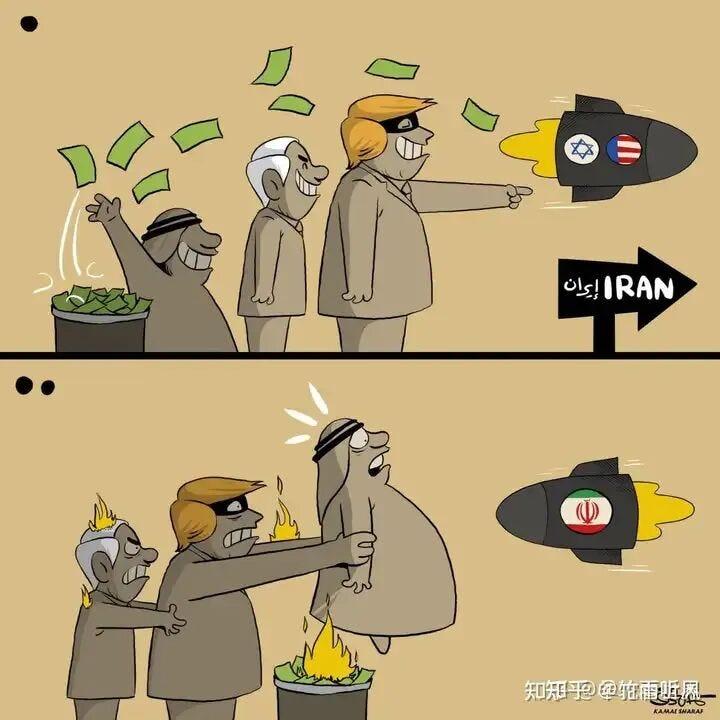
The dominant view on Zhihu is strikingly clear. A large share of the highest liked answers lean toward Israel as the most likely actor, with the United States as a secondary possibility, and Iran as the least likely. Their reasoning is not based on hard public evidence so much as incentives. If Israel believes U.S. commitment is wavering, and if it wants to keep Washington fully locked in while increasing pressure on Saudi Arabia to choose a side, then an incident like this would serve a strategic purpose.
Several commenters argue that Iran would gain little from hitting an embassy in Riyadh specifically. If Tehran wanted to send a direct message to Washington, they say, it has more obvious military or symbolic targets elsewhere in the region. In this reading, an embassy strike in Saudi Arabia creates political effects that benefit those who want to widen the war, not those trying to keep Saudi Arabia from fully entering it.
It is also notable that many commenters do not even frame this primarily as an anti American move. They see it as a Saudi pressure tactic. Dragging Riyadh closer to the battlefield would reshape the regional map overnight. That is why the online discussion keeps circling back to one question: not who can do this, but who benefits most if Saudi Arabia feels it can no longer remain cautious.
The Credibility Problem at the Center of the Story
One of the most revealing parts of this episode is not the allegation itself, but the reaction to it. On Zhihu, many users openly say that even if Iran were lying, people are now more inclined to doubt Washington and Jerusalem than Tehran. That does not mean Iran is automatically trusted. It means U.S. and Israeli credibility have, in the eyes of these commenters, deteriorated so badly that accusations from them no longer carry the same weight they once did.
That may be the biggest political consequence of the incident so far. Even without conclusive proof, the public conversation has moved quickly toward suspicion of manipulation. In alliance politics, that matters. Once doubts start growing around whether one partner may be taking actions that could entrap another, it becomes harder to maintain effortless trust, even if the alliance itself stays intact.
Will This Actually Damage the U.S.-Israel Alliance?
In the short term, probably not in any dramatic public way. That is also the rough consensus among many Chinese commenters. The U.S. and Israel are too deeply tied politically, militarily, and strategically for one murky incident to cause an open rupture. Even if American officials privately have questions, that does not mean Washington will suddenly break ranks.
But there is a second layer to that answer. A lot of alliance damage happens quietly. If American decision makers come to suspect that Israeli actions are increasing the risk of unwanted escalation, especially by targeting events or places that could force Washington’s hand, then future coordination could become more restrictive and more suspicious. Not broken, but tighter. Not divorced, but less trusting.
That is why this case matters even if it never gets fully resolved. In modern conflicts, uncertainty itself can be strategic. If no one can definitively prove who carried out the strike, every side gets room to shape the narrative. Israel, if responsible, would gain deniability. Iran gains space to present itself as measured toward Saudi Arabia. The United States gains room to preserve its alliance while keeping pressure on Tehran. Saudi Arabia, meanwhile, is left navigating a regional minefield where ambiguity may be more dangerous than clarity.
So What Should We Watch Next?
The real indicator is not the online blame game. It is Saudi behavior. If Riyadh stays cautious, avoids a deeper military role, and continues acting like a state trying not to be dragged into full regional war, then Iran’s denial may start to look more plausible to outside observers. If Saudi Arabia begins moving decisively toward open alignment, then whoever wanted that outcome may have succeeded regardless of who launched the actual strike.
For now, the embassy incident looks less like a clean intelligence story and more like a stress test for trust in the Middle East. And on that front, the verdict from Chinese social media is already unusually blunt: people may not know exactly who did it, but a lot of them no longer instinctively believe the official American version.
Curated and translated from Zhihu, China's largest Q&A platform. Read the original discussion →
Newsletter
Subscribe to The Expat Edit
Chinese perspectives on global events, wars, and great power competition. Curated from Zhihu.
Free. No spam. View on Substack →