
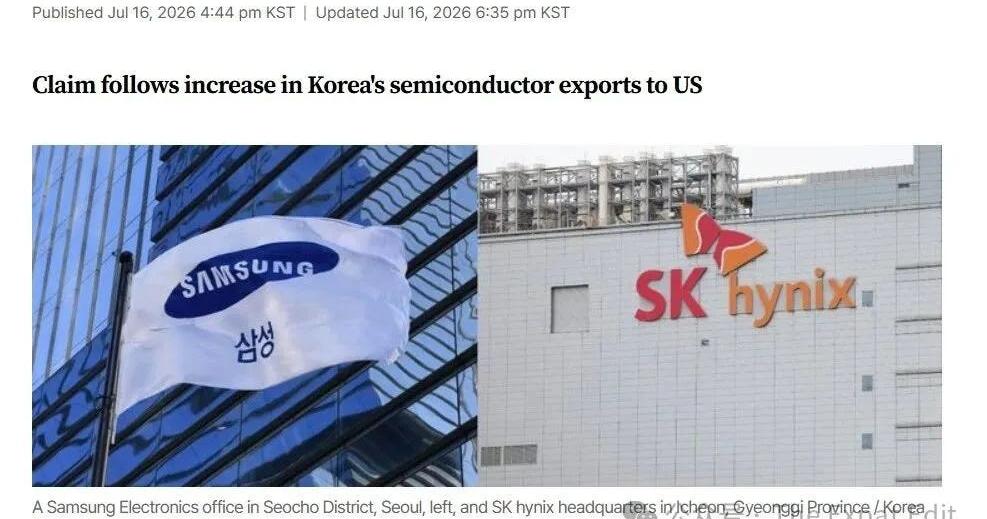
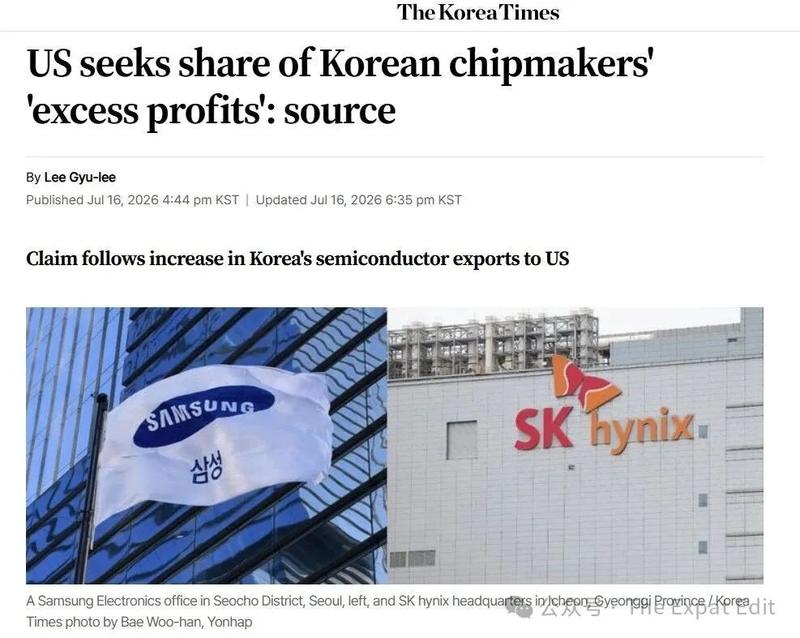
A wildly shared story is making the rounds in Chinese social media: the US supposedly told South Korea it wants part of Samsung and SK Hynix’s AI chip windfall. On the surface, it sounds outrageous. Buy someone’s product, then demand a cut of their profits? But as usual, the viral version is cleaner, louder, and more dramatic than the actual story.
What Was Actually Reported
Thanks for reading Silk & Steel! Subscribe for free to receive new posts and support my work.
The original Korea Times report said a US trade official raised the idea during talks with Seoul. The argument was that American companies have been major buyers of Korean chips, especially during the AI boom, so US firms should somehow share in the upside. That line alone was enough to trigger outrage online.
But there is an important catch. According to discussion around the original reporting, the US does not have a clear legal mechanism to directly seize or tax the global profits of Korean companies operating in Korea. In other words, this was not a ready-to-launch policy. It looked much more like negotiation pressure than an actual executable plan.
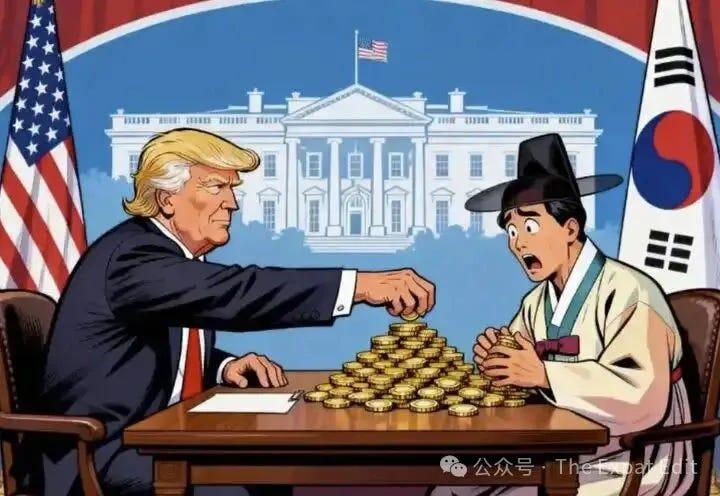
So Why Did This Blow Up?
Because the simplified version is irresistible. “America wants Korea to hand over profits” fits neatly into a much larger Asian narrative about dependency, pressure, and the real cost of alliance politics. It also lands at a time when Samsung and SK Hynix are making huge money from memory chips tied to the AI boom, especially high bandwidth memory.
For many Chinese commenters, this was not just about semiconductors. It was a reminder that when strategic industries become too important, economics stops being purely economic. The stronger your position in the supply chain, the more likely politics shows up at the factory gate.
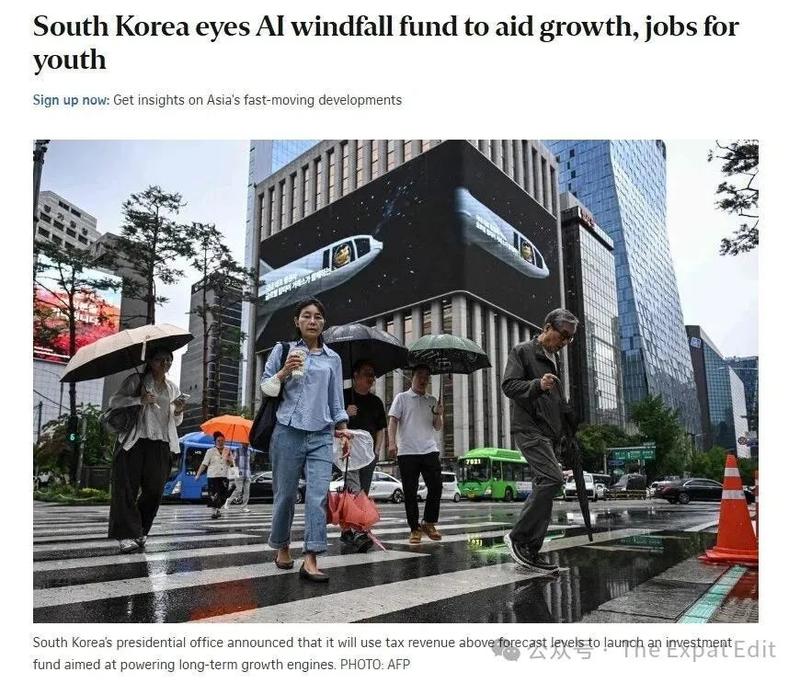
The Part Many Reposts Left Out
Several Chinese commentators pointed out that the “profit sharing” line may have been only one piece of a broader package. The more practical pressure points are familiar ones: build more in the US, offer long term supply arrangements, accept clawback conditions tied to American subsidies, and align more closely with Washington’s export controls toward China.
That makes the story less shocking, but arguably more significant. The real signal is not that the US can literally dip into Samsung’s Korean earnings tomorrow. The real signal is that Washington is willing to use every lever it has to reshape where chips are made, who gets priority access, and how tightly allies follow US tech strategy.
“The headline was about profits. The deeper story is about control.”
Why This Matters for Korea
Korea’s dilemma is brutal. Its top chip firms need the US market, US customers, and in many cases US policy approval. At the same time, Korea also wants to keep investment, jobs, and strategic manufacturing capacity at home. Those goals increasingly clash.
If pressure escalates, Seoul may not be asked for a direct cash transfer at all. It may instead be pushed toward outcomes that matter more in the long run: more fabs in America, stricter alignment on China restrictions, or pricing and supply commitments that favor US buyers. That kind of concession is less theatrical than “hand over the profits,” but far more realistic.
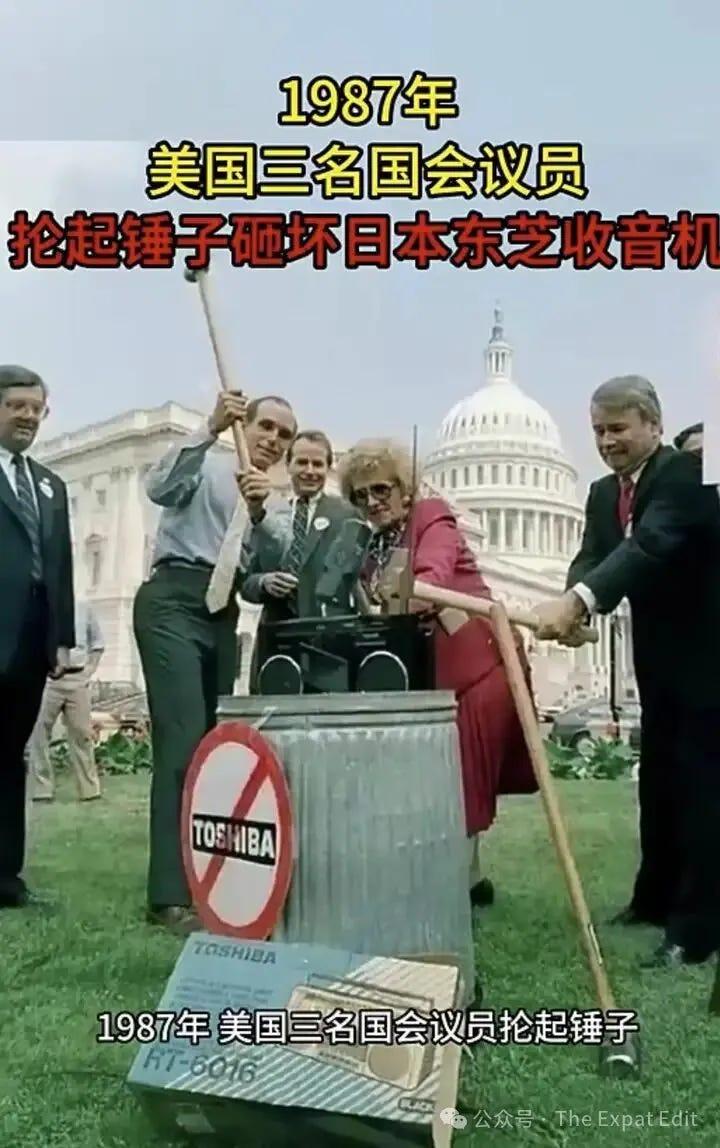
The Expat Edit Take
My read is simple. No, this does not appear to mean America can just invoice Samsung and SK Hynix for a slice of their overseas profits. That is the viral version, not the workable one.
But yes, the episode still releases a very clear signal. In the age of AI chips, allies are not just partners. They are also pressure targets. If your companies sit on a strategic chokepoint, everyone wants in. Sometimes with subsidies. Sometimes with lawsuits. Sometimes with tariffs. And sometimes with suggestions so aggressive they are probably designed to shock first and negotiate later.
So the real question is not whether Washington can literally grab Korean chip profits. It is whether Korea can keep its semiconductor crown without paying for it in policy autonomy. That debate is only getting started.
Thanks for reading Silk & Steel! Subscribe for free to receive new posts and support my work.
Curated and translated from Zhihu, China's largest Q&A platform.
Newsletter
Subscribe to The Expat Edit
Chinese perspectives on global events, wars, and great power competition. Curated from Zhihu.
Free. No spam. View on Substack →