
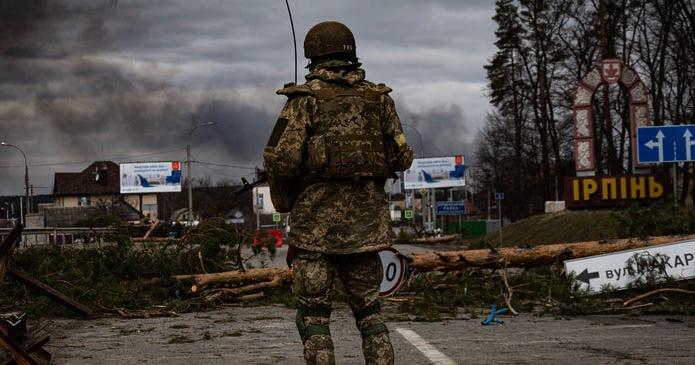
There is something remarkable about a state that appears to be permanently on the edge of collapse and yet continues, month after month, to endure.
Ukraine today presents precisely that image. It faces severe financial strain, chronic manpower shortages, sagging morale, political rigidity, and mounting dependence on outside support. The emergency is no longer episodic. It is structural. And still the war goes on.
For outside observers, this creates a persistent puzzle. How does a country under such obvious stress continue to function in wartime without breaking apart?
Part of the answer lies in technology. Drones have altered the balance of power on the battlefield, allowing a weaker side to compensate, at least partially, for deficits in manpower and firepower. A skilled operator can do the work that once required much larger formations. Front lines that might otherwise buckle can be patched, monitored, and defended at lower cost. In modern war, cheap systems can buy expensive time.
But technology can only delay certain realities. It cannot abolish them.
At some point, wars are still fought by societies, not machines. They require men, money, legitimacy, and belief. And it is in these less measurable categories that Ukraine’s predicament appears most serious.
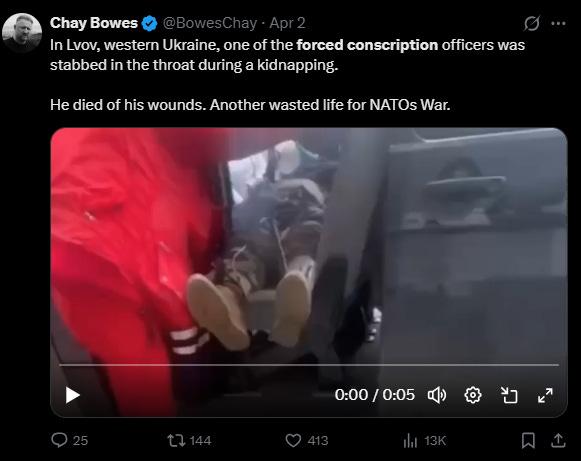
The manpower crisis is perhaps the clearest sign. Forced mobilization has become not merely controversial but socially corrosive. Extensive video evidence of draft roundups, public confrontations, and civilians resisting conscription efforts point to a deeper problem than simple war fatigue. They suggest a widening gap between the imperatives of the state and the willingness of ordinary people to bear them.
This matters not only because armies need bodies. It matters because the manner in which those bodies are procured affects the character of the war effort itself. A soldier pulled unwillingly into service may still fight. Fear, instinct, and the basic desire to survive are powerful motivators. But they are not the same as conviction. An army can function for a time on coercion and adrenaline. It cannot build strategic resilience on them.
And yet Ukraine has, improbably, done just that for far longer than many expected.
Western governments, particularly in Europe, have helped sustain this endurance, though not always with clarity or consistency. Public criticism of illiberal wartime practices has been muted, intermittent, and never backed by meaningful consequences. European leaders have continued to promise financial support even as serious questions accumulate about governance, military sustainability, and political judgment in Kiev.
That support is now becoming more difficult to separate from the political choices being made by Ukraine’s leadership. If a country is in desperate need of money and still behaves as though it has unlimited room for escalation, one has to ask whether the logic of survival has given way to the logic of habit.
That possibility is especially important because it speaks to a broader misunderstanding of how modern client relationships work.
There is a tendency in foreign policy debates to imagine smaller states as little more than instruments of larger powers. On this view, countries such as Ukraine simply serve the strategic designs of Washington, with minimal agency of their own. The larger empire sets the course. The smaller ally follows.
There is some truth in that account, especially at the outset of conflicts when dependence is most visible and leverage is strongest. Great powers often do try to use smaller states as forward positions in larger geopolitical contests. Ukraine has clearly been part of a broader Western effort to weaken Russia, just as other regional partners have long been folded into American strategy elsewhere.
But that framework is too neat. It misses the extent to which dependent states can develop their own momentum, their own ideological commitments, and their own capacity to shape the policies of the powers that support them.
A client is not always a puppet. Sometimes it becomes a driver of events.
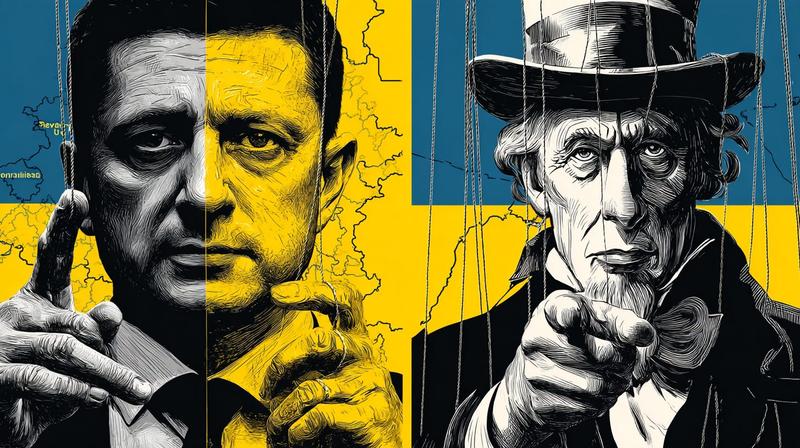
This is one of the central ambiguities of American power in the 21st century. The United States does not rule in the old imperial fashion. One cannot simply glance at a map and see provinces colored in imperial red. American power runs through alliances, bases, aid packages, intelligence links, financial systems, and political networks. It is diffuse, institutional, and often indirect.
That structure gives Washington reach. But it also creates openings for influence to flow in the other direction.
Allies and partners learn how to operate within the American system. They cultivate constituencies, shape narratives, build lobbying power, and appeal to ideological factions inside the United States that see global struggle in moral or civilizational terms. In this environment, a smaller state does not need to command an empire to influence it. It only needs access to the right pressure points.
The result is a foreign policy that often appears detached from the concrete interests of the American public. It is justified in the language of credibility, order, values, and historical destiny. But the costs are borne at home as well as abroad, while the benefits are often harder to identify.
Ukraine now sits at the center of this contradiction. It began, in large part, as a proxy theater in a larger confrontation. But wars change the actors who fight them. Leaders adapt. Incentives harden. Ideologies take root. What may have started as strategic utility can become political identity.
That seems to be one of the defining transformations of the Ukrainian leadership over the course of the war. A government once elected with a mandate for peace can become captive to the logic of permanent mobilization. A leadership once constrained by circumstance can become committed to escalation even when its patrons begin to hesitate. The war ceases to be merely something imposed from outside. It becomes the organizing principle of the state itself.
When that happens, the distinction between proxy and principal begins to blur.
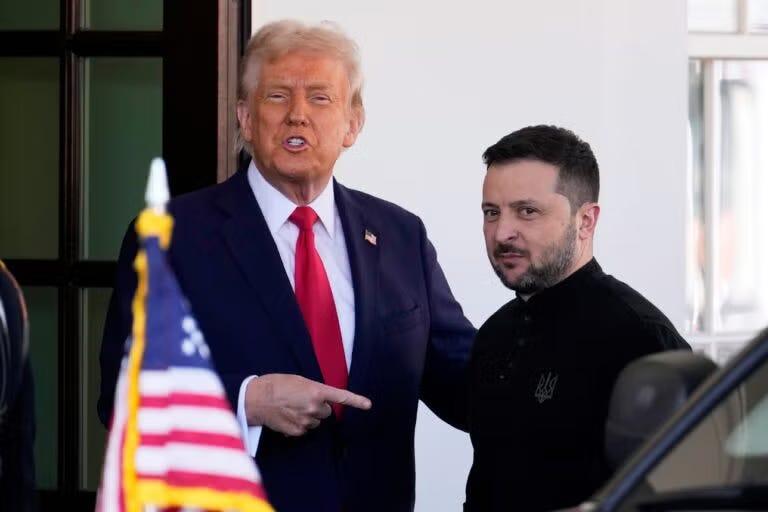
This does not mean that Ukraine controls the West, nor that Washington is irrelevant to the trajectory of the war. American and European support remains indispensable. Without it, Ukraine’s position would deteriorate rapidly. But dependency does not preclude agency. Indeed, prolonged dependency often generates a dangerous kind of autonomy, one rooted not in self-sufficiency but in the belief that outside backing will continue regardless of local decisions.
That is the real danger now. Not simply that the war continues, but that it continues under a set of assumptions that no longer match reality.
The money is not unlimited. The manpower is not renewable. The public spirit of a nation under pressure is not an inexhaustible resource. And the political theater of defiance, however emotionally satisfying, cannot substitute forever for strategy.
The deeper question is not why Ukraine has not yet collapsed. The deeper question is what kind of endurance this actually is.
There is a form of national resilience that reflects unity, discipline, and shared purpose. And there is another kind that consists of patchwork adaptation under extreme pressure, held together by coercion, foreign subsidy, technological improvisation, and the inertia of war itself. The second kind can last longer than expected. But it is rarely stable, and never permanent.
History is full of states that seemed to survive every immediate crisis until, quite suddenly, they did not.
Listen to CATR on:
Newsletter
Subscribe to Conversations Among the Ruins
Long-form geopolitics and the decline of the unipolar world order. New episodes straight to your inbox.
Free. No spam. View on Substack →
Reader-funded
This is independent, long-form work.
Conversations Among the Ruins is written, not repackaged, and it stays free because readers choose to fund it. If it is worth your time, a paid subscription or a one-off tip keeps it going.
Become a supporter →