
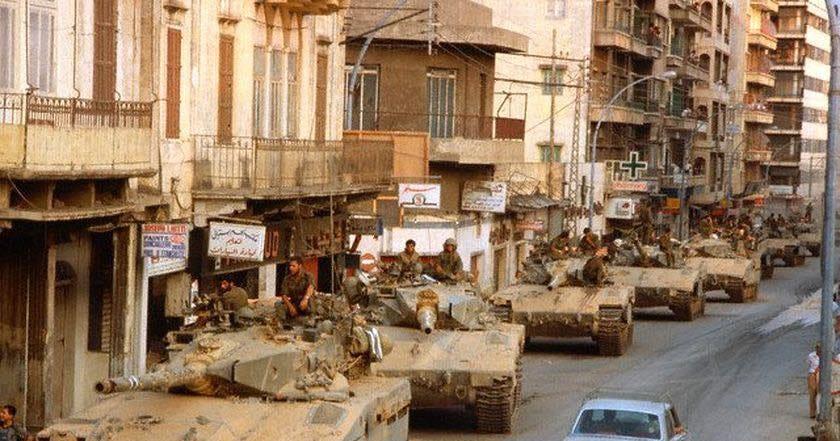
There is a familiar way of describing the war along Israel’s northern border. Israel, it is said, enjoys overwhelming military superiority. Hezbollah may be troublesome, even lethal, but in the end it is outmatched by a state with advanced air power, intelligence dominance and the steady backing of the United States.
That telling has the virtue of simplicity. It also misses what has made the conflict in southern Lebanon so enduring, and so dangerous.
For all of Israel’s strength in the air, it has repeatedly struggled on the ground against Hezbollah. This is not a new problem. It is a pattern. Southern Lebanon has a way of turning technological advantage into strategic frustration. Air supremacy can pulverize villages, flatten infrastructure and terrorize civilians. It does not automatically translate into control of territory, much less into political victory.
That distinction matters. It may prove to be one of the central facts of the region’s future.
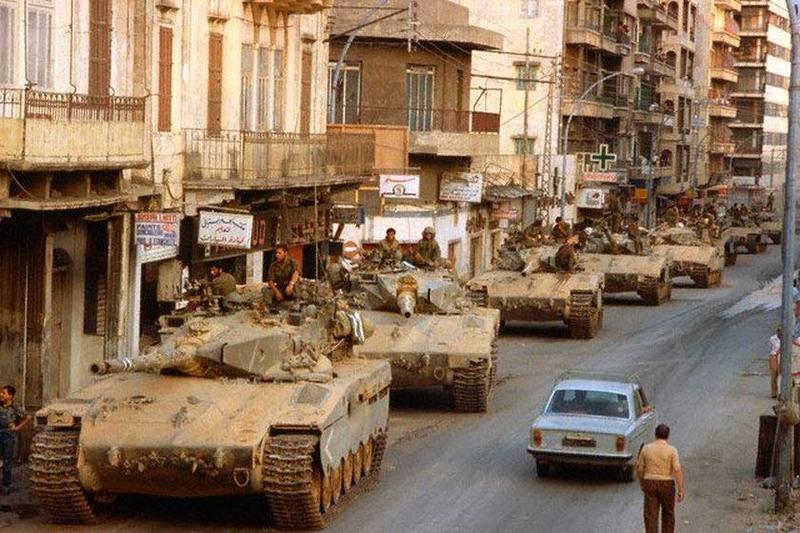
Hezbollah was born in the crucible of invasion. It emerged after Israel’s 1982 incursion into Lebanon and matured during the long occupation that followed. Over the next 18 years, it became the principal force that fought Israel in the south and, ultimately, helped drive it out. In much of the Arab world, that history established Hezbollah not simply as an armed faction, but as a resistance movement with credibility earned in combat.
It also became something more embedded and more complicated than the labels often used in Western discourse allow. In large parts of southern Lebanon, Hezbollah is not merely a militia. It is woven into the social fabric. It operates through networks of welfare, local authority and communal defense. It draws its core strength from Lebanon’s Shia population, but its alliances extend beyond sectarian lines. In the south, many Christians, including Orthodox communities, have often found common cause with it. That reality does not fit neatly into the prevailing categories of counterterrorism analysis. But then neither does Lebanon.
Lebanon is fractured, decentralized and often governed less by sovereign authority than by negotiated power among sects, parties and patrons. In that environment, armed legitimacy is not only a function of firepower. It is also a function of rootedness. Who belongs to the land, who protects it, who bleeds for it, and who remains when the bombs fall.
This is where Hezbollah’s advantage begins.
Israel has shown, once again, that it can devastate southern Lebanon at will. Villages have been reduced to rubble. Churches, mosques, homes and solar infrastructure have been destroyed. Entire communities, some ancient, have been emptied or shattered. The scale of displacement has been immense. Civilian suffering has been treated less as collateral damage than as a method of war.
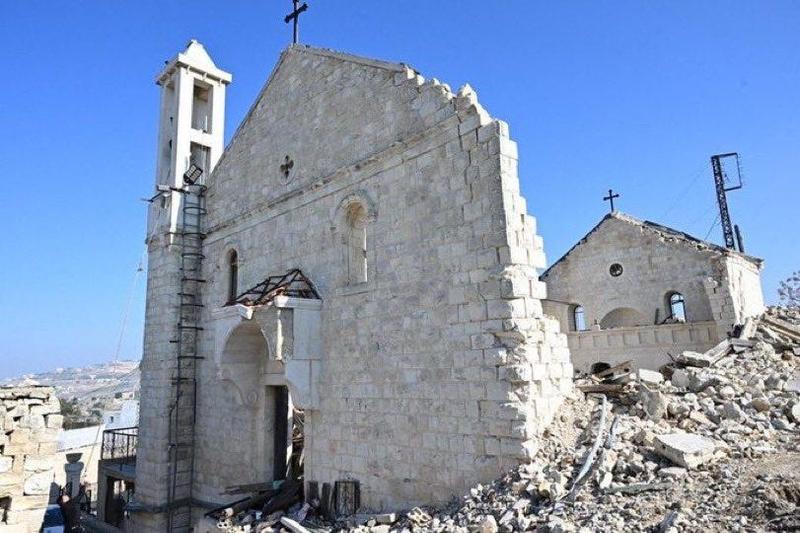
The logic appears grimly familiar. If hostile territory cannot be securely held, it can at least be made unlivable. What has happened in Gaza now casts its shadow northward. Destruction becomes a substitute for strategy.
But destruction is not the same thing as victory.
This has been Israel’s recurring dilemma in Lebanon. It can bomb with impunity, but when it advances on the ground, the war changes shape. Hezbollah has repeatedly shown itself adept at exactly the kind of fighting that blunts conventional superiority: ambushes, prepared defenses, decentralized operations and attritional warfare that imposes costs over time. Israeli forces may gain ground. Holding it is another matter.
There are signs that this old problem has acquired a new dimension. Hezbollah appears to have integrated first-person-view drones into its battlefield tactics, including fiber-optic variants that are harder to disrupt. These relatively cheap systems have become one of the signature weapons of modern war, capable of turning multimillion-dollar armored vehicles into vulnerable targets. The lesson, seen vividly in Ukraine, is now being applied in Lebanon. A low-cost innovation can neutralize expensive hardware with brutal efficiency.
This is not just a tactical development. It is a political one. It sharpens the asymmetry at the heart of the conflict. One side can afford to lose villages because it has no alternative but to keep fighting for them. The other can destroy those villages, but must still reckon with whether its soldiers are willing to pay the price required to occupy them.
That is the question hovering over southern Lebanon now. Not whether Israel can destroy. It clearly can. The question is whether it can hold, and whether it has the political and human reserves to sustain a long ground struggle against an opponent that sees the war not as an expedition but as an existential defense of home.
The emotional force of that difference is easy to underestimate from afar. For many in southern Lebanon, these are not abstract front lines. They are ancestral villages, family fields, churches and mosques, places inhabited continuously for centuries, in some cases for much longer. To lose them is not merely to lose property. It is to suffer an assault on memory, continuity and belonging. Occupation in such a place does not simply produce fear. It produces generations of rage.
That anger is not limited to one community. It extends across parts of Lebanese society that do not fit the crude sectarian map outsiders often impose. The image of shared suffering matters. So does the image of desecration. When villages are destroyed wholesale, when religious symbols are violated, when civilian life is systematically erased, the result is not pacification. It is mobilization.
That may be one reason Hezbollah reportedly has no shortage of fighters.
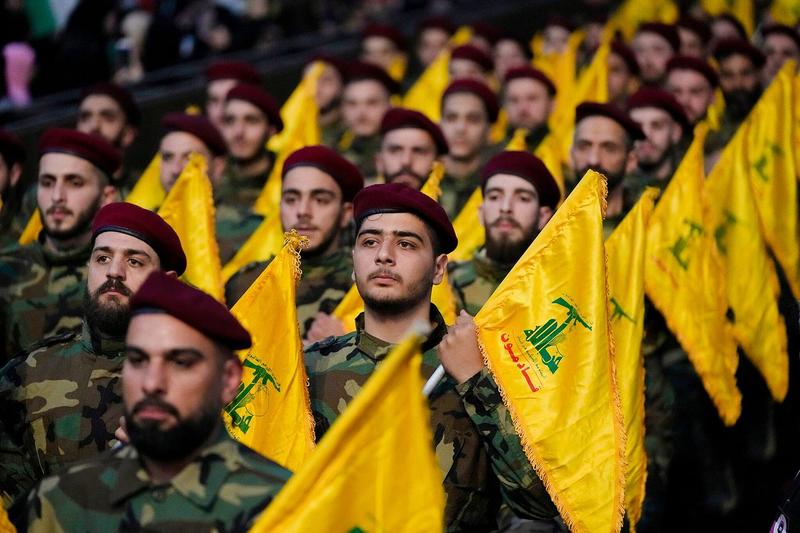
This does not mean its position is easy. The movement has suffered major blows, including the assassination of senior leaders and sustained pressure on its logistical networks. The collapse of the old Syrian order has complicated the regional landscape and could limit overland resupply routes. Lebanon’s central government, weak at the best of times, appears increasingly susceptible to American and Israeli pressure. There are factions inside the country that remain hostile to Hezbollah and would welcome its diminishment.
Yet even these vulnerabilities point to a deeper truth. If military conquest were straightforward, such political engineering would not be necessary. External powers do not spend so much effort trying to isolate, delegitimize and fragment an adversary that can be easily defeated by force alone.
And force alone has not been enough.
That should trouble not only Israel’s leaders but its society. The most striking feature of the current moment is not merely the severity of the war. It is the apparent inability of large parts of Israeli public life to reckon with its consequences. There are dissident voices, to be sure, including journalists, former officials and a small number of public figures who have warned that the country is careening toward catastrophe. But they remain isolated. Broadly speaking, there has been remarkably little self-interrogation commensurate with the scale of the violence.
Instead, criticism from abroad is often dismissed as prejudice. This reflex has become one of the most damaging habits of the age. It transforms political judgment into ethnic animus, converts outrage at state violence into proof of ancient hatred and relieves a society of the burden of asking whether its own actions might be producing the backlash it fears.
This is not only morally evasive. It is strategically ruinous.
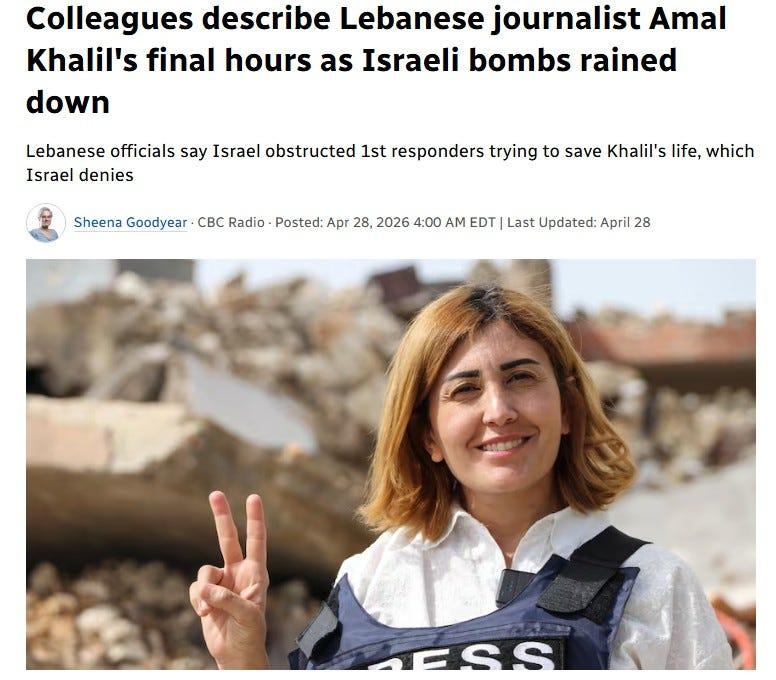
Much of the world’s revulsion at Israel’s conduct did not arise in a vacuum. It emerged in response to what people could see plainly: the leveling of neighborhoods, the killing of civilians, the targeting of journalists and medical workers, the routine language of dehumanization, the evident belief that overwhelming force confers moral exemption. To explain the resulting anger solely as antisemitism is to insist on blindness as a civic creed.
And blindness has consequences.
Israel’s regional position has long rested not simply on its own power, but on the assumption of durable American primacy. That assumption looks less secure than it once did. If American military dominance is fraying, if regional states begin to doubt Washington’s willingness or capacity to underwrite the existing order, then the entire strategic architecture shifts. Countries that once relied on proximity to American and Israeli power may begin to hedge. New alignments become thinkable. Old certainties weaken.
In that environment, every unresolved war becomes more dangerous. Every occupation becomes more expensive. Every act of punitive destruction yields diminishing returns.
Southern Lebanon may be the place where these limits are exposed most clearly. Israel can make the region look like a wasteland. It may even believe that such wastelands enhance security. But a ruined village is not a surrendered village. A depopulated borderland is not a stable one. Rubble does not erase attachment. More often, it hardens it.
This is the paradox at the heart of the war. The side with the greater destructive capacity may still be the side with the weaker claim on time. Hezbollah and the communities around it do not need to win in the conventional sense. They need to endure, impose costs and remain rooted. Israel, by contrast, must convert devastation into durable control. It has not shown that it can.
History in southern Lebanon suggests otherwise.
The deeper tragedy is that this outcome is visible in advance. One can already see the shape of it: villages destroyed, civilians displaced, more fighters recruited, more hatred banked for the next round, and no political settlement capable of surviving the ruin. The war then resumes under a different pretext, with a new body count and the same unlearned lessons.
A state can bomb a landscape into silence for a time. It cannot bomb it into consent.
In the end, that may be the simplest explanation for why Israel keeps finding Lebanon so difficult. It is not fighting a battlefield alone. It is fighting a people’s attachment to place, and that is one of the hardest forces in politics to defeat.
Listen to CATR on:
Newsletter
Subscribe to Conversations Among the Ruins
Long-form geopolitics and the decline of the unipolar world order. New episodes straight to your inbox.
Free. No spam. View on Substack →
Reader-funded
This is independent, long-form work.
Conversations Among the Ruins is written, not repackaged, and it stays free because readers choose to fund it. If it is worth your time, a paid subscription or a one-off tip keeps it going.
Become a supporter →