
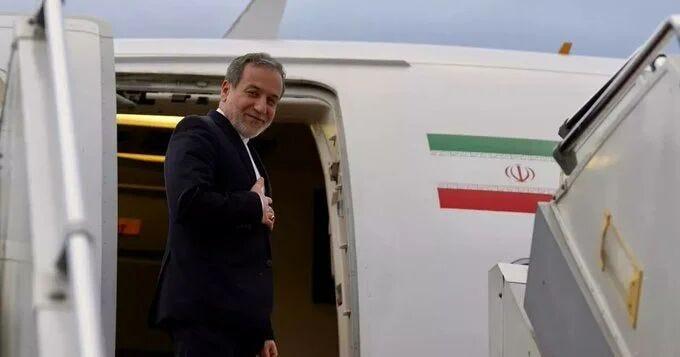
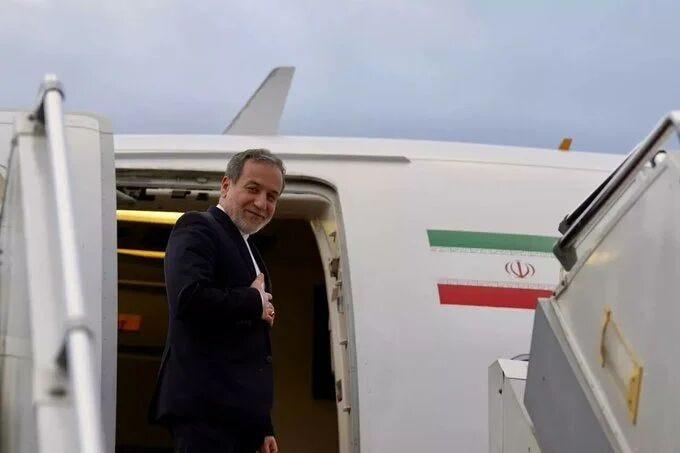
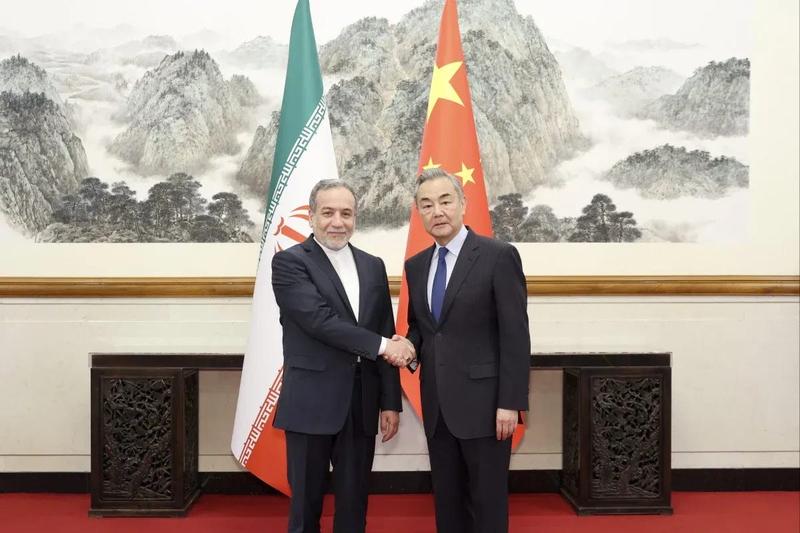
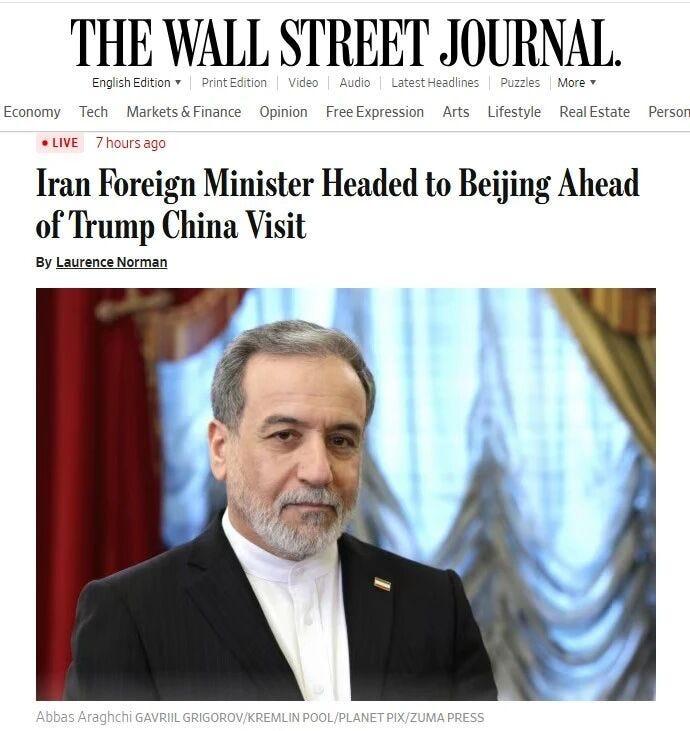
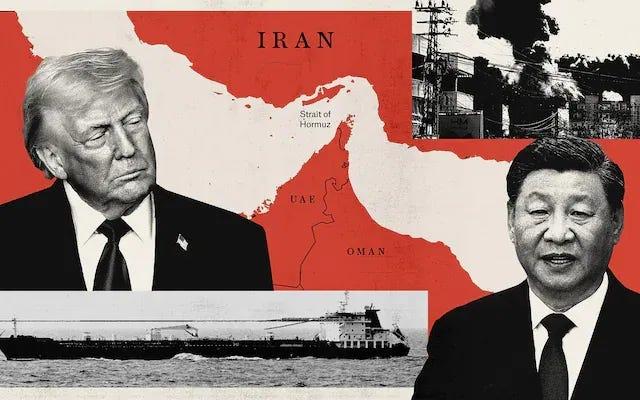
Iran’s Foreign Minister Abbas Araghchi is in Beijing today for talks with Chinese Foreign Minister Wang Yi, and the timing is doing most of the talking. Officially, this is a bilateral diplomatic visit. Unofficially, it is being read across Chinese social media and policy circles as something much bigger: a prelude to new Middle East messaging, a possible round of strategic coordination before a Trump China trip, and a test of whether Beijing still wants to play messenger, stabilizer, or quiet power broker in one of the world’s most combustible regions.
Why the Timing Is Raising Eyebrows
If this were just another routine exchange, it probably would not have triggered so much speculation. But this visit lands at a moment when several storylines are overlapping at once: renewed questions about U.S. regional strategy, ongoing pressure on Iran, reports of diplomatic maneuvering ahead of a possible Trump visit to China, and fresh debate over whether Beijing is being positioned as a channel for messages others cannot deliver directly.
That is why the reaction online has been so intense. Some Chinese commentators believe Araghchi is in Beijing to pass messages. Others think Iran is looking for economic breathing room rather than military promises. A third camp says the visit matters less for what is signed and more for what it signals: that China remains one of the very few capitals able to speak to Iran, Russia, and the West without fully alienating any of them.
Is Beijing Being Used as a Message Channel?
This is the most popular theory circulating online, and it is not hard to see why. China is one of the few countries with working lines of communication across rival blocs. It talks to Tehran. It talks to Moscow. It can talk to Washington. It buys energy from states the West sanctions, while still maintaining huge trade relationships with Europe and the United States. That gives Beijing a rare diplomatic position, and it often uses that position carefully rather than loudly.
In that context, Araghchi’s visit looks less like a plea for dramatic Chinese intervention and more like a consultation stop. If there are ceasefire ideas, de escalation formulas, or red lines that need to be quietly conveyed, Beijing is one of the few places where such communication can happen without public theater. China does not need to openly mediate to still be useful as a trusted relay point.
“The real question is not whether China will ‘save’ Iran. It is whether Beijing wants to quietly shape the conversation before someone else does.”
What Iran Likely Wants From China
Despite some dramatic commentary online, the odds of China offering overt military backing look low. That has been a common reading from more sober Chinese observers as well. Beijing’s style is usually to avoid getting dragged into someone else’s war, especially when the strategic upside is unclear and the sanctions risk is real.
What Iran is more likely seeking is a narrower package: diplomatic support, help keeping trade channels alive, tolerance for procurement of certain goods, and reassurance that China will not join efforts to further isolate Tehran. In plain English, Iran may be looking for room to breathe, not a formal alliance.
Energy is part of that equation too. China already buys Iranian oil, directly or indirectly, and that relationship matters to both sides. But energy ties alone do not explain the urgency of this visit. If oil were the only issue, the machinery already exists. The urgency suggests politics, signaling, and crisis management are all in play.
The Problem Beijing Cannot Ignore: Iran’s Internal Divisions
One theme that repeatedly came up in the Zhihu discussion was trust, or more precisely, the lack of it. For Chinese analysts and nationalist commentators alike, one of the biggest frustrations with Iran is not simply its foreign policy. It is the perception that Tehran often speaks with multiple voices at once.
Reformists, conservatives, the presidency, parliament, the Revolutionary Guard, and the supreme leadership do not always project the same priorities. One faction may seek negotiation, another may escalate, and a third may use ties with China as leverage in talks with the West. From Beijing’s point of view, that makes Iran a difficult partner. Chinese policymakers tend to prize predictability, long horizons, and disciplined message control. Iran often offers the opposite.
That is one reason many Chinese commentators are skeptical that any major breakthrough will come from a foreign ministerial visit alone. Araghchi matters, but he is not the whole Iranian system. Beijing will listen, but it will also ask the same quiet question many in China are asking publicly: who exactly is he speaking for this time?
Why China Is Interested, But Careful
China has clear reasons to stay engaged. It wants stable oil flows, manageable regional tensions, and diplomatic influence without direct entanglement. A Middle East crisis that spikes energy prices or threatens shipping lanes is bad for China’s economy. At the same time, being seen as the one major power that everyone still has to talk to is good for China’s image and leverage.
But Beijing also has reasons to keep its distance. Iran can be useful, but it can also be unpredictable. Supporting Tehran too openly would invite costs from the West while giving China limited control over the outcome. That is not a trade Beijing usually likes. So the likely Chinese approach is familiar: stay close enough to matter, far enough to avoid ownership.
That balancing act is central to understanding this visit. China may be willing to host, listen, coordinate, and even pass messages. It is much less likely to write blank checks, make security guarantees, or get pulled into an emotional geopolitical alliance. For Beijing, influence is most valuable when it remains flexible.
So What Should We Actually Watch?
The most important clues will not necessarily come from the official readout itself. Diplomatic statements are often deliberately bland. What matters more is the sequencing after the visit. Does rhetoric cool down elsewhere? Do Chinese state media stress stability and dialogue more than usual? Does a Trump visit move forward more confidently after this stop? Do oil and shipping conversations suddenly become more concrete?
In other words, this trip may matter less as a standalone event and more as a hinge. It could be remembered as a simple courtesy call. Or it could turn out to be one of those quiet diplomatic waypoints that only looks important in retrospect, after the next round of negotiations, meetings, or de escalation steps fall into place.
For now, the clearest takeaway is this: Araghchi’s Beijing visit is not really about dramatic headlines or fantasy alliance politics. It is about positioning. Iran wants options. China wants leverage. And both sides know that in a tense geopolitical moment, even a “routine” meeting can carry a lot more weight than the official announcement suggests.

Curated and translated from Zhihu, China's largest Q&A platform.
Newsletter
Subscribe to The Expat Edit
Chinese perspectives on global events, wars, and great power competition. Curated from Zhihu.
Free. No spam. View on Substack →