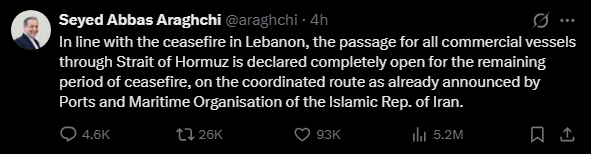
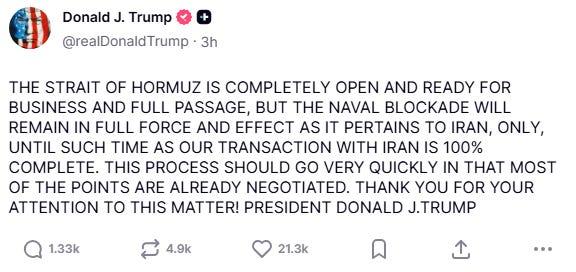
Iran’s announcement that the Strait of Hormuz is now open to all commercial shipping sounds dramatic, and it is. But it is not a clean return to normal. Tehran says the passage is fully open only for the remainder of the current ceasefire window, and only along routes coordinated by Iranian maritime authorities. Washington, meanwhile, says shipping can move again, yet insists its own naval blockade tied to Iran will remain in place until a broader deal is finalized. In other words, the world’s most important oil chokepoint is open, but still very much under negotiation.
A Reopening With Conditions
The key detail in Iran’s statement is not just that Hormuz is open. It is that the opening is temporary, conditional, and politically loaded. Tehran tied the move to the Lebanese ceasefire and framed the decision as valid only during the remaining ceasefire period, widely reported as around ten days. Ships are also expected to follow a coordinated route already published by Iran’s Ports and Maritime Organisation. That means this is not a declaration of permanent free navigation. It is a controlled de escalation signal.
The distinction matters because nearly every side is trying to shape the optics. Iran wants to show it is not recklessly strangling global trade. The United States wants to show pressure is still on. Europe wants shipping restored without looking dependent on Washington. Markets simply want to know whether tankers can pass without being caught in the middle.
Why Tehran Blinked
The simplest explanation is pressure. Iran had leverage as long as Hormuz disruption threatened oil markets and global shipping. But leverage cuts both ways. A prolonged closure would have invited more military coordination against Iran, more diplomatic isolation, and more economic pain at home. Once the Lebanon front moved toward a ceasefire, Tehran suddenly had an off ramp. Reopening the strait gave it a way to lower the temperature without openly calling it surrender.
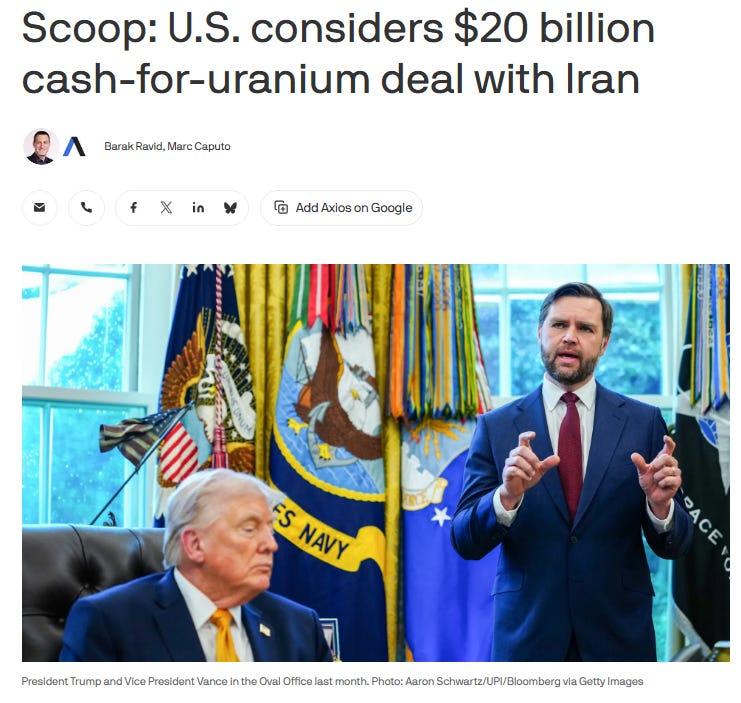
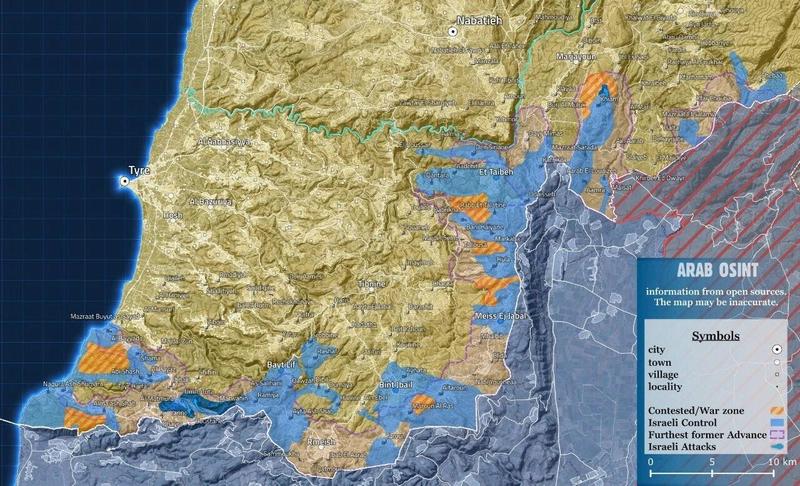
Several Chinese commentators also point to another factor: the battlefield and political environment had changed. Israeli operations in southern Lebanon reportedly deepened, Hezbollah came under heavier strain, and Iran’s wider deterrence picture looked weaker than it did earlier in the conflict. At the same time, reports circulated of a possible U.S. proposal involving roughly $20 billion in unfrozen Iranian assets in exchange for uranium concessions and international monitoring. None of that makes Tehran look strong, but it does make the timing easier to understand.
“Hormuz is open again, but not because trust has returned. It is open because everyone suddenly needs a pause.”
The U.S. and Iran Are Selling Different Stories
Tehran’s version is that it is acting responsibly during a ceasefire and managing traffic through coordinated routes. Washington’s version is that its pressure campaign worked and will continue until Iran signs onto a broader deal. Both can claim partial truth. The shipping lane appears to be reopening in practice, but the political conditions around it are unresolved.
That is why this moment is less a peace breakthrough than a bargaining phase. Iran gets a chance to reduce immediate military and economic pressure. The United States gets to keep coercive tools in place while negotiations continue. Each side can present the same development to its domestic audience as proof of strength.
Why Markets Reacted So Fast
The market reaction was immediate because Hormuz is not just another waterway. A huge share of global oil and LNG flows through it. Once traders sensed that large scale disruption might be avoided, oil prices fell sharply, risk assets jumped, and the panic premium started to fade. Reports out of Europe also suggested renewed international coordination around maritime security, adding to the perception that the worst case scenario had been postponed.
But postponed is the key word. Shipping companies and insurers will still watch the next few days closely. A fragile ceasefire, overlapping military postures, and unresolved sanctions architecture all mean this route is safer than before, not safe in any final sense.
What Happens Next
The next phase depends on whether the ceasefire holds and whether the rumored U.S. Iran package turns into a real agreement. If inspectors enter, uranium stockpiles are transferred or diluted, and some frozen assets are released, this may be remembered as the first visible step toward a broader settlement. If those talks collapse, Hormuz could once again become a pressure point overnight.
For now, Iran’s move looks less like generosity and more like tactical retreat under a diplomatic label. It buys time. It reduces immediate escalation risk. And it gives every party a talking point. But none of that should be confused with lasting stability. The strait is open. The crisis is not over.
Curated and translated from Zhihu, China's largest Q&A platform.
Newsletter
Subscribe to The Expat Edit
Chinese perspectives on global events, wars, and great power competition. Curated from Zhihu.
Free. No spam. View on Substack →