
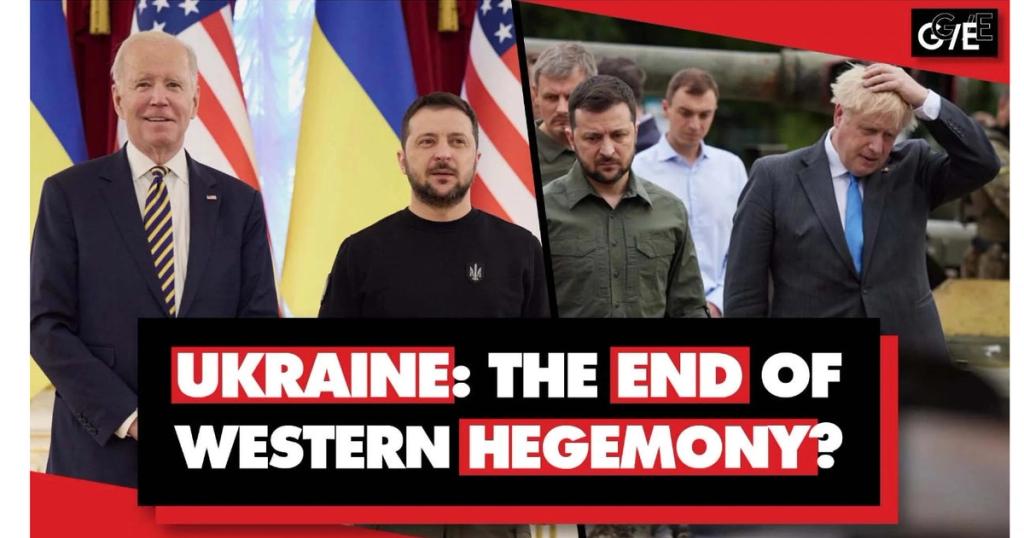
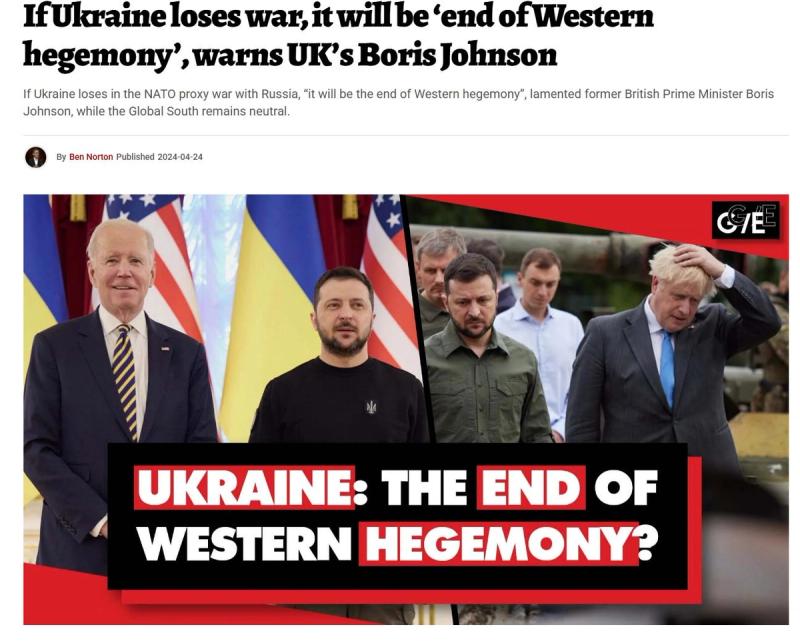
For much of the past several years, the war in Ukraine has been treated as the central theater in the struggle over the future of global order. It was there, many argued, that the limits of American power were being tested, NATO cohesion strained, European economies battered, and the transition from a U.S.-dominated world toward something more diffuse and multipolar made visible in real time.
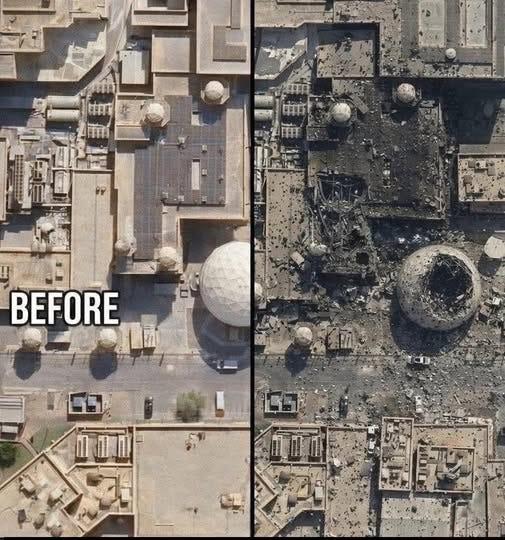
Now attention has shifted sharply to Iran. The speed and scale of that shift is telling. What once seemed like the defining conflict of the age suddenly appears to some as only one front in a larger unraveling. If Ukraine exposed the erosion of American hegemony, the war involving Iran appears to have accelerated it.
This is not because Ukraine no longer matters. Quite the opposite. The war remains one of the most consequential geopolitical events of the century. It continues to shape the balance of power in Europe, drain Western arsenals, reorder trade flows and test the strategic endurance of both Russia and the Atlantic alliance. Its eventual outcome will still reverberate for decades.
But wars move at different speeds. Ukraine has become a grinding conflict of attrition, where territorial changes are measured in incremental advances and the larger significance often emerges slowly, through accumulation rather than spectacle. Iran, by contrast, has injected immediacy into the system. It has raised the prospect of dramatic regional escalation, exposed U.S. vulnerabilities in the Middle East, and forced a reckoning with assumptions that had become deeply embedded in Western strategic thinking.
The two wars are not separate stories. They are deeply connected. In fact, it is becoming harder to understand either one in isolation.
The most obvious link is material. The war in Ukraine consumed vast quantities of Western munitions, air defense systems, and precision weapons. Those stockpiles were not infinite, despite years of rhetoric implying otherwise. The consequence is that when a new crisis emerges elsewhere, the United States and its allies do not enter it with the surplus and flexibility they once might have possessed. A military establishment built on the assumption of abundance now confronts scarcity.
This matters acutely in the Middle East. Had the Ukraine war never happened, Washington and its allies would likely have entered any confrontation with Iran with deeper reserves and greater confidence in their ability to sustain a prolonged campaign. Instead, they are operating after years of depletion. The strategic costs of one war are now shaping the options available in another.
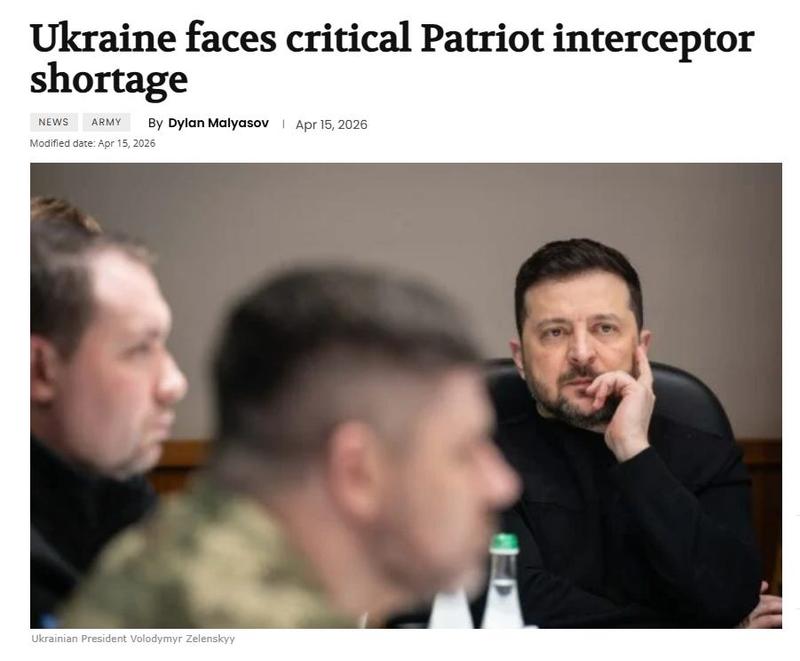
The reverse is also true. A wider war involving Iran affect Ukraine in ways that are obvious. Interceptors and advanced systems sent to one theater are not available in another. Political attention is finite. So is industrial capacity. Kyiv has already confronted the possibility that support once treated as urgent and open-ended is being subordinated to crises elsewhere.
There is also an energy dimension that binds these conflicts together. The Ukraine war already inflicted profound damage to Europe’s economic model by severing or weakening access to cheap Russian energy. A major disruption involving Iran and the Strait of Hormuz compounds those pressures dramatically. Energy prices are rising, and supply chains are tightening. Fertilizer, shipping and industrial inputs all are affected.
And here an irony becomes difficult to ignore. In a world where flows through the Gulf are constrained, countries that can supply oil, gas, fertilizers and key industrial commodities suddenly gain leverage. Russia, already the target of an unprecedented Western pressure campaign, is benefiting from precisely the kind of dislocation that Western policy helped create. The broader the disruption, the stronger Moscow’s hand may become.
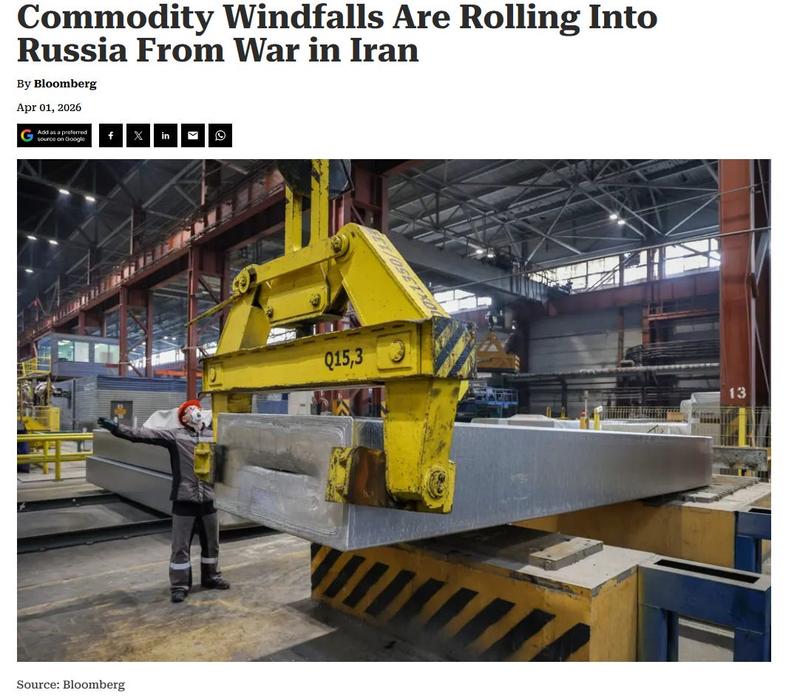
This is one of the recurring features of the current moment. Actions undertaken to preserve U.S. influence often seem to accelerate the trends undermining it.
There is a military lesson here as well, and it may prove even more unsettling.
For years, the United States and its allies have spent extraordinary sums maintaining a global posture built around aircraft carriers, forward bases, expensive surface fleets and highly complex legacy platforms. These systems were designed for an era in which scale, visibility, and concentration of force conveyed dominance. But recent wars have revealed something more troubling. Many of these assets are not merely expensive. They are increasingly vulnerable.
In Ukraine, cheap drones have transformed the battlefield. Motorcycles, trench networks, and simple countermeasures have reappeared alongside precision weapons and satellite surveillance. Heavy armor, once seen as a symbol of battlefield supremacy, often becomes a target before it can become an advantage. Improvisation matters as much as industrial sophistication, and mass low-cost systems can degrade high-cost platforms in ways that would once have seemed improbable.
The Middle East has underscored a similar point. Fixed bases in exposed positions are not always instruments of power. They can become liabilities, especially against adversaries equipped with missiles, drones, mines, fast attack craft, and distributed launch infrastructure. What constituted strategic reach in one era becomes mere target density in another.
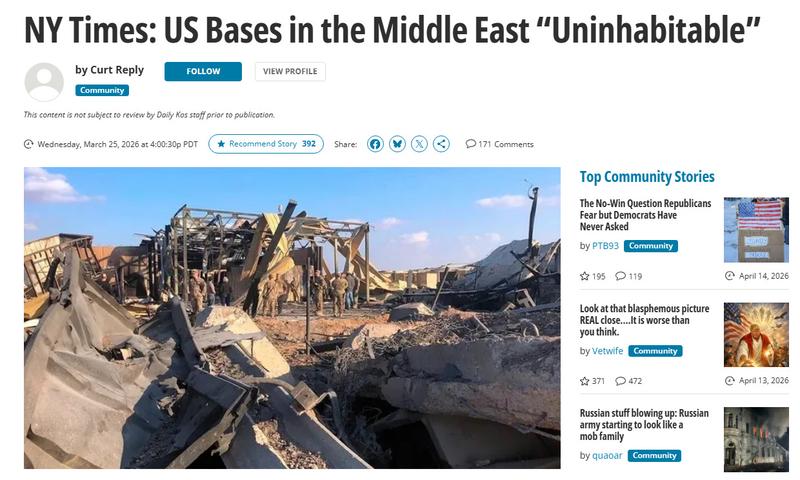
This is where the contrast becomes especially sharp. Much of the Western security architecture in the region still reflects 20th-century assumptions. Hardened airstrips, visible installations, and surface naval dominance remain central to its logic. But some of America’s adversaries have adapted more quickly to 21st-century conditions. Underground missile complexes, dispersed launch systems, inexpensive drones and maritime asymmetry are not signs of backwardness. They are often evidence of strategic adaptation.
The uncomfortable possibility is that some middle powers now understand the changing character of war better than the most lavishly funded militaries in the world.
This should not be overstated. The United States remains immensely powerful. Its military reach, technological base, and alliance network remain without historical parallel. Iran is not China. It is not Russia. But military superiority is not a static condition, and prestige can obscure vulnerability. The inability to adjust doctrine, procurement, and force structure to changing realities is itself a form of decline.
That decline is not simply military. It is political and psychological. There is a growing tendency in Washington and European capitals to act as if old status guarantees present effectiveness, as if institutions that once delivered dominance can continue to do so through inertia alone. More spending is proposed, but often in familiar forms. More platforms. More prestige projects. More symbols of power, even as the character of power changes beneath them.
This is visible in Europe’s renewed militarization. Faced with mounting insecurity, many governments appear ready to spend more on conventional hardware associated with a previous era. But if the wars in Ukraine and the Middle East have shown anything, it is that rearmament without adaptation can become an exercise in expensive nostalgia.
The deeper issue is that the international system is no longer organized around uncontested Western initiative. Other states have adjusted. They have learned to survive sanctions, absorb pressure, build redundancy, and exploit asymmetries. They do not need to surpass the United States across every category of power. They only need to make the old model of dominance unaffordable, unsustainable, or unworkable.
That is what makes the overlap between Ukraine and Iran so significant. Together, they reveal not simply that the United States faces multiple crises, but that those crises interact in ways that magnify structural weakness. One war drains stockpiles needed for another. One sanctions regime reshapes energy markets in ways that strengthen rival suppliers. One regional escalation exposes the obsolescence of force structures built for a different strategic age.
This does not mean that American power is about to disappear. Great powers do not collapse on a news cycle. Their decline tends to be uneven, contested and prolonged. Foundations can erode for years before visible rupture arrives. But erosion still matters. Eventually, systems built on assumptions that no longer hold begin to fail in ways that can no longer be managed rhetorically.
That may be the real significance of the present moment. The war in Ukraine began the process of exposing the strains within the American-led order. A war involving Iran has intensified them. Together they suggest that what is underway is not a temporary crisis, but a more far-reaching transition.
The question is no longer whether the world is becoming multipolar. It is how disorderly the passage will be, and whether the powers most invested in the old order are capable of recognizing how much has already changed.
Listen to CATR on:
Newsletter
Subscribe to Conversations Among the Ruins
Long-form geopolitics and the decline of the unipolar world order. New episodes straight to your inbox.
Free. No spam. View on Substack →
Reader-funded
This is independent, long-form work.
Conversations Among the Ruins is written, not repackaged, and it stays free because readers choose to fund it. If it is worth your time, a paid subscription or a one-off tip keeps it going.
Become a supporter →