
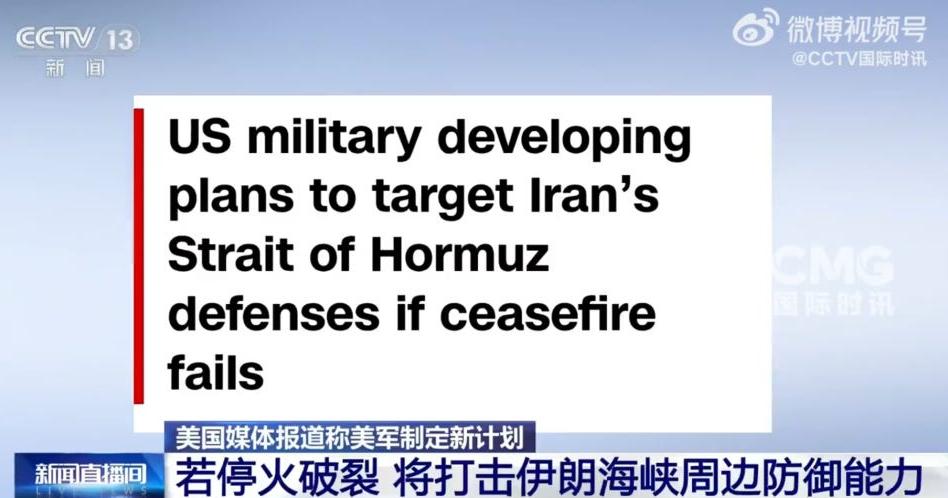
A fresh round of headlines lit up Chinese social media this week after reports said the US military is preparing new options in case the current ceasefire with Iran collapses. The reported focus is the Strait of Hormuz and Iran’s surrounding defensive network, with possible strikes on dual use infrastructure and even energy targets if Washington wants to force Tehran back to the table. On Zhihu, users are asking the obvious question: is this real war planning, negotiation theater, or just another round of pressure politics?
What the Report Actually Says
The core claim, cited by Chinese media from unnamed sources, is that the Pentagon is drawing up a revised plan for renewed conflict with Iran if the ceasefire breaks down. The priority would be degrading Iranian military defenses around the Strait of Hormuz, one of the world’s most sensitive energy chokepoints. Some reporting also says Washington could target civilian military dual use nodes and energy infrastructure to increase economic pain and political pressure.
That does not automatically mean war is imminent. Militaries constantly update contingency plans, especially when a ceasefire looks shaky. But in the current regional climate, the mere leak of such planning matters. It sends a signal to Iran, reassures regional allies, and gives negotiators an extra stick to wave around while talks stay unresolved.
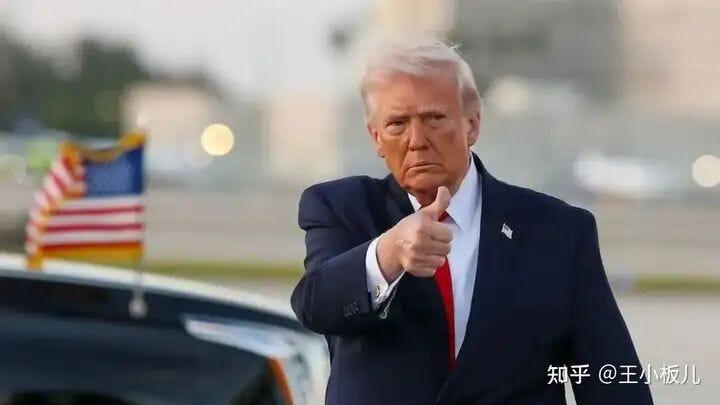
Chinese internet users noticed another layer too. US messaging has been all over the place. One day the tone is pressure, the next it is patience. Trump was quoted again as saying there is “no rush” and “no pressure” while still wanting a “permanent agreement” with Iran. That mix of threats and delay has made many observers suspicious that the battle is still mostly about leverage.
Why the Strait of Hormuz Matters So Much
The Strait of Hormuz is not just another patch of water. A huge portion of the world’s oil and gas shipments passes through it, which means any hint of disruption can spook markets instantly. That is why many Chinese commentators think a US plan centered on Hormuz is plausible. It is the one area where military action could be framed not as regime change, but as “restoring navigation” and protecting global trade.
One popular Zhihu answer argued that Washington’s most likely military script would be limited and theatrical: use overwhelming firepower to knock out Iran’s main anti ship positions, escort a batch of trapped oil tankers through, then withdraw quickly and declare success. The logic is simple. A narrow operation around Hormuz is easier to sell politically than a wider war deep inside Iran.
But even that so called limited option is risky. Iran does not need perfect defenses to create chaos. It only needs enough strike capability to make insurers panic, push shipping costs up, and scare commercial traffic. In other words, “opening” Hormuz militarily is much harder than a map room presentation makes it sound.
The Open Source Clue That Got People Talking
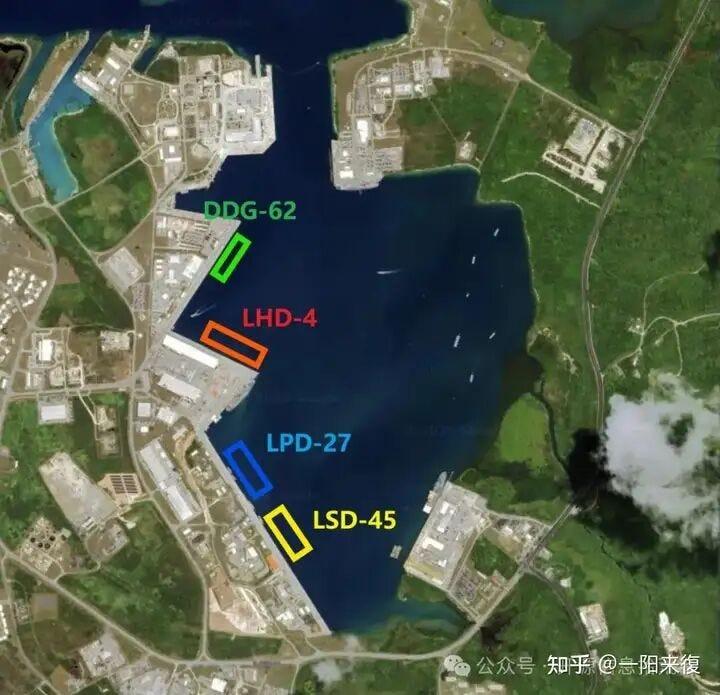
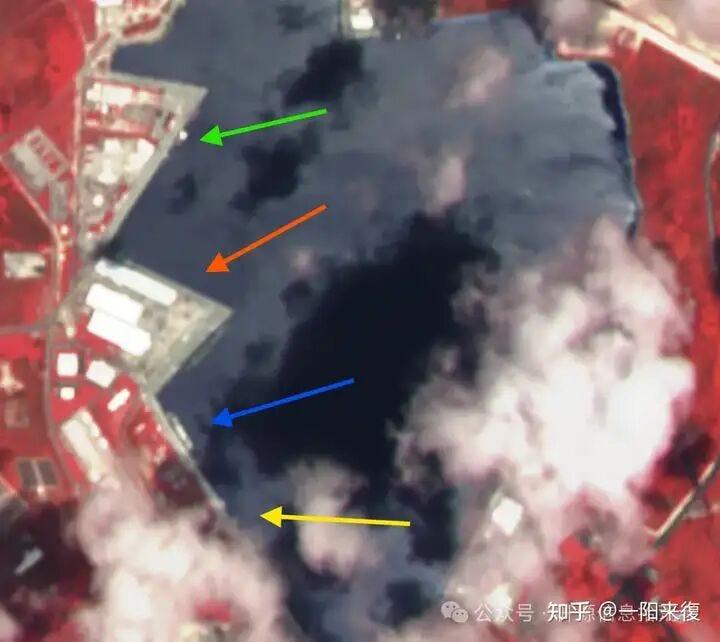
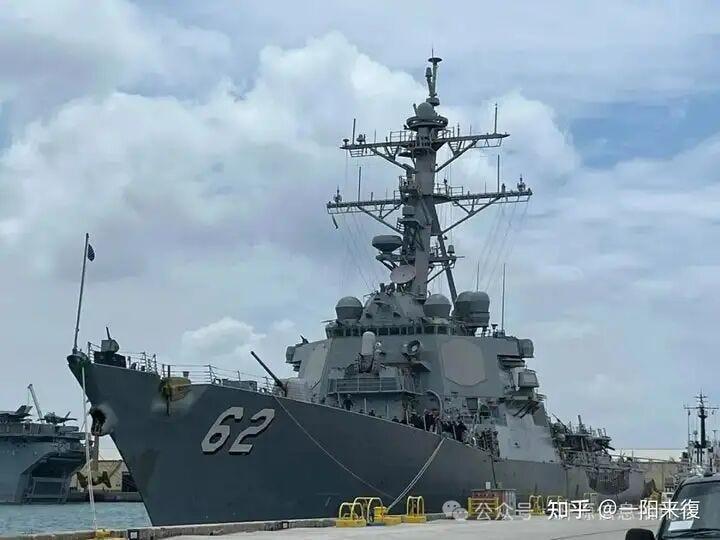
The most concrete discussion on Zhihu did not come from official statements at all. It came from open source tracking. One widely shared post analyzed Guam’s Apra Harbor using photos and satellite imagery, identifying the April 19 positions of four ships linked to the Boxer Amphibious Ready Group: DDG 62, LHD 4, LPD 27, and LSD 45. By April 24, the poster said, the latest satellite image showed all four had departed.
On its own, that does not prove these ships are heading for a fight with Iran. Naval deployments move all the time. But the post resonated because it gave Chinese readers something more tangible than anonymous leaks. It was a rare case where internet users felt they could “see” movement rather than just react to headlines. In a discussion full of rumor, open source imagery carried unusual weight.
That said, the same open source post was careful not to overclaim. It mainly established that a previous prediction of a long stay in Guam was wrong, and that the group’s onward movement deserved attention. In other words, it hinted at possibility, not certainty.
“The loudest signal right now may not be an incoming war, but a negotiation strategy built to look like one.”
What Chinese Commenters Seem to Agree On
Reading through the Zhihu thread, a rough consensus appears. Many think the chance of renewed military action is real, but not necessarily immediate and not necessarily on a massive scale. The more common view is that Washington wants to preserve escalation dominance without getting trapped in a costly ground war. Chinese users repeatedly pointed out that bombing is easy to talk about, but controlling the political and economic consequences is much harder.
A number of commenters also argued that striking infrastructure would be the more likely next step if talks fail. The reasoning is blunt: if direct military attrition does not force concessions, then pressure on electricity, banking, transport, energy, and payroll systems might. Some users compared that logic to earlier Western air campaigns that focused on making normal life unbearable rather than seizing territory outright.
At the same time, there was skepticism about the source of the leak itself. Several commenters wondered whether the “sources” were genuine insiders or just part of a media shaping effort. On Chinese platforms, anonymous national security reporting is often read less as straight information and more as part of the struggle itself.
Why a Full Scale War Still Looks Unlikely
If there is one strong note of realism running through the thread, it is this: a serious war with Iran is not a clean operation. Iran has strategic depth, rough terrain, a capacity for retaliation through partners and proxies, and the ability to punish shipping and regional infrastructure even when under heavy attack. That does not make Iran unbeatable, but it does make a “quick win” much less believable.
Several Chinese commenters stressed that the United States can hit Iran hard from the air, but turning that into a stable political result is another matter. A ground war would be deeply unpopular and dangerous. A purely aerial campaign could still inflict pain, yet might fail to produce the concessions Washington wants. This is why many see both sides as trapped in a grind. The US cannot easily accept looking weak. Iran cannot easily give up the leverage it sees in uranium, sanctions resistance, and the Hormuz card.
In short, both sides have reasons to escalate, but also strong reasons to stop short of the point of no return.
The Market Signal Is Also Telling a Story
One of the more interesting observations in the thread had little to do with missiles or ships. It was about markets. A Zhihu user tracked several recent days of Trump statements, Iranian responses, and reports of military preparation, then pointed out that US equities had barely moved. Daily swings remained relatively mild, while only energy and defense names showed clearer sensitivity.
Their conclusion was provocative: maybe the alternating cycle of threats and talks is not only aimed at Iran, but also at markets. By repeating the same pattern over and over, Washington may be trying to desensitize investors to Middle East escalation risk so that, if conflict does intensify, the initial financial shock is less severe. Whether that is true or not, it is exactly the kind of strategic reading that plays well on Chinese discussion boards.
It also helps explain why so many Chinese observers are cautious about taking war headlines at face value. In their reading, the headlines themselves are part of the battlefield.
So, How Likely Is a Restart of War?
Based on the reporting and the range of Chinese commentary, the likeliest answer is not “yes” or “no,” but “limited escalation remains very possible.” A narrow campaign tied to Hormuz, shipping security, or infrastructure pressure is much easier to imagine than a broad campaign aimed at overthrowing Iran or occupying territory. The military planning is believable because militaries always plan. The political threshold for actually pulling the trigger is much higher.
If diplomacy breaks down completely, renewed strikes are not hard to picture. If diplomacy limps along, then these plans may function mainly as coercive theater. Either way, the biggest takeaway from Chinese online discussion is that few people expect a clean resolution soon. Most expect more pressure, more signaling, more leaks, and more attempts by both sides to shape the next round before it begins.
For now, the smartest reading may be this: the possibility of war is real enough to matter, but still uncertain enough to be used as leverage.
Curated and translated from Zhihu, China's largest Q&A platform.
Newsletter
Subscribe to The Expat Edit
Chinese perspectives on global events, wars, and great power competition. Curated from Zhihu.
Free. No spam. View on Substack →