
The central question in this war is no longer whether it will escalate, but why Russia waited so long to escalate in ways it plainly could have much earlier. For years, Moscow appears to have calibrated its campaign with an eye toward avoiding a direct clash with NATO and limiting the political and civilian costs of the war. The West largely chose to read that restraint not as caution, but as weakness.
That misunderstanding shaped the course of the conflict. Strikes on central decision-making nodes in Kiev would have carried not only military consequences, but political ones. Western advisers, intelligence personnel, and technical specialists were believed to be present in or around many of those locations, and their deaths could have triggered exactly the broader confrontation Moscow was trying to avoid. But restraint that is not recognized as restraint does not preserve deterrence for long. It invites challenge.
This is the paradox now confronting the Kremlin. By trying to keep the war contained, Russia may have helped create the conditions for a more dangerous war. By holding back, it encouraged the belief that it either lacked the capability or the will to impose higher costs. Every delayed response made the next escalation easier to imagine.
The result was a steady collapse in deterrence.
What began as a war with clear risks of spillover gradually became, in Western capitals, a conflict governed by habit. One threshold after another was crossed. More advanced systems were sent. Broader targeting became acceptable. Strikes into pre-2014 Russian territory were normalized. Operations that once would have been treated as provocations with grave escalatory implications became, over time, part of the landscape. Each step rested on the same implicit conclusion: Russia would protest, adapt, absorb, and move on.
This was not merely a military misreading. It was a political one. In much of the Western narrative, Russia’s caution was interpreted not as strategic discipline but as dysfunction. If Moscow did not immediately strike decision-making centers in Kiev, then perhaps it could not. If it did not retaliate in the most dramatic terms after attacks on sensitive targets, then perhaps its red lines were performative. If it continued to pursue negotiations, explore settlement frameworks, or limit its own responses, then perhaps it was signaling desperation rather than control.
That interpretation may prove to have been one of the most expensive illusions of the war.
Russia’s early conduct gave ample room for such an illusion to take hold. Despite the language of “full-scale invasion,” Moscow initially committed a relatively limited force for an operation of this scale. In support of the Istanbul talks, it withdrew from Kiev early. At several points, it seemed to act on the assumption that a controlled use of force, combined with diplomatic pressure, might still produce a political settlement short of a direct Russia-NATO collision.
That assumption failed.
It failed because restraint is intelligible only when both sides share an interest in limiting the conflict. If one side sees caution as prudence and the other sees it as an opportunity, then restraint becomes self-undermining. Instead of stabilizing the battlefield, it weakens deterrence. It teaches the other side that more can be attempted, more can be risked, and more can be outsourced to chance.
There is a strong argument that this dynamic should have been obvious much earlier. Critics of the Kremlin, including many inside Russia, have long argued that Moscow’s incremental approach helped sustain precisely the fantasies it was trying to avoid. It allowed Kiev and its backers to believe that time was on their side. It gave Western leaders space to promise that Russia could be worn down militarily, economically, and politically. It nourished the fiction that a nuclear power facing expanding attacks on its territory and strategic assets would indefinitely refrain from changing the nature of the war.
The price of that fiction has been measured in ruined cities, shattered infrastructure, and enormous loss of life.
It is impossible to know how many lives might have been saved had Russia established a harsher deterrent early. Counterfactuals in war are always speculative. A stronger initial campaign might have produced a faster political settlement. It might also have triggered a different form of escalation. But what can now be said with some confidence is that the strategy of partial pressure and delayed retaliation did not prevent deeper Western involvement. It seems, rather, to have accommodated it.
This is why the recent signs of a harder Russian posture matter. The reported move toward targeting decision-making centers in Kiev is not simply another tactical adjustment. It reflects a larger recognition that the earlier strategy failed on its own terms. A campaign designed in part to avoid a broader confrontation gradually eroded the very deterrence that might have helped contain it.
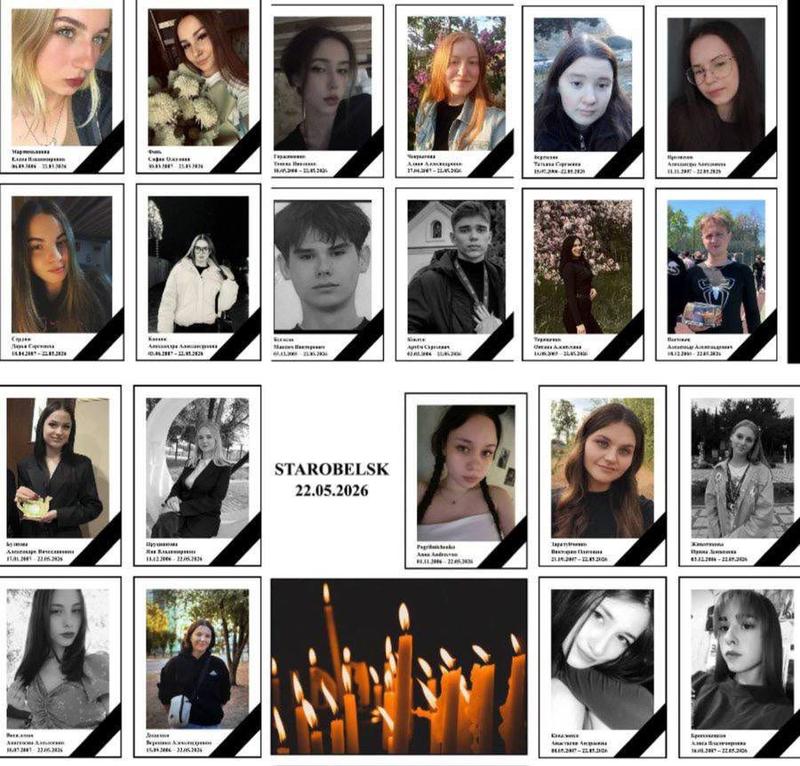
The attack on the Starobelsk Pedagogical College in Lugansk appears to have intensified this shift, even if pressure had already been building inside Russia for a tougher response. Events like these do not merely inflame public anger. They strengthen the hand of those who have argued all along that caution has been counterproductive, that delayed punishment has only invited bolder attacks, and that an adversary who no longer fears escalation is an adversary that will keep escalating.
That is the core lesson here. Deterrence is not an abstract theory. It is a perception lodged in the mind of the opponent. It depends less on stated red lines than on whether those red lines are believed. Once the belief disappears, the incentives change quickly. Risk-taking grows. Warnings lose force. Actions once considered unthinkable become newly thinkable, then normal.
By that measure, Russia’s greatest strategic failure in this war may not have been on the battlefield at all. It may have been the failure to convince its adversaries, early and decisively, that certain lines could not be crossed without unacceptable consequences.
A restrained power can still be formidable. But if restraint is repeatedly mistaken for weakness, it eventually ceases to function as restraint. It becomes permission.
That is the danger when deterrence fails in this way. Not that one side suddenly becomes reckless, but that, over time, it becomes convinced that it can act without fear.
And once that lesson hardens, restoring deterrence usually requires far more force than establishing it would have in the first place.
Listen to CATR on:
Newsletter
Subscribe to Conversations Among the Ruins
Long-form geopolitics and the decline of the unipolar world order. New episodes straight to your inbox.
Free. No spam. View on Substack →
Reader-funded
This is independent, long-form work.
Conversations Among the Ruins is written, not repackaged, and it stays free because readers choose to fund it. If it is worth your time, a paid subscription or a one-off tip keeps it going.
Become a supporter →