
For perhaps the first time in a generation, the United States and Israel are confronting each other in full public view as governments operating at cross-purposes. Not over rhetoric, not over optics, and not over some manageable diplomatic quarrel, but over a crisis serious enough to threaten energy markets, regional stability, and the credibility of American power itself. What was once hidden behind the language of ironclad partnership is now becoming harder to disguise.What has changed is not a sudden moral awakening in Washington, nor a newfound concern for Palestinian or Lebanese lives. The shift is more elemental than that. It is a recognition that Israel’s current course is no longer merely controversial or embarrassing. It is colliding with core American interests in a way that is becoming impossible to ignore.
The rupture did not come from Gaza, though the destruction there badly eroded American credibility. It came when Israel’s regional escalation began threatening the larger architecture of American power itself. Once the conflict with Iran put shipping lanes, energy markets, and military logistics at risk, the old formula of unconditional support became harder to sustain. What had long been treated as a difficult alliance began to look, from the perspective of American statecraft, like a strategic liability.
That is why the recent posture of Donald Trump and JD Vance matters
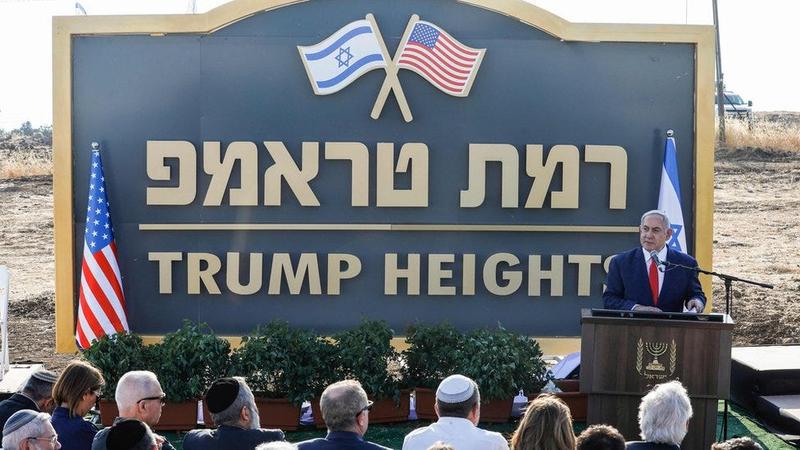
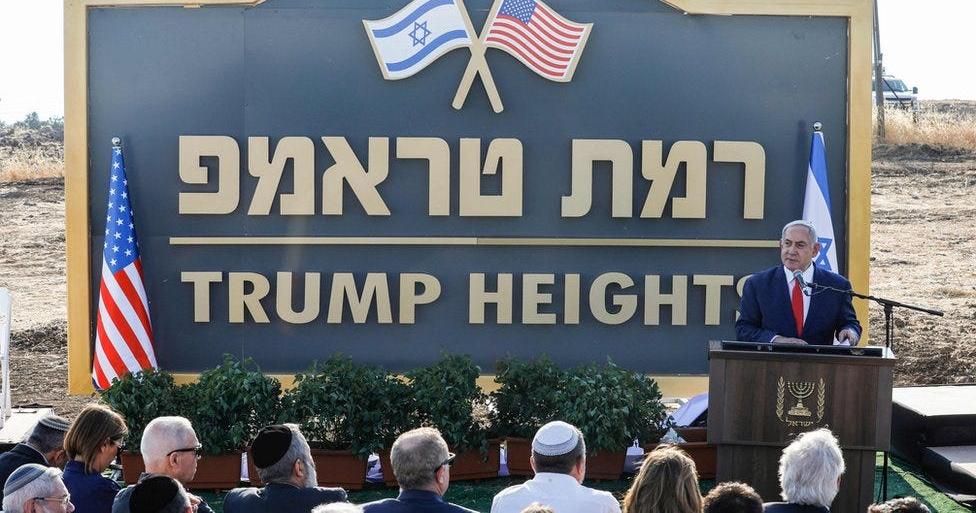
Trump is not a natural critic of Israel. On the contrary, he spent much of his political life proving his loyalty to it. He moved the U.S. embassy to Jerusalem. He recognized Israeli sovereignty over the Golan Heights. He built a political identity in part around being more openly pro-Israel than his predecessors. If a figure like Trump is now willing to speak in language that places blame on Israel for regional chaos, that is not a small tactical adjustment. It is evidence that something deeper has shifted.
Vance’s comments have been even more revealing. His tone has suggested a willingness to say in public what American officials have usually kept behind closed doors: that Israel’s behavior is imposing unacceptable costs on the United States, and that American support is not a blank check for policies that could drag the entire region, and with it the global economy, into crisis.
The significance of this moment lies not only in the words themselves, but in where they are being said and to whom. When criticism of Israel begins to circulate on conservative media, among Republican voters, and within a political coalition that has long treated support for Israel as axiomatic, the terrain changes. This is not campus activism or dissident foreign policy commentary. It is the beginning of a crack inside one of the last major pillars of Israel’s political protection in the United States.
That crack has been forced open by Israeli overreach.
For years, Israeli leaders acted on the assumption that Washington would always follow. That confidence was not entirely irrational. Successive American administrations had taught them this lesson. Israel could expand settlements, devastate Gaza, escalate in Lebanon, and repeatedly test Washington’s limits, all without facing serious consequences. The expectation of impunity became deeply ingrained.
But there is a difference between carrying out brutal policies against a stateless population and pushing the United States into a direct confrontation with Iran that threatens oil flows, financial markets, and the stability of America’s own alliances. The first could be managed politically. The second touches the nerve center of global power.
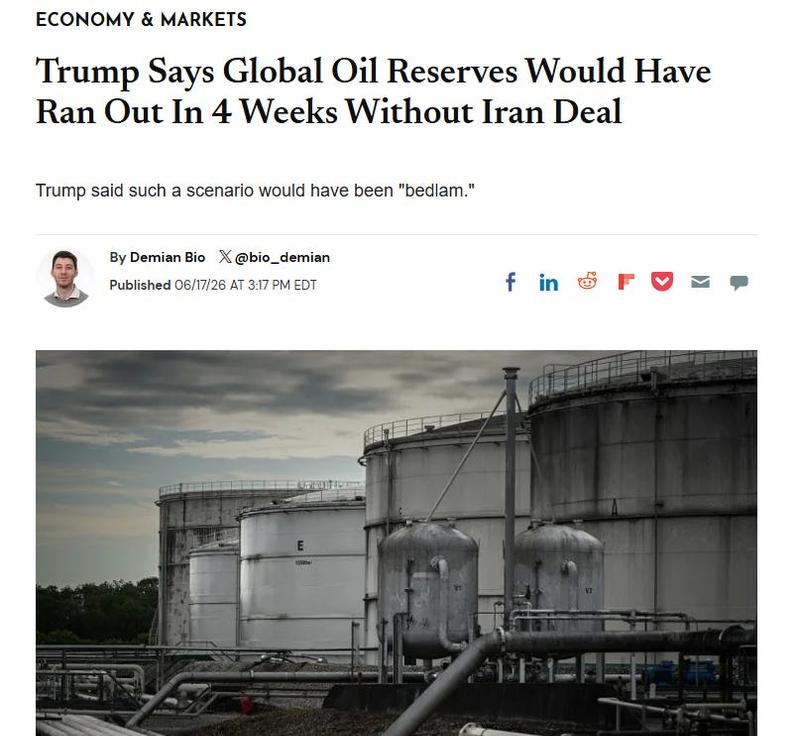
At that point, the issue stops being one of optics or values. It becomes one of self-preservation.
That is also what makes this moment different from the many quieter disputes that have come before it. What has been exposed is not the sudden breakdown of American control, but the collapse of a longstanding illusion. The United States and Israel have often had divergent interests, yet American officials typically masked that fact by adopting Israeli goals as their own and selling them to the public as matters of U.S. credibility or security. The invasion of Iraq was perhaps the most consequential example. In the current crisis, that habit of concealment is failing. Israel’s disregard for American interests is not operating quietly in the background. It is unfolding in public, as it works to undermine a U.S. agreement and pull Washington back into confrontation with Iran.
That new visibility is precisely what makes the current break so significant, and so unstable. If Trump and Vance continue down this path, they will come under ferocious pressure. The pro-Israel establishment in Washington is not weak. It has powerful allies in Congress, donor networks, think tanks, and the media. Much of the political class still reflexively treats any serious criticism of Israel as suspect. Trump in particular is vulnerable to these pressures. He is acutely responsive to elite flattery, public humiliation, and media backlash.
None of this guarantees durability. It is entirely possible that the administration could retreat, revert to old habits, and once again subordinate American policy to Israel’s demands.
But even if that happens, something important has already been exposed. The mythology of the special relationship has been damaged in public. The alliance is no longer appearing, at least to all factions of the American right, as cost-free, sacred, or strategically obvious. It is being argued over in a new way.
That matters because political orthodoxies often survive until the moment they fail all at once. For years, the U.S.-Israel relationship seemed immune to normal strategic calculation. Israel was treated not as an ally that could clash with American interests, but as a permanent extension of them. What is emerging now is a more dangerous but also more realistic understanding: that the interests of the two states are not identical, and that under current conditions they may be directly opposed.
If that recognition takes hold, this will be remembered not as another temporary disagreement between allies, but as the moment the old consensus began to break.
And once that consensus breaks, it may prove harder to restore than Washington imagines.
Listen to CATR on:
Newsletter
Subscribe to Conversations Among the Ruins
Long-form geopolitics and the decline of the unipolar world order. New episodes straight to your inbox.
Free. No spam. View on Substack →
Reader-funded
This is independent, long-form work.
Conversations Among the Ruins is written, not repackaged, and it stays free because readers choose to fund it. If it is worth your time, a paid subscription or a one-off tip keeps it going.
Become a supporter →