


For decades, the political order in Washington and across much of the West treated Israel as an exceptional case, a state to be defended, indulged and, when necessary, rhetorically shielded from the consequences that would be imposed on almost any other ally. That arrangement was never merely diplomatic. It was moral, institutional, and cultural. It shaped the language of official statements, the assumptions of television panels, the priorities of legislatures, and the silences of major newspapers.
Now, that arrangement is under strain.
Not because the governments of the West have suddenly discovered courage. They have not. Not because the foreign policy establishment has undergone some moral awakening. It has not. The old habits remain deeply embedded. But something more difficult to manage has begun to assert itself: reality, repeated so often and in such graphic form that it has become harder to keep hidden behind procedural language and familiar talking points.
The destruction of Gaza did not unfold in darkness. It happened in full view of the world. And as military pressure expanded beyond Gaza into Lebanon, many people were left with a simple and increasingly furious question: How much can be done, how much suffering can be documented, before anyone with actual power decides to stop it?
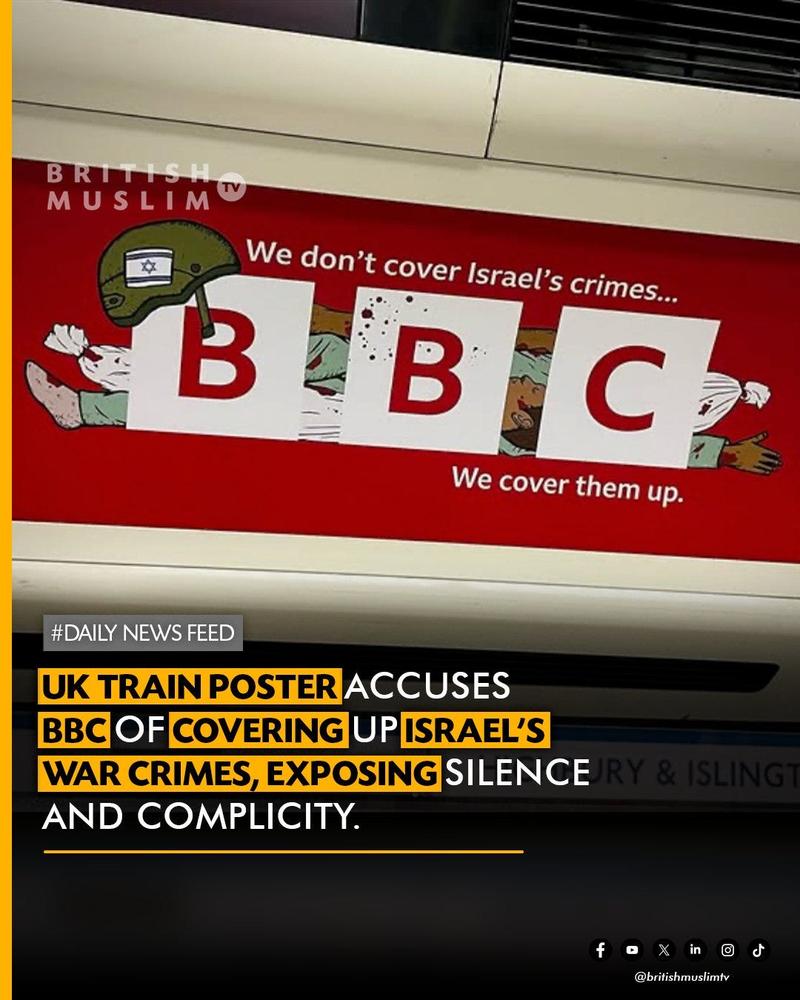
That question does not arise from naïveté. It arises from a dawning recognition that the paralysis is not accidental. It is the product of a system that has for years rewarded passivity, excused brutality, and treated meaningful restraint on Israel as politically unthinkable.
This did not happen overnight. The region itself offers a map of how opposition was neutralized. Egypt, once a central adversary of Israeli regional power, was gradually folded into a different arrangement after Camp David. The government was stabilized with American aid and strategic incentives. Jordan has long existed in a precarious balancing act, with a large Palestinian population and a monarchy keenly aware of the dangers of internal unrest. Lebanon, fractured and vulnerable, has been subject to repeated Israeli assault while its formal institutions remain weak and heavily constrained. Across the region, governments struggle to contain enormous public anger.
The result is a strange and terrible spectacle. Populations are outraged. States are inert. Leaders issue statements. Civilians die.
In Europe, too, the response has rarely moved beyond carefully managed criticism. There are tools available short of military action: sanctions, diplomatic isolation, restrictions on arms transfers, and genuine material consequences. Yet these have remained largely theoretical, invoked in op-ed pages and activist petitions more often than in cabinet rooms. Israel has long depended on the assumption that outrage will dissipate before it hardens into policy. So far, that assumption has largely held.
The more revealing story may be in the United States, where the old consensus appears less stable than it once did.
For years, American presidents of both parties proved willing to absorb almost any political or moral cost to preserve the relationship. They supplied weapons, diplomatic cover, and ritual affirmations of solidarity. Even obvious excesses were managed through euphemism. Civilian death became “complexity.” Collective punishment became “security.” Unconditional support became “the special relationship.”
Yet there was, until recently, at least one perceived boundary. However indulgent Washington was prepared to be, there remained a broad understanding within parts of the national security establishment that a direct war with Iran posed dangers too large to ignore. One could be complicit in many things and still recognize that some escalations might trigger consequences beyond anyone’s control.
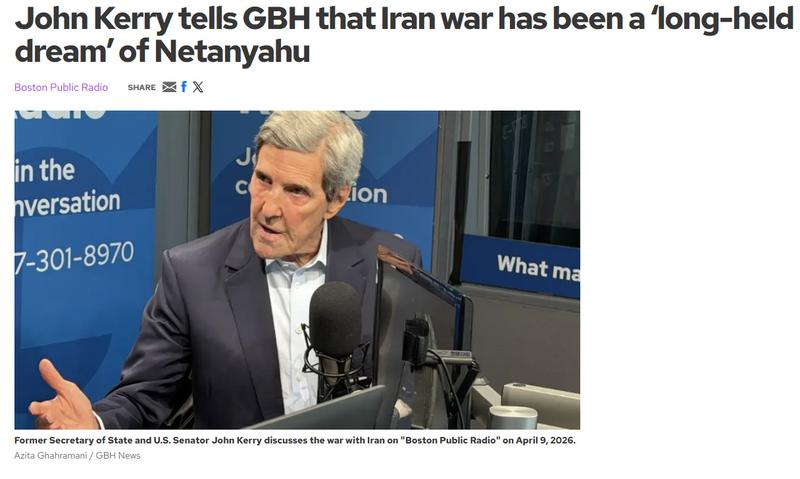
That boundary now appears far less secure.
This is one reason the current moment feels so volatile. Once a political system gives up even the last remaining commitment to self-preservation, it enters a more erratic phase. Officials begin to speak in the language of improvisation. Policymakers grasp for partial measures, symbolic shows of strength, and procedural maneuvers designed to extricate themselves from the disaster they have helped create. Everyone sounds less confident. Everyone sounds more trapped.
The trap is not merely strategic. It is domestic.
For a long time, foreign policy elites operated on the assumption that the American public would tolerate almost any contradiction abroad so long as daily life at home remained mostly bearable. That assumption is also weakening. Americans increasingly do not experience these questions as distant abstractions. They see a political class unable or unwilling to address declining living standards, rising costs, and institutional decay at home, while devoting endless energy to protecting a foreign ally from scrutiny or consequence. The issue is no longer only humanitarian, though it remains that. It is also political in the most immediate sense. People increasingly believe that this relationship distorts American priorities and narrows the boundaries of permissible debate inside their own country.
That belief, once relegated to the margins, is becoming harder to suppress.
Public opinion has shifted dramatically, especially among younger voters and within the Democratic base. The shift is not confined to one ideological camp. A broader skepticism is spreading across the political spectrum, though not always in coherent or admirable ways. Some critics are motivated by principle, others by opportunism. Some frame the matter in universal terms of law, rights, and human dignity. Others prefer the language of betrayal and national humiliation. Not all of this will be neat. Political realignments rarely are.
Still, the fact of the shift matters.
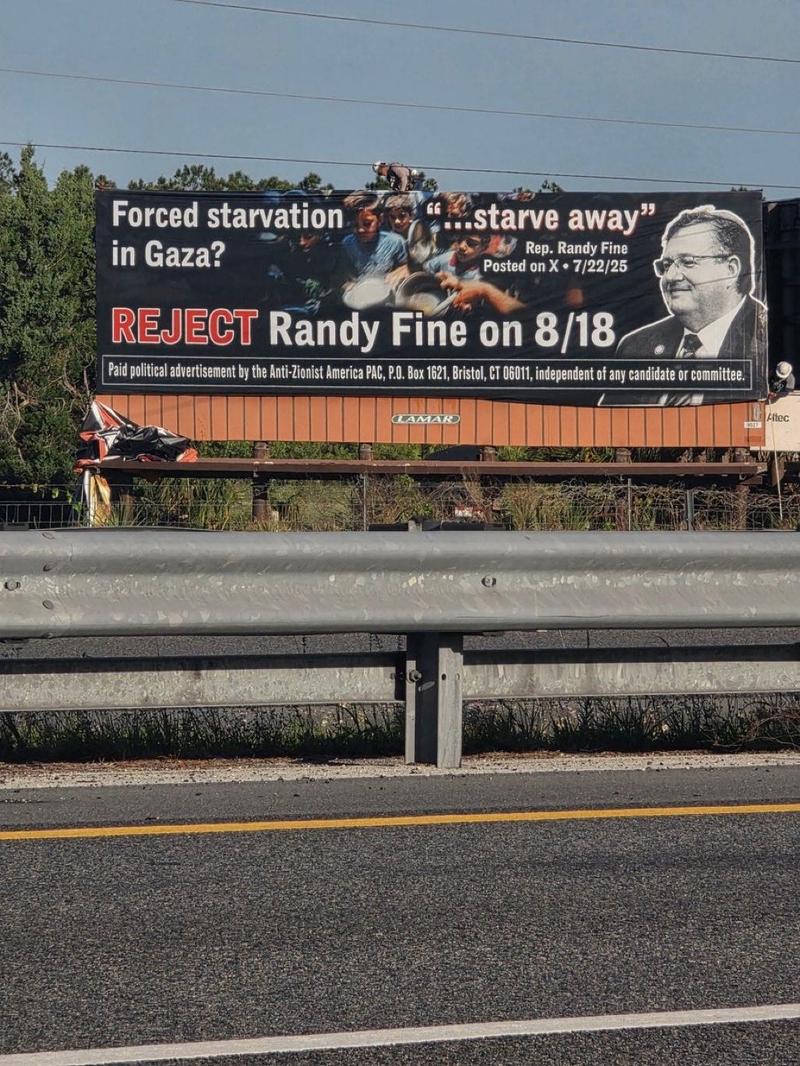
For perhaps the first time in generations, support for Israel is beginning to look less like a fixed article of American political faith and more like a position that must be defended, justified, and, increasingly, paid for. That alone is a profound change. It suggests that the old machinery of narrative control is no longer functioning as smoothly as it once did.
The role of media in this transformation is impossible to ignore. Traditional outlets still often frame Israeli violence in the passive voice, obscure agency, and bury atrocities. Readers are told that hospitals were “caught in crossfire,” that neighborhoods were “flattened amid clashes,” that civilians “died as tensions escalated.” The language performs its familiar function of disguising responsibility.
And yet this system no longer possesses a monopoly on images or testimony. Social media has punctured the seal. The cumulative effect is not simply informational. It is psychological. The old formula, in which one could rely on limited coverage, deferential phrasing, and editorial ambiguity to protect public opinion from moral clarity, has become less reliable. Enough evidence has escaped the gatekeepers that large numbers of people now feel they are watching two realities at once: the one visible on their screens and the one politely laundered into acceptability by establishment discourse.
That gap has political consequences.
No democratic system can indefinitely sustain a situation in which public sentiment and institutional behavior diverge so sharply. Voters may not follow every detail of a regional war, but they understand arrogance when they see it. They understand impunity. They understand that one set of rules governs ordinary people and another governs the protected.
What Israel has displayed in recent years is not only military dominance but accumulated hubris, the confidence of a state that has been taught through decades of Western indulgence that there will be no meaningful penalty for excess. Caution has given way to brazenness. The disguise has thinned because the sense of impunity has grown.
History suggests that this is rarely sustainable.
A political order can absorb hypocrisy for a long time. It cannot absorb it forever, especially once the hypocrisy becomes too naked to ignore and too costly to maintain. The backlash, when it comes, may be uneven. It may produce demagogues as well as reformers. It may be driven partly by calculation, partly by conscience. But it is difficult to believe that the present arrangement can endure unchanged.
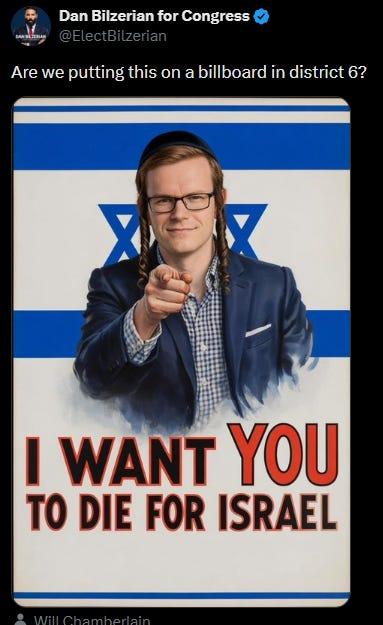
At some point, more candidates will be forced to answer questions that previous generations of politicians could evade. What is your position on Israel? What limits, if any, would you impose? What obligations does the United States owe to international law, to its own citizens, to the principle that allied states are not entitled to permanent exemption from accountability?
Those questions are coming because events have forced them into the open. The political class did not choose this reckoning. It postponed it. The media did not invite it. It obscured it. Allied governments did not confront it. They financed it, rationalized it, and hoped to outlast public attention.
That may no longer be possible.
What is breaking down is not only a policy consensus. It is a story, one told for decades in the language of strategic necessity and moral exceptionalism. Like many official stories, it endured because powerful institutions repeated it long enough to make dissent seem unserious or extreme. But stories fail when reality becomes too heavy for them to carry.
The images from Gaza and Lebanon have weight. So do the economic anxieties of ordinary Americans. So does the growing suspicion that a foreign policy once sold as stabilizing has instead become a source of danger, distortion, and democratic decay at home.
The old order still has enormous power. It still commands legislatures, donor networks, think tanks, and much of the press. It can still punish dissenters and reward loyalists. But power is not the same thing as legitimacy. And legitimacy, once lost, is difficult to recover.
The central question now is not whether the old consensus is weakening. It is. The question is what comes after it: a more honest foreign policy, or merely a cruder and more chaotic politics organized around the wreckage of the old one.
Either way, the age of automatic deference to Israel appears to be nearing its end.
Listen to CATR on:
Newsletter
Subscribe to Conversations Among the Ruins
Long-form geopolitics and the decline of the unipolar world order. New episodes straight to your inbox.
Free. No spam. View on Substack →
Reader-funded
This is independent, long-form work.
Conversations Among the Ruins is written, not repackaged, and it stays free because readers choose to fund it. If it is worth your time, a paid subscription or a one-off tip keeps it going.
Become a supporter →