

Gaza did not simply produce a humanitarian catastrophe. It destroyed the credibility of the language used to justify it. After months of razed neighborhoods, mass displacement, hunger, and the repeated killing of civilians, the old formulas no longer sound persuasive. They sound evasive. For millions of people, the question is no longer whether this war can still be defended in moral terms. That case has already failed.

Power does not operate by military force alone. It also needs to be justified. A government that wages war must persuade its own public, and ideally much of the world, that what it is doing is necessary, just, and unlike the crimes it condemns in others. When that effort fails, political consequences follow.
Governments can survive protests, accusations of hypocrisy, and international condemnation. What they struggle to survive is the loss of belief among their people. When enough people stop accepting the official explanation, support weakens, leaders lose confidence, and military ambition narrows. The greatest constraint on total war is often not logistical but political. It is the inability to sustain the story required to legitimize the violence.
That is now visible in the effort to widen the conflict in the Persian Gulf. Much of the Western public’s perception of Iran remains shaped by decades of propaganda portraying the Islamic Republic as a singular threat. But propaganda has limits. It works best at a distance, when facts are abstract, and victims remain unseen. It weakens when destruction becomes constant, intimate, and impossible to explain away.
Many in the West still know Iran mostly through caricature. But the reality before them is harder to evade: whereas Arab governments and much of the Western political class have accepted, enabled, or rationalized the destruction of Palestinian life, Iran has stood out as the one state, in alliance with non-state actors, that is willing to confront it. In the eyes of many, it has shown more clarity about Gaza and Lebanon than the governments that preach human rights while financing, excusing, or participating in mass slaughter.
At the center of this is a basic truth about conscience. People can accept almost any brutality when it is hidden behind abstraction or expert language. Siege becomes policy. Starvation becomes leverage. Bombardment becomes deterrence. Displacement becomes a security doctrine.
But when the suffering of innumerable individual human beings becomes visible, abstraction fails.
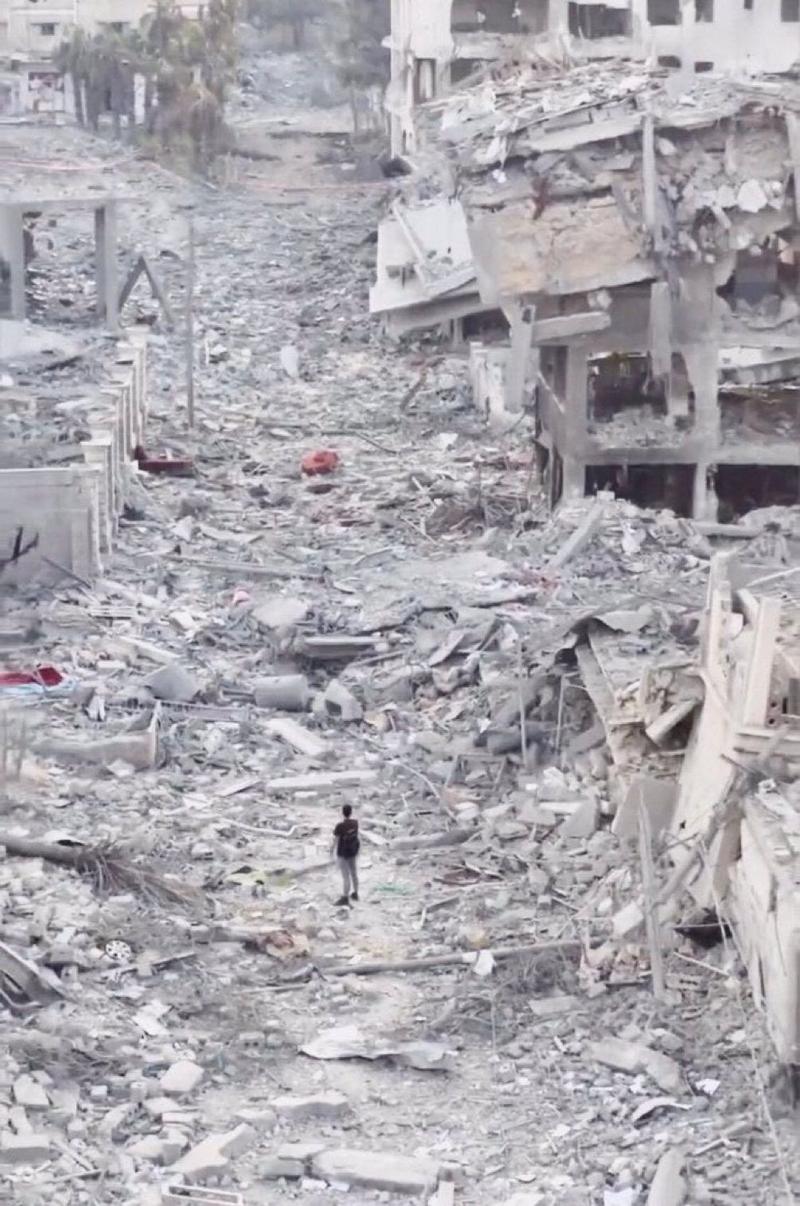
At that point, the argument is no longer about the objectives of the attacks and the excuses for the civilians who die as a result. It is about the character of the violence itself. Most people understand instinctively that there is a moral difference between civilian deaths as an incidental tragedy and civilian life treated as disposable. That judgment comes before legal analysis or strategic debate. It belongs to conscience and is supported by direct visual evidence.
Once that recognition takes hold, the moral inversion of the larger order is exposed. It becomes obvious that the state claiming the mantle of civilization is the one inflicting devastation, that the powers speaking the language of restraint are the ones arming that state, and that the nation cast as the true danger is the one opposing the destruction. Moral language no longer clarifies reality. It reverses it.
No political order can sustain that reversal forever.
This does not mean justice arrives on its own. Powerful states rarely retreat because they are ashamed. They retreat when the cost of maintaining the lie becomes too high, when publics stop believing, and when the language used to sanctify violence no longer works.
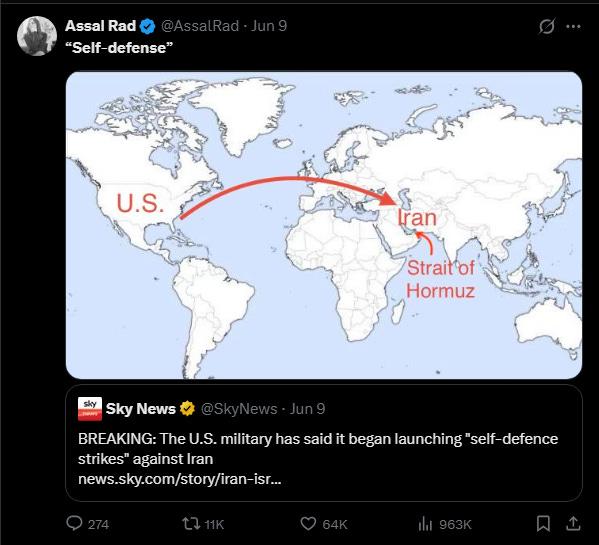
That is the deeper struggle now: whether citizens will allow euphemism to continue to substitute for judgment, and whether they will keep mistaking moral evasiveness for seriousness once the facts have become plain.
The wanton destruction of civilian life on a mass scale cannot be redeemed by the language of alliance or strategy. It does not become just because it is committed by a putative ally, or because its defenders speak in the polished idiom of order and security. And when a political order asks people to bless what they can plainly see is indefensible, that order should expect to lose its hold.
Wars are fought with missiles, money, and machines. They are also fought with stories. A state may continue to devastate after its narrative has failed. But not for long. With its moral alibi gone, even the power to devastate will surely slip from its grasp.
Listen to CATR on:
Newsletter
Subscribe to Conversations Among the Ruins
Long-form geopolitics and the decline of the unipolar world order. New episodes straight to your inbox.
Free. No spam. View on Substack →
Reader-funded
This is independent, long-form work.
Conversations Among the Ruins is written, not repackaged, and it stays free because readers choose to fund it. If it is worth your time, a paid subscription or a one-off tip keeps it going.
Become a supporter →