
AI panic is now fully part of student life in China. A recent Zhihu thread asking what kinds of skills university students should build in the age of fast-moving AI hit a nerve. Behind the question was a familiar fear: if AI can already write, code, translate, design slides, summarize research and even replace entire teams, what exactly should a student still spend four years trying to become good at?
A Question Bigger Than Campus
The answers were striking not because they agreed, but because they revealed the split mood of China’s white-collar future. Some respondents argued that students should stop fantasizing about being “irreplaceable” and instead learn to use AI deeply and aggressively. Others insisted that the real moat is still human judgment, taste, emotional intelligence, communication and the ability to question what a machine gives you. A few were far more blunt. In their view, the issue is not whether AI will steal your job. It is whether the job itself will still exist by the time you graduate.
That is a very China-in-2026 anxiety. In the space of two years, AI has moved from classroom novelty to labor-market pressure. Students now use it for translation, essay drafting, coding help, interview prep and even thesis structuring. At the same time, stories of companies trimming roles, flattening teams and automating routine work have become part of the daily tech news cycle. The result is a generation being told, all at once, to embrace AI, fear AI, and somehow outgrow AI.
The Most Common Answer: Learn to Use AI Properly
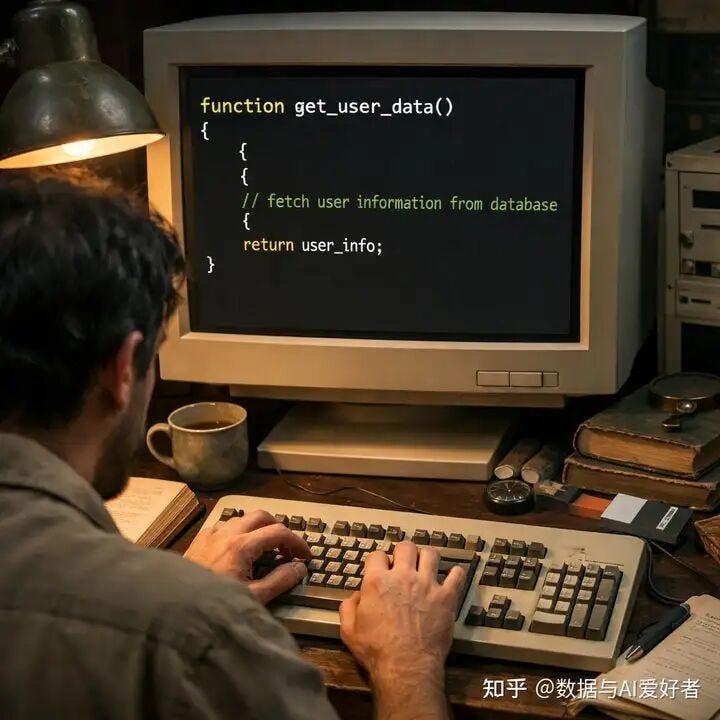
One of the most upvoted answers came from a tech executive who argued that shallow AI use is no longer enough. In his view, downloading an app and typing simple prompts is not real AI literacy. Students should be using AI to complete real tasks, build things, test ideas and expand their own thinking. He also stressed something that appeared again and again in the thread: AI coding is no longer just for computer science majors. Programming, or at least computational thinking, is increasingly becoming a general survival skill.
This is an important shift. In older internet cycles, “learn to code” sounded like niche advice for future engineers. In the AI age, many Chinese professionals are reframing it as a way of learning how to collaborate with machines. The point is not that every student should become a hardcore developer. The point is that those who can turn ideas into workflows, tools, scripts or automations will have much more leverage than those who only consume what others build.
“The new divide may not be human versus AI. It may be people who can direct AI versus people who can only watch it.”
But the Deeper Consensus Was More Human
At the same time, some of the thread’s most thoughtful responses pushed back against the idea that technical skill alone will save anyone. One answer described AI as a highly efficient tool for low-value repetitive work, but argued that machine output is often empty when the human behind it lacks real understanding. A report, a presentation or an essay generated in seconds may look polished, but still be intellectually thin. In this view, the strongest long-term abilities are not specific tools at all. They are critical thinking, deep comprehension, creative problem-solving and the ability to recognize when an answer is flawed.
Another reply went even further, quoting ideas that are becoming central to elite AI circles: what remains scarce is not knowledge storage, not even coding skill, but judgment, taste and values. That sounds abstract, but it matters. When AI can produce ten plausible outputs in ten seconds, the premium shifts from producing to selecting. Who can tell what is true, useful, elegant, ethical, persuasive or worth building? That question is much harder to automate.

The Darker Replies Were Probably the Most Honest
Not everyone in the thread was optimistic. One widely noticed answer came from a gaming industry worker who dismissed the comforting phrase “AI can never replace humans” as wishful thinking. His argument was simple and cold: for many occupations, the threat is not replacement at the individual level but elimination at the structural level. A company may no longer need that department, that role or that workflow at all. In that world, asking how to defend your bowl of rice misses the point. The bowl itself may disappear.
That answer resonates because it reflects a broader reality in China’s labor market. Employers care about output, speed and cost. If AI helps them get acceptable work faster and cheaper, many will accept “good enough” rather than wait for artisanal perfection. This is why so many younger Chinese workers feel squeezed. The old promise was that education led to stable white-collar work. The new reality is that many graduate jobs are being broken apart into automatable pieces.
So What Should Students Actually Build?
If there was one practical theme running through the thread, it was this: stop thinking in terms of one magic “AI-proof” skill. Instead, build a layered mix of abilities. Learn to use AI tools deeply enough that you are not obsolete. At the same time, develop the kinds of strengths that improve when paired with AI rather than weakened by it. Communication, public speaking, sales, writing, analysis, emotional control, good taste, fast learning and the ability to define a goal clearly all came up repeatedly.
In other words, the safest students may be those who can do two things at once. First, they can work with AI fluently. Second, they can still contribute what AI lacks, or lacks consistently: context, accountability, persuasion, trust, responsibility and a point of view. If you know how to ask better questions, combine weak signals, understand people, navigate ambiguity and make decisions under uncertainty, you are already operating in terrain where human value remains high.
What This Debate Really Reveals
The Zhihu thread was nominally about students, but it was really a conversation about class mobility, social pressure and the changing meaning of expertise in modern China. Students are not just asking how to stay competitive. They are asking whether the old path still works. Study hard, get into university, earn a degree, find a decent office job, move up steadily. AI is forcing many to confront the possibility that this sequence is no longer secure.
That does not mean the answer is despair. But it does mean the answer is not simply “be creative” or “have empathy” either. Those phrases sound nice, yet they become useful only when grounded in real capability. Creativity without skill is vague. Empathy without communication is passive. Technical ability without judgment is brittle. The students most likely to do well are probably those who combine practical AI fluency with a distinctly human core: clear thinking, emotional steadiness, strong expression, curiosity, ethical sense and the confidence to direct tools instead of hiding from them.
In short, China’s students may be asking the wrong question when they ask what AI cannot take. AI will take plenty. The better question is what kind of person becomes more powerful when AI is everywhere. That answer is harder, less comforting and probably more useful.
Curated and translated from Zhihu, China's largest Q&A platform. Read the original discussion →
Newsletter
Subscribe to The Expat Edit
Chinese perspectives on global events, wars, and great power competition. Curated from Zhihu.
Free. No spam. View on Substack →