


For years, one of the great taboos of American foreign policy was to ask, plainly and publicly, whether the relationship between the United States and Israel had ceased to serve American interests.
That taboo is breaking down.
Not entirely, and not everywhere. The old reflexes remain strong in Washington, where criticism of Israel is still often treated not as a policy disagreement but as a moral offense. Yet something has shifted. What was once confined to the margins is now entering the center of political debate. Even among factions of the American right that long treated alignment with Israel as an article of faith, there are signs of strain. The language is changing. The doubts are becoming harder to suppress.
This is happening for a simple reason. Events have become too visible, too costly, and too difficult to explain away.
Americans have watched yet another Middle East crisis unfold with the familiar promise that escalation would be limited, manageable, and strategic. They have heard the same assurances that military pressure would produce stability, deterrence, or some favorable diplomatic outcome. Instead, they are left with a pattern that looks more and more like entrapment: a regional agenda driven by another state’s priorities, an American leadership unable or unwilling to say no, and an American public expected to absorb the consequences.
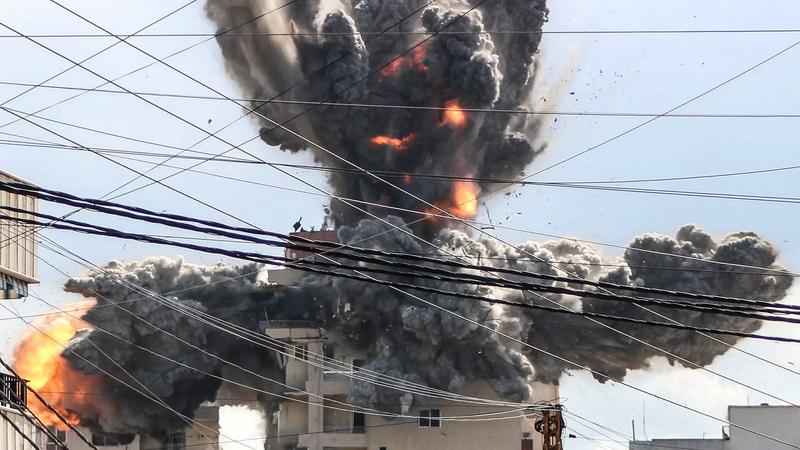
The most jarring part is not merely the possibility of a resumption of the war with Iran. It is the growing sense that many of the people charged with protecting U.S. interests understand perfectly well that such a war would be catastrophic, and yet cannot stop the machinery from moving forward.
That contradiction has become impossible to ignore.
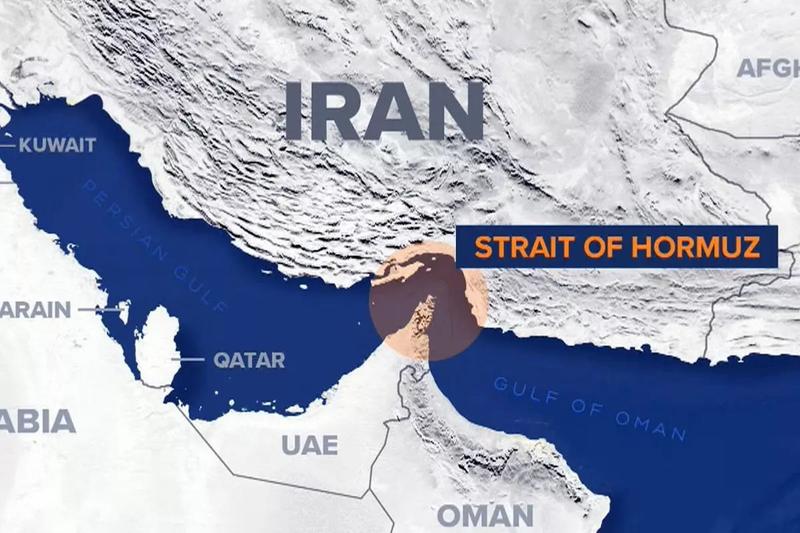
A full confrontation with Iran has never been comparable to the interventions Americans were taught to think of as manageable. This is not Libya. It is not a punitive strike in Syria. It is not a one-sided campaign against a weak state with little ability to retaliate. Iran sits astride one of the world’s most strategically vital waterways. It has missiles, networks, partners, and geography on its side. It can disrupt shipping, ignite regional fronts, threaten U.S. bases, and impose enormous costs on the global economy in a matter of days.
No serious observer can believe that reopening such a conflict would be clean or controlled. Any large-scale U.S. ground operation in the region would risk mass casualties, increased energy shocks, further attacks on American installations, and a spiral that no one could confidently contain. The fantasy of a quick, decisive operation suggests a political class that has learned almost nothing from the last quarter-century.
And still the buildup continues.
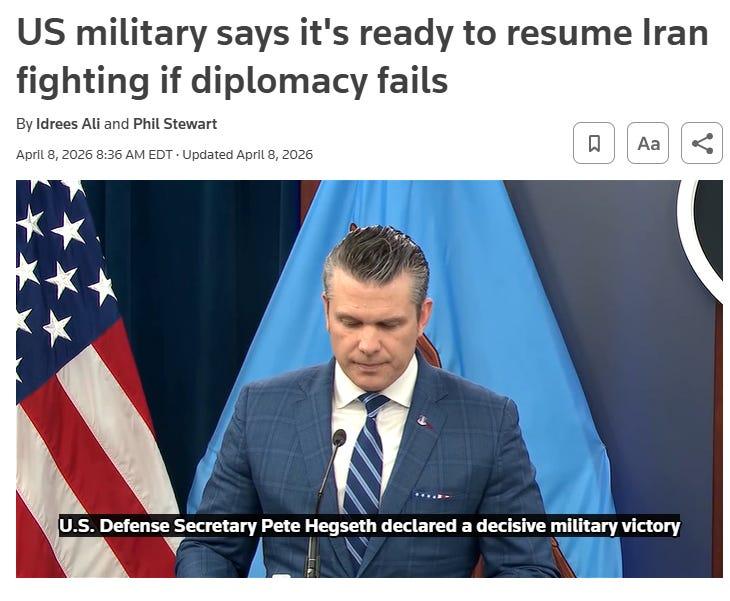
That is why troop movements matter more than official rhetoric. In modern crises, governments lie, delay, obscure, and reassure. But logistics tell the truth. When military assets are massed in theater over time, when amphibious and ground forces are repositioned, when support infrastructure begins to take shape, it is usually not theater. States do not spend that kind of money and effort for no reason. History is full of moments when people convinced themselves that a visible buildup was simply signaling, only to discover too late that it was preparation.
The deeper question is why American leaders seem so susceptible to this kind of pressure in the first place.
Why is it so difficult for the United States, a superpower with global reach, to impose boundaries on a smaller ally whose regional calculations repeatedly threaten to drag Washington into wider war? Why does restraint seem to require unusual courage, while escalation arrives with institutional ease?
There are several answers, and all of them are disturbing.
One is ideological. For decades, a large part of the American foreign policy establishment treated Israeli and American interests as not merely aligned but interchangeable. This view was always simplistic, but it became entrenched through think tanks, donor networks, media habits, and political incentives. In that world, to challenge Israel’s strategic preferences was to risk being cast as unserious, disloyal, or suspect. The result was not a healthy alliance but something more like intellectual capture.
Another answer is political weakness. American presidents, whatever their rhetoric, often enter office imagining they can bend events to their will by force of personality. Some are vain enough to think they alone can impose order on chaos. Some are so erratic that they confuse impulse for strategy. In either case, the effect is the same. They become vulnerable to flattery, pressure, and manipulation, especially when the alternative is admitting failure.
And then there is the possibility that many Americans increasingly suspect but that institutions remain reluctant to confront directly: that the architecture of influence is sustained not only by lobbies and ideology, but by systems of leverage, compromise, and fear. Public life in the United States has accumulated too many scandals, too many sealed records, too many names moving through the same elite circuits of money, sex, intelligence, and politics for citizens to dismiss such suspicions out of hand.
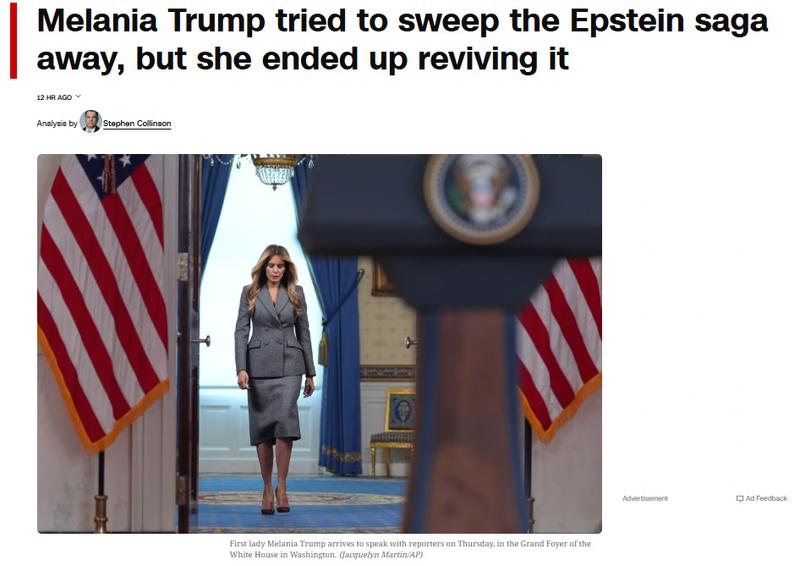
Perhaps some of these suspicions go too far. Perhaps some are impossible to prove. But the underlying intuition is understandable. When a policy is obviously irrational on its face, when it threatens ruin without plausible gain, people begin to ask what hidden forces could explain it.
This is what happens when governments destroy public trust. Citizens stop assuming that folly is merely folly. They begin to look for coercion behind absurdity.
Yet there is another explanation, one no less alarming. Sometimes the truth is not hidden sophistication but visible disorder. A political system can produce reckless choices not because it is masterfully controlled, but because it is degraded. Leaders can make world-historical decisions while being vain, impulsive, ill-informed, and emotionally unstable. They do not need to be blackmailed into disaster if they are already capable of it on their own.
That possibility should frighten Americans at least as much as the others.
There is also a second illusion now collapsing, and it concerns military success. Much of the public narrative surrounding confrontation with Iran has depended on selective presentation. Damage absorbed by the United States and its partners is minimized or concealed. Failed objectives are relabeled as strategic ambiguity. Tactical extractions are marketed as triumphs. A war that did not achieve its declared aims is narrated as a show of strength.
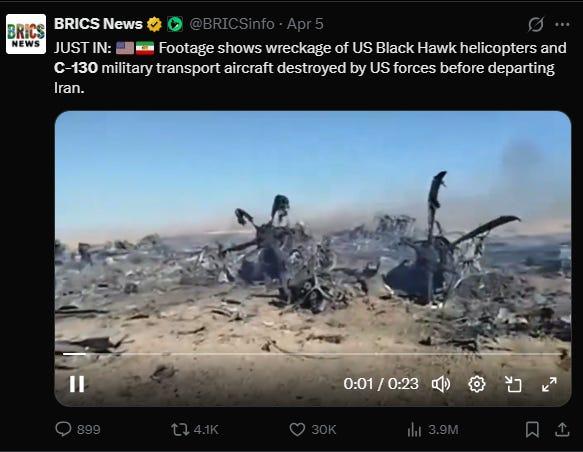
This kind of information management is not new. It is one of the oldest habits of imperial decline. When policymakers cannot produce victory, they attempt to produce the impression of victory. They rely on media ecosystems that repeat official framing, omit costly details, and train the public to confuse noise with evidence.
But reality has a way of returning, usually through material facts. Fuel prices rise. Shipping routes tighten. Insurance premiums spike. Bases become uninhabitable. Regional adversaries prove more capable than advertised. The public may not know every detail, but it can feel when a war sold as a demonstration of control has instead exposed limits.
That may be the most important fact in the current moment. For all the talk of restoring deterrence, it is the United States that looks increasingly constrained. Iran, after decades of sanctions, isolation, threats, and failed diplomacy, has demonstrated that it possesses something far more consequential than rhetorical defiance. It has leverage.
And leverage changes the psychology of world politics.
For nearly half a century, Iran was treated by Washington and much of the West as a state to be managed, isolated, weakened, and lectured. It was expected to negotiate endlessly, concede repeatedly, and accept humiliation as the price of reintegration. When it did negotiate, agreements were discarded. When it complied, sanctions remained. When Europe promised to act differently, it folded under American pressure.
The lesson of that history is bleak. States that rely on treaties and patience alone may find themselves punished for their restraint. States that acquire real coercive power are taken seriously.
That is a dangerous lesson for the world to learn. It teaches that force, not law, is the only currency respected by the international order’s self-appointed guardians. It encourages proliferation, brinkmanship, and regional militarization. It rewards exactly the behavior Western leaders claim to oppose.
And yet it is the lesson American policy has spent years delivering.
If the United States now finds itself staring at a shrinking set of options, it is because successive administrations mistook dominance for strategy. They believed pressure could substitute for settlement, that humiliation could produce compliance, and that military superiority could erase geography, history, and political will. Those assumptions are breaking down.
So too is the larger myth that the costs of America’s Middle East policy are borne only by distant peoples.
If this crisis deepens, the dead will not be abstractions. They will be young Americans sent into a theater where objectives are unclear, escalation dominance belongs to the other side, and the risks have been visible from the start. Military families, in particular, have every reason to ask what exactly their sons and daughters would be fighting for. Not for national survival. Not for a defensible peace. Not even for a coherent strategic end state. They would be sent into danger because Washington still cannot disentangle alliance from dependency, and loyalty from subordination.
This is the question now forcing itself into public view: Is the United States acting as a sovereign power, or as a state that can be maneuvered into war against its own better judgment?
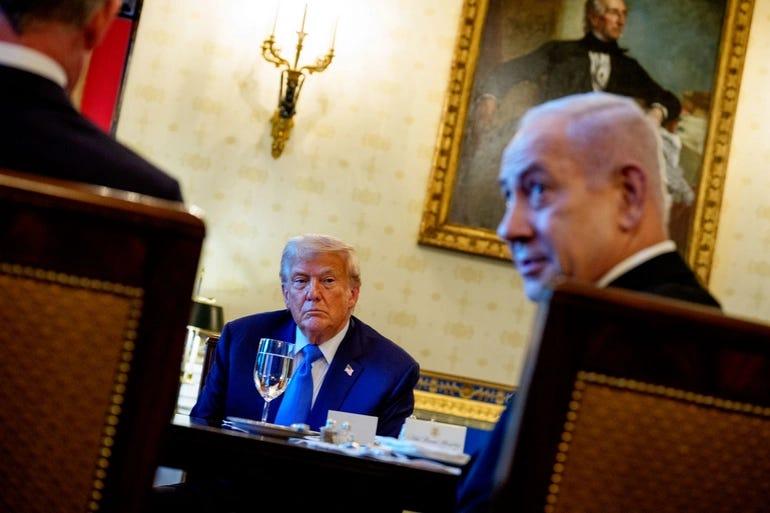
That question is uncomfortable because it cuts deeper than any single president or party. It touches the structure of American power itself: who influences it, who profits from it, who is permitted to question it, and who pays when it fails.
For a long time, asking such questions was enough to place a person beyond the pale. That is no longer true. The failures are too large. The contradictions are too obvious. The costs are too near.
An empire can survive many things, but if it fails to distinguish its own interests from those of others, it will not survive for long.
Listen to CATR on:
Newsletter
Subscribe to Conversations Among the Ruins
Long-form geopolitics and the decline of the unipolar world order. New episodes straight to your inbox.
Free. No spam. View on Substack →
Reader-funded
This is independent, long-form work.
Conversations Among the Ruins is written, not repackaged, and it stays free because readers choose to fund it. If it is worth your time, a paid subscription or a one-off tip keeps it going.
Become a supporter →