
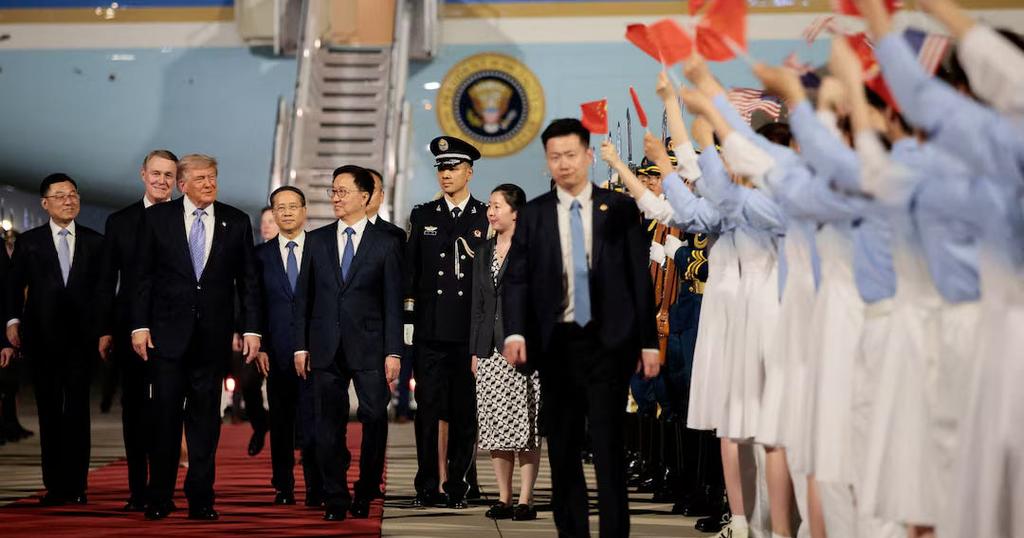
There is a revealing way to understand certain recent spectacles in international politics: not as diplomacy in the classical sense, but as theater arranged for a declining audience of one.
When a leader makes a trip to a rival capital and returns with nothing but banquets, handshakes, and flattering images to show for it, it is tempting to call the trip a failure. But that may miss the deeper point. Failure implies an attempt at substance. What increasingly appears to be happening is something more calculated. America’s adversaries, and perhaps some of its uneasy partners, seem to have concluded that substantive agreement is no longer possible. What remains is ceremonial management.
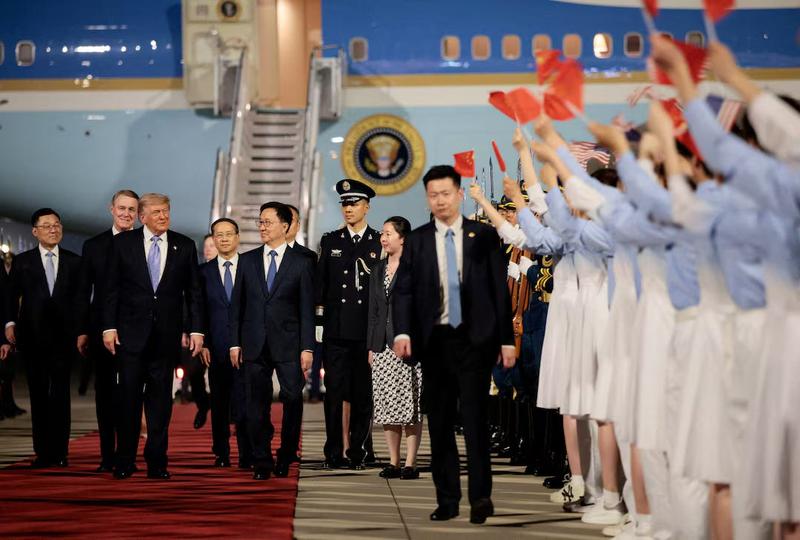
The logic is brutal but not irrational. The United States is still immensely powerful. Its president still commands an enormous military force and can unleash destruction on short notice. Yet power is not the same as credibility, and force is not the same as strategy. If a leader is seen as unstable, impulsive, and chiefly concerned with displays of grandeur, then the prudent response is not necessarily confrontation. It is accommodation at the level of symbols. Roll out the red carpet. Offer the state dinner. Let him leave feeling affirmed. Avoid the harder work of pretending a durable bargain can be made.
Unfortunately, a durable bargain is what the world needs right now.
Without it, the United States may very well drift toward renewed war with Iran.
Or perhaps, more accurately, it will be pushed back into war by Tel Aviv, where the belief is unanimous that military pressure, applied in calibrated bursts, can achieve desired outcomes without irrevocable costs. We have seen it carried out again and again against Israel’s neighbors. Bomb enough infrastructure, enough laboratories, enough power generation, enough transportation nodes, and the adversary will be weakened for years. Perhaps not defeated outright, but impaired enough to satisfy the strategic objective.
Yet even the advocates of this approach appear to understand, at some level, that there is no clear path to victory. The goal is not conquest in any meaningful sense. It is damage for damage’s sake. To set a country back. To degrade its capabilities. To make life harder, development slower, and recovery more expensive. This is less a war plan than a punishment doctrine.
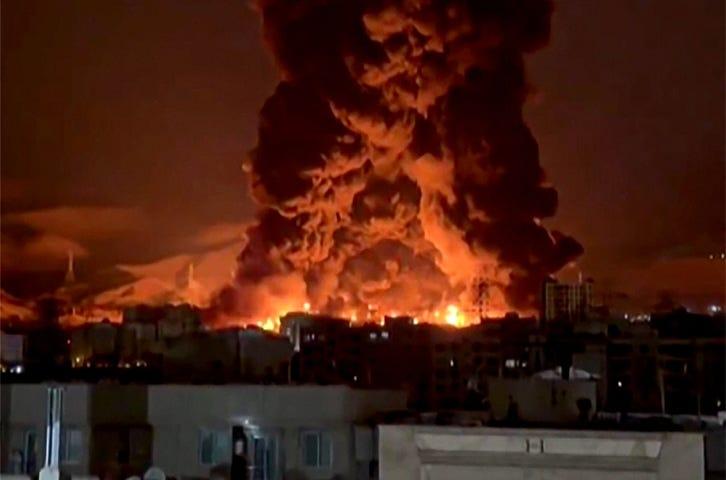
The problem with punishment doctrines is that they rarely remain limited to the punished.
A renewed campaign against Iran would not unfold in a geopolitical vacuum. It would reverberate through the Gulf, through global shipping lanes, through energy markets already strained by insecurity and improvisation. The immediate concern is not only whether the Strait of Hormuz is formally closed. Modern economic shocks do not require a clean binary of open or shut. Ambiguity can be almost as painful as closure: partial disruption, insurance spikes, rerouted tankers, damaged facilities, reluctant shippers, delayed investment, fragile expectations.
That kind of disruption is enough to produce a long crisis even without a total blockade. Moreover, if attacks resume and key energy infrastructure is hit across the region, the consequences will extend far beyond a temporary rise at the pump. A short shock can be absorbed. A structural impairment lasting years is something else entirely.
The world economy can manage many things. It struggles to manage prolonged uncertainty in the main artery of energy transport.
There are already signs that regional states understand this more clearly than Washington does. Some Gulf governments appear to be edging toward a practical accommodation with Tehran, not out of affection but out of self-preservation. That makes sense. For countries living within range of retaliation, the presence of American bases and the promise of American protection can begin to look less like a shield than an invitation to become a target. The old formula of security through alignment carries a different meaning when the patron’s strategy appears erratic, and the costs are paid locally.
Not every state in the region is drawing the same conclusion. The United Arab Emirates is moving closer to Washington and Israel, calculating that escalation is preferable to negotiation. But the broader pattern is unmistakable. The more unstable the military environment becomes, the more attractive a modus vivendi with Iran will look to countries that must actually live with the consequences.
That is one of the paradoxes of this moment. The use of force intended to reaffirm American primacy may instead accelerate regional efforts to route around it.
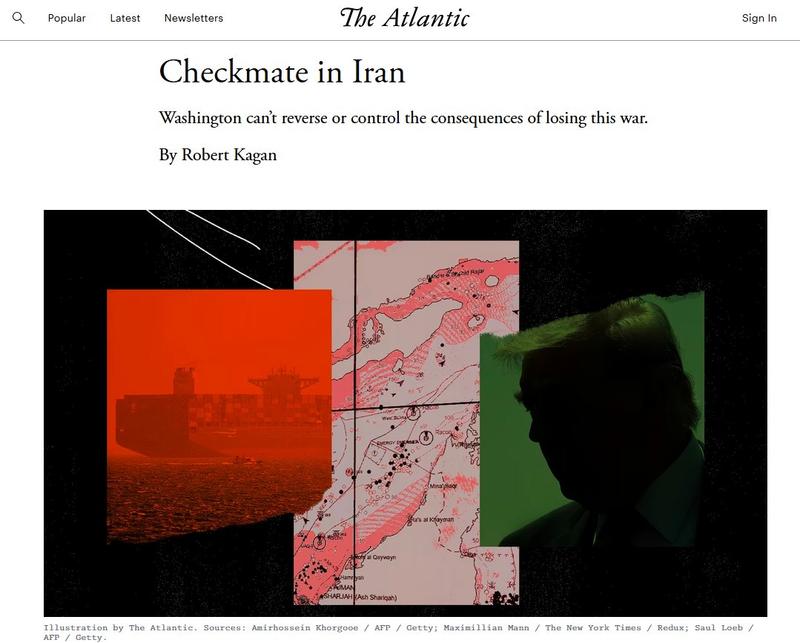
This points to the most uncomfortable truth of all. The greatest damage from another war with Iran may be inflicted on the mythology of American power.
Empires do not decline only when they lose battles. They decline when the gap between image and capacity becomes impossible to ignore. For decades, the central proposition of American hegemony was not merely that the United States possessed overwhelming force, but that it could apply that force decisively, sustain it over time, and translate it into political outcomes. If that proposition fails, the consequences spread quickly. Allies become nervous. Adversaries become bolder. Clients begin to hedge. Markets begin to price in unreliability.
The issue is not whether the United States can inflict destruction. It plainly can. The issue is whether it can achieve its ends without exhausting munitions, depleting stockpiles, exposing troops, destabilizing supply lines, and then discovering that the political problem remains unsolved.
That is a very different question. It is also the one that increasingly matters.
If military inventories are strained, if interception systems are being consumed faster than they can be replenished, if long-range strike capacity is finite, then even a superpower encounters hard limits. The public is often shielded from these details because strategic mythology depends on abstraction. “American power” sounds inexhaustible at a distance. Up close, it looks like production schedules, logistics chains, vulnerable bases, and reserve levels.
Those limits become politically real when they migrate from briefings into daily life. A destroyer lost at sea would do it. So would stranded troops. But the most democratic messenger of decline may be economic. High energy prices have a way of translating distant war into domestic comprehension.
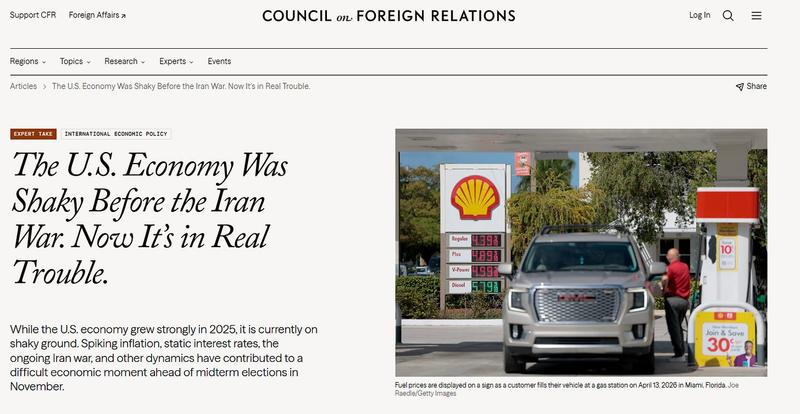
Citizens may not follow the disposition of missile stocks or the strategic logic of Gulf basing. They do understand what it means when gasoline becomes punishingly expensive, when inflation returns with force, when policymakers insist the crisis is manageable while households experience the opposite. In those moments, imperial overreach ceases to be an academic argument. It becomes a line item.
And if governments respond by draining reserves, leaning on inventories, and using temporary measures to suppress the visible cost, they are simply postponing the reckoning while making it worse. There is only so much stored capacity to consume before the buffer disappears. When that floor is reached, the adjustment will be brutal.
This is why the present moment feels so unstable. The United States still behaves as though it can compel outcomes through momentum and intimidation. But many of the relevant actors appear to have concluded otherwise. Rivals are learning to flatter without conceding. Regional partners are learning to hedge without announcing defection. Markets are learning to absorb the possibility that Washington no longer controls escalation as confidently as it once did.
A great power can survive military setbacks. What is harder to survive is the slow public recognition that its leaders no longer know the difference between spectacle and strategy.
That recognition does not arrive all at once. It arrives piecemeal, through failed ventures, rising costs, contradictory justifications, and the nagging sense that every available move makes the position worse. In chess there is a term for this kind of predicament: zugzwang, a position in which any move is a bad one.
It is not a place where a serious power wants to be.
And yet that is where the United States increasingly appears to stand in the Middle East. Not at the height of command, but in the grip of a dilemma of its own making. Unable to secure a decisive victory, unwilling to accept restraint, and still tempted by the belief that one more round of force will restore a credibility that force itself has already diminished.
History is unsparing with powers that mistake performance for control. The pageantry can continue for a while. So can the rhetoric. But eventually reality presents the bill.
Listen to CATR on:
Newsletter
Subscribe to Conversations Among the Ruins
Long-form geopolitics and the decline of the unipolar world order. New episodes straight to your inbox.
Free. No spam. View on Substack →
Reader-funded
This is independent, long-form work.
Conversations Among the Ruins is written, not repackaged, and it stays free because readers choose to fund it. If it is worth your time, a paid subscription or a one-off tip keeps it going.
Become a supporter →