
There are some subjects in public life that become less discussable precisely as they grow more consequential. Russia’s war in Ukraine is one of them.
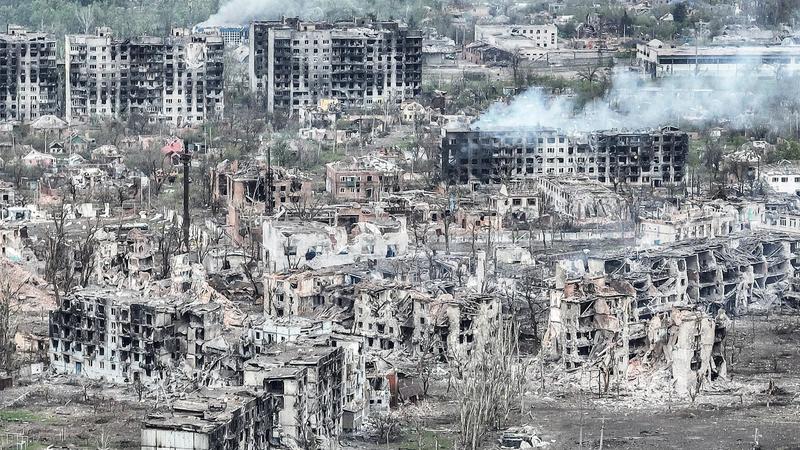
Not because the facts are unavailable. Not because the human suffering is unclear. Ukraine’s devastation is obvious to anyone willing to look. Cities reduced to rubble, families scattered, a generation consumed by mobilization, death, and exile. The destruction is real, immediate, and morally serious.
But the moment one tries to move beyond the most compressed moral summary, debate tends to shut down. The accepted script is simple: Russia invaded Ukraine. That is true. It is also not the whole story. And in foreign policy, as in history, leaving out the story before the crisis often means misunderstanding the crisis itself.
This is not an argument for applauding the Russian “Special Military Operation.” It is an argument for taking causation seriously.
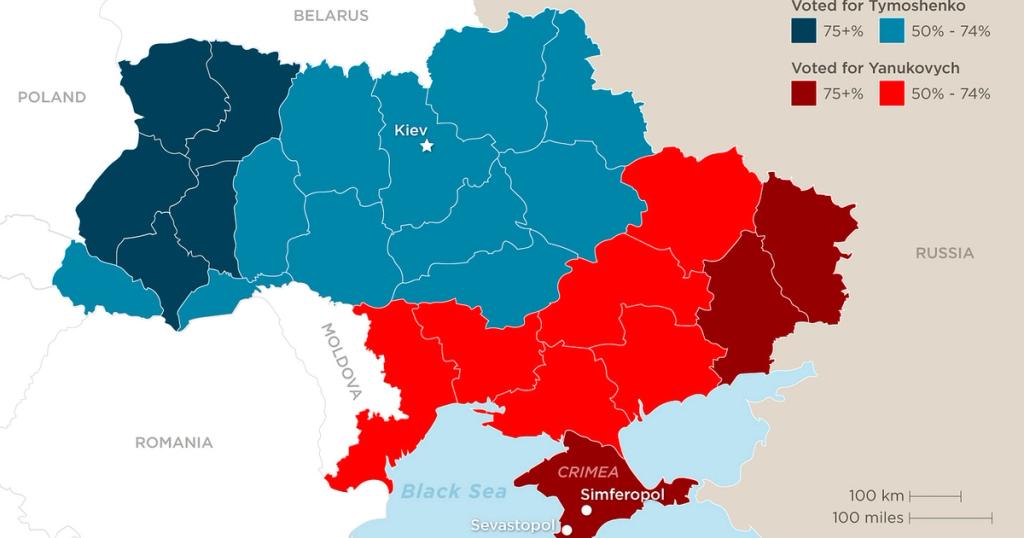
In the West, the war is often presented as if it began in February 2022, as though history arrived fully formed the moment Russian troops crossed the border. Yet the conflict did not emerge from a vacuum. Before the invasion, eastern Ukraine had already endured eight years of war. The fighting in the Donbass, which followed the coup of 2014, was not a mere footnote. It was a prolonged and bloody internal conflict involving separatist regions, the Ukrainian state, and, eventually, Russian backing.
For many in eastern Ukraine, especially the Russian-speaking populations in Donetsk and Lugansk, the post-coup order did not represent national renewal, but a threat. The government that emerged after the Maidan revolution was seen by nearly everyone there not simply as pro-Western but as hostile to their language, identity, and political loyalties. How could they think otherwise when the first act of the new legislature was to suppress the Russian language? And when military operations began against the breakaway regions, the hostile intent of the new regime became undeniable.
One need not endorse separatism to understand why many in the east no longer believed they had a secure future inside a centralized Ukrainian state.
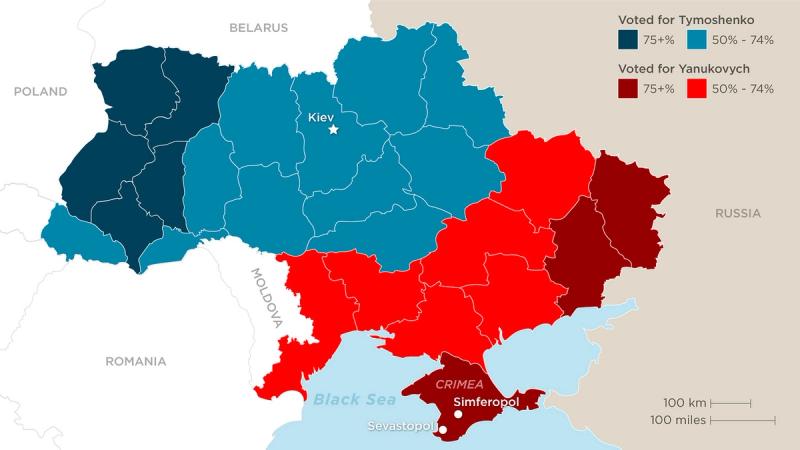
That matters. It matters because in the dominant Western telling, the Ukrainian people are an undifferentiated political mass and Russia is a uniquely irrational aggressor. But countries divided by language, memory, geography, and competing historical identities do not remain stable by the force of narrative alone. They require carefully crafted settlements, compromises, and constitutional imagination. Ukraine had repeated opportunities for such stabilizing settlements, but those opportunities were not taken.
The most important was the Minsk process. The Minsk Accords, backed by the United Nations Security Council and brokered with French and German involvement, were meant to provide a framework for ending the Donbass war through autonomy arrangements within Ukraine. The basic premise was clear: keep the contested regions formally inside Ukraine while granting them protections and self-government sufficient to end the fighting.
For years, this was held up as the diplomatic path forward. Yet later admissions from senior Western leaders made plain what many in Moscow had long suspected: the accords were never treated by the key parties as a settlement to be implemented in good faith. They were used, by their own account, as a means of buying time for Ukraine to strengthen itself militarily and retake the break-away regions by force of arms.
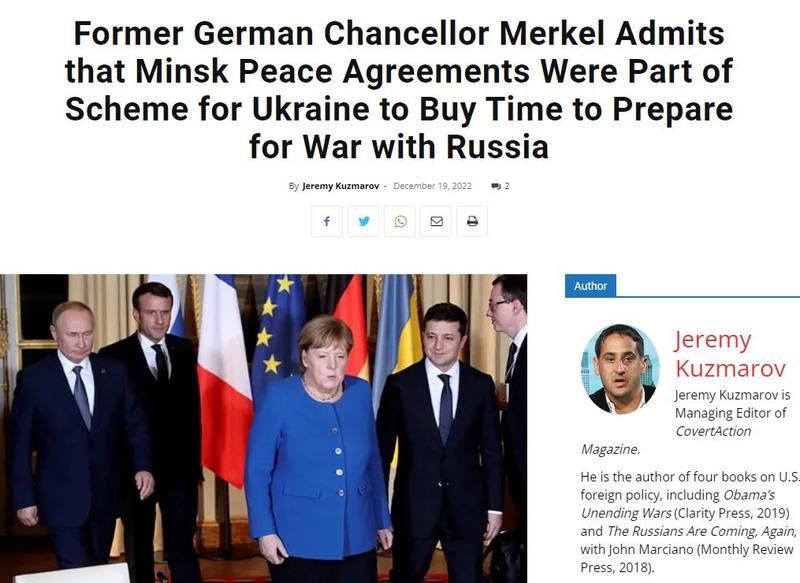
That admission should have caused a political earthquake in the West. Instead, it passed with remarkably little reflection.
Imagine, for a moment, how Washington would respond if a major rival had participated in a peace process on America’s border while privately treating it as a delaying tactic for military buildup. There would be no confusion about how such behavior would be interpreted. It would be taken as proof that diplomacy had been instrumentalized, not honored.
From the Russian perspective, that is exactly what happened.
There is another point Western audiences are rarely encouraged to consider except in caricature: Russia’s security fears were not invented in a fever dream. They may be overstated, but they are not imaginary.
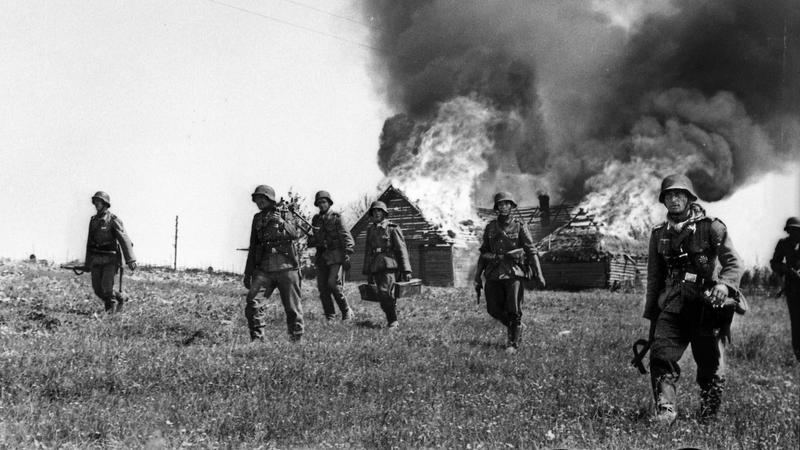
Russia has been invaded through the western corridor before, catastrophically. Historical memory is not an abstraction in a country that lost tens of millions in World War II. Nor is NATO, from Moscow’s point of view, a neutral civic association. Russians watched NATO dismantle Serbia, watched the overthrow of Qaddafi’s regime in Libya, and watched with growing anxiety for years as the alliance expanded steadily eastward despite repeated warnings from Russian officials, diplomats, and analysts that Ukraine represented a red line.
In the West, such warnings were often dismissed as bluff or paranoia. But states do not experience threats according to the psychology of their rivals. They experience them according to their own history, institutions, and strategic culture. A red line does not have to appear reasonable to outsiders to be real.
That does not prove that Moscow was justified in launching the war. It means the war was far from inexplicable—that, indeed, it was predictable.
Even the early phase of Russia’s 2022 intervention complicates the standard picture of an all-out campaign of conquest. The initial force deployment was too small for a serious attempt to subdue and occupy even part of Ukraine, much less permanently hold all of it. What followed instead were negotiations that moved with surprising speed. Draft agreements were produced in Istanbul. According to multiple accounts, there was a plausible framework for peace, one that would have involved Ukrainian neutrality, Russian withdrawal, and an end to the war before it entered its most ruinous phase.
That chance vanished.
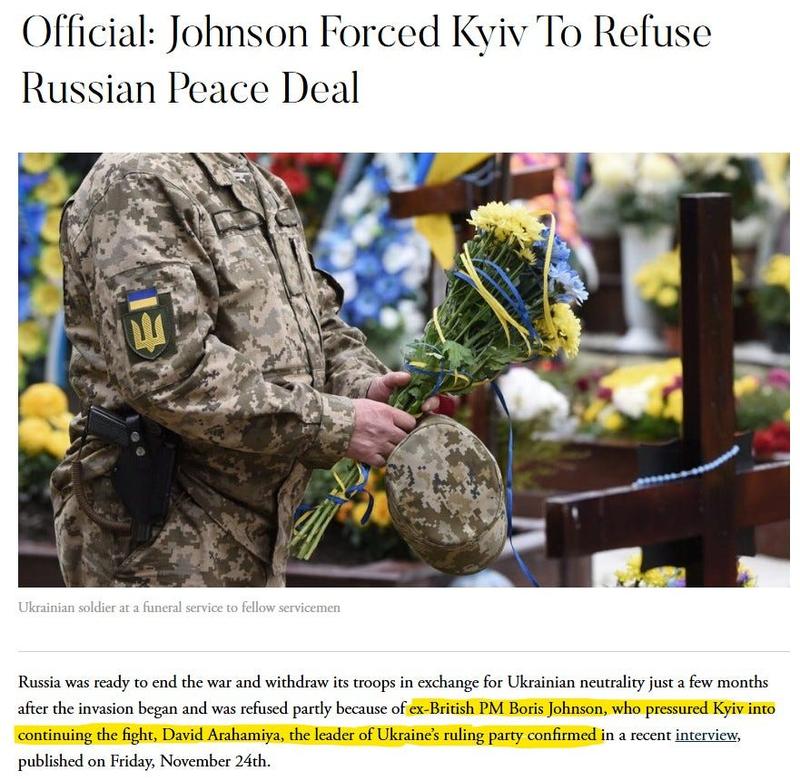
The reasons remain debated in emphasis, but not in essence. External actors encouraged Kyiv to continue fighting rather than settle. Western confidence, or Western illusion, took hold: Russia could be weakened, perhaps defeated; the battlefield could deliver what diplomacy had not. Since then, the costs have been paid overwhelmingly by Ukrainians.
And those costs have not merely been territorial. They have been civilizational.
A great deal of Western rhetoric about Ukraine still sounds as though it belongs to the opening months of the war rather than its current reality. The language is heroic, clean, and abstract. The reality is exhausted, coercive, and grim. Forced conscription, men seized off the streets, corruption on a monumental scale, and a political culture shaped by oligarchic networks and intimidation are not marginal details. They are central to understanding the state that has been idealized abroad.
This is where much commentary becomes unserious. To note profound dysfunction in Ukraine’s political order is not to deny the fact of Russia’s invasion. It is to reject the fantasy of Ukrainian purity. Ukraine, long before 2022, was notorious for corruption and violent nationalist currents. These were not Kremlin inventions. They were documented repeatedly by Western institutions, journalists, and Ukrainian observers themselves, right up until the war made inconvenient truths harder to say aloud.
Public discourse in wartime has little patience for ambiguity. Every conflict demands mascots. Every tragedy is sorted into flags and slogans. But statesmanship requires a harder discipline. It requires asking not only who fired first in a given moment, but what sequence of decisions made catastrophe more likely and settlement less so.
That discipline has been largely absent from the Western treatment of Ukraine.
Instead, moral clarity has often served as a substitute for strategic thought. To say “Russia invaded” has been treated as sufficient analysis, as though highlighting one fact answers every other question. It does not answer why the post-2014 Ukrainian state elevated and empowered violent extremist factions. It does not answer why the Minsk framework was allowed to decay. It does not answer why NATO continued to press the issue of Ukrainian alignment despite years of warnings. It does not answer why early negotiations in 2022 were sabotaged by Ukraine’s Western backers. And it does not answer what exactly the West imagines victory now means.
The tragedy of Ukraine is not only that it was invaded, but also that every available off-ramp was discredited or ignored until destruction itself became policy.
There is still a powerful tendency to frame any call for settlement as capitulation, any attempt at historical context as apology, any acknowledgment of Russian motives as propaganda. This is an intellectually debilitating habit. If one cannot describe the world as it is because the description may be morally inconvenient, one is no longer doing analysis. One is retreating into an emotionally comforting fantasy.
But the road to peace will have to pass through painful realities.
At some point, serious people will have to say what has been obvious for some time: Russia is not going to abandon the territories it now treats as central to its security, and Ukraine is not going to restore its pre-2014 borders by force. One may regret that. One may rage against it. But a strategy that refuses reality is only a slower form of surrender.
The question, then, is no longer whether this war has a clean ending. It does not. The question is whether there remains enough honesty in Western politics to admit that prolonging a losing fight is not true solidarity, but, rather, a decision that is being paid for in blood by people far from the editorial boards, think tanks, and television studios where so many stirring slogans were minted.
Ukraine deserved better than an invasion, you say. Fine, I don’t disagree. But if you care about the Ukrainian people, then forget the slogans and let go of those grossly distorted historical narratives, however emotionally satisfying they may be. Swallow the bitter pill of reality to save what remains of Ukraine.
Listen to CATR on:
Newsletter
Subscribe to Conversations Among the Ruins
Long-form geopolitics and the decline of the unipolar world order. New episodes straight to your inbox.
Free. No spam. View on Substack →
Reader-funded
This is independent, long-form work.
Conversations Among the Ruins is written, not repackaged, and it stays free because readers choose to fund it. If it is worth your time, a paid subscription or a one-off tip keeps it going.
Become a supporter →