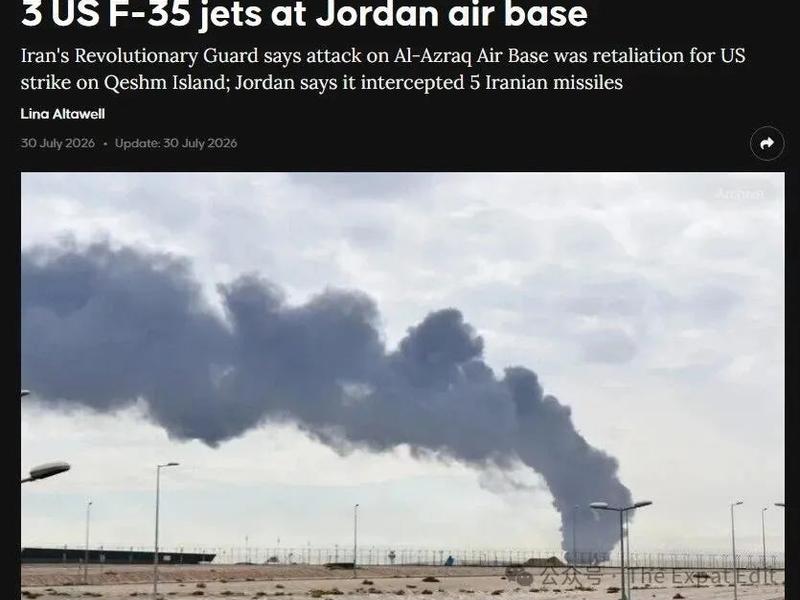
One of the most dangerous habits in foreign policy is to mistake familiarity for understanding. For years, Iran has been described in much of the Western press as a dependent power, a regional actor sustained by larger patrons, dangerous but limited, resilient but ultimately outmatched by the United States and its allies. That picture is no longer tenable, if it ever was.
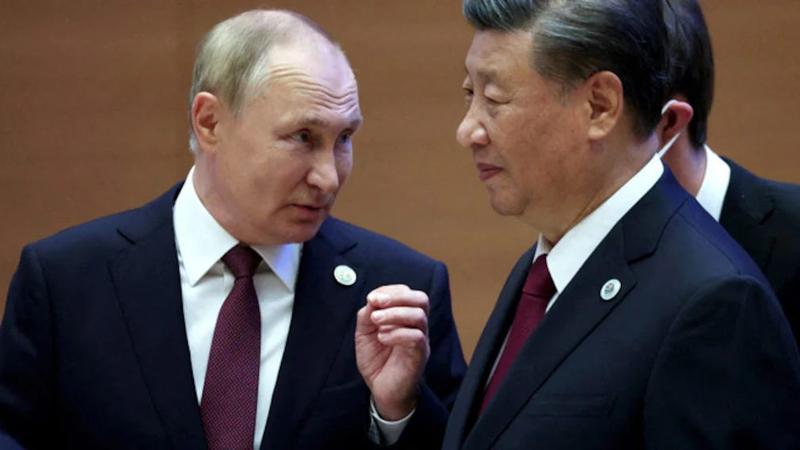
The central strategic fact of the current confrontation is not simply that Iran has partners in Russia and China. It is that Iran itself is a far more sophisticated military and technological power than many in Washington appear willing to acknowledge. That misreading has consequences. It distorts public expectations, encourages reckless planning, and sustains the fantasy that escalation still offers a path to victory.
Iran is not a great power in the conventional sense. Its economy is constrained, its air defenses are uneven, and it does not possess the kind of expeditionary reach that defines an empire. But those realities can obscure another truth. In several of the domains that define contemporary warfare, Iran has achieved a level of capability that puts it in serious contention with the most advanced militaries in the world.
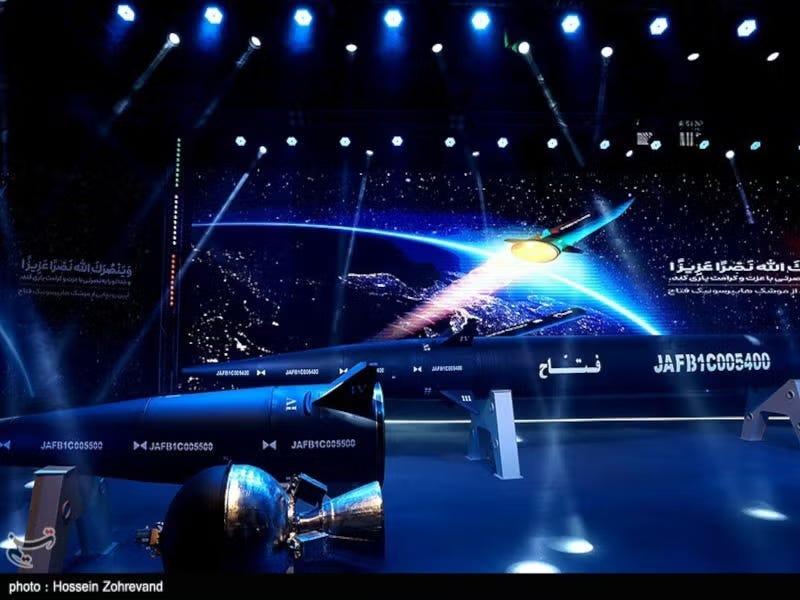
Its missile program is not a propaganda project. Its drone industry is not a novelty. Its radar systems and indigenous weapons production are not the marks of a backward state improvising under sanctions. They are evidence of a country that spent years preparing for precisely this kind of conflict, under the assumption that it would one day face direct and sustained pressure from a technologically superior adversary. Rather than collapse under isolation, it adapted to it.
That matters because the balance of military power in modern war is not measured only in aircraft carriers, stealth bombers, or defense budgets. It is measured in survivability, replenishment, geography, and the ability to impose costs. It is measured in whether one side can absorb punishment and continue fighting, while the other discovers that its own vulnerabilities are far greater than advertised.
Iran can absorb damage. It is a large country with strategic depth, distributed infrastructure, and a political system built around endurance. More important, it can also return damage. That is the point many Western analysts still resist. The old assumption was that Iran could be struck repeatedly, degraded from the air, and ultimately contained by superior firepower. But that model depended on a familiar pattern: the United States and its allies would attack from relative safety, while the opponent would struggle to respond in kind.
That assumption appears increasingly obsolete.
If the logic of the campaign becomes one of continuous strikes on Iranian infrastructure, then retaliation is not theoretical. It is built into the structure of the conflict. A strategy of attrition against Iran necessarily invites attrition elsewhere, against regional bases, energy infrastructure, shipping, and allied territory. And unlike some of the enemies Washington faced in the last two decades, Iran has the technical means to make that retaliation sustained, costly, and politically destabilizing.
This is why so much of the discussion now circles around escalation scenarios that would once have sounded almost absurd. A ground operation. A limited seizure. A dramatic raid to alter the strategic map. These ideas persist because the alternatives are narrowing. If air power and standoff strikes do not produce decisive results, policymakers begin searching for some final instrument that will restore momentum.
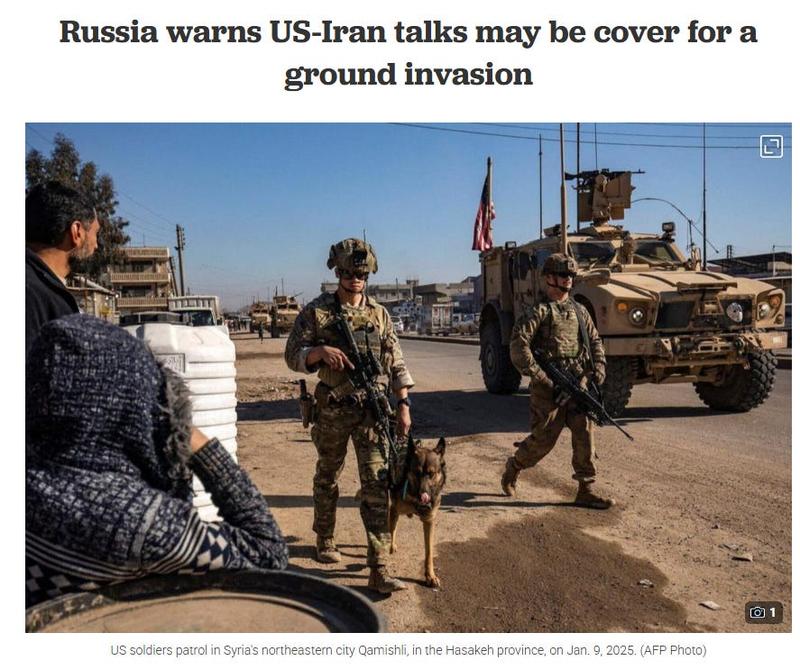
But the practical obstacles to such an operation are staggering. Amphibious assaults were brutal even in the wars of the last century. In an era of satellites, precision missiles, drones, mobile air defenses, and real-time targeting, the challenge is even greater. Forces massing offshore are not invisible. Ships approaching littoral zones are not entering uncontested space. Aircraft moving toward insertion points are not operating over undefended terrain. The notion that a large expeditionary force could be brought close enough to shore, landed, sustained, and protected in the face of layered Iranian defenses requires a degree of optimism that borders on delusion.
Even a failed attempt could be catastrophic. A transport hit before landing. A ship lost with hundreds or thousands aboard. Aircraft downed in concentrated waves. Such losses would not merely damage military plans. They would shake the political foundations of the intervention itself.
The danger is not that these plans may appear sound. It is that they are unsound and may still be attempted.
History offers many examples of states escalating not because the next move is wise, but because the existing course has produced no acceptable off-ramp. Once credibility becomes the organizing principle of policy, prudence recedes. The question ceases to be what can be achieved and becomes what cannot be seen to be abandoned.

That is the real trap confronting Washington. The war is no longer only about military outcomes. It is about prestige, alliance management, domestic politics, and the fear that restraint will be read as weakness. The United States has often justified its interventions as tests of resolve. But resolve is a dangerous substitute for strategy. It can keep a country in a war long after the original rationale has collapsed.
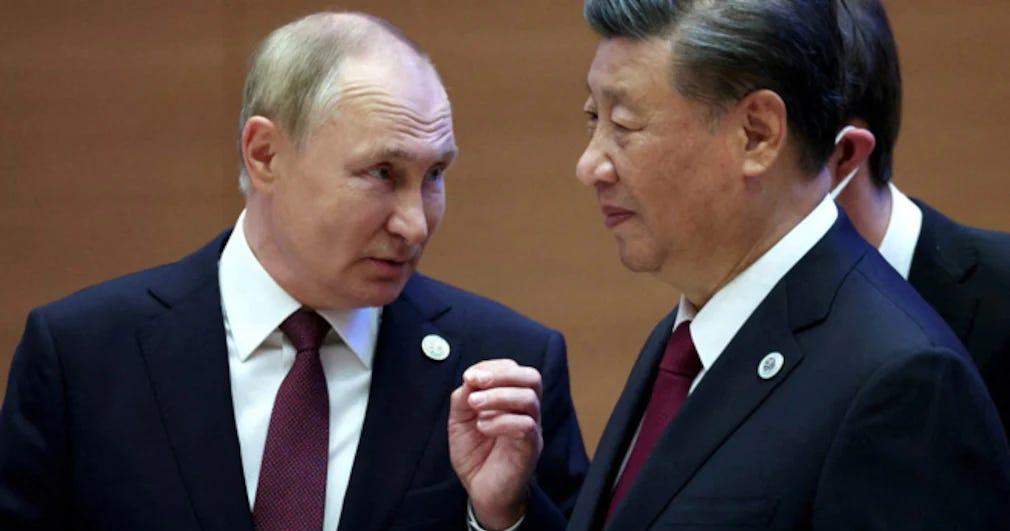
There is also the wider geopolitical dimension, which is impossible to ignore. Russia and China may calibrate their involvement differently, but neither can view the destruction or subjugation of Iran as a peripheral event. For both, the issue is larger than the fate of a single government. It concerns the shape of the regional order, the credibility of American coercion, and the precedent that would be set if a strategically important partner were left to be dismantled under pressure.
That does not mean either power is eager for direct confrontation. It does mean they have strong incentives to ensure that Iran does not lose. Material support, intelligence cooperation, diplomatic cover, and selective military assistance can all shift the battlefield without requiring a formal declaration of alliance. The deeper the conflict goes, the less realistic it becomes to imagine Iran as an isolated target.
This is where many official narratives break down. They continue to speak as if American power were decisive simply because it is immense. But scale is not the same thing as leverage. The United States can inflict destruction. No serious observer should doubt that. The question is whether destruction can still deliver the political results Washington seeks. On that score, the record is poor and growing worse.
Even the most sustained bombing campaigns in modern history have not reliably broken states that retained strategic depth, political will, and external support. They have devastated societies. They have killed civilians. They have degraded infrastructure for generations. But, by themselves, they have never produced surrender. They have consistently revealed the limits of air power when detached from a realistic political end state.
And there is another constraint, less discussed but no less real: munitions, platforms, and tolerance for loss are finite. Modern war at high intensity consumes precision weapons at a remarkable rate. Standoff munitions cannot be expended indefinitely without consequence. Aircraft cannot be risked freely if even sporadic air defenses remain active. The margin between dominance and vulnerability is thinner than public rhetoric suggests.
This is one reason the aura of easy superiority has begun to fray. When an adversary can shoot back effectively, can target bases, can threaten shipping, and can impose real economic pain on the wider world, the costs of coercion stop being abstract. They become visible in energy prices, insurance rates, force protection demands, and public anxiety.
That is the deeper significance of the present moment. The confrontation with Iran may be remembered less as a regional war than as a revelation. It exposes a world in which the United States remains immensely powerful but no longer enjoys the impunity that defined the post-Cold War decades. It reveals what happens when a military machine designed for dominance encounters an adversary built for endurance. It shows how an empire can possess overwhelming force and still find itself short of options.
If that is true, then the most serious question is not whether Washington can continue the war. It can. The question is whether it can achieve anything commensurate with the price. There is a difference between the ability to destroy and the ability to prevail. Great powers often learn that distinction too late.
For the United States, that lesson may now be arriving with unusual force. A campaign launched in the language of pressure and credibility could end in something more sobering: the recognition that coercion has limits, that escalation is not a strategy, and that a world once ordered around American primacy is becoming harder to command.
Empires rarely announce their decline. More often, they discover it at the edge of a war they no longer know how to win.
Listen to CATR on:
Newsletter
Subscribe to Conversations Among the Ruins
Long-form geopolitics and the decline of the unipolar world order. New episodes straight to your inbox.
Free. No spam. View on Substack →